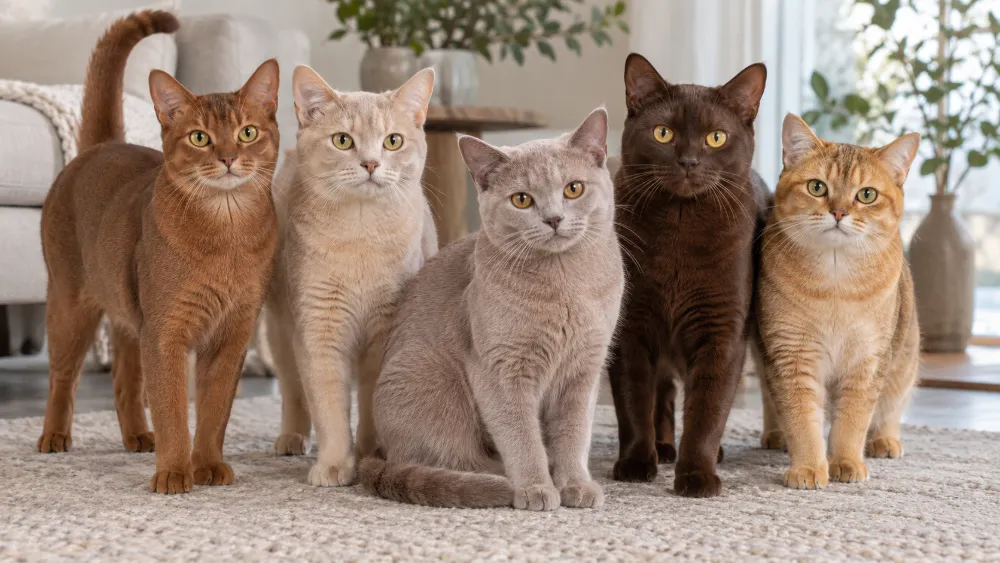
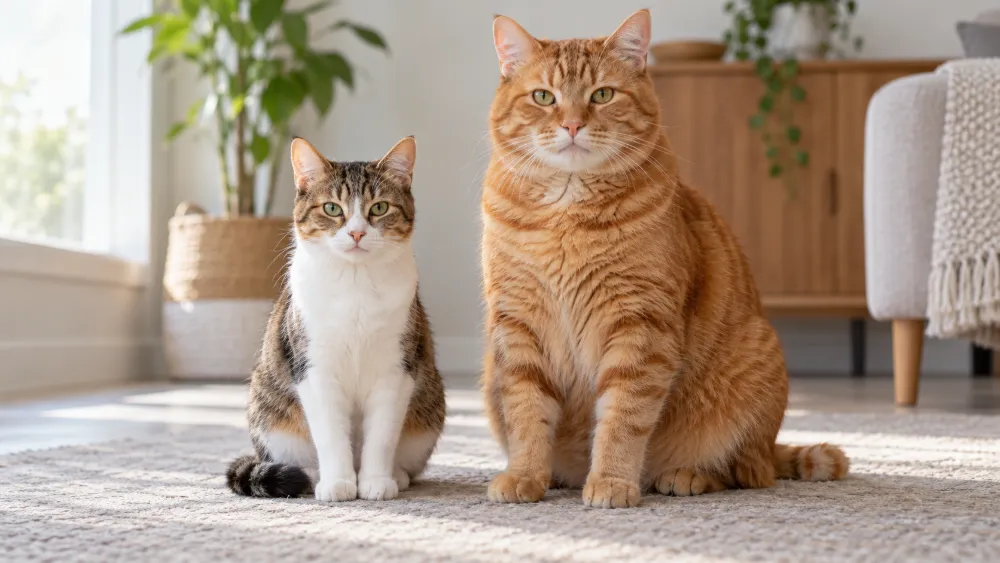
Some cat breeds seem to be everywhere. Others are so uncommon that even lifelong cat lovers may never see one in person.
But what actually makes a cat breed “rare”? There is no worldwide census that ranks every pedigreed cat breed from rarest to most common. Different registries operate in different countries, and a breed that is difficult to find in the United States may be better established somewhere else.
One useful benchmark comes from the Cat Fanciers’ Association (CFA). In 2025, CFA identified the American Bobtail, American Wirehair, LaPerm, Khao Manee and Turkish Van among its least frequently registered breeds. Other established breeds, including the Kurilian Bobtail, Singapura and Korat, also have relatively small breeding populations or limited availability in parts of the world.
Here are eight rare cat breeds worth knowing—and what makes each one unusual.
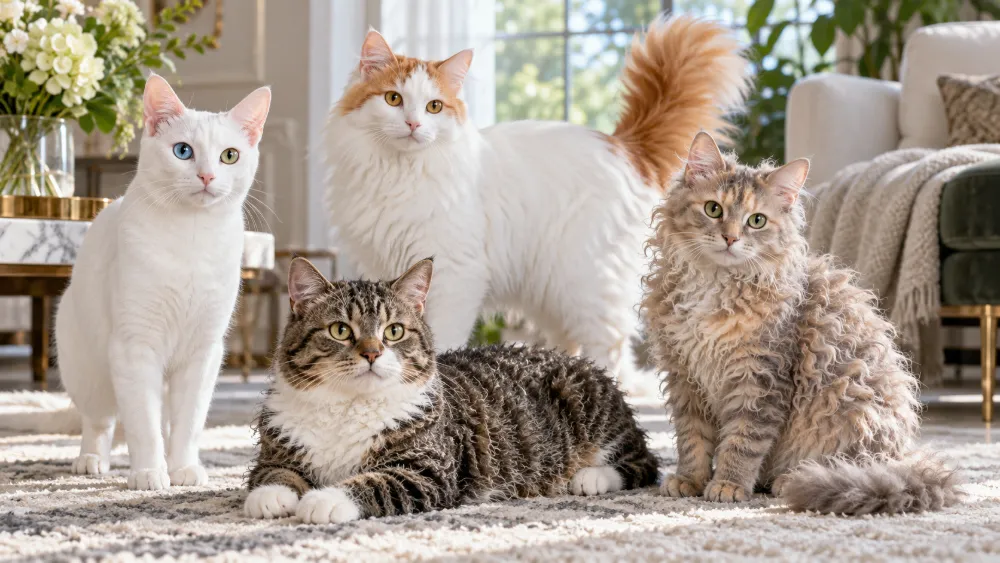
Rare Cat Breeds at a Glance
| Breed | Origin | Best-Known Trait | Why It Is Uncommon |
|---|---|---|---|
| Khao Manee | Thailand | Pure white coat and vivid eyes | Small breeding population outside Thailand |
| American Wirehair | United States | Crimped, springy coat | Very limited breeder population |
| Turkish Van | Turkey | Van-patterned coat and athletic build | Limited breeding population |
| LaPerm | United States | Naturally curly coat | Unusual mutation maintained by a relatively small breed community |
| American Bobtail | United States | Naturally shortened tail | Relatively few breeders and registrations |
| Kurilian Bobtail | Kuril and surrounding islands | Pom-pom-like tail | Much less common outside parts of Europe and Russia |
| Singapura | Singapore | Very small size and ticked coat | Small foundation and breeding population |
| Korat | Thailand | Silver-blue coat and green eyes | Relatively small number of breeders |
1. Khao Manee
The Khao Manee is one of Thailand’s historic native cat breeds. Its name means “White Gem,” an appropriate description for a cat known for a brilliant white short coat and luminous eyes.
The eyes may be blue, yellow, green or another accepted shade. Some Khao Manees are odd-eyed, meaning the two eyes are different colors. Odd eyes are striking, but they are not required for every cat of the breed.
The breed is old in Thailand but comparatively new to Western cat registries. TICA records that the first Khao Manee was imported to the United States in 1999, while CFA accepted the breed for registration much later, in 2018.
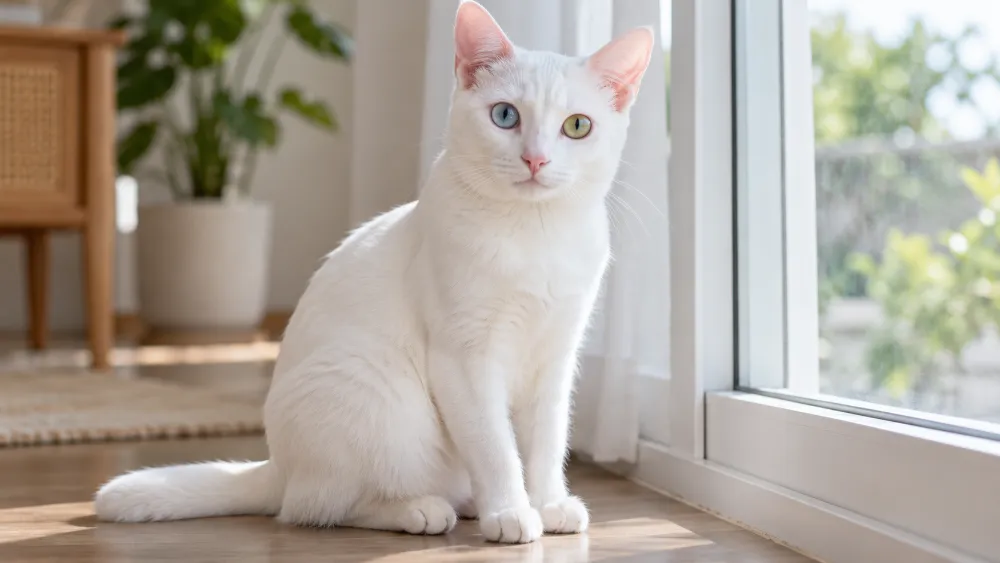
Khao Manees are generally described as curious, social and intelligent. Their rarity comes less from an exotic appearance than from the relatively small breeding population outside their homeland.
They also appear in discussions of unusual and expensive cat breeds, although rarity and price are not the same thing. A high asking price does not automatically prove that a cat is genetically rare or responsibly bred.
2. American Wirehair
The American Wirehair began with a spontaneous coat mutation discovered in a litter of farm cats in New York State in 1966.
Its defining feature is its unusual coat. Individual hairs may be crimped, bent or hooked, giving the fur a springy, coarse texture. Even the whiskers can appear curled or crimped.
Despite the unusual coat, the American Wirehair has the sturdy proportions of a conventional domestic cat rather than an extreme body shape. CFA describes the breed as easygoing and notes that it remains relatively rare.
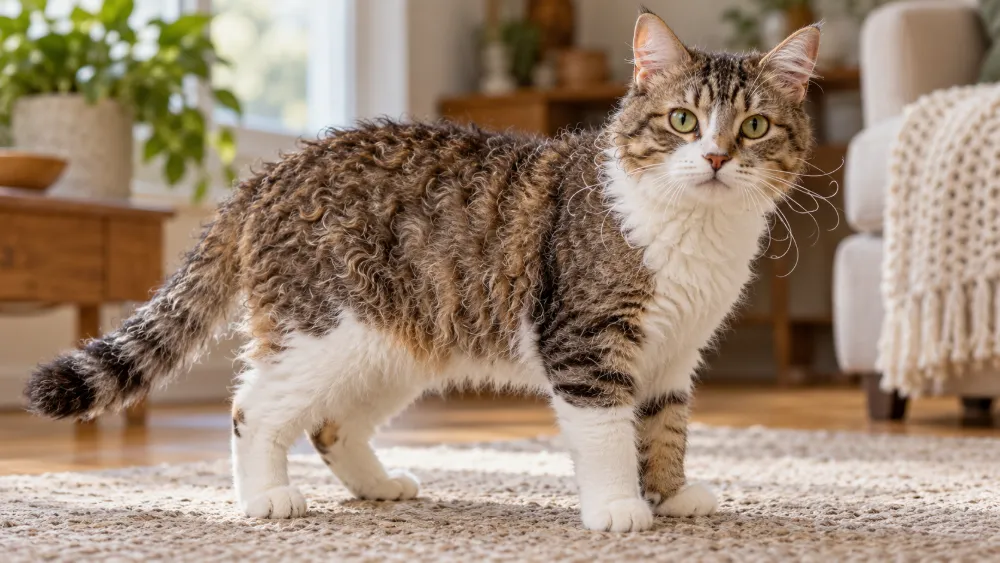
This is also a useful reminder that unusual-looking cats are not necessarily separate species—or even the result of deliberately creating an extreme body type. A single naturally occurring mutation can sometimes become the foundation of a recognized breed.
If distinctive appearances interest you, see our guide to unusual-looking cat breeds for several other examples of coat, ear and body traits.
3. Turkish Van
The Turkish Van is a large, athletic natural breed associated with the region around Lake Van in eastern Turkey.
Its traditional appearance is easy to recognize: the body is mostly white, while color is concentrated mainly on the head and tail. This distribution became so closely associated with the breed that similar markings in other cats are often called a “van pattern.”
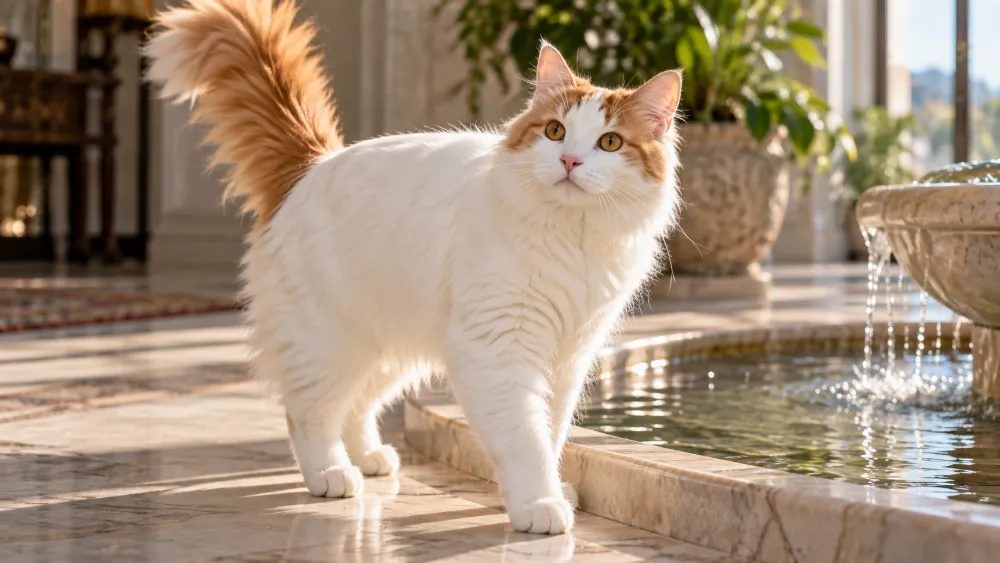
Turkish Vans are active, powerful cats that mature slowly. They are also famous for their association with water, which has led to the popular nickname “swimming cat.” Individual cats vary, however, so owning a Turkish Van does not guarantee that it will want to jump into a pool.
CFA includes the Turkish Van among its least frequently registered breeds, and TICA also describes it as rare even in its native homeland.
4. LaPerm
The LaPerm is another breed created from a naturally occurring coat mutation.
The story began in Oregon in 1982, when a kitten named Curly was born almost hairless. She later developed a soft curly coat and subsequently produced curly-coated kittens of her own.
Modern LaPerms may be longhaired or shorthaired. Their coats range from loose waves to ringlets, and the whiskers may also curl.
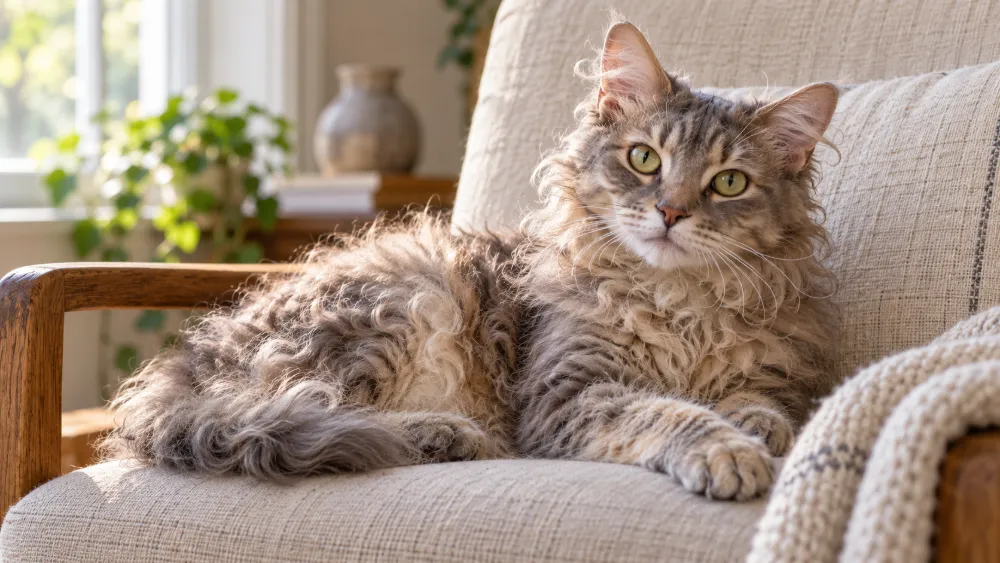
Although the coat attracts most of the attention, LaPerms are generally known as people-oriented and affectionate cats. CFA lists the LaPerm among its less frequently registered breeds.
5. American Bobtail
The American Bobtail is a muscular domestic breed with a naturally shortened tail. The length and shape of the tail can vary considerably from cat to cat.
Its wild-looking face and body sometimes lead people to assume that the breed has recent wild-cat ancestry. CFA is explicit that the American Bobtail is a domestic cat breed.
The breed was developed after breeders became interested in naturally bobtailed cats in North America during the late 1960s. Today, both longhaired and shorthaired American Bobtails are recognized.
CFA describes the breed as relatively rare and notes that prospective owners may need to wait or travel to find an established breeder.
6. Kurilian Bobtail
The Kurilian Bobtail is another naturally short-tailed cat, but it is distinct from the American Bobtail.
Its history is associated with the Kuril Islands, Sakhalin and nearby parts of the Russian Far East. The breed’s most recognizable feature is a short, fluffy tail that can resemble a pom-pom.
No two tails are exactly alike. TICA notes that the vertebrae may form different combinations of curves, kinks and spirals, producing an individual tail shape for each cat.
The Kurilian Bobtail is better known in some parts of Europe and Russia than it is in North America. TICA has historically described the breed as particularly uncommon in the United States.
7. Singapura
The Singapura is famous for being one of the smallest established pedigreed cat breeds.
Adults have a compact but muscular body, unusually large eyes and ears, and a warm sepia-toned ticked coat. TICA lists adult females at roughly 4–6 pounds and males at about 6–8 pounds.
Despite their small size, Singapuras are not usually described as delicate or inactive. They tend to be curious, playful and highly interested in whatever their people are doing.
TICA describes the Singapura as still rare, with breeders working to maintain and broaden its breeding population.
8. Korat
The Korat is another ancient breed from Thailand, but it looks very different from the white Khao Manee.
A Korat has a short silver-tipped blue coat, a muscular medium-sized body and large green eyes. Its head is traditionally described as heart-shaped when viewed from the front.
Korats have been documented in Thai tradition for centuries and were historically associated with good fortune. The breed reached the United States in the 20th century.
CFA describes the Korat as a rarer breed and notes that breeder numbers remain relatively small. Unlike a gray mixed-breed cat, a pedigreed Korat is defined by ancestry and a breed standard, not simply by having blue-gray fur.
What Does “Rare Cat Breed” Actually Mean?
There is no single global definition.
A breed can be considered rare because it has:
few annual registrations;
a small number of active breeders;
a geographically restricted breeding population;
a relatively recent introduction into a particular country;
or a small foundation gene pool that preservation breeders are trying to maintain carefully.
That is why lists claiming to rank the “10 rarest cats in the world” should be treated cautiously unless they state exactly which registry, country and year the numbers come from.
It is also important to distinguish a rare breed from a rare color or coat pattern. For example, calico and tortoiseshell describe coat patterns rather than individual breeds. Our calico vs. tortie guide explains that distinction in more detail.
Are Rare Cat Breeds the Same as Rare Wild Cats?
No.
The breeds in this article are domestic cats. They belong to the domesticated cat lineage and have been developed or preserved as pedigreed breeds.
Wild felids such as tigers, ocelots, sand cats and lynxes are separate wild species. Conservation terms such as Vulnerable or Endangered refer to wild populations and should not be confused with a domestic breed simply being uncommon.
You can see the broader distinction in our guide to the different types of felines.
Does Rare Mean Healthier or Less Healthy?
Not automatically.
Rarity by itself does not tell you whether an individual cat is healthy. What matters more is the genetic diversity of the breeding population, the conditions being selected for, responsible health screening and the quality of the breeder’s program.
Small breeding populations can create challenges because breeders have fewer unrelated animals available. Responsible preservation breeding therefore requires careful pedigree management and, where appropriate, health or genetic testing.
Anyone looking for a rare pedigreed kitten should ask about:
registration and pedigree documentation;
breed-relevant health testing;
vaccination and veterinary records;
the health and temperament of the parents;
how kittens are raised and socialized;
and what support the breeder provides after adoption.
Rarity should never be used as an excuse for poor welfare or irresponsible breeding.
FAQ
What is the rarest cat breed?
There is no scientifically verified single “rarest cat breed in the world.” Registries cover different countries and populations. In 2025, CFA identified the American Bobtail, American Wirehair, LaPerm, Khao Manee and Turkish Van among its least frequently registered breeds.
Is the Khao Manee a rare cat?
Yes. The Khao Manee is an old Thai breed but remains uncommon outside Thailand. It entered Western breeding programs relatively recently compared with breeds such as the Siamese or Persian.
What is the rarest cat color?
Breed rarity and coat-color rarity are different questions. Some colors or genetic combinations can be uncommon, but there is no single coat color that can reliably be called the rarest across every breed and every domestic cat population.
Are rare cats more expensive?
Sometimes, but not always. Limited availability can raise prices, but pedigree, breeder costs, location, demand, health testing and many other factors also affect price. Expensive does not necessarily mean rare, healthy or responsibly bred.
Can rare cat breeds make good pets?
Yes, but rarity should not be the main reason to choose one. Temperament, activity level, grooming needs, health considerations and compatibility with your household matter much more than how unusual the breed is.
Final Thoughts
Rare cat breeds are fascinating because they preserve unusual pieces of domestic-cat history—from the brilliant white Khao Manee of Thailand to the spontaneous curly coat of the LaPerm and the unique wire-textured coat of the American Wirehair.
But “rare” should be used carefully. There is no worldwide league table covering every pedigreed cat, and breed numbers can change from one registry or country to another.
The most useful way to think about rarity is therefore not “Which cat is number one?” but “How large and widely established is this breed’s documented breeding population?” That approach gives a much more accurate picture of why some breeds remain so difficult to encounter.