The Midnight Slurp: Why Constant Paw Licking Becomes a Problem
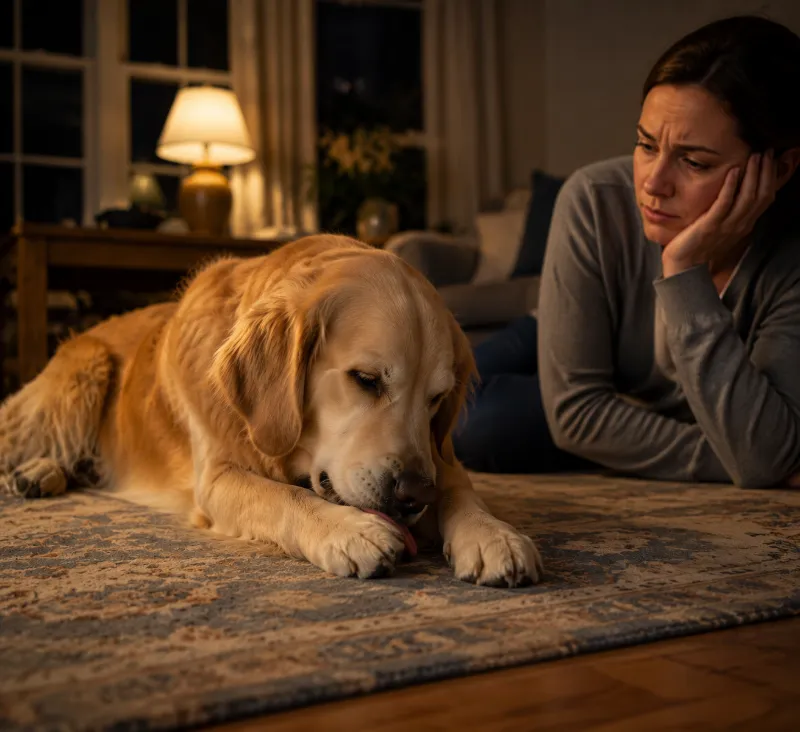
Many dog owners are familiar with the repetitive sound of a dog licking its paws after everyone has gone to bed. While occasional grooming is normal, repeated licking every night is usually a sign that something is bothering the skin or that the behavior has become habitual.
Continuous licking keeps the paws damp, damages the skin barrier, and creates an environment where bacteria and yeast can grow more easily.
Without treatment, chronic irritation may eventually contribute to:
Red, inflamed skin
Hair loss around the paws
Cracked paw pads
Secondary bacterial skin infections
Yeast overgrowth
Painful thickened skin
Lick granulomas (acral lick dermatitis)
The sooner the underlying cause is identified, the easier it is to prevent long-term skin damage.
Is Nighttime Paw Licking Normal?
A few minutes of grooming before sleep is generally considered normal. Dogs often clean dirt, dust, or small debris from their feet after walks.
However, licking becomes more concerning when it:
Occurs every night
Lasts for long periods
Interrupts sleep
Causes redness or swelling
Results in hair loss
Produces an unpleasant odor
Persistent licking should be viewed as a symptom rather than a diagnosis.
Quick Checklist: Five Common Reasons Dogs Lick Their Paws at Night
| Possible Cause | Common Clues |
|---|---|
| Environmental allergies | Seasonal itching, after outdoor walks |
| Yeast overgrowth | Musty or corn chip ("Fritos") odor |
| Food intolerance | Year-round itching, ear problems, digestive changes |
| Boredom or anxiety | Mainly occurs during quiet evenings |
| Minor irritation or debris | Grass seeds, dirt, salt, sand, small cuts |
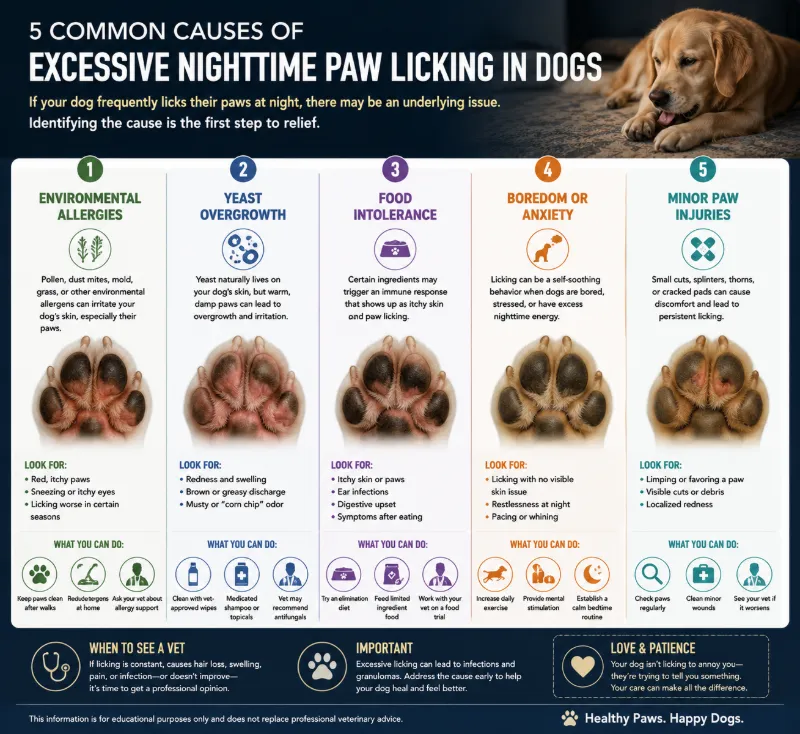
1. Environmental Allergies
Environmental allergies are one of the most common reasons dogs lick their paws repeatedly.
After walking through grass, weeds, or flowering plants, pollen and tiny plant particles may become trapped between the toes and paw pads. These allergens can irritate sensitive skin even after the dog returns indoors.
Common Environmental Allergens
Grass pollen
Tree pollen
Weed pollen
Mold spores
Dust mites
Typical Signs
Licking multiple paws
Red skin between the toes
Itching after walks
Seasonal flare-ups
Face rubbing or ear scratching
What Can Help?
Gently wiping or rinsing the paws after every walk may remove pollen and other irritants before they remain on the skin overnight.
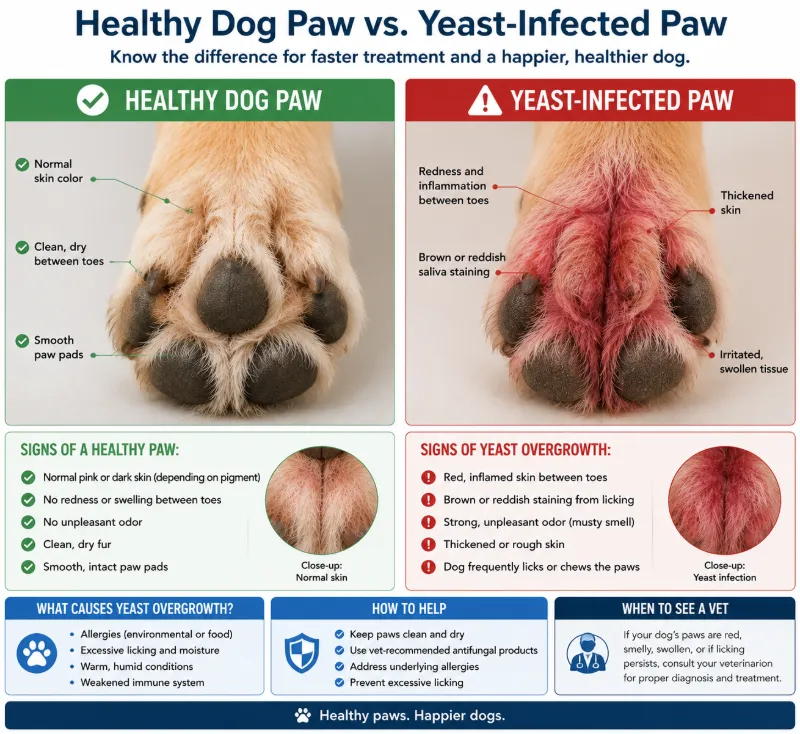
2. Yeast Infections
Yeast naturally lives on healthy canine skin, but warm, damp paws provide an ideal environment for excessive growth.
Dogs that constantly lick their feet often make the problem worse because moisture encourages additional yeast multiplication.
Common Signs of Yeast Overgrowth
Brown saliva staining
Red skin between toes
Greasy skin
Persistent licking
A distinctive odor often compared to corn chips or "Fritos"
Although this odor is commonly associated with yeast, similar smells can also occur with certain bacteria or normal skin microorganisms. A veterinarian can determine the exact cause through examination and testing.
3. Food Intolerances
Some dogs develop adverse reactions to ingredients in their diet. Unlike seasonal environmental allergies, food-related skin problems may occur throughout the year.
Possible dietary triggers include:
Beef
Chicken
Dairy products
Wheat
Soy
Other dietary proteins or ingredients
Food intolerance cannot usually be confirmed by symptoms alone. Your veterinarian may recommend an elimination diet to investigate whether food contributes to the problem.
4. Boredom or Anxiety
Not all paw licking begins with a skin disease.
Some dogs lick repeatedly because the behavior becomes self-soothing during quiet evenings when there is little else to do.
Contributing factors may include:
Insufficient exercise
Lack of mental stimulation
Separation-related stress
Changes in routine
Anxiety
If medical causes have been ruled out, increasing daytime enrichment and providing interactive toys before bedtime may help reduce repetitive licking.
5. Minor Irritation or Injury
Small problems hidden between the toes may be surprisingly uncomfortable.
Examples include:
Grass awns or seeds
Small cuts
Splinters
Road salt
Hot pavement burns
Ice-melting chemicals
Dry cracked paw pads
Carefully inspect the paws under good lighting, but avoid digging deeply into the skin if you suspect a foreign object.
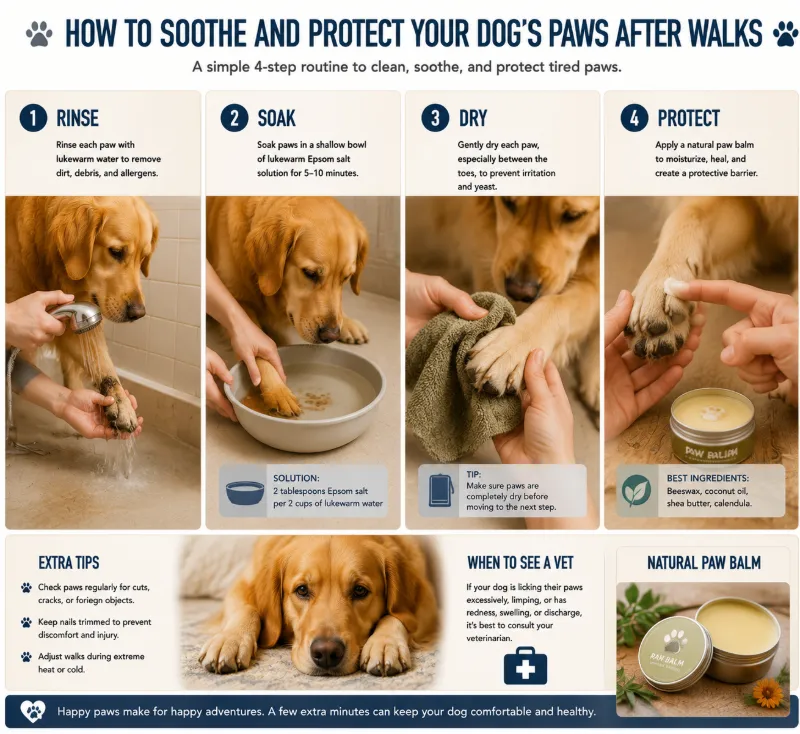
Immediate At-Home Relief
If your dog is otherwise healthy and the paws show only mild irritation, simple home care may provide temporary relief while you monitor the situation. If symptoms worsen or persist, contact your veterinarian.
Epsom Salt Paw Soak
A brief soak in lukewarm water containing Epsom salt may help clean mildly irritated paws and soothe some dogs.
General steps:
Prepare lukewarm water.
Add Epsom salt according to the product instructions.
Soak the affected paw for about five minutes.
Dry thoroughly between every toe.
Dogs should not drink the soaking solution, and open wounds should be evaluated by a veterinarian before soaking.
Diluted Apple Cider Vinegar Rinse
Some owners use diluted apple cider vinegar as a gentle paw rinse for dogs without broken skin.
Do not apply vinegar to:
Open sores
Bleeding skin
Deep cracks
Ulcers
Because vinegar may sting damaged skin, discontinue use if your dog appears uncomfortable.
Always Dry the Paws
Moisture trapped between the toes can encourage yeast and bacterial growth. Thorough drying after bathing, swimming, or soaking is an important part of paw care.
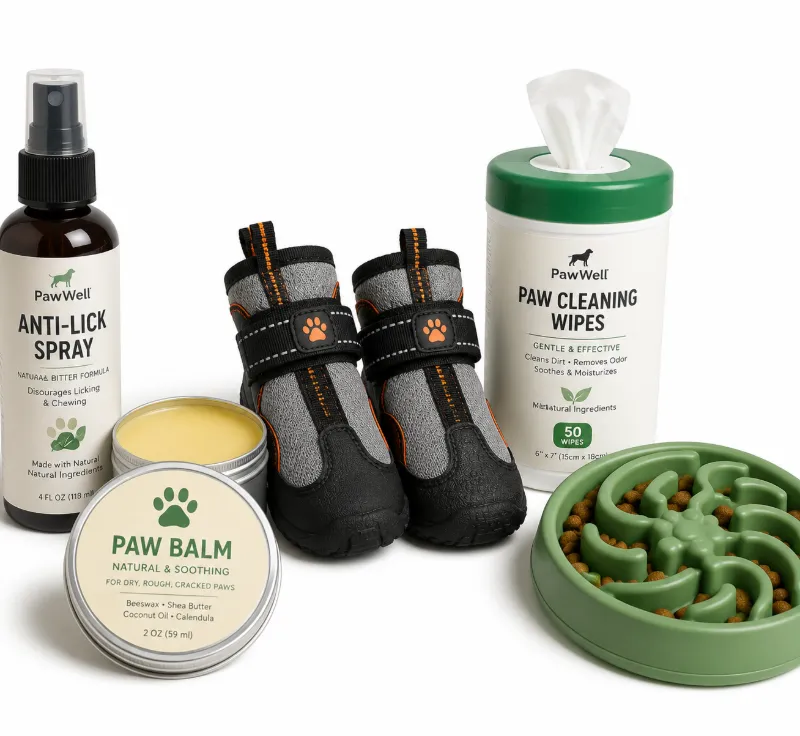
Products That May Help
Anti-Lick Sprays
Natural anti-lick sprays may discourage licking by leaving an unpleasant taste while also moisturizing irritated skin. Choose products specifically formulated for dogs and avoid applying them near the eyes or mouth unless directed by the manufacturer.
Paw Balms
Paw balms can help moisturize dry, cracked paw pads and provide a protective barrier against environmental irritation.
Look for products that contain ingredients suitable for canine skin and follow the manufacturer's usage instructions.
Protective Dog Boots
Protective boots may reduce exposure to hot pavement, snow, ice-melting chemicals, rough surfaces, and environmental allergens during walks.
Boots should fit properly without rubbing or restricting circulation.
Other Helpful Products
| Product | Potential Benefit |
|---|---|
| Slow-feeding puzzle toy | Provides mental enrichment before bedtime |
| Paw wipes | Removes pollen and dirt after walks |
| Natural paw balm | Moisturizes dry paw pads |
| Anti-lick spray | Discourages excessive licking |
| Protective dog boots | Limits environmental exposure outdoors |
When Should You See a Veterinarian?
Veterinary evaluation is recommended if:
Licking continues for several days despite home care
The paws become swollen
There is bleeding or pus
Your dog limps
The odor becomes strong or persistent
Hair loss develops
The skin becomes thickened or darkened
Your dog appears painful
Repeated infections occur
Your veterinarian may recommend skin cytology, allergy testing, parasite evaluation, or dietary trials depending on the examination findings.
Emergency Warning Signs
Seek prompt veterinary attention if your dog develops:
Severe swelling of the paw
A deeply embedded foreign object
Heavy bleeding
Sudden inability to bear weight
Rapidly spreading redness
High fever
Extreme lethargy
Signs of severe pain
Preventing Nighttime Paw Licking
Rinse or wipe paws after walks.
Keep the fur between the paw pads neatly trimmed if recommended for your dog's coat type.
Dry the paws thoroughly after getting wet.
Maintain regular parasite prevention.
Provide daily exercise and mental stimulation.
Inspect paws regularly for injuries or foreign material.
Address allergies early with veterinary guidance.
Final Thoughts
Persistent nighttime paw licking is often a sign that your dog's paws are itchy, irritated, uncomfortable, or that the behavior has become habitual. Environmental allergies, yeast overgrowth, food intolerance, boredom, and minor injuries are among the most common causes.
Simple measures such as cleaning paws after walks, using protective paw care products, and reducing excessive moisture may provide relief for mild cases. However, chronic licking should never be ignored because repeated trauma can lead to painful skin infections and lick granulomas. When symptoms persist or your dog shows signs of pain, swelling, or infection, a veterinary examination is the safest way to identify and treat the underlying cause.
FAQs
Why does my dog only lick its paws at night?
Many dogs become more aware of itching or discomfort when the household is quiet. Nighttime licking may also be related to boredom, anxiety, or allergens picked up during daytime walks.
Is it normal for dogs to lick their paws before bed?
A brief period of grooming is generally normal. Persistent licking that lasts for extended periods or causes skin damage is not considered normal and should be investigated.
Why do my dog's paws smell like corn chips?
A mild "Fritos" or corn chip smell is commonly associated with microorganisms that naturally live on canine skin. A stronger odor accompanied by redness or itching may suggest yeast or bacterial overgrowth, which should be evaluated by a veterinarian.
Can allergies make dogs lick their paws?
Yes. Environmental allergies are among the most common reasons for chronic paw licking, especially during pollen seasons.
Does apple cider vinegar help itchy dog paws?
Some owners use diluted apple cider vinegar as a paw rinse for dogs with intact skin. It should not be used on open wounds, cracked skin, or areas that appear painful.
Are paw balms safe for dogs?
Many paw balms formulated specifically for dogs are designed to moisturize and protect paw pads. Always use products intended for pets and follow the manufacturer's instructions.
What is a lick granuloma?
A lick granuloma, also called acral lick dermatitis, is a chronic skin lesion caused by repeated licking of the same area. Veterinary treatment is often required because the underlying cause must also be addressed.
When should I worry about paw licking?
Seek veterinary advice if licking persists, the paws become swollen or painful, there is discharge, your dog begins limping, or repeated skin infections develop.