Akitas and Shiba Inus are both Japanese spitz-type dogs with curled tails, upright ears, thick coats, and independent personalities, but they are very different in size and handling needs. The Akita is much larger, stronger, more protective, and more serious. The Shiba Inu is smaller, fox-like, agile, and often more manageable in smaller homes. Both are intelligent and loyal, but neither is an easy beginner dog.
Akita vs Shiba Quick Answer
The main difference between an Akita and a Shiba is size and temperament. An Akita is a large, powerful guardian-type dog that can be reserved, protective, and dominant if poorly managed. A Shiba Inu is a smaller companion-sized dog with a bold, independent, cat-like personality. Akitas need more space, stronger handling, and careful socialization. Shibas need patience, secure fencing, and training for recall, manners, and independence.
Akita vs Shiba Summary Table
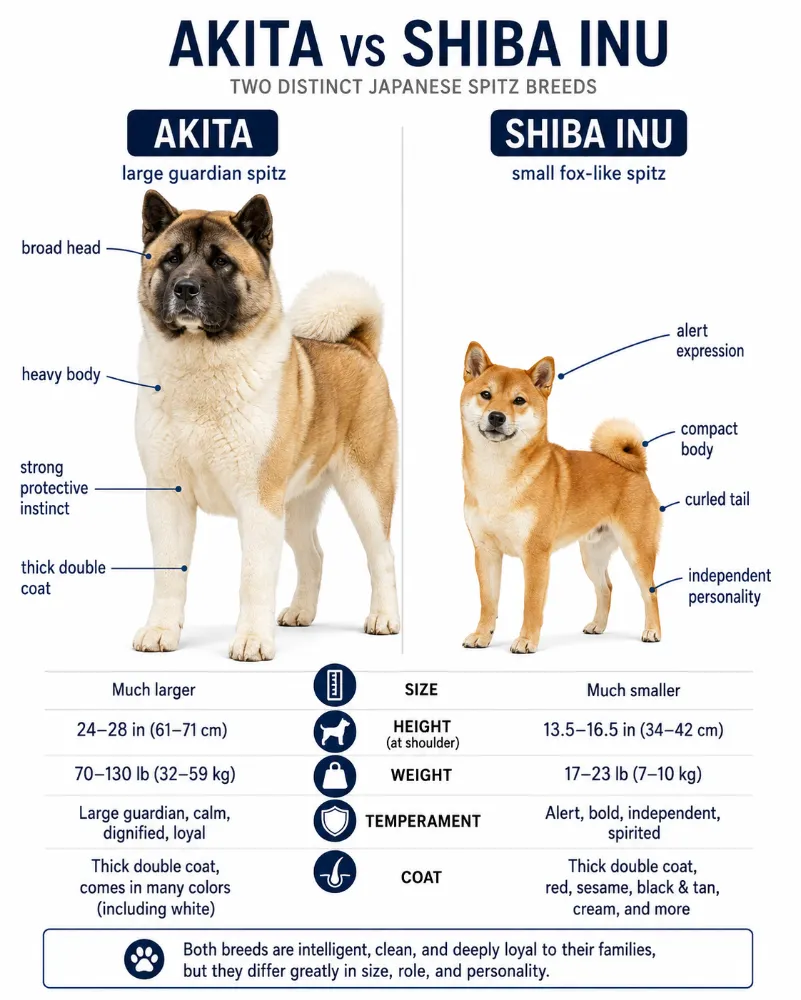
| Feature | Akita | Shiba Inu |
|---|---|---|
| Origin | Japan | Japan |
| Dog type | Large spitz-type guardian and hunting dog | Small to medium spitz-type hunting and companion dog |
| Typical size | Large and powerful | Small, compact, and agile |
| Typical height | About 24–28 inches depending on sex and type | About 13.5–16.5 inches depending on sex |
| Typical weight | Often about 70–130 lb depending on sex and type | Often about 17–23 lb |
| Body build | Heavy, muscular, substantial, strong-boned | Compact, light, agile, fox-like |
| Temperament | Loyal, serious, reserved, protective, independent | Bold, alert, clever, independent, lively, sometimes aloof |
| Guarding instinct | Strong | Moderate alert watchdog instinct |
| Trainability | Intelligent but strong-willed and powerful | Intelligent but stubborn, selective, and independent |
| Exercise needs | Moderate to high, depending on age and line | Moderate, but needs mental stimulation and secure outdoor activity |
| Best home | Experienced owners, secure property, calm structured home | Owners who want a smaller but independent dog |
| Quick clue | Large bear-like Japanese dog | Small fox-like Japanese dog |
What Is an Akita?
The Akita is a large Japanese dog breed originally associated with hunting, guarding, and companionship. It is known for its strength, dignity, thick double coat, curled tail, triangular ears, broad head, and loyal temperament. Akitas are often calm and quiet indoors when mature, but they are powerful dogs with serious instincts.
There are two major Akita types commonly discussed: the Japanese Akita Inu and the American Akita. The Japanese Akita Inu is usually more fox-like and refined, with more limited traditional colors. The American Akita is often larger, heavier, broader-headed, and may appear in a wider range of colors and markings. In everyday searches for “Akita vs Shiba,” most people are comparing the general Akita type with the Shiba Inu.
An Akita is not simply a bigger Shiba. It is a much more powerful dog with stronger guarding instincts, greater physical strength, and a more serious ownership responsibility.
What Is a Shiba Inu?
The Shiba Inu is a small Japanese spitz-type dog originally used for hunting small game and birds in mountainous terrain. It is known for its fox-like face, curled tail, upright ears, compact body, quick movement, and confident personality.
Shibas are often described as independent, clean, alert, and cat-like. They may be affectionate with their families but reserved with strangers. Many Shibas are not naturally eager to please in the way some retrievers or herding dogs are. They often prefer to make their own decisions.
The Shiba Inu is much smaller than the Akita, but it is not necessarily easier in personality. A Shiba can be stubborn, dramatic, vocal, escape-prone, and difficult off-leash. It is a small dog with a big attitude.
Quick Visual Difference
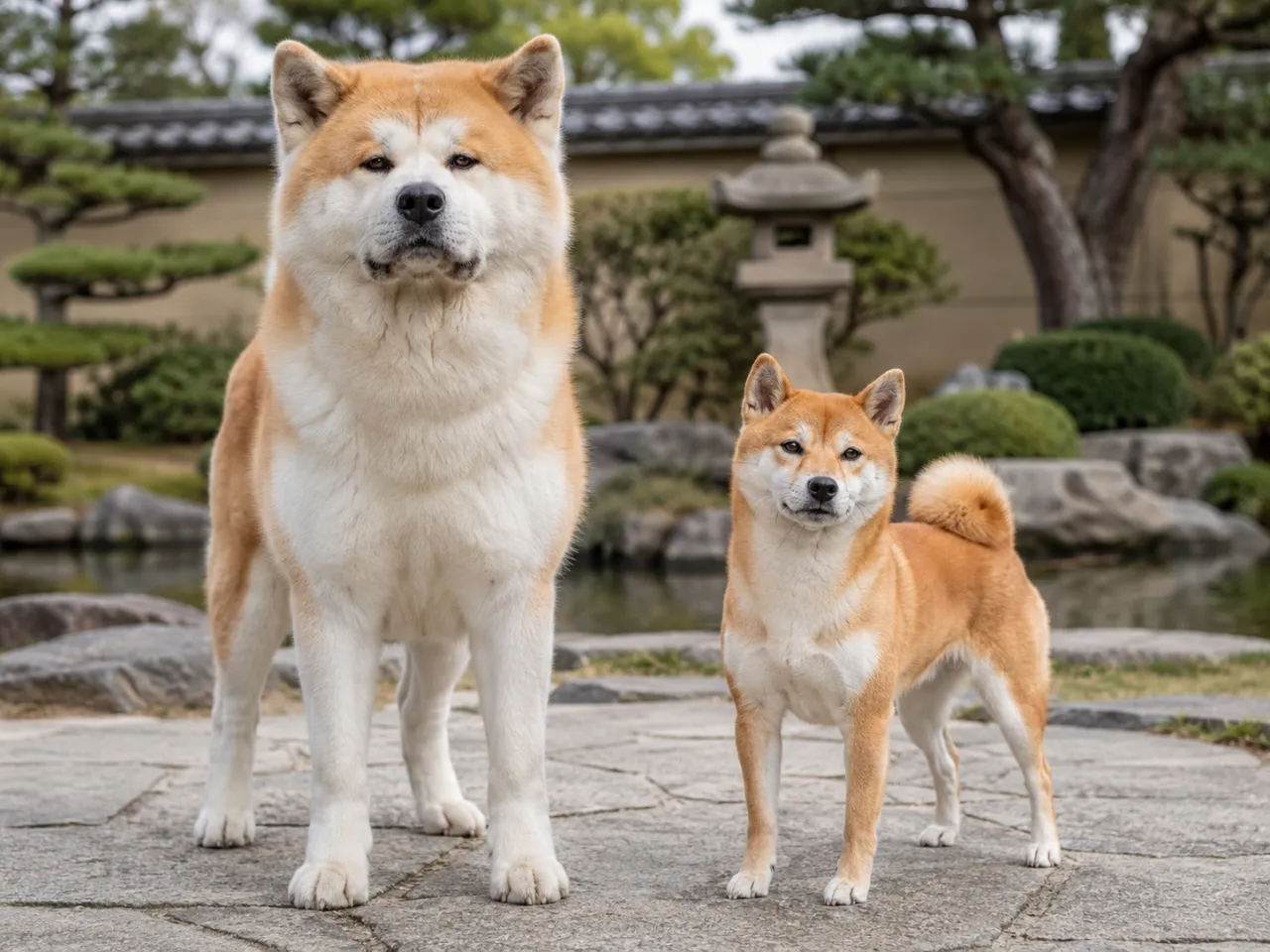
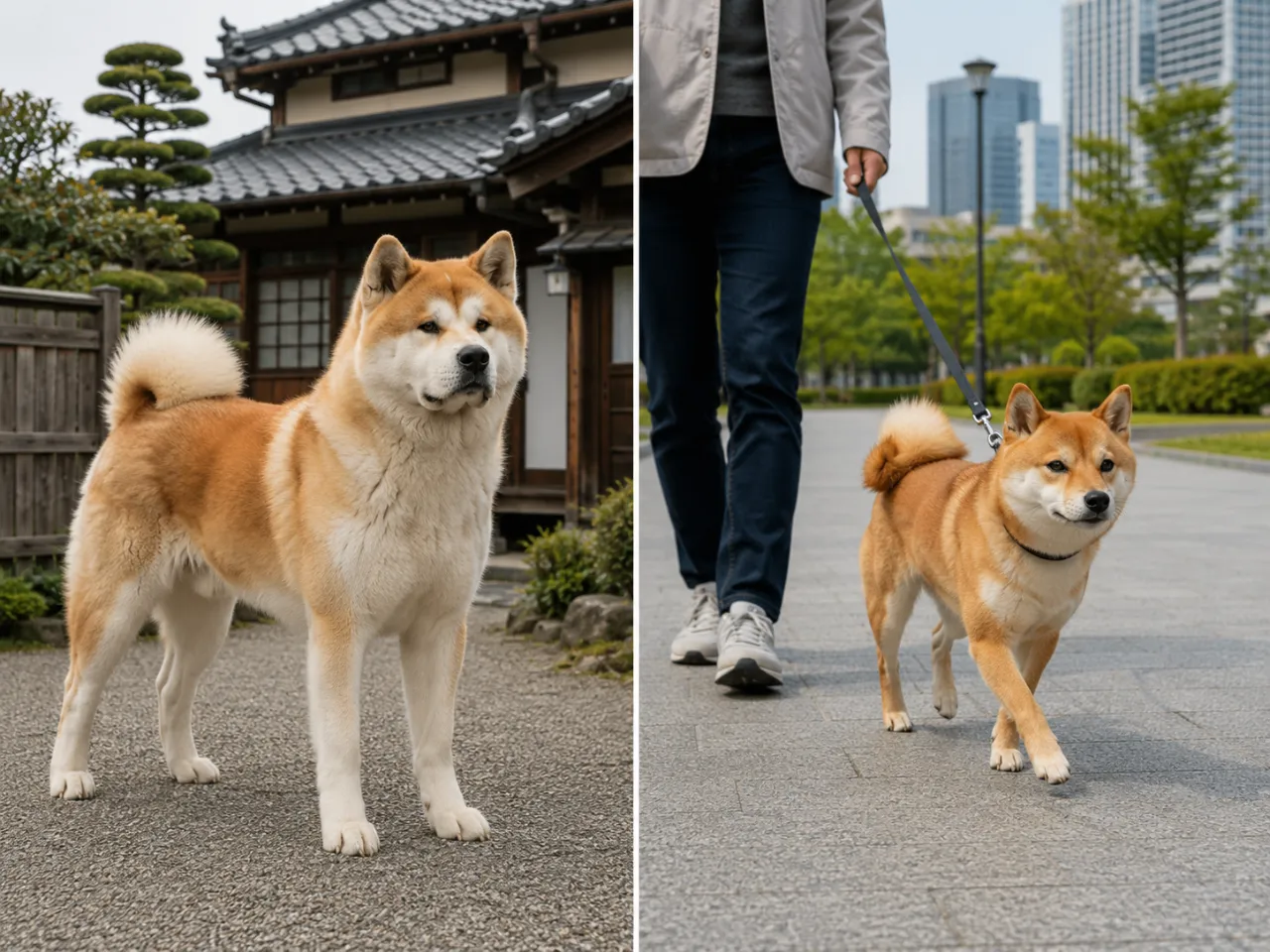
The fastest way to tell an Akita from a Shiba is size. An Akita is large, heavy, and bear-like. A Shiba Inu is much smaller, lighter, and fox-like.
Akita: large body, broad head, heavy bone, powerful chest, serious expression.
Shiba: small compact body, fox-like face, agile movement, alert expression.
Akita: looks like a large guardian spitz.
Shiba: looks like a small hunting spitz.
Size and Weight Differences
Size is the biggest physical difference. Akitas are large dogs. A mature Akita can weigh several times more than a Shiba Inu. This size difference affects everything: feeding cost, grooming effort, exercise control, housing needs, travel, vet handling, leash strength, and safety around children or other animals.
Shiba Inus are much smaller and easier to lift, transport, and house. However, their small size should not be confused with an easy personality. A Shiba may be physically manageable but mentally challenging.
If you want a large protective dog, the Akita is closer to that role. If you want a smaller independent companion, the Shiba is the more practical choice.
Body Shape and Appearance
Akitas have a large, strong, balanced body. They often have a broad head, deep chest, thick neck, strong legs, and curled tail. Their appearance gives an impression of power and dignity.
Shibas are compact and agile. They have a wedge-shaped head, pointed ears, curled tail, tight body, and light-footed movement. Their expression is alert and clever. Many people describe Shibas as fox-like because of their face shape, coat color, and quick movements.
Both breeds have spitz traits: upright ears, curled tail, dense double coat, and a confident posture.
Coat and Colors
Both Akitas and Shibas have double coats. The outer coat is straight and protective, while the undercoat is dense and insulating. This coat helps protect them from cold weather but also means heavy seasonal shedding.
Shiba Inu colors commonly include red, sesame, black and tan, and cream. Many Shibas have pale markings called urajiro on the cheeks, muzzle, chest, belly, and inner legs.
Akita colors depend partly on type and registry. Japanese Akitas are often red, white, or brindle with specific traditional markings. American Akitas may appear in a broader range of colors, including pinto, brindle, white, black mask patterns, and other combinations.
Temperament and Personality
Akitas are usually loyal, calm, serious, and protective. They often bond deeply with their family but may be reserved or suspicious around strangers. A well-raised Akita should be stable and confident, not randomly aggressive. However, their natural guarding instinct means they need careful socialization and responsible handling.
Shibas are bold, lively, independent, and alert. They often have strong opinions and may dislike being forced into things. Many Shibas are affectionate on their own terms. They may enjoy being near their owner but not always enjoy being held, hugged, or controlled.
The Akita is usually more serious and protective. The Shiba is usually more mischievous, agile, and independent.
Training Differences
Both breeds are intelligent, but neither is typically easy to train. They are independent thinkers, not automatic obedience dogs.
An Akita needs early training because it becomes large and powerful. A poorly trained Akita can be difficult or dangerous to control. Important skills include leash manners, calm greetings, recall foundations, impulse control, handling tolerance, and neutrality around strangers and dogs.
A Shiba also needs training, but the challenge is often stubbornness and selective listening. Many Shibas understand commands but choose whether the command is worth obeying. Recall can be especially unreliable because Shibas may chase wildlife, explore, or ignore their owner when distracted.
For both breeds, reward-based training, patience, consistency, and early socialization work better than harsh pressure.
Socialization Needs
Socialization is extremely important for both breeds. Akitas must learn to remain calm around strangers, visitors, other dogs, veterinarians, groomers, and unfamiliar environments. Without socialization, their protective instincts may become difficult to manage.
Shibas also need socialization, but for a different reason. They can become suspicious, reactive, or overly independent if not exposed carefully to the world. They should learn that handling, grooming, car rides, noises, strangers, and other dogs are normal parts of life.
Socialization does not mean forcing the dog to love everyone. It means teaching calm, confident, controlled behavior in many situations.
Exercise and Energy Level
Akitas need regular exercise, but many mature Akitas are not hyperactive. They often enjoy walks, hikes, yard time, training sessions, and calm companionship. Young Akitas may be more energetic and need careful outlets for strength and curiosity.
Shibas are smaller but often quick, alert, and active. They enjoy walks, sniffing, games, training puzzles, and safe fenced outdoor time. They may not need as much physical exertion as some working breeds, but they need mental stimulation and freedom to explore safely.
Both breeds can become destructive or difficult if bored. Exercise should be paired with training and enrichment.
Prey Drive and Off-Leash Risk
Both Akitas and Shibas may have high prey drive. They may chase cats, squirrels, rabbits, birds, deer, or small pets. This is especially important because both breeds can be unreliable off-leash.
Shibas are famous for poor recall in open areas. Many owners never allow them off-leash outside a secure fence. Akitas can also chase animals and may be difficult to stop due to their size and strength.
A secure leash, fenced area, and careful management are safer than assuming either breed will always return when called.
Guarding Instinct
The Akita has a much stronger guarding instinct than the Shiba. Akitas are naturally protective and may be suspicious of strangers entering their territory. This can make them excellent watchdogs, but it also creates responsibility.
Shibas are alert and may bark at unusual sounds, but they are not usually serious guardian dogs in the same way Akitas are. They are more likely to act as small watchdogs than physical protectors.
Owners should never encourage unnecessary aggression in either breed. A stable dog should be confident and controlled, not reactive or fearful.
Family Life and Children
Akitas can be loyal family dogs, but they are best suited to homes that understand large protective breeds. Because of their size and strength, they should always be supervised around children. They may not tolerate rough handling, teasing, or chaotic play from unfamiliar children.
Shibas can also live with families, but they may not enjoy constant handling from young children. Many Shibas prefer respectful interaction and personal space. They may resist being picked up, hugged, or chased.
For both breeds, children should learn how to behave around dogs: no ear pulling, no tail grabbing, no disturbing sleeping dogs, no taking food, and no rough teasing.
Other Dogs and Pets
Akitas can be dog-selective or same-sex aggressive, especially as adults. Some Akitas live peacefully with another dog, particularly when raised carefully, but they are not usually ideal dog-park dogs.
Shibas can also be selective with other dogs. They may be bold, bossy, or easily offended by rude dogs. Some Shibas do well with calm canine companions, while others prefer being the only dog.
Small pets require caution with both breeds. Cats, rabbits, birds, and rodents may trigger prey drive unless the dog has been carefully raised and managed around them.
Apartment Living
A Shiba Inu is usually more practical for apartment living because of its smaller size. However, Shibas still need daily walks, enrichment, and training. They may also scream, bark, or become destructive if frustrated.
An Akita can live in a smaller home only if the owner provides enough exercise, structure, and management, but apartments are often challenging because of size, guarding behavior, landlord restrictions, and interactions with neighbors or other dogs.
For urban living, the Shiba is usually easier. For rural or spacious homes, an Akita may fit better if the owner is experienced.
Grooming and Shedding
Both breeds shed heavily. Their double coats “blow” seasonally, releasing large amounts of undercoat. During shedding season, brushing may be needed several times per week or even daily.
Akitas shed more volume simply because they are much larger. Grooming an Akita takes more time, more space, and more cleaning. Shibas are smaller, so the amount of loose hair is less, but they still shed heavily for their size.
Basic care includes brushing, nail trimming, dental care, ear checks, and regular veterinary visits. Neither breed should be shaved, because the double coat helps regulate temperature and protect the skin.
Health Considerations
Akitas may be prone to health concerns such as hip dysplasia, autoimmune disorders, thyroid disease, eye problems, skin issues, and bloat risk. Responsible breeding, proper diet, weight control, and veterinary care are important.
Shibas may be prone to allergies, patellar luxation, hip issues, eye problems, and dental concerns. Many Shibas are long-lived, but they still need preventive care and healthy weight management.
For both breeds, choose responsible breeders or reputable rescues, ask about health testing, and avoid choosing a dog only based on appearance.
Lifespan
Shibas usually live longer than Akitas, mainly because they are smaller dogs. Many Shiba Inus live into their teens with good care.
Akitas are large dogs and generally have shorter average lifespans than Shibas. Good breeding, lean body condition, exercise, and early veterinary care can help improve quality of life.
Size is one of the major reasons small breeds often live longer than large breeds.
Feeding and Cost
Akitas cost more to feed because they are much larger. They also require larger beds, stronger crates, larger collars and leashes, higher medication doses, and potentially more expensive veterinary care.
Shibas are less expensive in daily feeding and supplies, but they are not “cheap” dogs. They still require high-quality food, veterinary care, grooming tools, enrichment, training, and secure fencing or leashes.
In general, the Akita is the more expensive breed to own because of size.
Noise and Vocal Behavior
Shibas are famous for the “Shiba scream,” a dramatic high-pitched vocalization that may happen when they are excited, frightened, annoyed, restrained, or handled in a way they dislike. Not every Shiba screams often, but the behavior is well known.
Akitas are often quieter and may bark less casually, but when they do vocalize, their bark is deep and serious. Many Akitas are naturally watchful and may bark when they detect something unusual.
Both breeds can be vocal, but the Shiba is often more dramatic, while the Akita is often more imposing.
Akita Inu vs American Akita vs Shiba Inu
The term “Akita” can refer to the Japanese Akita Inu or the American Akita. This can make comparisons confusing.
| Dog | General Look | Quick Note |
|---|---|---|
| Japanese Akita Inu | Large, elegant, fox-like, often red, white, or brindle | More refined Japanese type |
| American Akita | Larger, heavier, broader head, many colors possible | More massive guardian-type appearance |
| Shiba Inu | Small, compact, fox-like, curled tail | Much smaller and more companion-sized |
Compared with both Akita types, the Shiba is dramatically smaller, lighter, and easier to house in urban settings.
Common Misidentifications
One common mistake is thinking the Shiba is a miniature Akita. Although they share Japanese spitz traits, they are separate breeds with different histories, sizes, and temperaments.
Another mistake is assuming the Akita is just a larger companion dog. Akitas are powerful guardians and require experienced handling.
A third mistake is thinking Shibas are easy because they are small. Shibas can be stubborn, independent, escape-prone, and difficult off-leash.
How to Identify One in a Photo
When looking at a photo, use several clues together:
Check size: a large, heavy dog is likely an Akita; a small fox-like dog is likely a Shiba.
Check head shape: Akitas have broader, heavier heads; Shibas have smaller wedge-shaped heads.
Check body build: Akitas are powerful and substantial; Shibas are compact and agile.
Check expression: Akitas often look serious and calm; Shibas often look alert and mischievous.
Check setting: a dog that looks small enough to pick up easily is almost certainly not an Akita.
Check coat and tail: both have double coats and curled tails, so these traits alone are not enough.
Which Breed Is Easier to Train?
Neither breed is famous for easy obedience. Shibas are smaller and easier to physically manage, but they can be very stubborn. Akitas may be calmer and more serious, but their size means training mistakes matter more.
For most owners, the Shiba is easier to manage physically, while the Akita requires more experience because of strength, guarding instinct, and dog-selective tendencies.
The best training approach for both is consistent, reward-based, structured, and patient.
Which Breed Is Better for First-Time Owners?
The Shiba Inu is usually more realistic for a first-time owner than the Akita, but it is still not an easy beginner breed. A first-time Shiba owner must be prepared for independence, poor recall, shedding, vocal drama, and stubborn behavior.
The Akita is generally not recommended for most first-time dog owners. Its size, strength, protective nature, and possible dog-selective behavior require confident, experienced handling.
A dedicated beginner can succeed with either breed only with research, training support, and realistic expectations. However, for most beginners, easier companion breeds may be better choices.
Which Breed Is More Affectionate?
Both breeds can be affectionate, but they express it differently. Akitas often show deep loyalty and quiet devotion. They may be calm, watchful, and close to their family without constantly demanding attention.
Shibas can be affectionate, but often on their own terms. Some love cuddling; others prefer sitting nearby rather than being held. A Shiba may choose when and how it wants contact.
If you want a dog that constantly seeks physical affection, neither breed is guaranteed to fit. Both are loyal, but independent.
Which Breed Is More Protective?
The Akita is much more protective. Akitas were historically valued as strong, loyal, serious dogs and often have natural guardian instincts. They may be reserved with strangers and alert to threats.
Shibas are alert watchdogs but not serious protection dogs. They may bark at strangers or unusual sounds, but their small size limits their physical guarding ability.
If protection instinct is the question, the Akita clearly has the stronger guarding role.
Which Breed Should You Choose?
Choose an Akita if you are an experienced dog owner who wants a large, loyal, calm, protective dog and can provide structure, socialization, secure handling, and responsible management. An Akita is best for owners who respect powerful guardian breeds.
Choose a Shiba Inu if you want a smaller, cleaner, fox-like companion with independence, personality, and spitz charm. A Shiba is best for owners who can handle stubbornness, secure leashes, training challenges, and a dog that may not always obey like a typical companion breed.
Do not choose either breed only because of appearance. Both are beautiful, but their personalities require commitment.
Final Comparison
The Akita and Shiba Inu share Japanese heritage, curled tails, upright ears, thick coats, and independent personalities, but they are very different dogs. The Akita is large, powerful, protective, and serious. The Shiba is small, agile, fox-like, clever, and often stubborn.
If you want a large guardian and have experience with strong dogs, the Akita may be a good fit. If you want a smaller but still independent Japanese spitz companion, the Shiba may be more practical. Both need training, socialization, grooming, exercise, and owners who understand that beauty does not equal simplicity.
Related Dog Comparisons
Shiba Inu vs Husky
Akita vs Husky
Akita vs German Shepherd
Shiba Inu vs Corgi
Japanese Akita vs American Akita
Shiba Inu vs Finnish Spitz
FAQs About Akita vs Shiba
Is a Shiba Inu a small Akita?
No. The Shiba Inu is not a miniature Akita. They are separate Japanese breeds with different histories, sizes, temperaments, and ownership needs.
What is the main difference between an Akita and a Shiba?
The main difference is size and temperament. Akitas are large, powerful, and protective. Shibas are much smaller, fox-like, agile, and independent.
Which is bigger, Akita or Shiba?
The Akita is much bigger. An adult Akita can weigh several times more than a Shiba Inu and is far stronger physically.
Which is better for apartments?
The Shiba Inu is usually better for apartments because it is smaller. However, it still needs exercise, training, enrichment, and secure leash control.
Are Akitas good family dogs?
Akitas can be loyal family dogs in experienced homes. They need socialization, training, supervision around children, and responsible management because they are large and protective.
Are Shibas good family dogs?
Shibas can be good family dogs for respectful households, but they may not enjoy rough handling or constant cuddling. They do best with owners who understand their independent nature.
Which breed is easier to train?
Neither is especially easy. Shibas are smaller but stubborn. Akitas may be calmer but are stronger and more serious. Both need patient, consistent, reward-based training.
Do Akitas and Shibas shed a lot?
Yes. Both have thick double coats and shed heavily, especially during seasonal coat blowing. Akitas shed more total hair because they are much larger.
Can Akitas and Shibas live with cats?
Some can live with cats if raised carefully, but both breeds may have prey drive. Supervision, early introductions, and management are important.
Which breed is better for first-time owners?
The Shiba is usually more realistic for first-time owners because it is smaller, but it is still challenging. The Akita is generally better for experienced owners due to size, strength, and guarding instincts.