What is the strongest dog breed in the world?
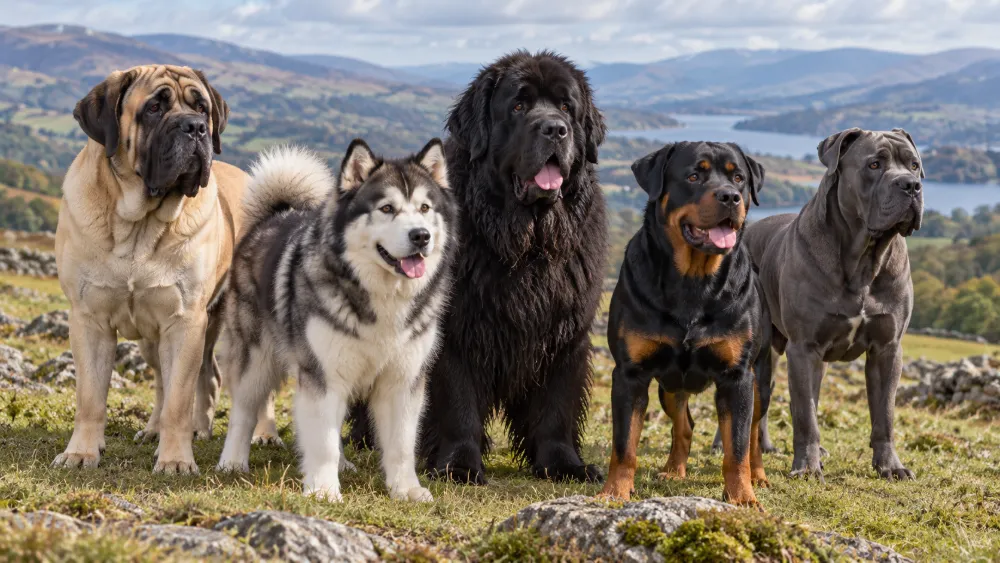
There is no single scientific answer, because strength can mean several different things. A massive Mastiff may have greater raw body power, an Alaskan Malamute was developed to haul heavy freight for long distances, and a Newfoundland combines size, muscle and swimming ability for water rescue.
So instead of relying on questionable internet “bite-force rankings,” this guide looks at 10 breeds with well-documented physical power, working history, size and strength.
This is not a laboratory ranking from strongest to weakest. Each breed represents a different type of canine strength.
What Makes a Dog Breed “Strong”?
There is more than one way to measure canine strength.
Useful factors include:
body mass — how much muscular body weight the dog carries;
pulling strength — ability to move carts, sleds or heavy loads;
endurance — ability to work for long periods;
structural power — heavy bone, broad chest and muscular build;
guardian ability — physical capacity to protect livestock or property;
swimming power — strength in water;
and athletic strength — combining power with agility and speed.
That means the “strongest dog” changes depending on the job.
10 Strongest Dog Breeds at a Glance
| Breed | Typical Strength | Approximate Adult Weight |
|---|---|---|
| Mastiff | Extreme mass and raw body strength | 120–230 lb |
| Boerboel | Muscular guardian power | About 150–200 lb |
| Saint Bernard | Giant body strength and mountain working heritage | 120–180 lb |
| Newfoundland | Water rescue and draft strength | 100–150 lb |
| Anatolian Shepherd Dog | Livestock guardian power and endurance | 80–150 lb |
| Leonberger | Giant working and draft strength | 90–170 lb |
| Rottweiler | Compact muscular working strength | 80–135 lb |
| Great Pyrenees | Mountain guardian strength | 85 lb and up |
| Cane Corso | Muscular athletic guardian power | Often over 100 lb |
| Alaskan Malamute | Heavy freight pulling | About 75–85 lb |
1. Mastiff
If strength means sheer size and mass, the Mastiff is one of the most obvious candidates.
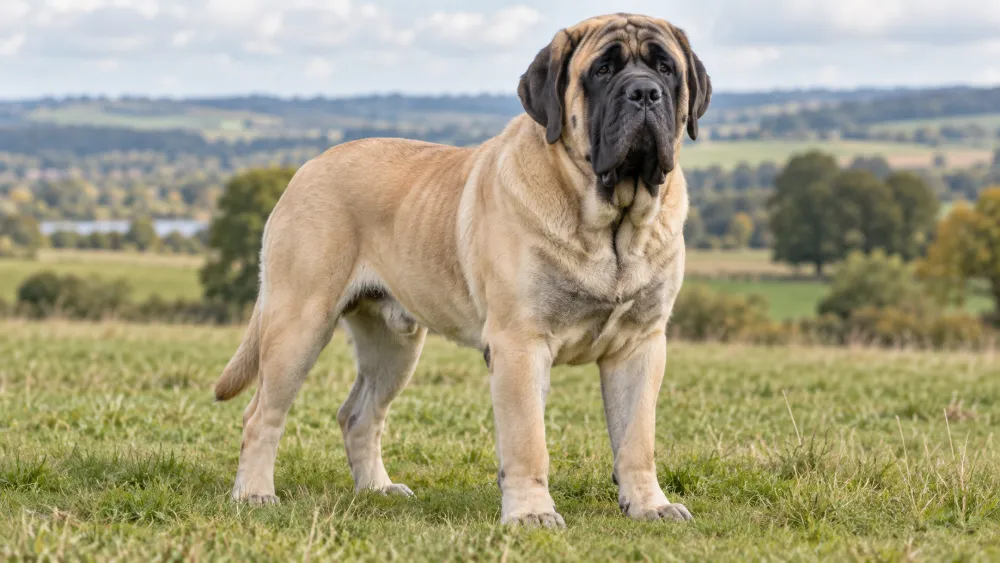
The American Kennel Club lists male Mastiffs at approximately 160 to 230 pounds, while females generally weigh 120 to 170 pounds.
That places the breed among the heaviest domestic dogs.
The Mastiff combines:
extreme body mass;
heavy bone;
a broad chest;
large shoulders;
and substantial muscular power.
Unlike more athletic working breeds, its strength is primarily about raw physical mass and structural power.
2. Boerboel
The Boerboel is a South African mastiff-type farm guardian.
AKC weight guidance places the breed at roughly 150 to 200 pounds, yet Boerboels are expected to remain athletic rather than simply massive.
They were developed to protect remote South African farms and homesteads.
The breed combines:
large body size;
heavy musculature;
powerful movement;
and more agility than many giant mastiff breeds.
This combination makes the Boerboel a particularly good example of power plus mobility.
3. Saint Bernard
Saint Bernards are giant working dogs historically associated with the Swiss Alps.
Male Saint Bernards generally weigh around 140 to 180 pounds, while females commonly weigh 120 to 140 pounds.
Their enormous frame, heavy bone and muscular body make them naturally powerful.
The breed became famous through the dogs kept around the Great St. Bernard Pass, where generations of dogs were associated with mountain rescue work.
Modern Saint Bernards are usually companions rather than rescue dogs, but their giant working-dog structure remains obvious.
4. Newfoundland
Newfoundlands show a very different type of strength.
A male Newfoundland commonly weighs 130 to 150 pounds. The breed was developed around demanding work performed by fishermen in Newfoundland.
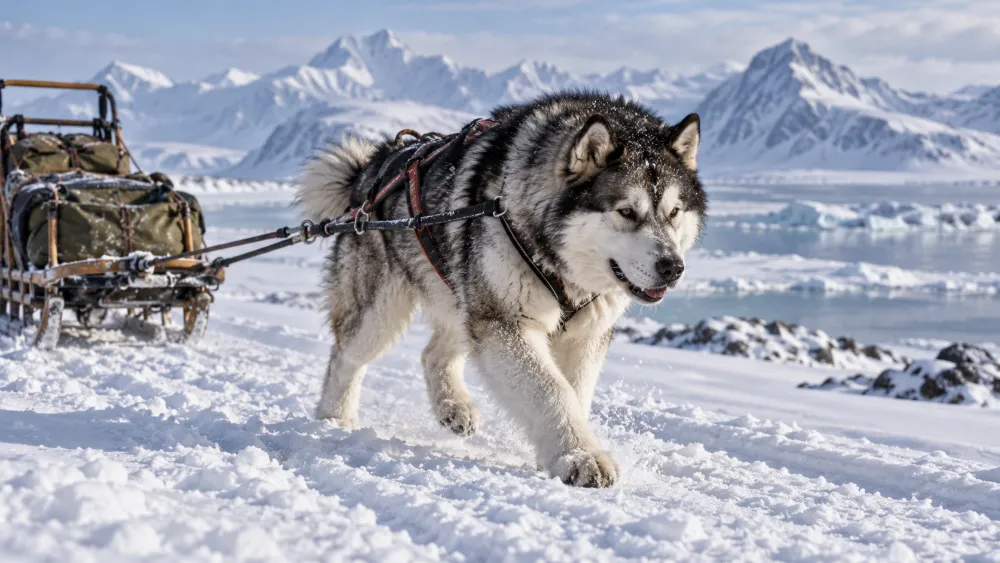
Historically, Newfoundlands helped:
pull fishing nets;
haul carts;
carry burdens;
and rescue people from water.
Their broad body, strong limbs, powerful swimming motion and large lung capacity make them outstanding water workers.
Newfoundland strength is therefore not just about standing on land and looking massive. It is functional pulling and swimming power.
5. Anatolian Shepherd Dog
The Anatolian Shepherd Dog was developed as a livestock guardian under demanding conditions.
Adult males generally weigh approximately 110 to 150 pounds.
The AKC breed standard describes the Anatolian as large, rugged and powerful while also possessing endurance and agility.
That combination matters.
A livestock guardian may need to:
patrol large areas;
stay outside for long periods;
respond quickly to threats;
and physically deter predators.
So the Anatolian represents guardian strength combined with stamina, rather than simply maximum body weight.
6. Leonberger
The Leonberger is a giant German breed, with males ranging roughly from 110 to 170 pounds.
Although originally developed largely as an impressive companion, the breed also became capable of substantial working tasks.
Modern Leonbergers participate in activities including:
draft work;
cart pulling;
water work;
and other working-dog sports.
The AKC describes the Leonberger as both huge and powerful, and notes that an adult can be stronger than—and sometimes outweigh—its owner.
7. Rottweiler
Rottweilers are not as enormous as Mastiffs or Saint Bernards, but their strength is concentrated into a more compact, athletic frame.
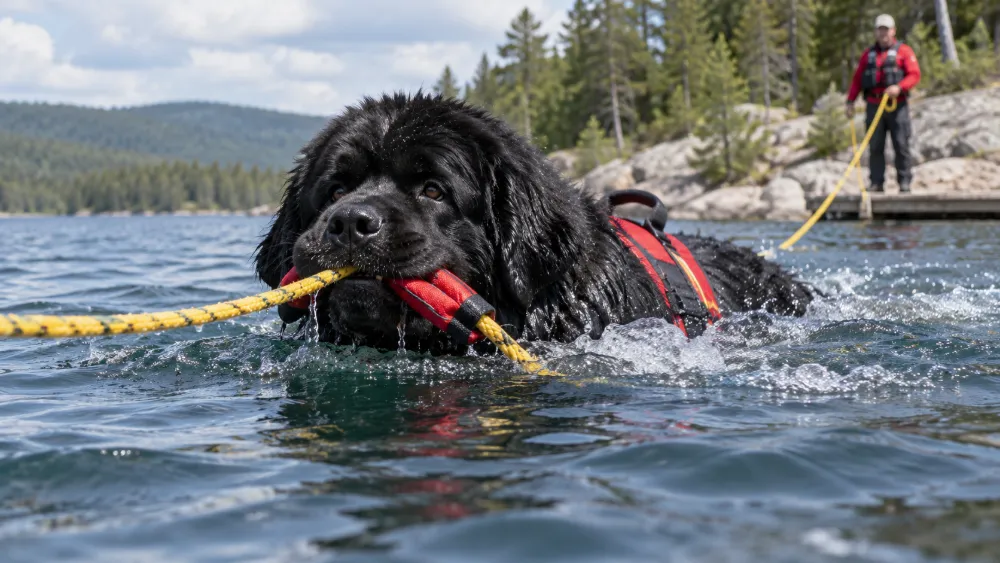
Male Rottweilers generally weigh approximately 95 to 135 pounds.
The AKC breed standard emphasizes a compact but substantial build representing:
strength;
agility;
and endurance.
Historically, ancestors of modern Rottweilers worked with livestock, and the breed later became known for guarding and other demanding working roles.
The Rottweiler is therefore a good example of dense muscular strength without giant-breed proportions.
8. Great Pyrenees
The Great Pyrenees was developed to protect livestock in the Pyrenees Mountains between France and Spain.
Adult males stand as tall as 32 inches and usually weigh at least about 100 pounds.
The AKC calls the breed immensely powerful and notes that its traditional job included protecting flocks from predators such as wolves and bears.
Mountain guardian work requires more than weight. These dogs also needed:
endurance;
balance on difficult terrain;
independence;
and enough physical power to discourage predators.
9. Cane Corso
The Cane Corso is an Italian mastiff-type working breed.
It can stand nearly 28 inches at the shoulder, and many adults weigh more than 100 pounds.
Unlike extremely heavy Mastiffs, the Cane Corso combines muscular mass with a distinctly athletic structure.
The breed's historical roles included guarding property and performing farm work.
Its name is often translated approximately as “bodyguard dog,” which reflects its long association with protection.
For this breed, strength comes from the combination of:
muscular development;
large body size;
athletic movement;
and working drive.
10. Alaskan Malamute
The Alaskan Malamute is much lighter than a Mastiff, yet it belongs on any serious list of strong dogs because it was specifically developed for heavy hauling.
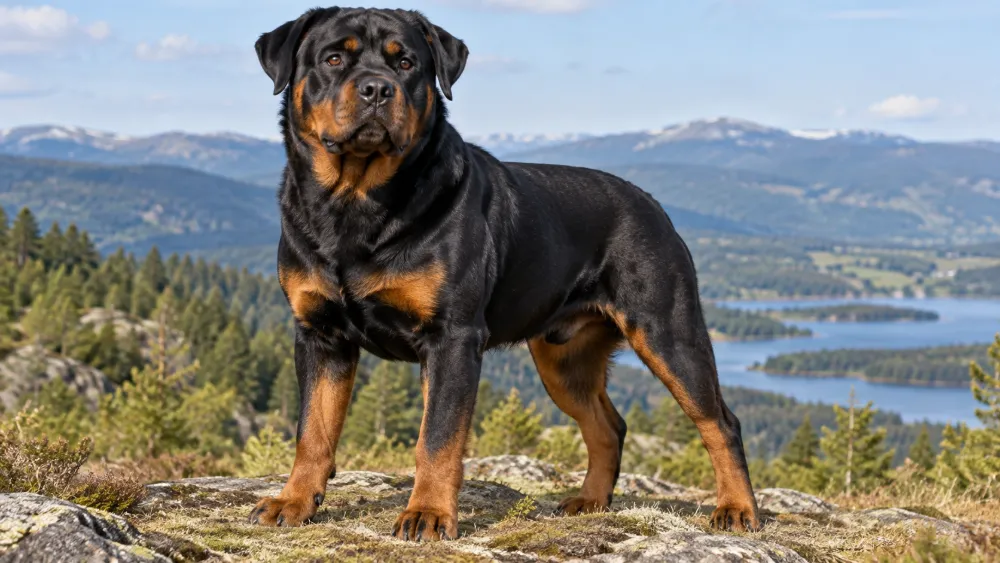
Typical adult Malamutes weigh around 75 to 85 pounds.
They have:
heavy bone;
a deep chest;
powerful shoulders;
strong hindquarters;
and tremendous endurance in cold climates.
The key distinction is between a Malamute and a lighter racing sled dog.
The Malamute was designed to pull heavy loads at relatively low speeds over long distances.
In other words, it is a canine freight hauler.
Which Dog Breed Is the Strongest?
There is no scientifically established single strongest breed.
The answer changes according to what is being measured.
| Type of Strength | Strong Candidate |
|---|---|
| Raw body mass | Mastiff |
| Heavy freight pulling | Alaskan Malamute |
| Water rescue power | Newfoundland |
| Mass plus agility | Boerboel or Cane Corso |
| Livestock guardian endurance | Anatolian Shepherd or Great Pyrenees |
That is much more meaningful than assigning every breed one invented strength score.
What Dog Has the Strongest Bite?
Be cautious with online claims about exact bite-force rankings.
You may see precise PSI numbers assigned to breeds such as Kangals, Cane Corsos, Mastiffs and Rottweilers.
The problem is that canine bite force varies according to:
the individual dog;
body size;
skull and jaw geometry;
where on the tooth row force is measured;
motivation;
measurement equipment;
and experimental method.
There is no universal standardized test in which every dog breed has been measured under identical conditions.
For that reason, a chart claiming that one breed has exactly “X PSI” while another has exactly “Y PSI” should not automatically be treated as scientific fact.
Does a Strong Dog Mean an Aggressive Dog?
No.
Physical strength and aggression are different traits.
A Newfoundland can be enormously powerful yet is famous for working cooperatively with humans in rescue settings.
Malamutes use their strength to haul loads. Livestock guardians use power primarily to deter threats.
Breed tendencies, genetics, early socialization, training, environment and individual temperament all influence behavior.
It is therefore misleading to describe a breed as dangerous simply because it is physically strong.
Are Strong Dog Breeds Harder to Own?
They can be.
A poorly trained 20-pound dog is inconvenient. A poorly controlled 150-pound dog can become extremely difficult to manage.
Owners of large powerful breeds need to prioritize:
early socialization;
reward-based obedience training;
leash manners;
appropriate exercise;
healthy body weight;
and responsible supervision.
The AKC specifically emphasizes early training for giant and guardian breeds because many eventually weigh as much as—or more than—the person handling them.
Does More Muscle Always Mean More Strength?
No.
A dog's visible muscle mass is only one factor.
Real working performance also depends on:
skeletal structure;
joint health;
cardiovascular endurance;
body condition;
coordination;
motivation;
and task-specific breeding.
An overweight giant dog is not automatically stronger than a lean, conditioned working dog.
FAQ
What is the strongest dog breed in the world?
There is no single scientifically proven strongest breed. Mastiffs stand out for raw body mass, Alaskan Malamutes for heavy pulling, Newfoundlands for water-rescue strength, and several guardian breeds combine size, power and endurance.
What is the most powerful dog breed?
Mastiffs, Boerboels, Cane Corsos, Rottweilers, Anatolian Shepherd Dogs and other large working breeds are all exceptionally powerful, but “most powerful” depends on whether you mean size, pulling ability, athleticism or another type of strength.
What is the strongest dog for pulling?
The Alaskan Malamute is one of the classic heavy-pulling breeds. It was developed specifically to haul substantial freight over long distances rather than for maximum sled-racing speed.
What is the strongest water dog?
The Newfoundland is an outstanding candidate. Its large body, swimming power and working history made it famous for water rescue and hauling work.
Is a Mastiff stronger than a Rottweiler?
A Mastiff is usually much heavier and has greater raw body mass, while a Rottweiler is smaller and more compact and athletic. Which is “stronger” depends on the task being measured.
Is the Cane Corso one of the strongest dogs?
Yes. Cane Corsos are large, heavily muscled working dogs that often exceed 100 pounds while retaining considerable athleticism.
Do strong dog breeds have stronger bites?
Large jaw muscles and body size can contribute to bite force, but exact breed-by-breed PSI rankings found online are often not based on standardized scientific testing.
Are strong dogs more dangerous?
Not automatically. Physical power and behavioral aggression are different characteristics. Responsible breeding, socialization, training and management are particularly important for any large, powerful dog.
Final Answer
There is no single dog breed that is objectively the strongest in every category.
The Mastiff stands out for extraordinary mass and raw physical power. The Alaskan Malamute represents specialized freight-hauling strength. The Newfoundland combines huge size with powerful swimming and rescue ability, while breeds such as the Anatolian Shepherd, Great Pyrenees, Boerboel and Cane Corso were developed for physically demanding guardian work.
That variety is what makes canine strength interesting: dogs were not bred to win one universal strength contest. They were bred to be strong enough for very different jobs.
Sources Used for Fact Checking
American Kennel Club — Mastiff
American Kennel Club — Boerboel
American Kennel Club — Saint Bernard
American Kennel Club — Newfoundland
American Kennel Club — Anatolian Shepherd Dog
American Kennel Club — Leonberger
American Kennel Club — Rottweiler
American Kennel Club — Great Pyrenees
American Kennel Club — Cane Corso
American Kennel Club — Alaskan Malamute