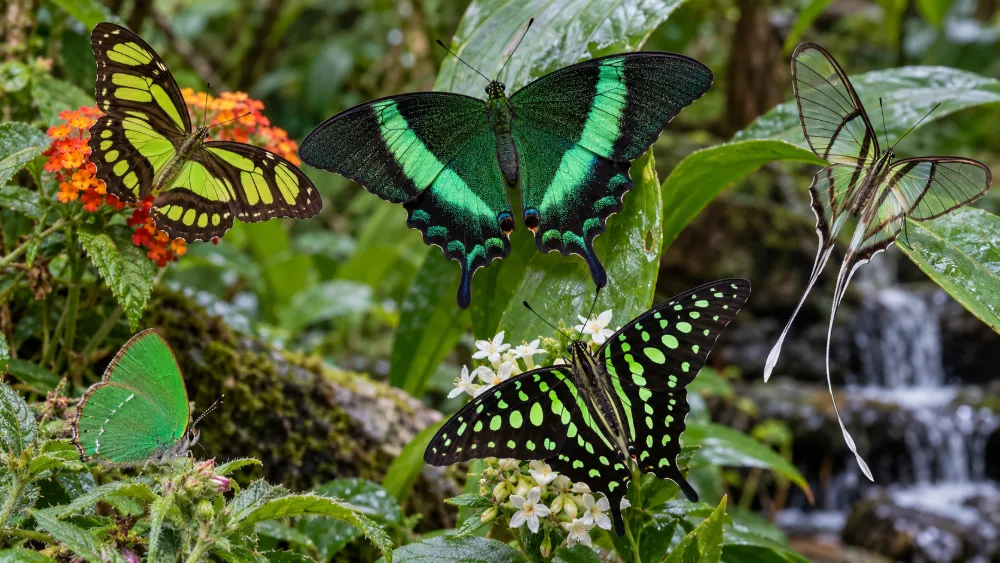
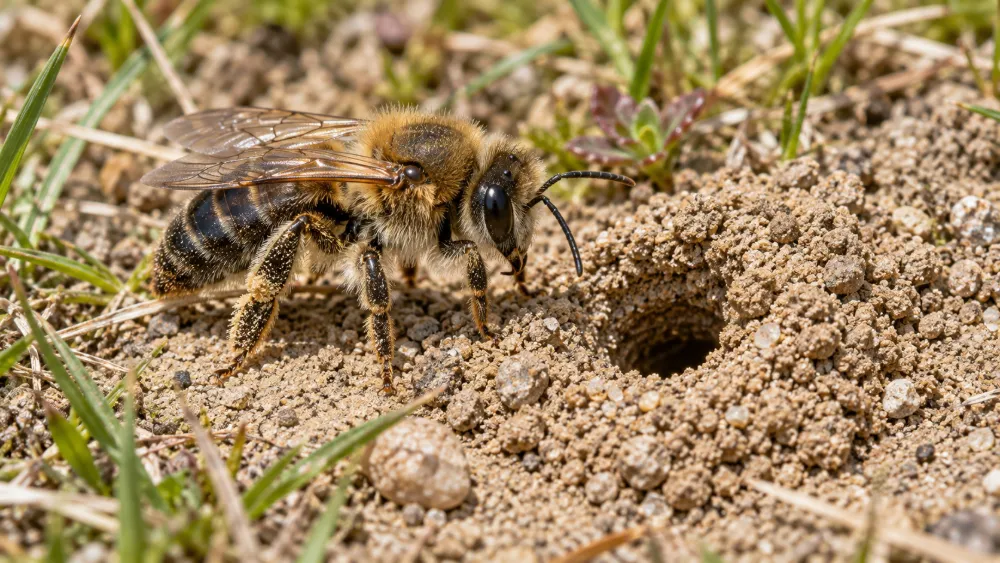
Yes, butterflies rest in a sleep-like state, usually at night, but they do not sleep exactly like humans. Most butterflies are active during the day and become inactive after sunset. They settle on leaves, stems, branches, or other sheltered surfaces, often remaining motionless for hours. This resting behavior is called roosting. Some butterflies spend the night alone, while others gather in groups. Although scientists have documented sleep-like behavior in butterflies, their rest should not automatically be considered identical to human sleep.
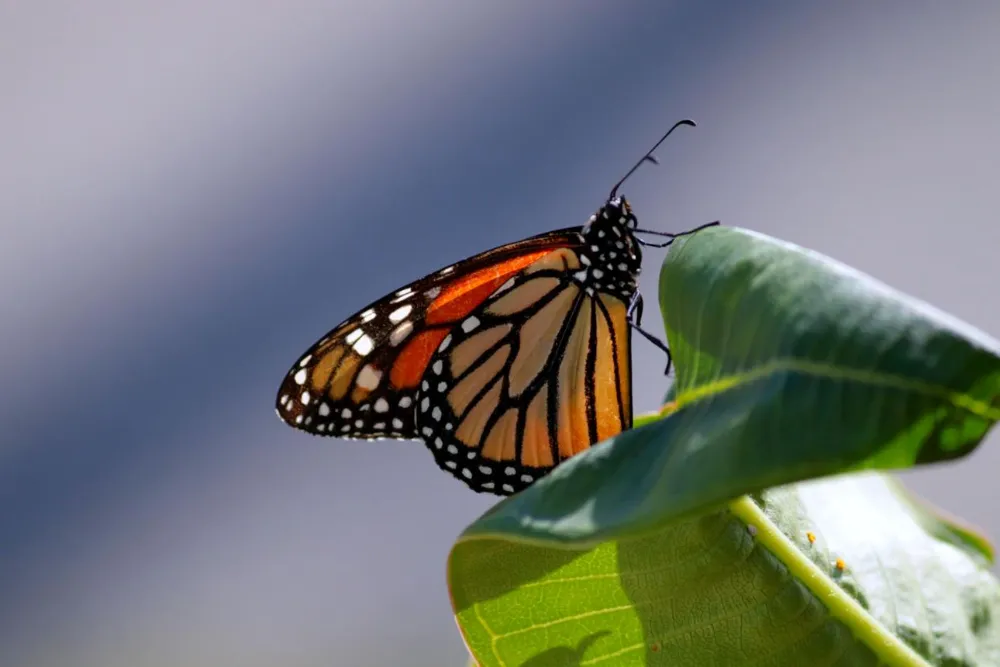
A monarch butterfly rests with its wings folded, a typical posture seen when many butterflies are inactive.
Do Butterflies Really Sleep?
Butterflies experience periods of prolonged inactivity that resemble sleep, particularly during the night.
However, scientists distinguish between ordinary inactivity, roosting, and sleep because these states are not necessarily identical.
In animal biology, sleep is often identified through a combination of behavioral characteristics, including reduced responsiveness, a characteristic resting posture, and the ability to wake in response to stronger stimulation.
Studies have described sleep-like behavior in several butterfly species. Researchers have also observed that many butterflies repeatedly select particular locations or structures for nighttime resting.
These findings support the idea that butterflies have organized resting behavior, but they do not establish that every butterfly species experiences sleep in precisely the same way.
Where Do Butterflies Sleep at Night?
Butterflies typically spend the night in sheltered locations that provide suitable conditions for resting.
Common nighttime roosting sites include:
Under leaves: Foliage can provide partial shelter from wind and rain.
On plant stems: Butterflies may cling to vertical or angled vegetation.
Among grasses: Dense vegetation can offer concealed resting places.
Inside shrubs: Branches and surrounding leaves may reduce exposure.
On tree branches: Some species gather on trees during migration or seasonal roosting.
Among vines: Certain tropical butterflies use protected vegetation for communal roosts.
The choice of location depends on the species, habitat, season, and local weather conditions.
Research on butterfly roosting shows that particular plant structures and microhabitats can strongly influence where butterflies settle.
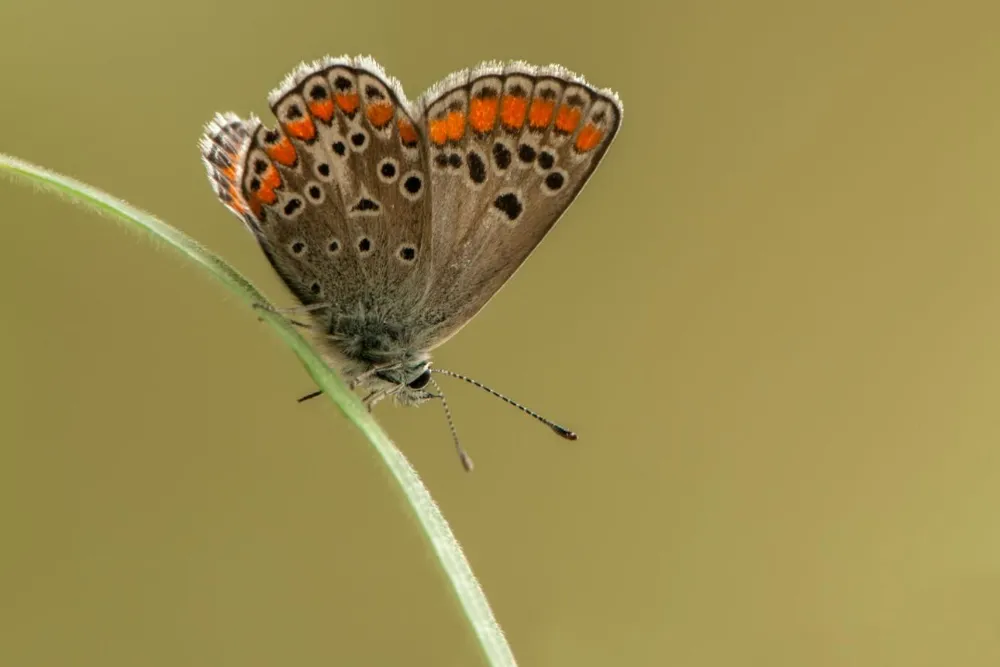
Small butterflies may spend the night on protected vegetation, including leaves and plant stems.
How Do Butterflies Sleep?
Butterflies generally rest by settling on a stable surface and greatly reducing their activity.
Many species hold their wings upright and closed above their backs while resting. This exposes the undersides of the wings, which often have less conspicuous coloration.
Other species may rest with their wings partly open or in different positions.
During a resting period, a butterfly may remain in one location for an extended time. It can still respond to disturbances and may move or fly away if conditions allow.
The exact posture varies among butterfly families and individual species.
Because butterflies do not have movable eyelids like humans, closed eyes cannot be used to identify whether one is resting.
Do Butterflies Sleep With Their Eyes Open?
Butterflies do not close their eyes when resting because their compound eyes lack movable eyelids.
A butterfly's compound eyes contain numerous visual units called ommatidia, which help it detect light, movement, and visual patterns.
When a butterfly becomes inactive, its eyes remain externally visible.
This does not mean the insect is continuously alert in the same way as an actively flying butterfly.
Behavior and responsiveness, rather than eyelid position, are more useful for studying sleep-like states in insects.
Why Do Butterflies Rest at Night?
Most butterflies are primarily diurnal, meaning they are active during daylight hours.
At night, several environmental changes make flight and feeding less favorable.
1. Lower Temperatures
Butterflies are ectothermic animals, so their body temperature and activity depend strongly on environmental conditions.
Cool nighttime temperatures often reduce their ability to fly.
2. Reduced Light
Many butterflies use visual information to navigate, locate flowers, recognize other butterflies, and identify suitable habitats.
Reduced light can make these activities more difficult for primarily daytime species.
3. Energy Conservation
Remaining inactive reduces the energy required for movement and other activities.
Nighttime resting allows butterflies to avoid unnecessary flight when environmental conditions are less favorable.
4. Shelter and Protection
Protected roosting locations may reduce exposure to wind, rain, and certain predators.
The benefits depend on the roosting site and species, and not every resting position provides equal protection.
Do Butterflies Sleep Alone or in Groups?
Both patterns occur.
Many butterflies rest individually, choosing a suitable leaf, stem, or another nearby surface.
Others form communal roosts, gathering with several or even many other butterflies.
Communal roosting is especially well documented in certain Heliconius butterflies and migratory monarch butterflies.
Research has shown that communal roosting can provide protective benefits in some species, although the advantages differ according to ecology and circumstances.
Group size and location also vary substantially among butterfly species.
Where Do Monarch Butterflies Sleep?
Monarch butterflies (Danaus plexippus) often rest on vegetation at night, and migrating monarchs may gather in conspicuous communal roosts.
During migration, groups of monarchs can settle on trees and other suitable structures.
Roosting locations help provide shelter from unfavorable conditions while the butterflies remain inactive.
During the overwintering season, large monarch aggregations may occur in suitable forest habitats.
These seasonal aggregations are different from the smaller nighttime roosts that monarchs may form while actively migrating.
Research published by the U.S. Geological Survey has examined monarch roost-site selection along the eastern North American migration route.
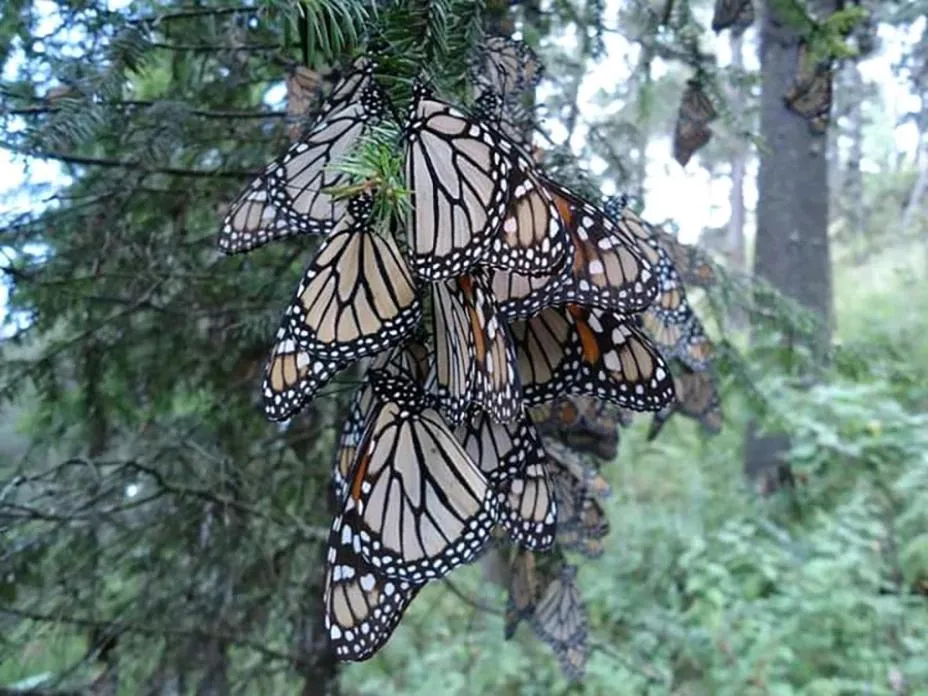
Monarch butterflies may gather on trees during migration, forming communal roosts at night.
Do Butterflies Sleep in the Same Place Every Night?
Some butterflies repeatedly use particular roosting areas, while others move between resting locations.
The pattern depends on their behavior, habitat, and environmental conditions.
Studies of communal-roosting butterflies show that suitable sites may be used repeatedly over extended periods.
However, a butterfly resting on a garden leaf one evening will not necessarily return to that exact leaf the following night.
Changes in weather, vegetation, feeding locations, and threats can all influence roost selection.
Do Butterflies Sleep During the Day?
Butterflies can remain inactive during the day when conditions are unsuitable for normal activity.
For example, a butterfly may rest during heavy rain, cold weather, or periods of strong wind.
Some butterflies also spend time motionless between feeding and other activities.
However, daytime inactivity does not necessarily mean that a butterfly is sleeping.
Researchers must consider environmental conditions, normal activity patterns, and responsiveness before interpreting behavior as sleep-like.
What Happens to Butterflies When It Rains?
During rainfall, many butterflies stop flying and seek protected locations.
Rain can make flight more difficult, particularly when temperatures are low or water accumulates on vegetation.
Butterflies may settle beneath leaves, among branches, or inside dense plants until conditions improve.
Some of these sheltered sites also serve as nighttime roosts.
A butterfly resting during rain may appear asleep, but it may simply be avoiding unfavorable weather.
Do Butterflies Sleep in Winter?
Some butterfly species enter extended periods of reduced activity during winter, but this is not the same as ordinary nightly sleep.
Depending on the species, butterflies may survive the cold season as eggs, caterpillars, pupae, or adults.
Species that overwinter as adults may enter a dormant state called diapause or experience other forms of seasonal inactivity.
Some adult butterflies shelter in protected vegetation, tree cavities, or other suitable locations during colder months.
Other species, such as migratory monarch populations, move to regions with more suitable winter conditions.
Winter dormancy and nighttime roosting are related to inactivity but involve different biological processes.
Can Butterflies Fly at Night?
Most butterflies are primarily active during daylight, but activity patterns vary among species.
Some butterflies may fly around dusk or occasionally under low-light conditions.
However, nighttime flight is much more characteristic of many moth species.
Butterflies and moths both belong to the insect order Lepidoptera, but their daily activity patterns are not separated by an absolute rule.
Not all moths fly at night, and not all butterflies are exclusively active in bright daylight.
Butterfly Sleep vs. Human Sleep
| Feature | Butterflies | Humans |
|---|---|---|
| Typical resting period | Often nighttime | Usually nighttime |
| Movable eyelids | No | Yes |
| Typical resting posture | Clinging to a surface | Lying or reclining |
| Resting in groups | Some species | Possible |
| Reduced responsiveness | Observed in sleep-like states | Yes |
| Human-style sleep stages | Not established | Well documented |
These differences illustrate why scientists use caution when comparing insect rest directly with human sleep.
Frequently Asked Questions
What time do butterflies go to sleep?
Many butterflies begin resting around dusk, but there is no universal bedtime. Activity depends on the species, light level, temperature, and weather.
Do butterflies sleep upside down?
Some butterflies rest beneath leaves or on angled vegetation, which can make them appear upside down. Resting posture varies among species.
Do monarch butterflies sleep at night?
Monarch butterflies commonly become inactive and roost at night. Migrating monarchs may gather together on trees and other vegetation.
Can butterflies see while sleeping?
Butterflies have compound eyes without movable eyelids, so their eyes remain uncovered while resting. However, visible eyes do not necessarily mean that an insect is fully alert.
Do butterflies hang from leaves when sleeping?
Yes. Many butterflies cling to leaves, stems, or other suitable surfaces during nighttime rest.
Do butterflies wake up in the morning?
Many butterflies become active again when environmental conditions improve, particularly as daylight and temperature increase.
Is a butterfly dead if it is not moving?
No. A motionless butterfly may be resting, cold, or otherwise inactive. Lack of movement alone does not establish that it is dead.
The Bottom Line
Butterflies commonly rest at night in a sleep-like state known as roosting. They often settle on leaves, stems, branches, and other sheltered surfaces, remaining inactive until conditions become suitable for movement.
Some butterflies rest alone, while others, including certain Heliconius and monarch butterflies, form communal roosts. Although butterfly rest is not identical to human sleep, it is an important part of their daily behavior and survival.
Sources & Further Reading
The following museum resources and scientific studies provide additional information about butterfly resting behavior, nighttime roosting, and habitat selection.
American Museum of Natural History — Butterfly FAQ. Explains butterfly resting and communal roosting.
The Benefit of Being a Social Butterfly: Communal Roosting Deters Predation. Peer-reviewed research on Heliconius communal roosts.
Roosting Site Usage and Gregarious Roosting in Lycaenidae Butterflies. Research on nighttime roosting sites and social interactions.
U.S. Geological Survey — Monarch Butterfly Roost Site Selection. Research on migratory monarch roosting habitats.