Most adult frogs do not drink water through their mouths like humans do. Instead, they absorb much of the water they need directly through their skin. Many frogs and toads have a specialized area on the underside of their bodies called the pelvic patch, or drinking patch, which allows them to take in water from wet surfaces. This unusual adaptation helps frogs stay hydrated, even when they are not actively swimming or sitting in a pond.
How Do Frogs Drink Water?
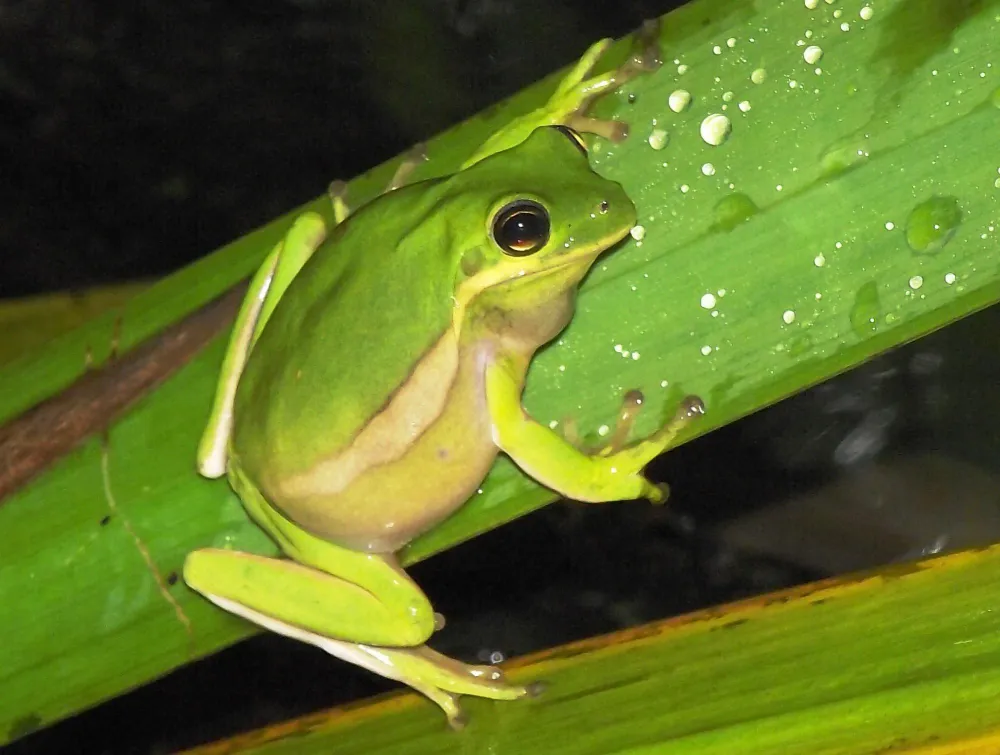
Frogs obtain water mainly by absorbing it across their permeable skin. Rather than taking repeated mouthfuls of water, many adult frogs sit in shallow water or press their undersides against damp surfaces.
Water then moves across the skin and into the body, helping replace moisture lost through evaporation and other normal physiological processes.
This process depends partly on differences in water potential between the frog's body fluids and its surroundings. Specialized proteins in the skin, including water channels called aquaporins, help regulate water movement.
A frog does not necessarily absorb water equally across its entire body. In many species, the skin on the lower abdomen and pelvic region is particularly important.
Some aquatic and semiaquatic frogs have different patterns of water uptake, reflecting their habitats and evolutionary adaptations.
What Is a Frog's Drinking Patch?
The drinking patch, scientifically called the pelvic patch, is a specialized region of skin on the underside of many frogs and toads.
It is usually located toward the rear of the abdomen and may extend onto the inner surfaces of the hind legs.
Compared with other skin regions, the pelvic patch may have:
High permeability to water
A rich network of blood vessels
Specialized water-channel proteins
Structural adaptations that improve contact with wet surfaces
When a frog presses this region against damp soil, wet vegetation, or shallow water, moisture can pass through the skin and enter the body.
The importance and structure of the pelvic patch vary between species.
Why Don't Frogs Need to Drink Through Their Mouths?
For many adult frogs, absorbing water through the skin is an effective way to maintain hydration.
Unlike mammals, which generally obtain drinking water by swallowing liquids, frogs have evolved skin that allows substantial water exchange with their environment.
This is especially useful for amphibians because their skin must remain physiologically functional in both aquatic and terrestrial conditions.
However, saying that frogs never swallow water would be too broad. Water can enter the digestive tract during feeding or other activities, and drinking behavior is not identical in every amphibian species.
The important distinction is that many adult frogs do not depend on ordinary mouth-based drinking as their primary way of rehydrating.
Can Frogs Absorb Water Through Their Skin?
Yes. Water absorption through the skin is one of the most distinctive features of frog physiology.
Frog skin is relatively thin and permeable, allowing water and certain dissolved substances to move across it.
The process involves several factors:
Skin contact: The frog rests against a suitable moist surface or enters water.
Water movement: Water moves across the permeable skin, depending on the conditions inside and outside the body.
Transport regulation: Water-channel proteins and hormonal signals help control permeability.
Fluid distribution: Absorbed water enters the body's fluid compartments and circulation.
The precise rate of absorption depends on the frog species, environmental conditions, hydration state, and the properties of the contacted surface.
Do Frogs Absorb Water Through Their Feet?
Frogs may absorb some water through different areas of their skin, including parts of their limbs, but their feet are not necessarily the main water-absorbing surfaces.
In many terrestrial and semiterrestrial frogs, the pelvic patch is more important for rapid water uptake.
This region may extend onto the undersides of the thighs, which can make it appear that water is being absorbed through the hind legs.
The specialized toe pads of tree frogs primarily help them grip surfaces. They should not be confused with the main pelvic drinking patch.
Do Toads Drink Water the Same Way as Frogs?
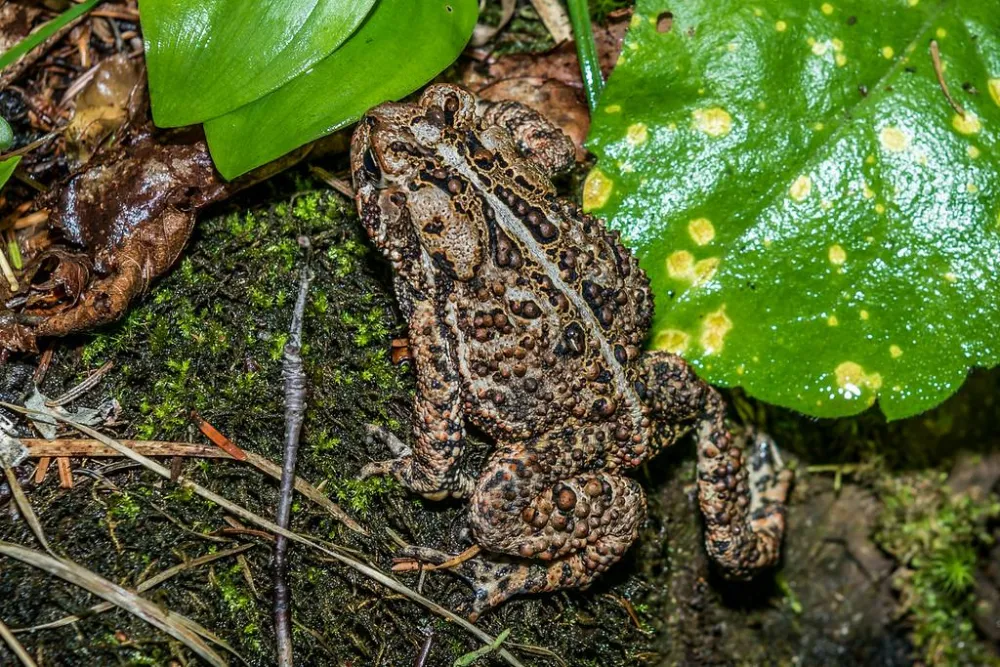
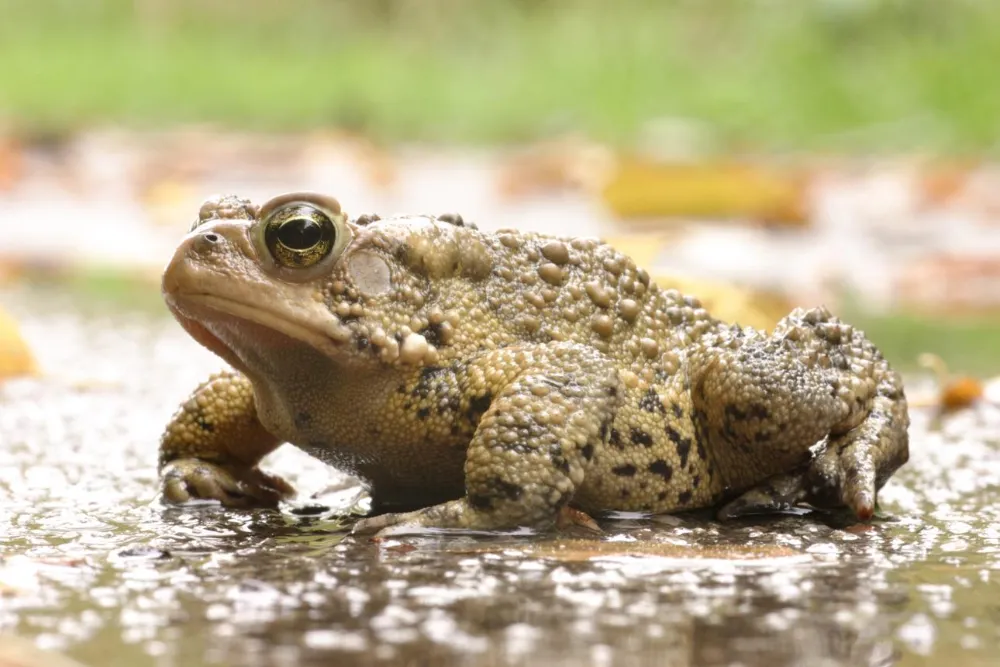
Yes. Toads are a type of frog, and many toads rely heavily on water absorption through their skin.
Terrestrial toads may press their bellies against moist soil or shallow water to rehydrate.
Some species living in relatively dry environments have particularly well-developed pelvic patches that help them take advantage of available moisture.
However, toads are not completely protected from dehydration. Their skin still loses water, especially under hot, dry, or windy conditions.
Do Tree Frogs Drink Water?
Tree frogs also need water, even when they spend much of their lives above the ground.
Many tree frogs obtain moisture from rainwater, wet leaves, humid surroundings, and other suitable water sources.
When resting on a damp leaf or another moist surface, a tree frog may absorb water through its skin.
Different tree frog species vary in their resistance to water loss. Some have behavioral or physiological adaptations that help them survive periods of limited moisture.
Humidity alone does not guarantee that a frog can replace all lost body water. Access to suitable liquid water or wet surfaces can remain important.
Can Frogs Drink Salt Water?
Most frogs cannot safely rely on seawater for hydration.
Because frog skin is permeable, the concentration of salts in the surrounding water can strongly affect water movement across the skin.
Highly salty water may draw water out of the body instead of helping the frog rehydrate.
Some specialized frog species tolerate brackish or salty environments better than most others. These adaptations should not be generalized to all frogs.
For the majority of common freshwater and terrestrial frogs, freshwater habitats and appropriate moisture conditions are important for survival.
How Do Frogs Stay Hydrated on Land?
Frogs that spend time on land use a combination of physiological and behavioral strategies to maintain water balance.
These strategies can include:
Seeking humid or shaded microhabitats
Remaining under logs, leaves, or rocks during dry periods
Becoming more active at night or after rainfall
Using the pelvic patch to absorb water from damp surfaces
Reducing activity when conditions favor rapid water loss
Storing and reabsorbing water from the urinary bladder in some species
The importance of each strategy depends on the species and its environment.
Desert-adapted frogs may use burrowing and extended periods of inactivity to survive prolonged dry conditions, while rainforest frogs often depend on consistently humid environments.
What Happens When Frogs Become Dehydrated?
Dehydration can interfere with a frog's movement, circulation, metabolism, and normal physiological functions.
Because water balance is closely connected to amphibian skin function, severe water loss can quickly become dangerous.
Potential consequences include reduced activity, impaired movement, physiological stress, and eventually death if suitable conditions are not restored.
There is no single visible sign that reliably diagnoses dehydration in every species.
Pet frogs showing unusual weakness, abnormal posture, persistent inactivity, or other concerning changes should be evaluated by a veterinarian experienced with amphibians.
Do Frogs Absorb Chemicals Through Their Skin?
Yes. The permeability that allows frogs to absorb water can also make them vulnerable to certain environmental contaminants.
Some chemicals dissolved in water can pass through amphibian skin and interfere with normal physiological processes.
This is one reason water quality matters for frog conservation and captive care.
Inappropriate chemicals, residues from cleaning products, and certain pollutants may present risks, although their effects depend on the substance, concentration, exposure duration, and frog species.
Frog habitats benefit from efforts to reduce water pollution and preserve healthy wetlands.
Do Tadpoles Drink Water?
Tadpoles differ from adult frogs because they spend their early development primarily in water and have different structures for respiration and fluid regulation.
Water exchange in tadpoles occurs through several pathways, including their body surfaces and, depending on the species and developmental stage, their digestive tract.
Some aquatic larvae also regulate water and salts through specialized tissues associated with their gills and skin.
Therefore, the statement that frogs do not drink through their mouths applies most clearly to the usual hydration behavior of many adult frogs, not necessarily to every tadpole.
Frog Hydration vs. Human Drinking
| Feature | Most Adult Frogs | Humans |
|---|---|---|
| Primary way of obtaining drinking water | Absorption through skin | Swallowing water through mouth |
| Specialized drinking patch | Present in many species | Absent |
| Skin water permeability | Relatively high | Relatively low |
| Major dehydration risk | Water loss through permeable skin | Inadequate intake and excessive fluid loss |
| Relationship with surrounding water | Direct skin exchange is important | Skin limits water exchange |
This comparison highlights how frogs have evolved a fundamentally different approach to maintaining body water.
Frequently Asked Questions
Do frogs drink water with their mouths?
Most adult frogs absorb the water they need primarily through their skin instead of deliberately drinking it through their mouths.
What part of a frog absorbs water?
Many frogs have a specialized pelvic patch on the underside of their bodies that is particularly effective at absorbing water from wet surfaces.
Can frogs absorb water from wet soil?
Yes. Many terrestrial frogs and toads can rehydrate by pressing their pelvic skin against suitably damp soil or other moist surfaces.
Do frogs need fresh water?
Most frogs require access to suitable freshwater or moisture-rich environments, although exact requirements and tolerance to salts vary among species.
Can frogs survive without water?
Frogs cannot survive indefinitely without water. Some species have adaptations that allow them to withstand long dry periods, but all require appropriate water balance for survival.
Do frogs absorb water through their stomachs?
Water absorption through the belly refers to movement across the skin on the underside of the body, not directly through the digestive stomach.
Do frogs absorb water through their skin while swimming?
Yes. Water exchange can occur across frog skin during contact with water, although the direction and rate of movement depend on surrounding conditions and the species.
The Bottom Line
Most adult frogs do not drink water the way humans do. Instead, they rely on their permeable skin to absorb moisture, often using a specialized pelvic or drinking patch on the underside of the body.
This adaptation allows frogs and toads to rehydrate from shallow water and damp surfaces. It also explains why suitable moisture, healthy habitats, and water quality are so important to amphibian survival.