Small holes suddenly appearing across a lawn can be alarming—especially when dozens of bees seem to be flying just above the ground.
In many cases, however, these insects are ground-nesting solitary bees rather than an aggressive underground colony.
The term “ground bee” is not the name of one species. It is commonly used for several types of bees that dig nests in soil, including mining bees, some sweat bees and cellophane bees.
Most of these bees are important pollinators and are far less defensive than yellowjackets, which are wasps that can also nest underground.
Quick Answer: What Are Ground Bees?
“Ground bees” usually refers to bees that make nests in underground tunnels.
Common examples include:
mining bees in the family Andrenidae;
cellophane bees in the genus Colletes;
some sweat bees in the family Halictidae;
and several other native solitary bees.
Many are solitary. Each female excavates and provisions her own nest rather than living in a large colony with thousands of workers.
However, many females may choose the same patch of suitable soil, creating what looks like a large colony.
How to Identify Ground Bees
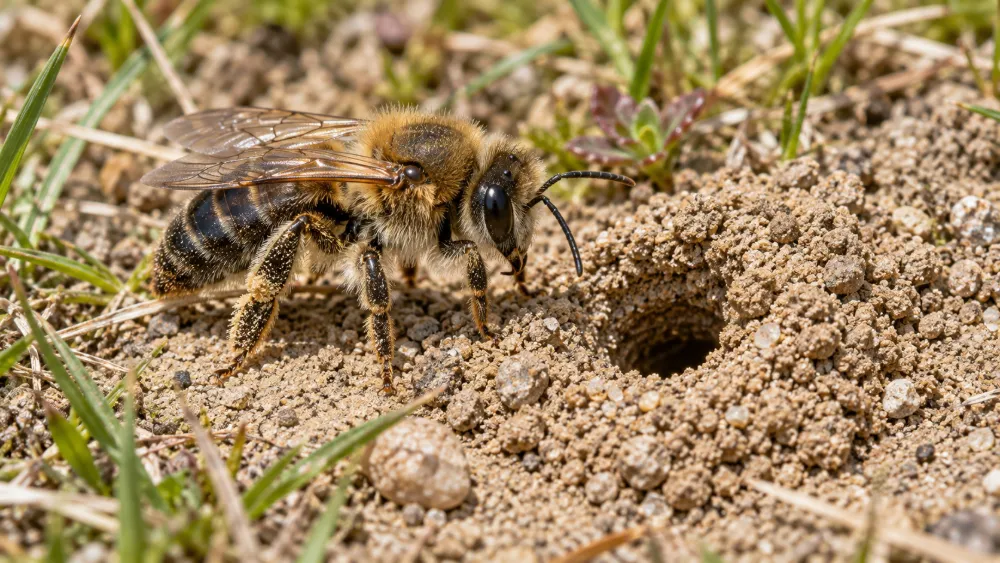
Ground-nesting bees vary considerably in appearance because many different species use underground nests.
Mining bees are among the most commonly noticed.
Typical features can include:
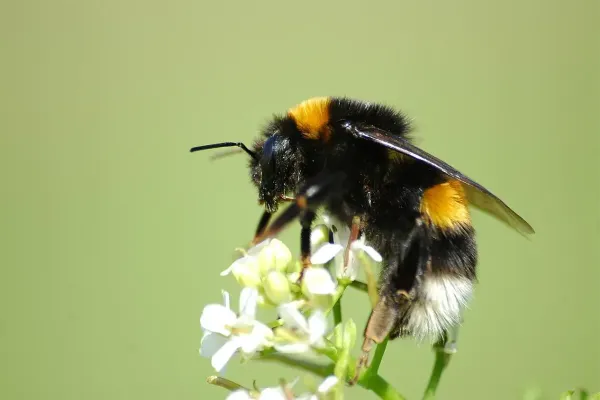
a fuzzy or hairy body;
brown, gray, black or reddish coloration;
visible hairs used to carry pollen;
approximately honey-bee size or smaller;
and repeated flights to small holes in bare or thinly vegetated soil.
Some sweat bees are much smaller and may even be metallic green or blue.
For that reason, color alone is not enough to identify every ground-nesting bee.
What Does a Ground Bee Nest Look Like?
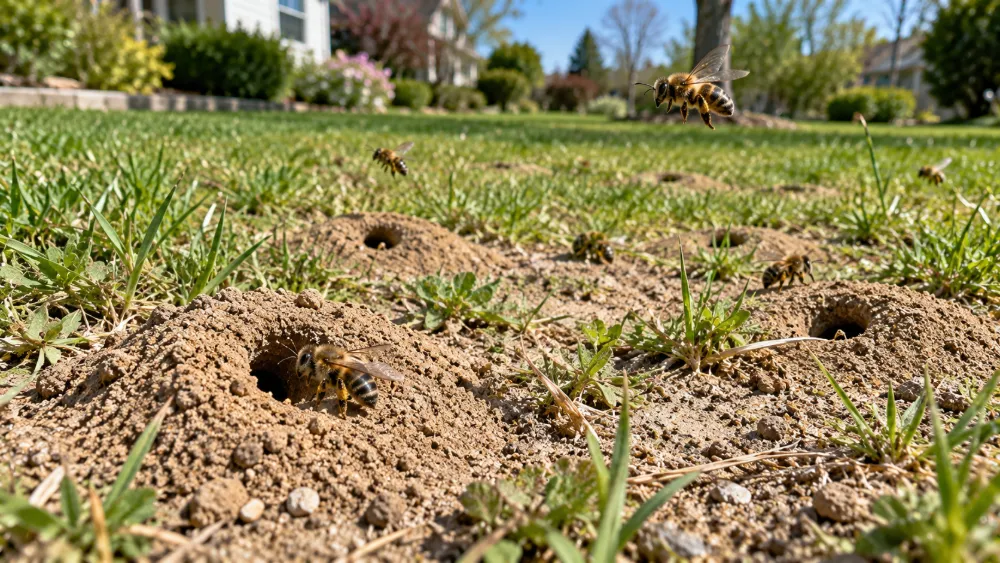
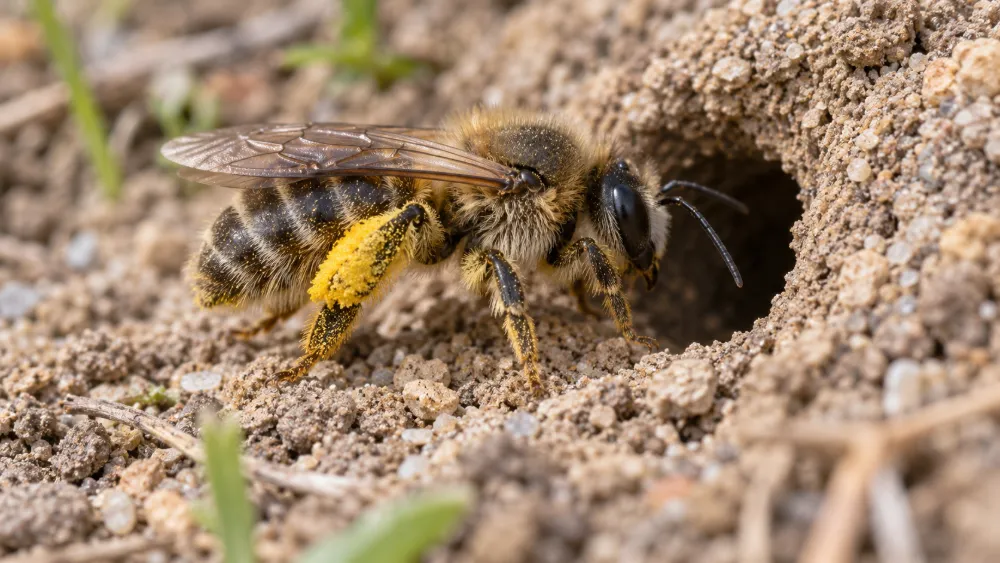
A typical solitary ground-bee nest begins as a small round hole in the soil.
Excavated dirt often forms a loose mound or miniature volcano around the entrance.
The female digs downward and then constructs individual brood cells branching from the main tunnel.
In some mining-bee species, tunnels may extend six inches or more into the soil.
Inside each brood cell, the female typically places a supply of pollen and nectar.
She lays an egg on or beside this food supply, seals the cell and continues building additional cells.
The larva later feeds on the stored food and develops underground.
Why Are There So Many Holes in My Lawn?
This is one of the most confusing things about solitary bees.
“Solitary” does not necessarily mean one bee lives hundreds of feet from another.
A sunny patch of dry, well-drained soil can be ideal nesting habitat.
Dozens or even hundreds of females may independently choose the same location.
This is called a nesting aggregation.
Although the holes may be close together, each female is generally responsible for her own nest and offspring.
The aggregation can therefore look like a social bee colony even when it is not one.
Why Are Bees Flying Low Over the Grass?
During spring nesting season, numerous bees may fly just a few inches above the ground.
Some are females locating and provisioning nests.
Many of the most noticeable individuals are males searching for newly emerging females.
This activity can look chaotic, but the males of bees do not have stingers.
In common spring mining-bee aggregations, intense activity may last only a few weeks.
Do Ground Bees Sting?
Most solitary ground-nesting bees are not aggressive.
Females of many species are physically capable of stinging, but they rarely do so unless they are trapped, squeezed or directly handled.
Males cannot sting.
Unlike a large social colony, a solitary mining bee does not have hundreds or thousands of workers available to defend a shared nest.
That makes its behavior very different from an underground yellowjacket colony.
Ground Bee vs. Yellowjacket
This distinction is extremely important because both insects may appear to be “bees coming out of the ground.”
| Feature | Typical Solitary Ground Bee | Yellowjacket |
|---|---|---|
| Animal group | Bee | Wasp |
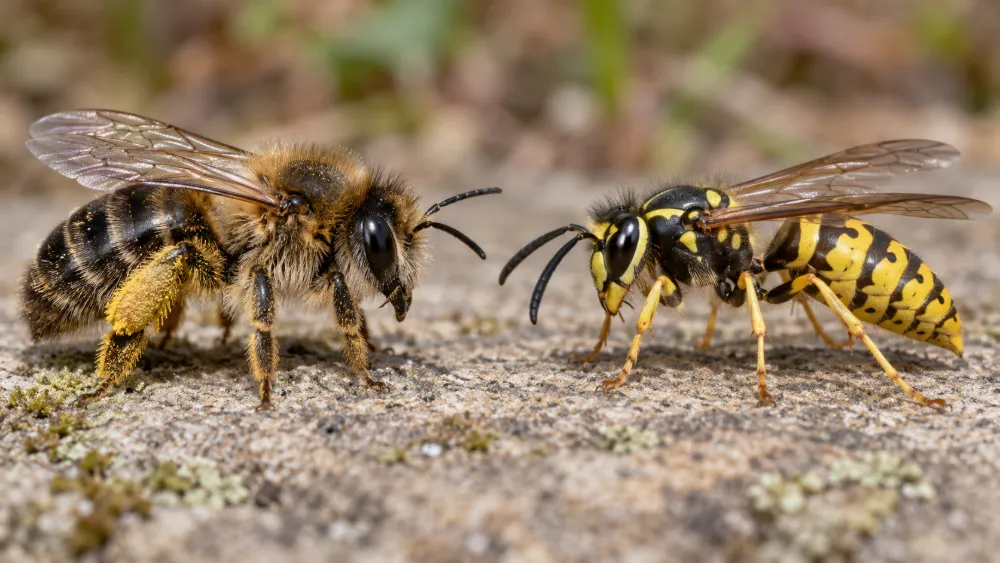
| Body | Often fuzzy or hairy | Smooth and shiny with relatively few hairs |
| Nesting | Usually one female per burrow | Large social colony |
| Visible holes | Often many separate small holes | Usually one or a few entrances to a shared nest |
| Behavior | Usually docile | Can aggressively defend nest |
| Stinging | Rare unless handled | Workers can sting repeatedly |
| Main food collected | Pollen and nectar | Adults use sugars; workers also collect animal food for larvae |
How Can You Tell If the Underground Nest Is a Yellowjacket Nest?
Watch from a safe distance rather than standing directly over the entrance.
A yellowjacket nest usually has many workers repeatedly entering and leaving one main opening that leads to the same underground colony.
The insects are typically:
bright yellow and black;
smooth rather than heavily fuzzy;
fast-flying;
and visibly wasp-like with a narrower waist.
Yellowjackets can vigorously defend the nest if disturbed.
In contrast, solitary ground-bee sites commonly contain many individual holes spread across an area.
Are Ground Bees Dangerous?
Typical solitary mining bees present little danger to people who simply walk through or use the lawn.
University extension sources consistently describe these bees as docile and unlikely to sting.
The main exception is when the insect has been misidentified.
Bumble bees may use underground cavities and are social. Yellowjackets also frequently use abandoned rodent burrows and other underground cavities.
Both can defend a colony more strongly than solitary mining bees.
Anyone with a known severe allergy to insect stings should avoid close contact with unidentified nests.
Are Ground Bees Good for the Garden?
Yes.
Native ground-nesting bees are important pollinators of wildflowers, garden plants, fruit trees and other flowering plants.
Mining bees in the genus Andrena are particularly important spring pollinators.
Some emerge at the same time that fruit trees and early wildflowers bloom.
The females spend much of their active lives gathering pollen and nectar for their offspring.
Do Ground Bees Damage Lawns?
Usually not in any meaningful way.
The entrance holes and tiny soil mounds may temporarily make a lawn look uneven or messy, but extension specialists generally consider the turf damage minor.
The loose soil normally disperses with rain and weather.
Because activity is often seasonal, many nesting sites become much less noticeable after the adult nesting period ends.
Should You Get Rid of Ground Bees?
In most cases, no.
If the insects are confirmed solitary ground-nesting bees and the location does not create a serious conflict, leaving them alone is usually the best option.
They provide pollination benefits, are rarely aggressive and are active above ground for a relatively short period.
Pesticide treatment is normally unnecessary.
How to Discourage Ground Bees Without Killing Them
Ground-nesting bees commonly prefer:
sunny soil;
dry conditions;
good drainage;
bare ground;
or thin turf.
If nests repeatedly appear in an area where they create a problem, make the site less attractive rather than trying to kill the bees.
Useful long-term approaches include:
maintaining denser turf;
overseeding bare patches;
using appropriate groundcover;
and reducing exposed nesting soil in areas where bees are not wanted.
In garden areas intended to support pollinators, the opposite approach can be useful: leaving some well-drained bare soil creates valuable nesting habitat for native bees.
Should You Flood a Ground Bee Nest?
Regular watering may make dry soil less attractive for future nesting, but deliberately flooding an active nest is not usually necessary.
It can destroy developing bees and may be counterproductive in a pollinator-friendly garden.
If the site is simply inconvenient, changing the vegetation and soil cover after the nesting season is usually a better long-term solution.
Do Ground Bees Make Honey?
Most solitary ground-nesting bees do not produce stores of honey like a honey bee colony.
A female instead collects pollen and nectar and places a small food supply in each brood cell for one developing larva.
Once the cell is provisioned and the egg is laid, she seals it.
Do Ground Bees Live in Colonies?
Most of the mining bees commonly called ground bees are solitary.
However, bee social behavior is diverse.
Some sweat bees can show varying degrees of social organization, and bumble bees are social bees that may also use underground nesting cavities.
So “lives underground” does not automatically mean “solitary.”
When Are Ground Bees Active?
Many mining bees appear in spring.
Some Andrena species are noticeable in lawns during April and May in northern parts of the United States.
Other ground-nesting species emerge at different times of year.
The timing often corresponds with the flowering period of plants the adults visit for pollen and nectar.
What Happens to the Nest in Winter?
For many solitary ground-nesting species, the adult female dies after completing her nesting work.
The next generation develops underground inside protected brood cells.
Depending on the species, the developing bee may spend many months underground before emerging during the appropriate season the following year.
This is why the same area can host bees again in successive years if nesting conditions remain favorable.
FAQ
What are ground bees?
Ground bees are bees that nest in soil. The term includes many species, especially solitary mining bees, cellophane bees and some sweat bees.
Do ground bees sting?
Females of many species can sting but rarely do unless handled or trapped. Male bees cannot sting.
Are ground bees aggressive?
Most solitary mining bees are docile and do not aggressively defend nesting aggregations.
What do ground bee holes look like?
They are usually small round holes surrounded by loose excavated soil. Many separate holes can occur close together in suitable nesting habitat.
Why are ground bees in my lawn?
They often select sunny, dry, well-drained soil with sparse vegetation because it is easy to excavate.
How long do ground bees stay?
Some spring mining-bee aggregations are visibly active for only two to four weeks, although the developing young remain underground much longer.
Are ground bees the same as yellowjackets?
No. Typical ground bees are bees, while yellowjackets are social wasps. Yellowjackets can also nest underground but are much more defensive around their colony.
How do I get rid of ground bees naturally?
If removal is truly necessary, changing the habitat is usually preferable to killing the bees. Maintaining dense vegetation or turf and reducing exposed dry soil can make a site less attractive for future nesting.
Do ground bees make honey?
Most solitary ground-nesting bees do not make large honey stores. Females collect pollen and nectar to provision individual brood cells for their larvae.
Are ground bees good pollinators?
Yes. Many native ground-nesting bees are important pollinators of wildflowers, garden plants and fruit crops.
Final Answer
Most insects commonly called ground bees are beneficial solitary bees that dig individual burrows in bare or thinly vegetated soil.
They may nest in large aggregations, creating dozens of small holes in a lawn, but that does not necessarily mean they share one colony.
Typical mining bees are docile, females rarely sting and males cannot sting at all.
The most important identification step is distinguishing them from yellowjackets. Yellowjackets are smooth-bodied social wasps that can build large underground colonies and aggressively defend their nests.
If the insects are confirmed solitary ground-nesting bees, they usually do not need to be removed. In most yards, the best solution is simply to let their short nesting season finish and appreciate the free pollination service.
Related Reading
Sources Used for Fact Checking
University of Maryland Extension — Mining Bees in Lawns
University of Maryland Extension — Insects and Mites in Home Lawns
NC State Extension — Ground-Nesting Bees in Turf
University of Minnesota Extension — Andrenid Bees
Penn State Extension — Bees in Pennsylvania
Penn State Extension — Eastern Yellowjacket