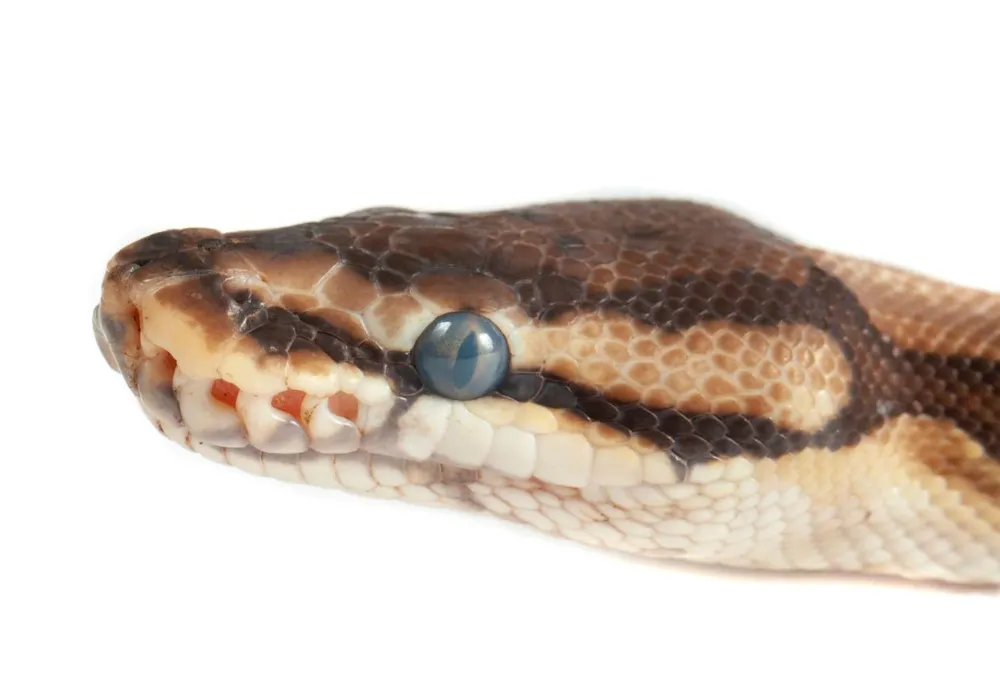
No, snakes cannot blink. Unlike humans and most other animals, snakes do not have movable eyelids. Instead, each eye is covered by a permanent transparent scale called a spectacle, brille, or eye cap. This clear covering protects the eye without blocking normal vision. Because snakes cannot close their eyes, they appear to stare constantly, even when they are sleeping. Their unusual eye anatomy is an adaptation that helps protect their eyes as they move through grass, sand, rocks, and other habitats.
Why Can't Snakes Blink?
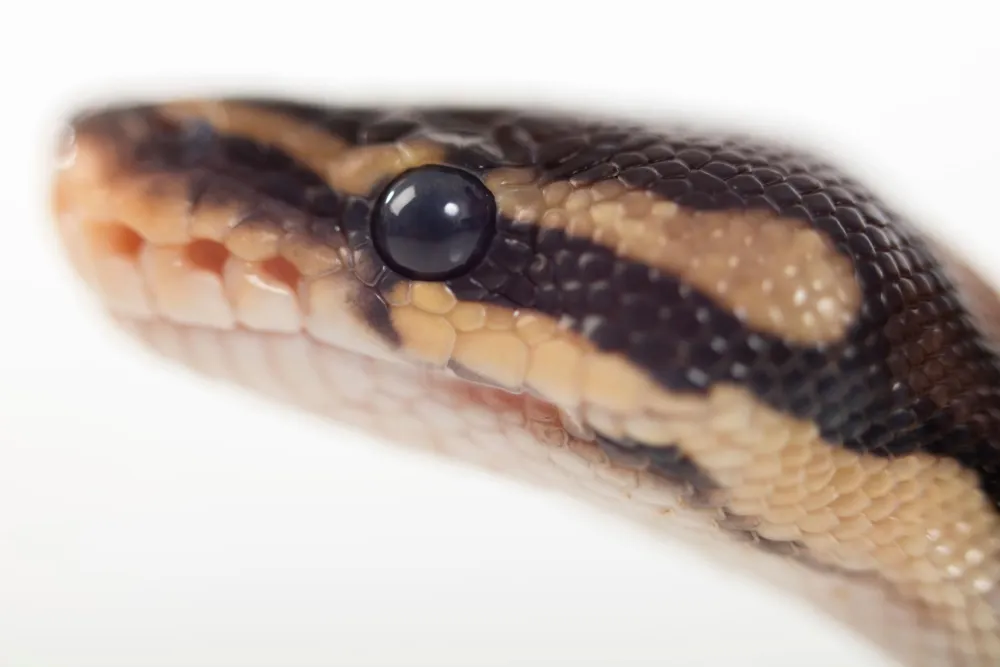
Snakes cannot blink because their eyelids are fused into a transparent protective covering. This structure is known as the spectacle.
In humans, blinking spreads tears across the eyes and helps remove dust and debris. Snakes achieve similar protective benefits with their permanently covered eyes.
The spectacle forms a clear barrier between the eye and the surrounding environment. It is particularly useful for an animal that frequently moves through vegetation, soil, underground tunnels, and narrow spaces.
Although the spectacle is sometimes described as a transparent scale, it is a specialized anatomical structure rather than an ordinary body scale.
Do Snakes Have Eyelids?
Snakes do not have movable eyelids. During embryonic development, the structures that would form separate eyelids fuse together and become transparent.
The result is a fixed covering that remains over the eye throughout the snake's life.
| Eye Feature | Snakes | Humans |
|---|---|---|
| Movable eyelids | No | Yes |
| Ability to blink | No | Yes |
| Ability to close eyes | No | Yes |
| Transparent protective spectacle | Yes | No |
| Eye protection | Permanent spectacle | Eyelids and tear film |
| Eye covering shed with skin | Yes | No |
This difference is one reason snakes can appear unusually alert or intimidating. Their eyes remain visible regardless of whether they are active, resting, or asleep.
What Protects a Snake's Eyes?
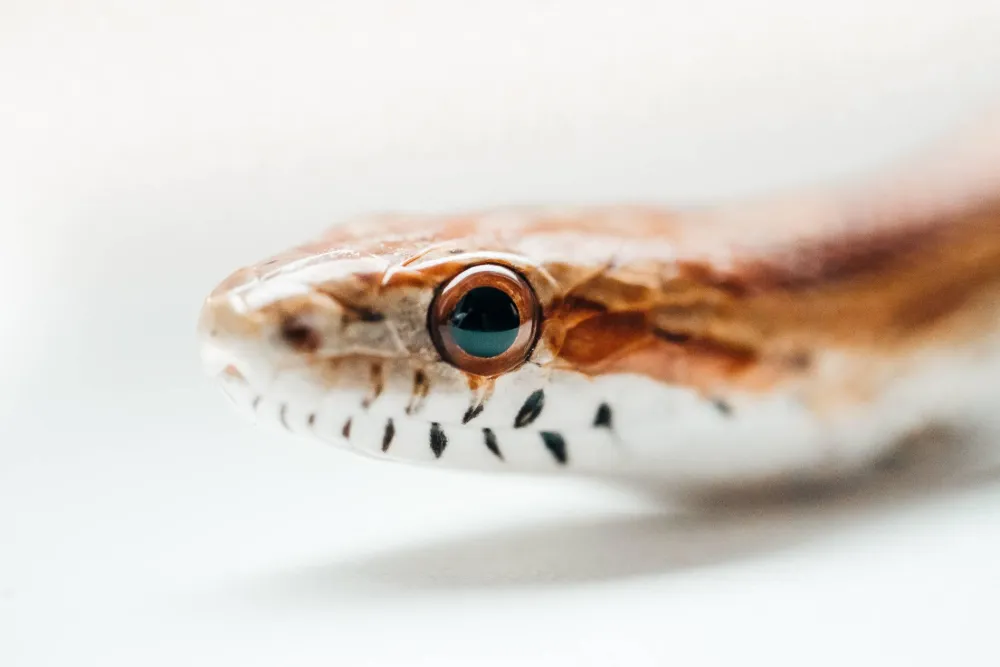
A snake's eyes are protected by transparent spectacles, sometimes called eye caps.
These coverings serve several important functions:
Physical protection: They help shield the delicate eye surface from dirt, vegetation, and minor abrasion.
Moisture protection: They help maintain a protected environment around the eye.
Continuous vision: Their transparency allows snakes to see without opening and closing eyelids.
Environmental adaptation: They are useful when snakes move through confined spaces or across rough surfaces.
A fluid-filled space exists between the spectacle and the cornea. This helps maintain the eye's protected environment.
The spectacle is not indestructible, however. Injuries, infections, and problems during shedding can still affect snake eyes.
Do Snakes Sleep With Their Eyes Open?
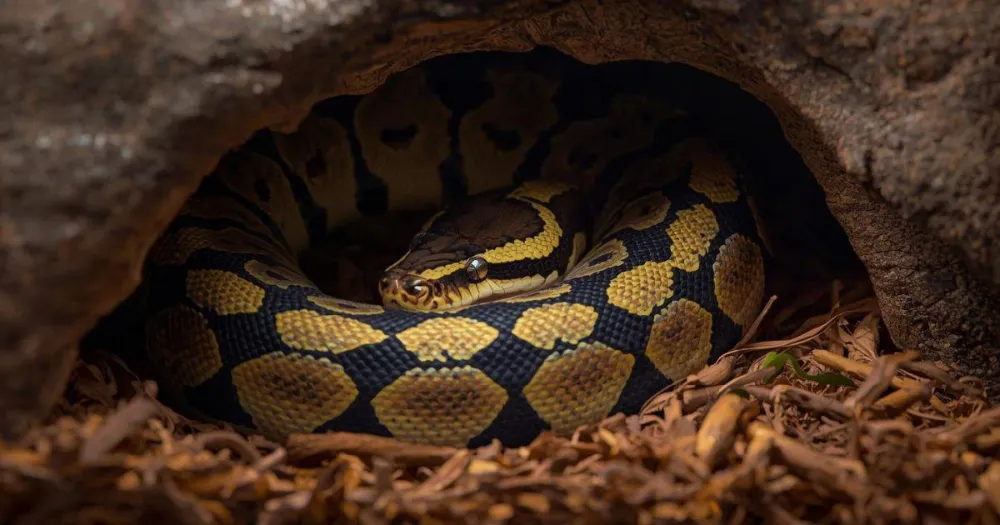
Yes. Snakes sleep with their eyes apparently open because they cannot close them.
A sleeping snake may look awake, making it difficult for an observer to distinguish between rest and active alertness.
Instead of watching for closed eyes, observers may notice changes in behavior, including:
Remaining motionless in a sheltered location
Reduced responses to ordinary environmental activity
A relaxed body posture
Long periods without obvious movement
However, remaining still does not necessarily mean a snake is asleep. Snakes also remain motionless when hiding, hunting, regulating body temperature, or avoiding potential threats.
Researchers can investigate reptile sleep using behavioral observations and measurements of brain activity, rather than relying on eyelid movement.
Can Snakes Close Their Eyes When They Are Scared?
No. Even when frightened or threatened, snakes cannot close their eyes.
A snake may instead protect its head through movement or body positioning. Depending on the species and situation, it may retreat, conceal its head, coil defensively, or seek shelter.
Different snakes use different defensive behaviors, so there is no single response shared by every species.
Because their eyes remain uncovered by movable lids, snakes depend on their spectacles for continuous protection.
Why Do Snake Eyes Turn Cloudy or Blue?
Snake eyes often appear cloudy, blue, or milky shortly before the animal sheds its skin.
During the shedding cycle, changes in the layers of skin and spectacle temporarily reduce the clarity of the eye covering.
This is a normal process known as part of ecdysis, or shedding.
A snake preparing to shed may show several signs:
Cloudy or bluish-looking eyes
Dull body coloration
Reduced activity
More time spent hiding
Temporary changes in feeding behavior
As shedding approaches, the eyes may become clearer again before the old outer skin is removed.
After a successful shed, the spectacle typically appears clear and the snake's body colors look brighter.
Because snakes can see less clearly during part of this process, unnecessary handling should generally be avoided.
Do Snakes Shed Their Eye Caps?
Yes. Snakes normally shed the outer layer of their spectacles along with their skin.
During a healthy shedding cycle, the old eye coverings usually come away as part of the shed skin.
The eye cap is not the eyeball itself. It is the outer protective covering.
Occasionally, an old spectacle fails to come away completely. This is called a retained eye cap or retained spectacle.
Retained eye caps can occur when shedding is disrupted by unsuitable environmental conditions, dehydration, underlying illness, or other problems.
If a pet snake appears to have a retained eye cap, owners should consult a reptile-experienced veterinarian. Attempting to peel or pull the covering away can damage the eye.
Can Snakes See Clearly Without Blinking?
Yes. The absence of blinking does not mean snakes are blind or unable to see their surroundings.
However, vision differs considerably among snake species.
Some snakes rely heavily on visual information when hunting, while others depend more on chemical sensing, vibrations, or heat detection.
For example, many active daytime hunters use their vision to follow movement. Some pythons and pit vipers also possess specialized heat-sensitive organs that help detect warm animals.
These heat-sensing organs are separate from the eyes and do not replace ordinary vision.
A snake's visual abilities depend on its evolutionary history, habitat, hunting strategy, and daily activity pattern.
Do All Snakes Have the Same Type of Eye Covering?
All living snakes have protective spectacles instead of movable eyelids, but their eyes are not otherwise identical.
Differences among species include eye size, pupil shape, visual sensitivity, and adaptation to different light conditions.
Some primarily nocturnal snakes have vertical pupils, while many daytime species have round pupils. These patterns are not universal, and pupil shape alone does not reliably indicate whether a snake is venomous.
The spectacle remains a defining feature of snake eye anatomy across these differences.
Do Lizards Blink?
Many lizards can blink because they have movable eyelids, but not all lizards do.
Some geckos and other lizards have transparent eye coverings resembling those found in snakes.
These animals may clean the surface of their eyes using their tongues.
One interesting comparison involves slow worms, which are legless lizards rather than snakes. Unlike snakes, slow worms have movable eyelids and can blink.
This makes blinking one useful anatomical distinction when comparing certain legless lizards with snakes.
Frequently Asked Questions
Can a snake blink one eye?
No. Snakes cannot blink either eye because they lack movable eyelids. Both eyes are protected by transparent spectacles.
Do snakes close their eyes when sleeping?
No. Snakes sleep without closing their eyes. Their fixed eye coverings remain in place whether they are asleep or awake.
Do snakes have eyelashes?
No. Snakes do not have eyelashes like mammals. Their transparent spectacles protect their eyes instead.
Can snakes cry?
Snakes produce fluids that help maintain their eyes, but they do not shed emotional tears in the way humans do. Their eye fluids are normally contained beneath the protective spectacles.
Do baby snakes blink?
No. Newly hatched or newly born snakes already possess protective spectacles and cannot blink.
Why does my snake stare at me?
A snake may appear to stare because it cannot blink. Looking in a particular direction does not necessarily indicate aggression, recognition, or a specific emotional state.
Can a snake go blind?
Yes. Snakes can experience visual impairment or blindness due to injury, disease, developmental abnormalities, or other conditions. Temporary cloudy eyes during a normal shed do not necessarily indicate permanent blindness.
The Bottom Line
Snakes cannot blink because they lack movable eyelids. Instead, a transparent spectacle permanently protects each eye. This remarkable adaptation allows snakes to keep their eyes covered while moving through different environments.
It also explains why snakes sleep with their eyes apparently open and why their eyes temporarily turn cloudy during shedding. Although a snake's stare may seem mysterious, it is simply part of its specialized reptilian anatomy.