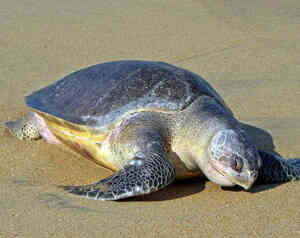
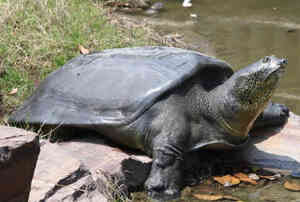
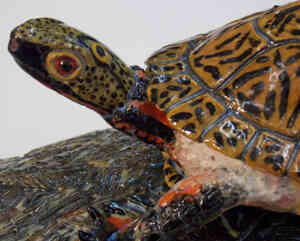
The Hawksbill Sea Turtle (Eretmochelys imbricata) is a medium-sized, strikingly patterned sea turtle in the family Cheloniidae and the only species in the genus Eretmochelys. It is best known for its narrow, hawk-like beak and its beautifully mottled shell with overlapping scutes. Hawksbills inhabit tropical coral reefs and rocky coasts across much of the world’s tropical oceans, where they play a unique ecological role as specialised sponge feeders. Centuries of exploitation for “tortoiseshell” (hawksbill shell), combined with habitat loss and other human impacts, have driven the species to critically endangered status.
Taxonomy and naming
The Hawksbill Sea Turtle is classified within Class Reptilia, Order Testudines, Family Cheloniidae and Genus Eretmochelys. The species name imbricata refers to the overlapping, tile-like arrangement of the carapace scutes, a key feature distinguishing hawksbills from other sea turtles. The common English name “Hawksbill” derives from the elongated, sharply hooked upper jaw, which resembles the bill of a bird of prey and allows the turtle to extract prey from crevices within coral reefs.
Physical characteristics
Hawksbill Sea Turtles are somewhat smaller and more slender than Green Turtles. Adults have an oval to slightly heart-shaped carapace with a distinctly serrated rear margin. The keratinous scutes on the carapace overlap like roof tiles, creating a strongly textured surface. Shell colouration is typically a complex mix of amber, golden, brown and black, forming attractive mottled patterns that have historically made hawksbill shell highly valued as “tortoiseshell.” The plastron is much paler, usually creamy yellow. The head is narrow with a pointed, hooked beak, and the forelimbs are long, powerful flippers, often bearing one or two pairs of prominent claws.
Distribution and habitat
Hawksbill Sea Turtles occur throughout much of the tropical Atlantic, Indian and Pacific Oceans. They are most strongly associated with clear, warm coastal waters featuring coral reefs, rocky shorelines, reef lagoons and sometimes mangrove fringes. Within these habitats they forage among reef structures, resting in ledges and crevices during the day. For nesting, females come ashore on sandy tropical and subtropical beaches, usually on relatively undisturbed islands or coastlines. Hatchlings and small juveniles spend their early years in open-ocean drift zones before recruiting to nearshore reef habitats as they grow.
Behaviour and lifestyle
Like other marine turtles, Hawksbills spend nearly all of their lives at sea, surfacing periodically to breathe and coming ashore only to nest. They are strong swimmers but often remain closely tied to coral reef systems and surrounding coastal habitats. By day, they may be seen swimming slowly over reefs or resting under ledges and in crevices; at other times they actively forage among corals and sponges. Hawksbills show migratory and natal homing behaviour, moving between feeding grounds and nesting beaches and often returning to the general area where they themselves hatched to lay eggs.
Diet
Hawksbill Sea Turtles have a specialised diet among sea turtles. They feed primarily on sponges attached to coral reefs, using their narrow, hooked beaks to pick pieces from crevices that many other animals cannot reach. They also consume sea anemones, soft corals, algae, small crustaceans and other invertebrates. By selectively grazing on sponges, Hawksbills help prevent sponges from overgrowing and outcompeting reef-building corals, thereby contributing to the maintenance of healthy, structurally diverse reef communities.
Reproduction and life cycle
Hawksbills are oviparous, and their breeding seasons vary among regions but are generally concentrated in warmer months. Adult females migrate from foraging grounds to nesting beaches, often travelling long distances. They typically come ashore at night, crawl above the high-tide line and dig flask-shaped nest chambers with their hind flippers. Each clutch contains several dozen round, white eggs, and a female may lay multiple clutches in a single breeding season, separated by intervals of a few weeks. After covering the nest with sand, she returns to the sea, leaving the eggs to incubate for about 6–8 weeks. Hatchlings emerge—usually at night to reduce predation risk—and rush toward the sea, where only a very small fraction will survive the many hazards of early life to eventually become adults.
Relationship with humans
The relationship between humans and Hawksbill Sea Turtles is complex. For centuries, hawksbills were hunted primarily for their beautifully patterned shells, which were used to produce combs, jewellery, eyeglass frames and other luxury items. They have also been taken for meat and eggs in some regions. International agreements such as CITES now prohibit international trade in hawksbills and their products, and many countries provide strict legal protection. At the same time, Hawksbill Sea Turtles have become iconic symbols of coral reef conservation and are a highlight for snorkellers and divers worldwide. Poorly managed tourism, however, can cause stress and disturbance if turtles are chased, touched or crowded by visitors.
Conservation status and threats
Globally, the Hawksbill Sea Turtle is listed as Critically Endangered on the IUCN Red List, with many regional populations severely depleted compared with historical levels. Major threats include illegal hunting and trade in shells, loss and degradation of nesting beaches due to coastal development and erosion, disorientation of nesting females and hatchlings by artificial lighting, bycatch and entanglement in fishing gear, ingestion of marine debris such as plastics, and broader reef degradation caused by pollution, destructive fishing and climate change. Rising sea temperatures, coral bleaching and more frequent severe storms further undermine the reef ecosystems that hawksbills depend on.