The Northern Snake-necked Turtle (Chelodina rugosa), also known as the Northern Long-necked Turtle, is a medium to large side-necked freshwater turtle in the family Chelidae and the genus Chelodina. It is native to tropical northern Australia and southern New Guinea, where it inhabits seasonal floodplains, billabongs and slow-flowing streams. The species is famous for its extremely long neck and for a highly unusual reproductive strategy in which females lay their eggs underwater and the embryos pause development until nests dry out.
Taxonomy and naming
The Northern Snake-necked Turtle belongs to Class Reptilia, Order Testudines, Family Chelidae and Genus Chelodina. Species in Chelodina are commonly called snake-necked turtles because of their very long, flexible necks, which they fold sideways beneath the shell margin rather than retracting straight back. Within the genus, C. rugosa is often placed in the subgenus Chelodina (Chelydera), sometimes referred to as the “thick-necked” snake-necked turtles. The species has had a complicated taxonomic history and was long known under the name Chelodina oblonga, but recent work has clarified that Chelodina rugosa is the appropriate name for the northern snake-necked turtle.
Physical characteristics
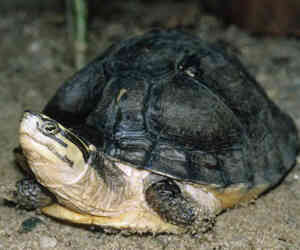
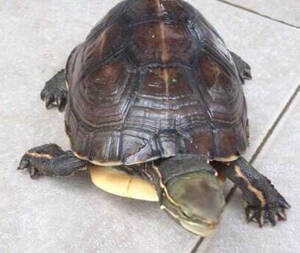
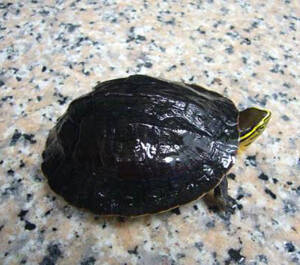
The Northern Snake-necked Turtle is a moderately large freshwater turtle with an oval, slightly domed carapace and a remarkably long neck. Adult carapace length typically reaches around 30–36 cm. The carapace is usually olive-brown, grey-brown or dark brown, sometimes with fine mottling or subtle patterning; the plastron is paler, cream to yellowish, sometimes with darker blotches. The head is relatively small with a somewhat pointed snout, while the neck is thick and very elongate, often as long as or longer than the shell when fully extended. The skin of the neck and limbs is grey to brown and covered in fine scales or tubercles. The limbs are strong, with broad, webbed feet that provide powerful propulsion in the water and allow the turtle to dig in soft substrates.
Distribution and habitat
This species occurs across tropical northern Australia, including parts of northern Queensland, the Northern Territory and northern Western Australia, and extends into southern New Guinea. It is closely associated with seasonal wetlands on coastal floodplains and adjacent lowlands. Typical habitats include floodplain billabongs, shallow swamps, backwaters, slow-moving streams and ephemeral water bodies that fill during the monsoonal wet season. When the wet season arrives, extensive areas are inundated, creating rich foraging and breeding habitat; during the dry season, water recedes and turtles concentrate in remaining pools or seek refuge in the mud.
Behaviour and lifestyle
The Northern Snake-necked Turtle is strongly aquatic and spends most of its time in the water. It is generally most active during the cooler parts of the day, such as early morning and late afternoon, surfacing to breathe and moving between feeding areas and resting sites among submerged logs and vegetation. During the hottest hours, individuals often rest on the bottom or shelter in vegetation or under debris. When threatened, they usually try to swim away quickly or bury themselves in soft mud. As a side-necked turtle (pleurodire), it cannot withdraw its head straight back; instead, it folds the long neck sideways, tucking the head alongside the body under the front of the shell.
Diet
The Northern Snake-necked Turtle is primarily carnivorous, with an opportunistic, strike-and-gape feeding style. It preys on small fish, fry, tadpoles and adult frogs, aquatic invertebrates such as crustaceans and insect larvae, and occasionally other small vertebrates, including hatchling turtles. The long neck allows it to keep the body relatively still while rapidly extending the head to seize prey. The species also scavenges carrion and organic debris, helping to recycle nutrients in wetland ecosystems.
Reproduction and life cycle
The reproductive biology of the Northern Snake-necked Turtle is among the most unusual of any turtle. Females typically nest towards the end of the wet season when water levels begin to stabilise. Instead of nesting on dry land, they dig nests in soft substrates under shallow water in billabongs and other ephemeral water bodies and lay clutches of eggs completely submerged. The embryos then enter a state of arrested development while the nests remain underwater. As the dry season progresses and water levels fall, the nests eventually dry out and atmospheric oxygen becomes available; only then do the embryos resume development. This strategy—underwater nesting followed by delayed development until exposure to air—is an extraordinary adaptation to highly seasonal floodplain environments. Clutch sizes are usually around a dozen eggs, and total incubation time depends on how long the nests remain inundated and the temperatures experienced after drying.
Relationship with humans
In parts of northern Australia, the Northern Snake-necked Turtle has long been known to Indigenous communities, who have detailed knowledge of its seasonal movements and nesting behaviour and sometimes harvest it as a traditional food resource. Modern land-use changes, however, including drainage of wetlands, dam construction and alteration of floodplain hydrology, can threaten important nesting and feeding habitats. The species also attracts interest in the international turtle trade because of its striking appearance and unusual biology, so unregulated collection could pose local risks. Responsible management of harvest and trade, combined with habitat conservation, is essential to ensure sustainable populations.
Conservation status and threats
The Northern Snake-necked Turtle has been assessed as Near Threatened on earlier IUCN Red List evaluations under the name Chelodina oblonga, while some regional assessments in Australia list it as Least Concern. Overall, it is considered a species of low to moderate conservation concern at a broad scale, though local populations and key habitats face substantial pressures. Major threats include the loss and modification of seasonal wetlands through drainage, levee construction and water extraction; disruption of natural flood regimes by dams and other water infrastructure; trampling and disturbance of nesting areas by feral buffalo, pigs and livestock; road mortality; and the potential impacts of climate change on rainfall patterns and the timing of wet and dry seasons. Conservation priorities focus on protecting and restoring floodplain wetlands, managing grazing and feral animals in key nesting areas, monitoring populations and engaging local communities in long-term stewardship of wetland habitats.