The Eastern Snake-necked Turtle (Chelodina longicollis), also known as the Eastern Long-necked Turtle, is a distinctive freshwater turtle native to eastern Australia. It belongs to the family Chelidae, the side-necked turtles, and the genus Chelodina, which is characterised by very long, flexible necks. Eastern Snake-necked Turtles are common inhabitants of rivers, lakes, farm dams and wetlands across much of eastern and south-eastern Australia. When threatened, they not only fold their long necks sideways beneath the shell but also release a strong-smelling fluid from glands near the tail, earning them the nickname “stinkers”.
Taxonomy and naming
This species is classified within Class Reptilia, Order Testudines, Family Chelidae and Genus Chelodina. Chelids are side-necked turtles, which fold the head and neck sideways under the edge of the shell rather than retracting them straight back as most other turtles do. The species name longicollis literally means “long-necked,” emphasising the most obvious morphological feature of the Eastern Snake-necked Turtle. Common English names include Eastern Snake-necked Turtle and Eastern Long-necked Turtle, both referencing its geographic distribution and elongated neck.
Physical characteristics
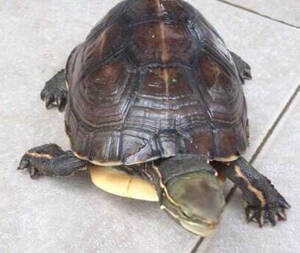
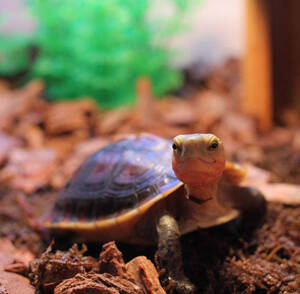
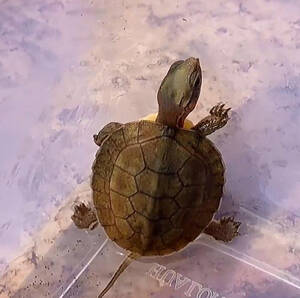
The Eastern Snake-necked Turtle has an oval to slightly heart-shaped carapace that is typically dark brown, blackish-brown or olive on the upper surface. The plastron (underside) is usually cream to yellowish with numerous dark blotches or marbling. The neck is extremely long and slender, often approaching or exceeding the length of the carapace when fully extended, giving the turtle its “snake-necked” appearance. The head is relatively small with a pointed snout and medium-sized eyes. The limbs are robust with well-developed webbing between the toes, adapted for swimming and walking on soft substrates. Overall, the combination of a moderate-sized shell and an extraordinarily long neck makes this species easy to recognise.
Distribution and habitat
Eastern Snake-necked Turtles occur across much of eastern and south-eastern Australia, from south-eastern Queensland through New South Wales and the Australian Capital Territory into Victoria and parts of South Australia. They favour still or slow-flowing freshwater habitats such as ponds, lagoons, billabongs, farm dams, creeks and quiet river reaches, especially where aquatic vegetation, soft muddy bottoms and basking sites like logs or rocks are available. During droughts or when waterbodies dry out, these turtles may aestivate by burying themselves in mud or retreating into shelter on land until conditions improve.
Behaviour and lifestyle
This species is semi-aquatic, spending much of its time in the water but regularly emerging to bask or move between waterbodies. Activity is generally diurnal, with turtles basking on logs, rocks and banks during sunny periods and foraging in the water when temperatures are suitable. When disturbed, Eastern Snake-necked Turtles may dive rapidly to the bottom, hide among vegetation or quickly fold their long necks sideways beneath the shell. They can also release a pungent, yellowish fluid from musk glands near the rear of the shell as a chemical defence, which is strong enough to deter many would-be predators and has led to their reputation as “stinkers”.
Diet
The Eastern Snake-necked Turtle is primarily carnivorous, though it may consume some plant material incidentally. Its diet consists largely of small fish, tadpoles and frogs, aquatic insects and larvae, crustaceans (such as small yabbies and shrimps), molluscs and other aquatic invertebrates, as well as carrion when available. The elongated neck allows the turtle to strike rapidly at prey, extending its head forward in a swift lunge. In captivity, a balanced diet typically includes fish, shrimp, insects, formulated turtle pellets and occasional plant matter to approximate the variety of foods eaten in the wild.
Reproduction and life cycle
Eastern Snake-necked Turtles are oviparous. Breeding generally occurs during the warmer months, when males court females through following and nudging behaviours. After mating, females leave the water to dig nests in soft soils or sandy banks above the waterline, where they lay clutches of roughly 10–25 eggs, depending on body size and condition. After covering and disguising the nest, the female returns to the water, leaving the eggs to be incubated by environmental heat. Incubation time is strongly influenced by temperature and moisture. Hatchlings emerge as miniature versions of the adults, with proportionally long necks and small shells, and must immediately cope with both aquatic and terrestrial predators while learning to forage effectively.
Relationship with humans
Eastern Snake-necked Turtles are non-venomous and generally shy around humans. They may bite defensively if handled roughly and can emit strong-smelling musk when disturbed, but they do not pose a serious danger to people. By feeding on fish, amphibians, insects and other aquatic animals, they play an important role in freshwater food webs. In some areas they are kept as display animals and pets, where legislation permits, but captive care requires substantial water volume, good filtration, basking platforms, appropriate heating and lighting, and a varied diet. For most people, the most appropriate way to enjoy this species is to observe wild individuals from a distance and avoid capturing or relocating them.
Conservation status and threats
Overall, the Eastern Snake-necked Turtle is not currently regarded as threatened and is generally assessed as Least Concern on conservation listings. It remains common in many suitable waterbodies, including artificial farm dams and reservoirs. However, local populations can be affected by wetland drainage and infilling, water pollution, changes in flow regimes, road mortality during overland movements, predation by introduced foxes and dogs, and accidental drowning in nets and traps. Effective conservation measures include protecting and restoring wetlands and slow-flowing waterways, reducing chemical pollution, installing wildlife-friendly road and waterway crossings, modifying fishing gear to reduce turtle bycatch and educating the public about the ecological value of native freshwater turtles.