A broken leg, sudden surgery, a late-night emergency visit – these are the moments that scare pet owners in the US and Europe the most. Not only because a dog or cat is in danger, but because the vet bill can be hundreds or even thousands of dollars or euros at once.
That’s why every responsible owner should have a pet emergency fund. It doesn’t need to be huge on day one. It just needs to exist, and to grow steadily over time.
In this guide, you’ll learn:
What a pet emergency fund is (and what it isn’t)
Why you need one even if you have insurance
Simple ways to calculate how much to save
Step-by-step methods to build your fund on any budget
Where to keep the money and when to use it
Common mistakes to avoid
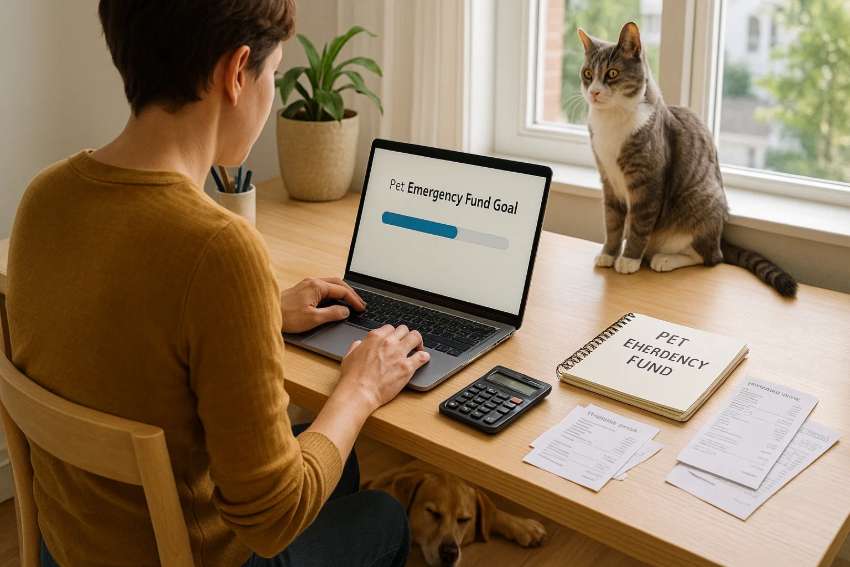
1. What Is a Pet Emergency Fund?
A pet emergency fund is money set aside only for urgent vet care – accidents, sudden illnesses, out-of-hours emergencies and unexpected diagnostic tests or medications.
1.1 What it is
A separate pot of money reserved for your dog or cat’s health.
A buffer that lets you say “yes” to treatment instead of panicking about the bill.
A way to protect your main savings, rent and food budget when something goes wrong.
1.2 What it is not
Not for routine care like annual vaccines or flea treatment (you should budget those separately).
Not for new toys, accessories or non-essential services.
Not a general savings account for anything you feel like buying.
The rule is simple: pet emergency fund = vet emergencies only.
2. Why You Need an Emergency Fund Even If You Have Pet Insurance
Many owners think “I have insurance, so I don’t need savings.” Unfortunately, that’s not true.
2.1 Insurance doesn’t cover everything
Policies have deductibles (the amount you pay before coverage starts).
They have co-pays or reimbursement rates (you still pay a percentage of each bill).
They have exclusions (for example, pre-existing conditions or some dental work).
2.2 You must usually pay first
In many cases, you pay the vet bill up front and claim money back later.
This means you still need cash available on the day of the emergency.
2.3 Insurance can change
Premiums rise as pets age.
You may change or cancel a policy in the future.
A strong plan combines insurance + emergency fund. Insurance covers big risks; the fund covers your share of the bill and anything the policy doesn’t pay.
3. How Much Should You Save for a Pet Emergency Fund?
There is no perfect number that fits every dog or cat. But you can use simple rules of thumb to pick a realistic target.
3.1 Think in “emergency levels”
Consider three tiers:
Basic safety net: Enough to cover an emergency exam, some tests and simple treatment for a minor to moderate issue.
Comfortable buffer: Enough for an emergency visit plus more advanced diagnostics (blood work, X-rays, ultrasound) and a day or two of care.
Strong protection: Enough to contribute meaningfully to surgery and hospitalization, especially for large dogs or complex cases.
For many owners:
The basic safety net might be roughly equal to one or two months of your normal living expenses or a realistic “medium” vet bill in your area.
The comfortable buffer might be more like three to four months of your normal expenses or a higher-end emergency bill.
The strong protection level may take years to build and may not be realistic for everyone – and that’s okay.
The key idea: anything is better than nothing. Don’t wait until you can save a “perfect” amount. Start with a small target and increase it over time.
3.2 Adjust for your pet and your situation
Large dogs: need higher doses of medication and more anesthesia; emergencies are often more expensive.
High-risk breeds: may need more orthopedic surgeries or complex care.
Outdoor cats: may have more injuries and infections than indoor cats.
Your income stability: if your income is irregular, a larger emergency fund helps smooth out shocks.
If your pet is large or high-risk, aim for the comfortable buffer or higher if you can. For small pets with lower risk and strong insurance, the basic safety net may be a practical starting goal.
4. How to Build a Pet Emergency Fund Step by Step
You don’t need to fill your fund all at once. Treat it like a slow, steady project.
4.1 Step 1: Open a separate savings pot
Create a savings account or digital “bucket” named something like “Pet Emergency Fund”.
Keep it separate from your everyday spending and general savings.
4.2 Step 2: Choose a realistic monthly amount
Look at your budget and pick a number you can commit to every month without skipping rent or food.
Even a small amount (for example, the price of one takeaway meal) is better than zero.
Automatic transfers on payday work best – you “pay your pet fund” before the money disappears elsewhere.
4.3 Step 3: Add extra when you can
Use part of any bonus, gift or tax refund to boost the fund.
When you spend less than expected on routine care or grooming, move the difference into the emergency fund.
If you quit a subscription or habit, redirect that money instead of letting it vanish.
4.4 Step 4: Set a target and review regularly
Pick a first target (for example, your basic safety net level).
Once you reach it, decide whether to aim for the comfortable buffer.
Review your fund once a year and adjust your monthly contribution if your income or pet’s needs change.
5. Where Should You Keep Your Pet Emergency Fund?
Your emergency fund needs to be:
Safe – you shouldn’t risk losing it in the stock market or crypto.
Accessible – you might need it fast on a weekend or at night.
Separate – so you’re not tempted to spend it on non-emergencies.
Good options include:
A simple savings account separate from your main checking account.
A “spaces” or “vault” feature inside your bank app, clearly labeled for pet emergencies.
Avoid investments that:
Can drop in value right before you need the money.
Take days to withdraw.
6. When Should You Use the Fund – and What Happens After?
6.1 When to use it
Use your pet emergency fund when:
Your dog or cat is suddenly sick, injured or in clear pain.
A vet recommends urgent treatment, diagnostics or hospitalization.
You are facing a bill that would otherwise force you into harmful debt or skipping essentials.
Don’t use it for:
Routine vaccines or planned check-ups.
New toys, beds, clothes or non-essential accessories.
Everyday expenses not related to your pet.
6.2 Rebuilding after an emergency
After you use the fund, expect it to be smaller – that is its purpose.
As soon as your finances stabilize, restart your monthly contributions.
If possible, slightly increase the amount until you reach your target again.
Think of it like this: you didn’t “fail” because you used the fund. You succeeded, because it was there when your pet needed it.
7. Common Mistakes With Pet Emergency Funds
7.1 Waiting for “extra” money to start
Most people never feel like they have “extra” money.
Start with a small automatic amount, even if it feels tiny.
7.2 Mixing the fund with everyday spending
Keeping your emergency fund in the same account as daily expenses makes it easy to “accidentally” spend.
Separate accounts or labeled sub-accounts help you respect the boundary.
7.3 Using risky investments instead of savings
Investments can go down right before you need the money.
Emergency funds should be boring: safe and easy to access.
7.4 Not updating the target as your pet ages
Senior pets usually have higher medical costs.
Review your target every year or two and adjust for age, breed and health changes.
8. Pet Emergency Fund vs. General Savings vs. Credit
You might wonder why you need a specific pet emergency fund if you already have some general savings or access to credit.
8.1 Why not just use general savings?
A labeled pet fund creates a mental barrier that prevents you from spending it on other things.
It helps you clearly see how prepared you are for vet emergencies instead of guessing.
8.2 Why not just use credit cards or loans?
High-interest debt can make one emergency bill much more expensive over time.
Credit limits may not be enough for large surgeries or multiple emergencies.
Already carrying debt can limit your options in future emergencies.
A pet emergency fund doesn’t have to replace general savings or all credit use – but it gives you a safer, cleaner first line of defense.
9. Final Thoughts: Peace of Mind for You and Protection for Your Pet
You can’t control when your dog eats something dangerous or when your cat suddenly can’t breathe properly. But you can control how prepared you are to handle the financial side of those emergencies.
A pet emergency fund:
Turns scary unknowns into manageable, planned risks.
Helps you say “yes” to necessary treatment when it matters most.
Protects your own financial stability at the same time.
You don’t need to build the perfect fund overnight. Start small, be consistent, review your plan once a year and adjust as your life and your pet change. Every month that you put something aside – no matter how modest – you’re quietly building a safety net under the life you share with your dog or cat.
That safety net is more than numbers in an account. It’s a promise: “If something happens, I’ll be ready to help you.”