Hamsters should not eat chocolate, caffeine, alcohol, onions, garlic, rhubarb, grapes, raw beans, raw potatoes, unripe tomatoes, fruit seeds or stone-fruit pits. Citrus, spicy foods and heavily processed human foods are also best avoided. Some of these foods may contain potentially harmful compounds, while others create digestive, choking or nutritional risks. If your hamster eats something dangerous or develops weakness, diarrhea, tremors, breathing problems or other unusual symptoms, contact a veterinarian promptly.
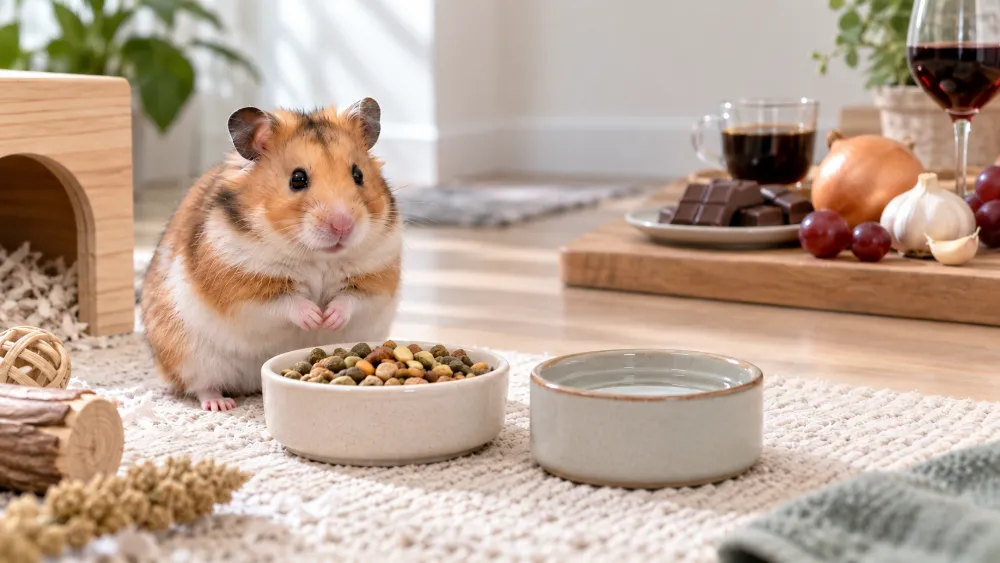
A complete hamster food should remain the foundation of the diet. Human foods that contain chocolate, caffeine, alcohol or unsuitable ingredients should be kept out of reach.
Foods Hamsters Should Not Eat: Quick List
| Food | Recommendation | Main Concern |
|---|---|---|
| Chocolate | Never feed | Theobromine and caffeine |
| Coffee and caffeinated drinks | Never feed | Caffeine |
| Alcohol | Never feed | Potentially severe toxicity |
| Rhubarb | Avoid completely | RSPCA warns it may be poisonous to rodents |
| Grapes | Avoid | RSPCA advises against them for hamsters |
| Garlic | Avoid | Veterinary hamster guides advise against it |
| Onions | Avoid | Veterinary hamster guides advise against them |
| Raw beans | Avoid | Listed as unsuitable in veterinary hamster guidance |
| Raw potato | Avoid | Not recommended for hamsters |
| Unripe tomato | Avoid | Veterinary guidance specifically warns against it |
| Apple seeds | Remove | Seeds can contain cyanogenic compounds |
| Peach, cherry, plum and other stone-fruit pits | Never feed | Hard choking hazard and potentially harmful compounds |
| Citrus fruit | Best avoided | May cause gastrointestinal irritation |
| Hot chili peppers | Avoid | Digestive irritation |
| Very sugary foods | Avoid | Obesity and nutritional imbalance |
| Very salty foods | Avoid | Not appropriate for hamster nutrition |
| Highly processed human food | Avoid | Often high in salt, sugar, fat or unsuitable ingredients |
Not Every “Bad” Food Is Equally Toxic
Online hamster food lists often make an important mistake: they use the word toxic for almost everything a hamster should not eat.
That is too simplistic.
There are several different reasons to avoid a food.
| Type of Risk | Examples |
|---|---|
| Potential chemical toxicity | Chocolate, caffeine, alcohol, some seeds and pits |
| Veterinary guidance advises against it | Onion, garlic, raw beans, raw potato, unripe tomato |
| Digestive irritation | Citrus, spicy peppers |
| Physical hazard | Hard fruit pits, inappropriate live prey |
| Poor nutritional choice | Candy, salty snacks, sugary cereals, fried food |
This distinction matters because a salty cracker and a piece of chocolate are not the same kind of risk, even though neither belongs in a hamster's regular diet.
Can Hamsters Eat Chocolate?
No. Hamsters should never be given chocolate.
Chocolate contains methylxanthines, particularly:
theobromine;
caffeine.
Veterinary hamster-care resources specifically list chocolate among foods that should not be fed.
Dark chocolate and baking chocolate generally contain more theobromine than milk chocolate, but there is no reason to test what amount might be tolerated by a hamster.
A hamster weighs only a tiny fraction of a person, so even small amounts deserve caution.
What If My Hamster Ate Chocolate?
Contact a veterinarian for advice, particularly if the amount is unknown or the hamster develops unusual symptoms.
Possible signs of toxic exposure in animals can include:
restlessness;
rapid breathing;
tremors;
weakness;
abnormal heart rate;
seizures in severe cases.
Do not attempt to make a hamster vomit at home.
Can Hamsters Drink Coffee?
No.
Coffee contains caffeine, and veterinary hamster-care guidance specifically identifies caffeine as something hamsters should never consume.
This also means hamsters should not be given:
coffee;
espresso;
energy drinks;
caffeinated tea;
cola;
caffeine-containing supplements.
A hamster only needs fresh clean water to drink.
Can Hamsters Drink Alcohol?
No. Alcohol should never be given to a hamster.
Veterinary hamster care sheets specifically warn that alcohol can cause serious illness or death.
Keep beer, wine, spirits and cocktails away from the enclosure.
Foods containing substantial alcohol should also not be offered.
Can Hamsters Eat Grapes?
The safest recommendation is no.
The RSPCA specifically advises hamster owners not to feed grapes, stating that grapes and rhubarb may be poisonous to rodents.
Other internet sources sometimes list grapes or raisins as acceptable, which creates confusing advice.
When a major animal-welfare organization specifically recommends avoiding a food and that food is not nutritionally necessary, there is little reason to take the risk.
Choose better-established fruits such as a tiny piece of seedless apple flesh or pear instead.
Can Hamsters Eat Rhubarb?
No. Rhubarb should be avoided.
The RSPCA specifically warns against feeding rhubarb to hamsters.
Do not offer:
raw rhubarb;
cooked rhubarb;
rhubarb leaves;
rhubarb desserts.
There are plenty of safer vegetables available.
Can Hamsters Eat Onions?
The cautious answer is no.
Current veterinarian-reviewed hamster care sheets advise against onions.
This is worth mentioning because older or more general pet-food lists sometimes disagree.
Since onion is not needed in a hamster diet, the safest practical approach is simply to exclude it.
That includes:
raw onion;
cooked onion;
onion powder;
foods seasoned with onion.
Can Hamsters Eat Garlic?
No.
Current veterinary hamster-care guidance specifically lists garlic among foods to avoid.
Do not feed:
fresh garlic;
cooked garlic;
garlic powder;
garlic-flavored human food.
A hamster does not need garlic for nutritional or health reasons.
Can Hamsters Eat Raw Potatoes?
Veterinary hamster-care sheets advise against raw potato.
Raw potato is therefore best kept out of the hamster's diet.
Potato also provides little reason to take up space in a diet when established safe options such as broccoli, cucumber, squash and peppers are available.
Can Hamsters Eat Raw Beans?
No.
Current veterinary hamster guidance lists raw beans among foods that should not be offered.
This refers to raw beans rather than green beans.
Green beans are a different vegetable and are commonly listed as safe in small portions.
This distinction is important because “beans” can refer to very different foods.
Can Hamsters Eat Tomatoes?
Tomato needs a more precise answer.
Veterinary hamster guidance specifically warns against unripe tomatoes.
If ripe tomato flesh is offered at all, it should be:
fully ripe;
red;
served in a very small amount;
free from leaves and stems.
Do not give:
green unripe tomatoes;
tomato leaves;
tomato stems;
tomato sauce;
ketchup.
Ketchup and sauces may contain sugar, salt, onion, garlic and other ingredients that do not belong in a hamster diet.
Can Hamsters Eat Apple Seeds?
No. Remove apple seeds before feeding apple flesh.
Apple seeds contain cyanogenic compounds that can release cyanide when damaged and metabolized.
A hamster has no need to eat the seeds.
If you offer apple:
wash it;
remove the core;
remove every seed;
cut off a tiny piece of flesh.
The apple flesh itself can be used as an occasional treat.
Can Hamsters Eat Cherry Pits or Peach Pits?
No.
Stone-fruit pits should never be offered to hamsters.
This includes pits from fruits such as:
cherries;
peaches;
plums;
apricots.
The hard pit is also physically inappropriate for such a small animal.
If offering a safe stone fruit, only use a tiny amount of flesh after the pit has been completely removed.
Fruit Seeds and Pits: A Simple Rule
The easiest rule is:
Remove seeds and pits before giving fruit to a hamster.
This avoids both unnecessary chemical exposure and physical hazards.
For a complete fruit guide, see What Fruits Can Hamsters Eat? Safe & Unsafe Fruit List.
Can Hamsters Eat Citrus Fruit?
Citrus is best avoided.
Veterinarian-reviewed hamster guidance advises against fruits such as:
oranges;
lemons;
limes;
grapefruit.
PetMD notes that citrus can contribute to gastrointestinal problems in hamsters.
This does not mean a tiny accidental lick guarantees poisoning.
It means citrus is an unnecessary choice when better-established fruits are available.
Can Hamsters Eat Spicy Food?
No.
Spicy peppers and heavily seasoned foods can irritate the gastrointestinal tract.
Do not give a hamster:
chili peppers;
hot sauce;
spicy chips;
curry;
seasoned leftovers.
Sweet bell peppers are different and can be suitable in small amounts.
Can Hamsters Eat Candy?
Candy should not be fed to hamsters.
The issue is not necessarily acute poisoning from ordinary sugar.
The problem is that candy provides:
large amounts of sugar;
little useful nutrition;
potential additives;
an unnecessary contribution to obesity and dietary imbalance.
Chocolate candy creates the additional problem of theobromine and caffeine.
Can Hamsters Eat Cookies or Cake?
These foods should be avoided.
Cookies and cakes commonly contain combinations of:
sugar;
fat;
salt;
chocolate;
icing;
other ingredients unsuitable for hamsters.
A hamster does not need “human treats.”
A tiny piece of a safe vegetable or an appropriate hamster treat is a better choice.
Can Hamsters Eat Chips or Crisps?
No.
Potato chips, corn chips and similar snacks are usually high in:
salt;
fat;
seasonings;
flavor additives.
They provide no nutritional advantage for a hamster.
Can Hamsters Eat Salty Food?
Heavily salted human food should not be offered.
Hamsters are tiny animals and their complete diet already supplies the minerals they need.
Avoid deliberately feeding foods such as:
salted nuts;
crisps;
pretzels;
processed meats;
salty crackers.
Can Hamsters Eat Sugary Cereal?
Sweetened breakfast cereal is not an appropriate hamster food.
Plain grains such as oats, barley, millet and wheat can fit into hamster feeding plans in small amounts, but adding sugar, chocolate coatings or artificial flavoring changes the nutritional picture completely.
Choose plain foods instead.
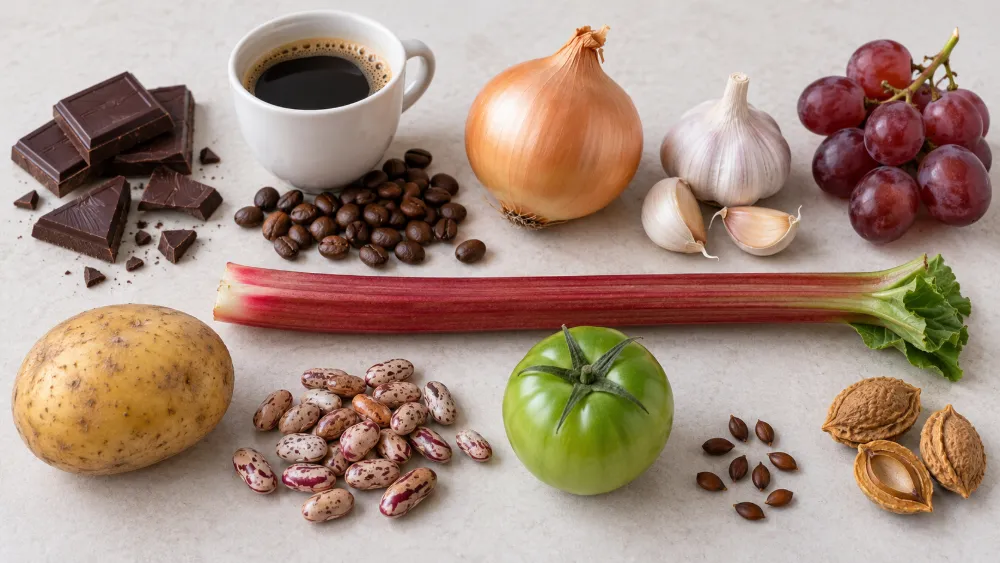
Some foods are potentially toxic, while others are avoided because they irritate the digestive system or offer poor nutrition.
Can Hamsters Eat Live Insects?
Hamsters are omnivores and wild hamsters eat insects.
However, PetMD advises against feeding live prey to pet hamsters because live insects can:
injure the hamster;
escape;
infest the enclosure.
If animal-protein enrichment is desired, safer options include an appropriate freeze-dried mealworm or another veterinarian-approved protein treat.
Can Hamsters Eat Human Food?
Some foods that humans eat are also suitable hamster ingredients.
Examples include tiny portions of:
broccoli;
cucumber;
bell pepper;
plain oats;
plain boiled egg;
seedless apple flesh.
But a human dish and a single ingredient are not the same thing.
For example:
| Ingredient | Plain Version | Human Dish |
|---|---|---|
| Carrot | Tiny fresh piece can be suitable | Glazed carrot with butter and sugar: avoid |
| Egg | Tiny plain boiled piece can be suitable | Fried egg with salt and oil: avoid |
| Oats | Plain oats can be suitable | Sugary flavored oatmeal: avoid |
| Bell pepper | Small fresh piece can be suitable | Spicy pepper dish with sauce: avoid |
What Should Hamsters Eat Instead?
Hamster feeding is much simpler when the diet is built around established safe foods.
The basic structure should be:
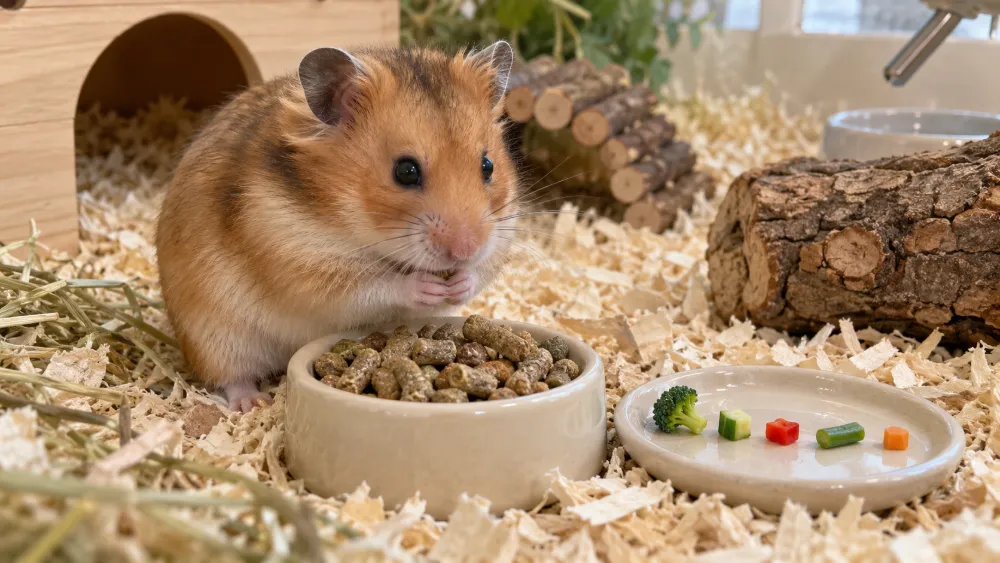
Complete hamster food as the nutritional foundation.
Small portions of suitable vegetables for variety.
Occasional fruit in tiny amounts.
Limited protein or seed treats.
Fresh clean water at all times.
See our full guide: What Can Hamsters Eat? Complete Safe Food List.
For vegetables specifically, see What Vegetables Can Hamsters Eat? Safe Vegetable List.
What If My Hamster Eats Something It Shouldn't?
First, remove access to the food so the hamster cannot eat more.
Then identify:
exactly what was eaten;
approximately how much;
when it happened;
the hamster's species and approximate body weight;
whether symptoms are present.
If the food is potentially toxic, the amount is unknown, or your hamster develops symptoms, contact a veterinarian promptly.
Do not rely on home remedies or attempt to make the hamster vomit.
Signs That Need Veterinary Attention
Seek veterinary advice if a hamster develops significant symptoms after eating something unusual.
Concerning signs can include:
not eating;
severe or persistent diarrhea;
a wet or soiled rear end;
extreme lethargy;
weakness;
tremors;
seizures;
difficulty breathing;
loss of coordination;
collapse;
sudden abnormal drinking or urination.
Small mammals can deteriorate quickly, so significant illness should not be monitored for days before seeking help.
Don't Make Sudden Diet Changes
Even when switching from an inappropriate food to a better one, avoid changing the entire diet abruptly.
The RSPCA recommends introducing dietary changes gradually because sudden changes can upset a hamster's digestive system.
When changing the main commercial diet, mix increasing amounts of the new food with decreasing amounts of the old food over several days.
Keep Dangerous Foods Away From the Enclosure
Hamsters are curious and may chew or pouch food very quickly.
Prevention is easier than dealing with accidental ingestion.
Do not place the enclosure where the hamster can reach:
chocolate;
coffee cups;
alcoholic drinks;
bowls of snacks;
fruit pits;
household medicines.
Supervise the hamster during out-of-enclosure play.
Frequently Asked Questions
What foods are poisonous to hamsters?
Foods and substances that should be kept away include chocolate, caffeine, alcohol and several plant foods that veterinary or animal-welfare guidance advises against. RSPCA specifically warns against grapes and rhubarb, while current veterinary hamster care sheets advise avoiding onions, garlic, raw beans, raw potatoes and unripe tomatoes.
What foods can hamsters not eat?
Avoid chocolate, caffeine, alcohol, grapes, rhubarb, onion, garlic, raw beans, raw potatoes, unripe tomatoes, fruit seeds and stone-fruit pits. Citrus, spicy foods and heavily processed human snacks are also best avoided.
Can hamsters eat chocolate?
No. Chocolate contains theobromine and caffeine and should never be given to hamsters.
Can hamsters eat grapes?
The RSPCA advises against grapes for hamsters because they may be poisonous to rodents. Since grapes are not necessary nutritionally, avoiding them is the cautious choice.
Can hamsters eat raisins?
Guidance is inconsistent, and raisins are simply dried grapes with concentrated sugar. Because RSPCA advises against grapes and raisins are unnecessary, the cautious approach is to avoid them.
Can hamsters eat onions?
Current veterinarian-reviewed hamster care sheets advise against onions. Since onion is not needed for hamster nutrition, it is best avoided.
Can hamsters eat garlic?
No. Veterinary hamster-care guidance recommends avoiding garlic.
Can hamsters eat rhubarb?
No. The RSPCA specifically warns that rhubarb may be poisonous to rodents.
Can hamsters drink coffee?
No. Coffee contains caffeine, which veterinary hamster-care guidance identifies as toxic.
Can hamsters drink alcohol?
No. Alcohol can cause serious illness or death and should never be given to a hamster.
Can hamsters eat citrus?
Citrus is best avoided. Veterinarian-reviewed guidance recommends against it, and citrus may contribute to gastrointestinal irritation.
Can hamsters eat apple seeds?
No. Remove the seeds and core before offering a tiny piece of apple flesh.
Can hamsters eat peach pits?
No. Stone-fruit pits should never be fed. Remove the pit completely and offer only a tiny amount of suitable fruit flesh if desired.
Can hamsters eat raw potatoes?
Current veterinary hamster-care resources advise against raw potato.
Can hamsters eat raw beans?
No. Raw beans are listed among foods to avoid. Green beans are different and can be offered in small portions.
What should I do if my hamster eats something toxic?
Remove the food, determine what and how much was eaten, and contact a veterinarian if the substance may be toxic, the amount is uncertain or the hamster develops abnormal symptoms. Do not attempt to induce vomiting at home.
Related Hamster Feeding Guides
Veterinary and Animal-Welfare Sources
RSPCA — What to Feed a Pet Hamster
RSPCA — How to Take Care of Your Hamster
PetMD — Hamster Care Sheet
PetMD — Syrian Hamster Care Sheet
PetMD — Dwarf Hamster Care Sheet
PetMD — What Can Hamsters Eat?