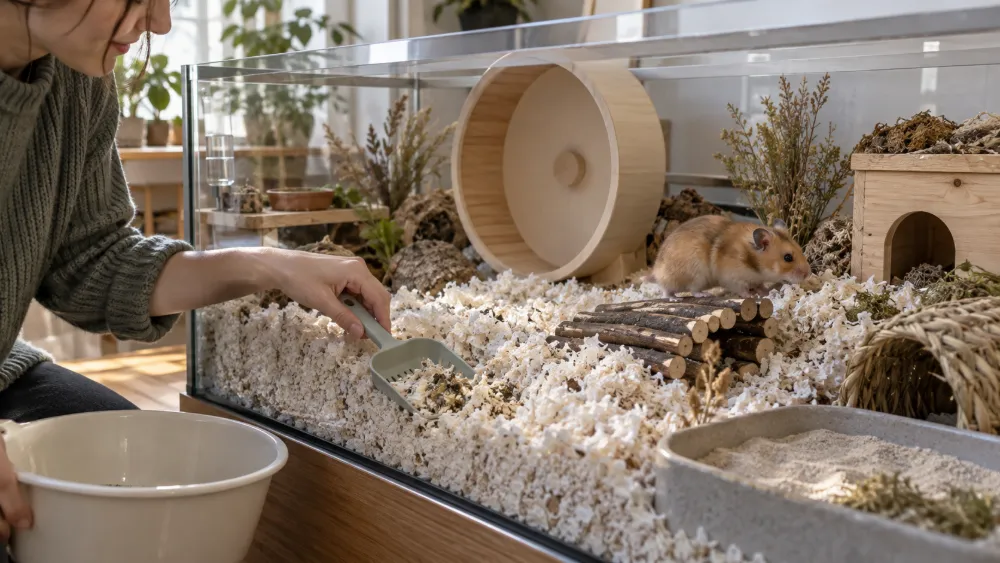
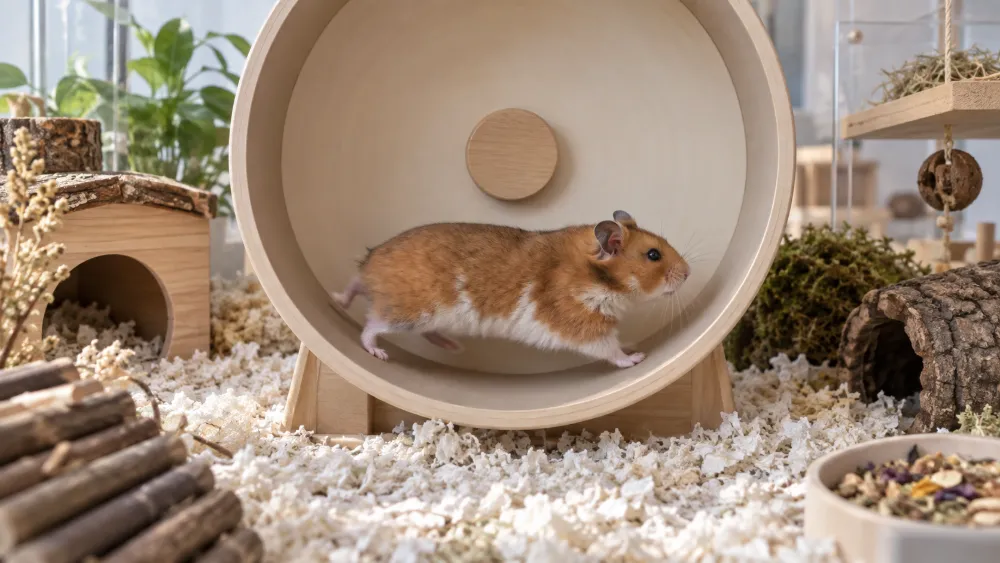
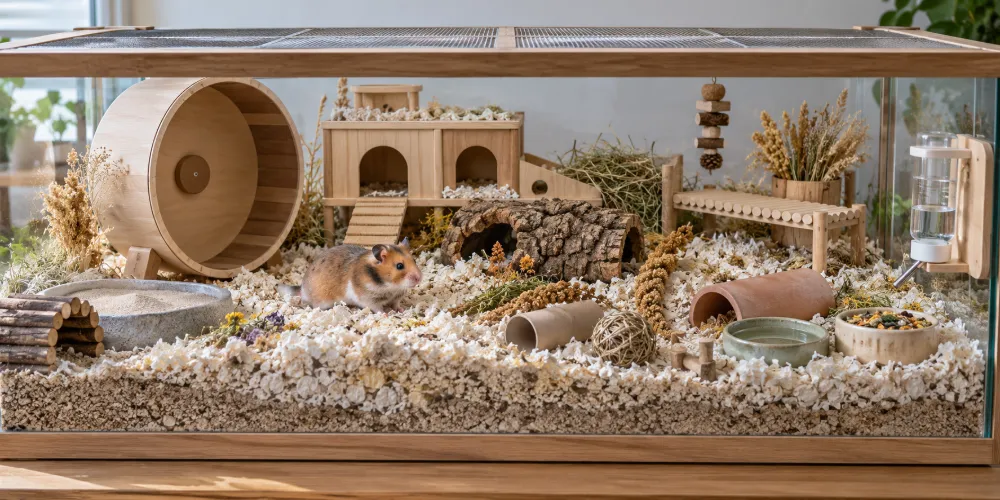
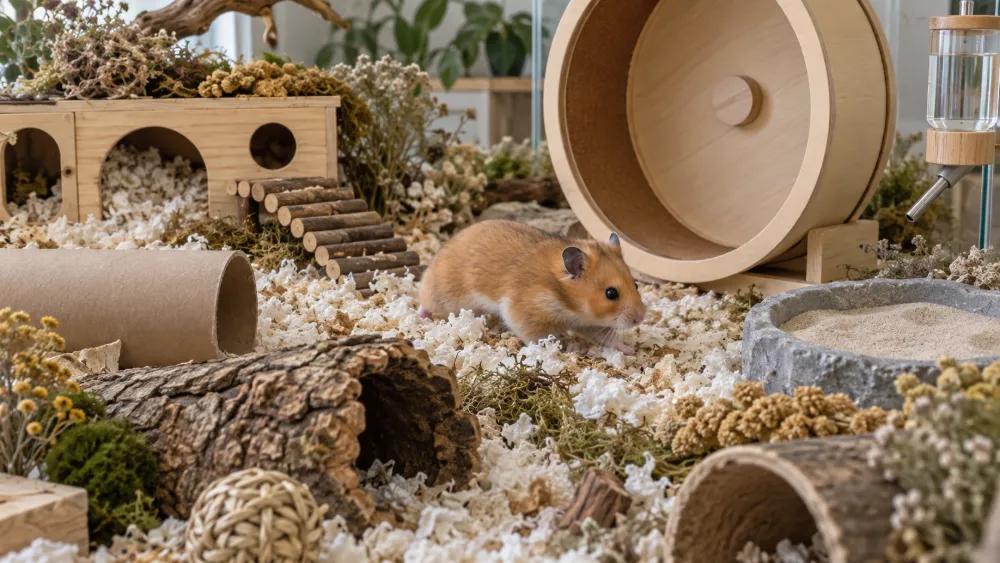
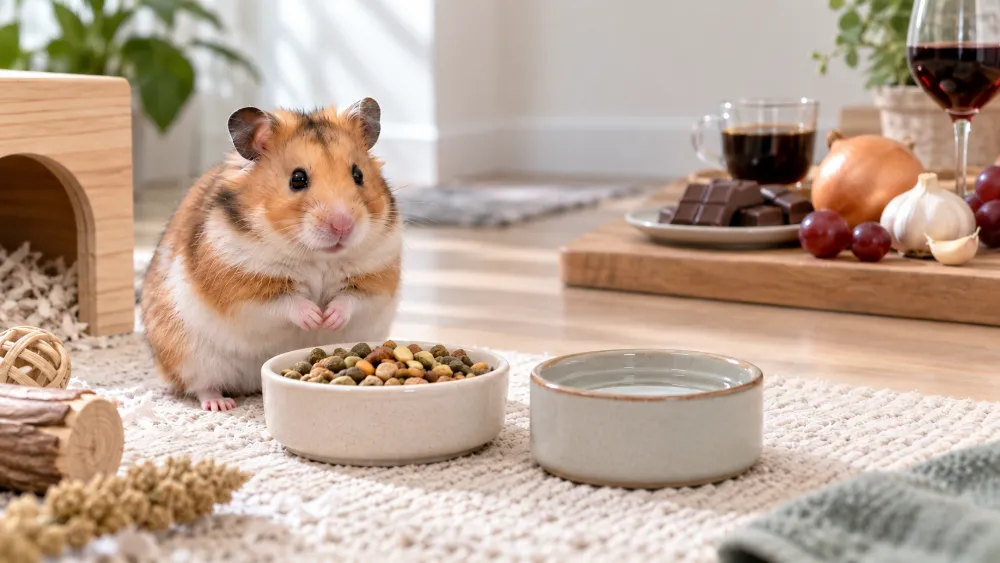
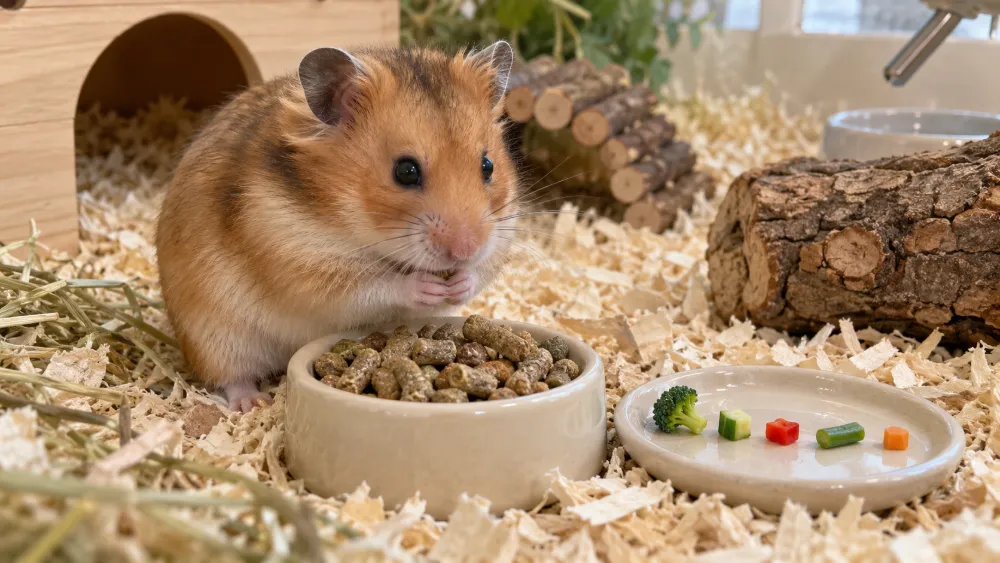
For most pet hamsters, soft unscented paper-based bedding is one of the best all-around choices because it is low in dust, absorbent and good at holding burrows. Dust-extracted aspen and non-fragranced hemp can also be suitable, especially when mixed with paper bedding or soft hay for better tunnel stability. A hamster should have a genuinely deep burrowing area—around 25 cm or more is a useful target. Avoid cotton wool, fluffy fiber bedding, scented bedding, dusty sawdust and unsuitable aromatic wood products.
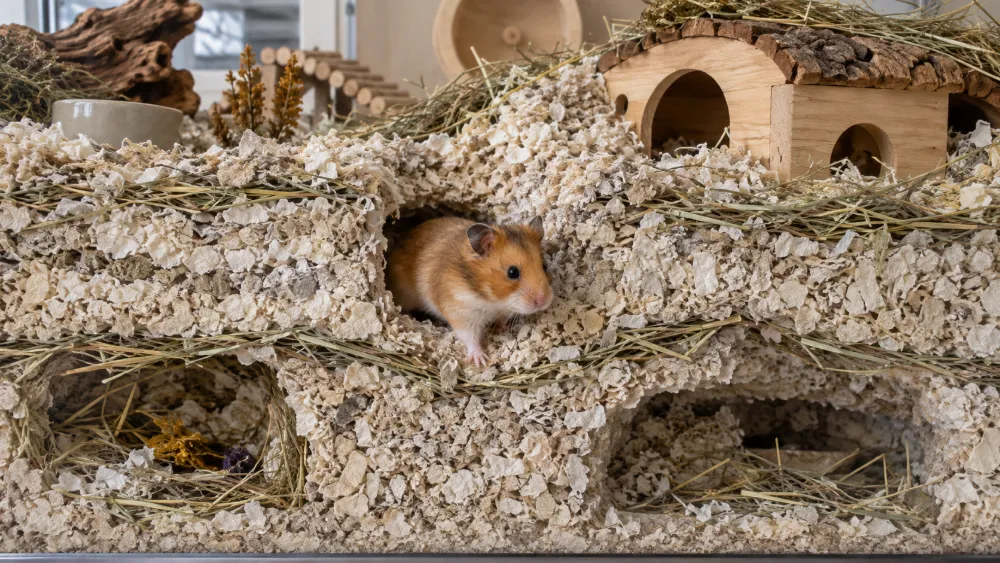
Deep, stable bedding allows hamsters to dig tunnels, build sleeping chambers and store food in ways that resemble their natural burrowing behavior.
Best Hamster Bedding at a Glance
| Bedding Type | Suitable? | Burrow Support | Main Notes |
|---|---|---|---|
| Unscented paper bedding | Excellent | Excellent when compacted | Good general-purpose choice |
| Aspen | Good | Moderate to poor alone | Choose dust-extracted material and mix for stability |
| Hemp | Good | Moderate to poor alone | Use non-fragranced, low-dust material |
| Soft hay | Useful supplement | Helps reinforce tunnels | Best mixed through another bedding |
| Plain toilet tissue | Good for nesting | Useful in nests | Unscented, dye-free and easily torn |
| Soil | Useful enrichment | Variable | Use chemical-free pet-safe soil, usually in a dig area |
| Cotton wool / hamster fluff | No | Not worth the risk | Entanglement and ingestion hazard |
| Dusty sawdust | No | Variable | Can irritate the respiratory system |
| Scented bedding | No | Variable | Fragrances can irritate sensitive airways |
What Is the Best Bedding for a Hamster?
For most home hamster enclosures, unscented paper-based bedding is the easiest material to recommend as the main burrowing substrate.
It has several advantages:
low dust when a good-quality product is chosen;
good absorbency;
soft texture;
relatively good tunnel stability;
easy mixing with hay, hemp or aspen;
easy spot cleaning.
Blue Cross lists paper-based bedding, wood-pulp bedding and hemp among suitable hamster bedding materials.
PDSA also recommends paper-based bedding and notes that it can be used alone or mixed with other materials.
Woodgreen particularly recommends soft paper bedding for deeper digging areas because it holds burrows well.
How Deep Should Hamster Bedding Be?
Aim for a deep burrowing area of approximately 25 cm or more where the enclosure allows it.
PDSA recommends no less than about 25 cm / 10 inches of bedding so hamsters can dig, sleep and store food underground.
Woodgreen recommends substantial bedding across most of the enclosure plus a deeper digging zone of approximately 25–30 cm.
More depth can be useful when:
the enclosure is tall enough;
the bedding holds tunnels effectively;
heavy objects are supported independently;
ventilation remains adequate.
The goal is not simply to reach a number on a ruler.
The hamster should actually be able to build and maintain burrows.
Why Do Hamsters Need Deep Bedding?
Burrowing is not an optional trick or novelty behavior.
It is a major part of normal hamster behavior.
In a deep substrate, a hamster can create spaces for:
sleeping;
nesting;
food storage;
hiding;
resting away from light;
moving between underground chambers.
RSPCA emphasizes that hamsters naturally build nests and dig burrows, while Blue Cross recommends providing plenty of deep bedding so this behavior can be expressed.
A shallow layer covering the cage floor may absorb urine, but it does not provide the same behavioral opportunity.
How Much Bedding Should Cover the Cage?
You do not necessarily need exactly the same depth across every part of the enclosure.
A practical setup often includes:
a large area with 25–30 cm or more of bedding;
a lower platform supporting the wheel;
a stable sand-bath area;
partially buried hides and tunnels.
What matters is that the deep section is large enough for meaningful burrowing rather than being a tiny decorative corner.
Your enclosure also has to be large and tall enough to accommodate this depth.
See Hamster Cage Size & Setup: How Big Should a Hamster Cage Be?.
Paper Bedding for Hamsters
Paper bedding is usually the simplest main substrate for a modern hamster enclosure.
Choose bedding that is:
unscented;
low-dust or dust-extracted;
soft;
free from unnecessary dyes or fragrances.
One important advantage is tunnel stability.
When paper bedding is layered and gently compressed, many hamsters can build tunnels that remain open rather than collapsing immediately.
Should Hamster Bedding Be Compressed?
Yes, gently compressing paper bedding can improve burrow stability.
Loose bedding may look deep immediately after it is poured into the enclosure but collapse significantly as soon as a hamster begins tunneling.
A better method is:
Add a layer of paper bedding.
Press it down gently.
Add another layer.
Optionally add small amounts of soft hay between layers.
Continue until the desired depth is reached.
Do not compact the bedding into a solid brick.
It should remain diggable while having enough structure to support tunnels.
Can Hamsters Use Aspen Bedding?
Yes. Dust-extracted aspen is generally considered a suitable hamster substrate.
Blue Cross specifically identifies aspen as an acceptable exception among wood shavings, and PDSA also lists aspen as a safe option.
The main disadvantage is that loose aspen often does not support elaborate tunnels as well as paper bedding.
A useful approach is to mix:
aspen;
paper bedding;
small amounts of soft hay.
This provides different textures while improving structural stability.
Can Hamsters Use Hemp Bedding?
Yes.
Blue Cross, PDSA and Woodgreen all include suitable hemp products among hamster bedding options.
Choose hemp that is:
non-fragranced;
low in dust;
untreated;
intended for animal bedding.
Like aspen, hemp often works better as part of a mixture when the goal is to create stable deep burrows.
Can Hamsters Use Hay as Bedding?
Soft hay can be useful, but it is generally better as a supporting material rather than the entire bedding layer.
PDSA specifically recommends soft hay as an addition because it can improve tunnel structure and stability.
Hay can be layered through paper bedding so that the fibers reinforce the burrow.
Choose:
soft hay;
clean hay;
dry hay;
hay without mould or excessive dust.
Very coarse or sharp stems should not dominate the hamster's sleeping area.
Can Hamsters Use Toilet Paper for Nesting?
Yes. Plain unscented toilet tissue can make excellent nesting material.
Hamsters can tear and arrange soft paper themselves.
Choose paper that is:
plain white or unprinted;
unscented;
free from lotion;
free from essential oils;
easy to tear apart.
PetMD also recommends plain unscented, dye-free shredded tissue or paper products instead of commercial cotton-like nesting fibers.
Bedding vs Nesting Material: What's the Difference?
The terms are sometimes used interchangeably, but they serve slightly different purposes.
| Material | Main Purpose |
|---|---|
| Bedding / substrate | Lines the enclosure, absorbs moisture and allows digging and burrowing |
| Nesting material | Soft material the hamster carries into its sleeping chamber to build a nest |
A deep layer of paper bedding can perform both roles, but providing extra plain tissue gives the hamster more choice over how to build its nest.
Can Hamsters Use Soil?
Suitable soil can provide useful digging enrichment.
PDSA includes organic, fertilizer-free, chemical-free soil marked as suitable for pets among possible hamster substrates.
In many home enclosures, soil works particularly well in a dedicated dig box rather than replacing the main paper bedding.
This creates an additional texture without making the entire enclosure difficult to keep dry.
Can Hamsters Use Coconut Fiber?
Coconut fiber is commonly used as a different-texture digging substrate.
It is best treated as enrichment in a separate dig area rather than the main deep burrowing bedding.
Keep it appropriately dry for hamster use and replace it if it becomes contaminated or mouldy.
Can Hamsters Use Wood Shavings?
This needs a more careful answer than simply saying all wood bedding is safe or unsafe.
Major animal-welfare sources do not phrase their guidance identically.
Blue Cross advises avoiding most wood shavings and sawdust because of respiratory concerns but specifically states that aspen can be used.
PDSA recommends dust-free aspen, spruce or hemp products while advising against ordinary dusty wood shavings and sawdust.
RSPCA guidance allows appropriate dust-free untreated wood shavings.
For a simple home-care rule:
Do not buy an unidentified bag of dusty or strongly scented wood shavings. If using a wood substrate, choose a clearly labelled low-dust hamster-safe product such as aspen.
Can Hamsters Use Pine Bedding?
Pine requires caution.
Veterinarian-reviewed PetMD care guidance advises avoiding cedar and unprocessed pine because aromatic oils can irritate a hamster's sensitive respiratory system.
Other welfare resources distinguish between different processed and dust-extracted wood products.
Because excellent alternatives such as paper, aspen and hemp are readily available, owners do not need to make pine the default choice.
Can Hamsters Use Cedar Bedding?
Cedar is best avoided.
Veterinary hamster guidance warns that aromatic oils in cedar can irritate the respiratory tract.
There are safer and better-established options, including:
paper;
aspen;
hemp.
Is Sawdust Safe for Hamsters?
Dusty sawdust should be avoided.
Very fine particles can irritate the eyes and respiratory tract.
PDSA specifically notes that ordinary sawdust is very dusty and recommends softer, lower-dust alternatives such as compressed paper bedding.
Blue Cross similarly advises against most sawdust and wood-shaving products.
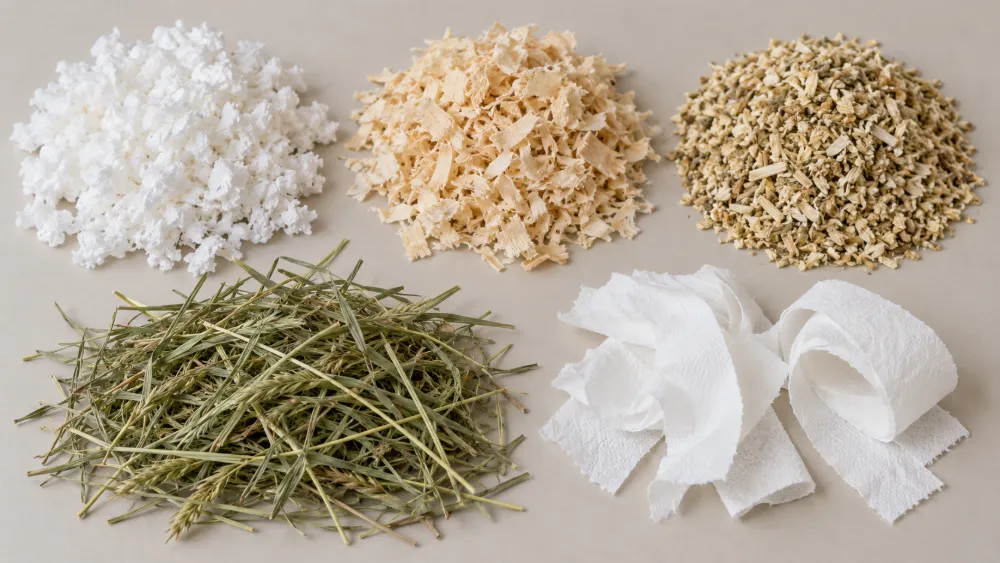
Paper bedding makes a strong main substrate, while aspen, hemp, soft hay and plain tissue can provide additional structure, textures and nesting material.
Why Scented Bedding Is a Bad Idea
A hamster does not need bedding that smells like lavender, lemon or another artificial fragrance.
Hamsters have a highly developed sense of smell and spend most of their time very close to their substrate.
PDSA advises choosing untreated, dust-free bedding and avoiding deodorizing chemicals.
Strong fragrance also does not solve the underlying cause of cage odor.
If an enclosure smells strongly, check:
wet bedding;
toilet areas;
spoiled fresh food;
a dirty wheel;
poor ventilation.
Is Cotton Wool Bedding Safe for Hamsters?
No. Do not use cotton-wool or fluffy fiber nesting products.
This warning appears consistently across major welfare organizations.
Long fibers can:
wrap around legs;
restrict circulation;
become caught around the body;
be swallowed;
contribute to intestinal obstruction;
cause pouch-related problems.
RSPCA specifically warns that thin fibers may become tangled around limbs severely enough to cause loss of circulation.
Soft shredded plain tissue is a much safer nesting material.
Is Kapok Bedding Safe for Hamsters?
PDSA advises against kapok and other fluffy bedding products.
The same basic problem applies: long or indigestible fibers may entangle the hamster or cause problems if swallowed.
Marketing terms such as “natural,” “soft” or “luxury nesting” do not automatically make a bedding product safe.
What About Bamboo Fluff?
PDSA also groups bamboo fluff with other unsafe fluffy bedding materials.
Again, the safest approach is simple:
Use bedding that tears easily into small pieces rather than long tough fibers.
Can Hamsters Use Newspaper?
Printed newspaper is not a preferred primary bedding material.
PDSA advises against shredded newspaper and recommends purpose-made low-dust paper substrates instead.
Plain unprinted cardboard or plain unscented paper products are easier choices for enrichment and nesting.
Should Hamster Bedding Be Colored?
Color itself does not make a bedding nutritious or useful.
If buying paper bedding, prioritize:
low dust;
no fragrance;
softness;
absorbency;
burrow stability.
A simple unscented bedding is preferable to choosing a product primarily because it looks decorative.
How to Make Hamster Bedding Hold Burrows
Some good substrates still collapse when used alone.
You can improve stability by:
Using paper bedding as the main structural material.
Adding bedding in layers.
Gently compressing each layer.
Mixing small amounts of soft hay through the substrate.
Partially burying a cork tunnel or cardboard tube as a starting tunnel.
PetMD specifically notes that compacting bedding and adding layers of soft hay can help tunnels stay intact.
Should You Mix Different Hamster Bedding?
Yes, mixing can work very well.
For example:
| Mixture | Why Use It? |
|---|---|
| Paper + hay | Strong burrow structure |
| Paper + aspen | Different texture plus tunnel stability |
| Paper + hemp | Absorbency and varied texture |
| Paper + aspen + hay | Useful multi-texture deep substrate |
You do not need five different materials.
A good-quality paper bedding alone can already work well.
How to Set Up Deep Hamster Bedding
Choose a cage capable of holding deep substrate.
Place stable platforms for heavy accessories first.
Add several centimeters of bedding.
Compress it gently.
Add another layer.
Mix in soft hay if desired.
Continue until the deep area reaches around 25 cm or more.
Partially bury a tunnel or hide entrance.
Allow the hamster to redesign the rest.
For the complete enclosure layout, see Hamster Cage Size & Setup.
Do Heavy Objects Belong on Top of Bedding?
Heavy items should not simply sit on loose deep substrate.
A hamster may tunnel underneath them and remove the support holding them up.
This applies particularly to:
large wheels;
ceramic hides;
heavy sand baths;
large wooden houses.
Support heavy items with stable platforms or legs that reach the solid cage base.
This lets the hamster burrow beneath nearby substrate without destabilizing the object.
What Bedding Is Best for Syrian Hamsters?
Deep paper-based bedding is particularly useful for Syrians because they are large enough to construct substantial tunnels.
A good Syrian setup can use:
paper as the main bedding;
some aspen or hemp for texture;
soft hay for tunnel structure;
plain tissue for nesting.
Provide approximately 25–30 cm or more in a large deep section where the enclosure allows it.
The cage must also fit the larger Syrian wheel.
See Hamster Wheel Size: Syrian, Dwarf, Roborovski & Chinese Hamsters.
What Bedding Is Best for Dwarf Hamsters?
The same major bedding types work for dwarf hamsters:
paper;
aspen;
hemp;
soft hay;
plain tissue.
Being smaller does not remove the need to burrow.
Dwarf hamsters can create surprisingly elaborate tunnel systems when provided with enough substrate.
What Bedding Is Best for Roborovski Hamsters?
Roborovskis should still have a deep burrowing substrate, but they also benefit from a generous sand area because they originate from relatively dry habitats.
Do not replace the main deep bedding with sand.
Instead, offer both:
a deep paper-based burrowing area;
a substantial hamster-safe sand area.
How Often Should Hamster Bedding Be Changed?
Do not automatically throw away all bedding every week.
A large deep-bedded enclosure can contain a significant amount of clean substrate, and hamsters rely heavily on familiar scent.
RSPCA recommends regular spot cleaning and notes that many enclosures only need a deeper clean approximately once or twice a month, depending on cage size and toilet habits. :contentReference[oaicite:1]{index=1}
A practical routine is:
remove wet bedding every few days;
remove spoiled fresh food;
clean obvious toilet areas;
leave clean burrow bedding alone when possible;
perform deeper cleaning when hygiene actually requires it.
See How Often Should You Clean a Hamster Cage? for the complete schedule.
Should You Keep Old Bedding When Cleaning?
Yes, provided it is clean and dry.
RSPCA recommends transferring some old unsoiled bedding and nesting material back into the enclosure after cleaning.
This preserves familiar scent.
Do not keep:
wet substrate;
mouldy bedding;
heavily soiled bedding;
spoiled food.
Why Does Hamster Bedding Smell?
Strong odor usually means something needs maintenance rather than fragrance.
Check for:
a urine-soaked toilet area;
fresh food hidden underground;
a dirty wheel;
a contaminated sand bath;
damp substrate;
poor ventilation.
A healthy deep-bedded enclosure should not need perfume to smell acceptable.
Signs Bedding May Be Causing Problems
Review the substrate and contact a veterinarian if appropriate if a hamster develops:
frequent sneezing;
nasal discharge;
watery eyes;
persistent scratching;
skin irritation;
difficulty breathing;
limb swelling associated with tangled fibers.
Dusty and scented bedding can act as environmental irritants, although respiratory symptoms can also be caused by infection or other medical problems.
Hamster Bedding Setup Example
| Area | Suggested Setup |
|---|---|
| Main burrow zone | 25–30+ cm compressed paper bedding with some soft hay |
| Wheel zone | Stable platform with shallower surrounding bedding |
| Nest | Multi-chamber hide plus plain shredded tissue |
| Digging enrichment | Separate soil or coconut-fiber dig box |
| Sand zone | Stable container of hamster-safe sand |
Hamster Bedding Checklist
Low dust
Unscented
Absorbent
Soft enough for nesting
Able to support burrows
Deep enough for real tunnels
No cotton-wool fibers
No fragrance or deodorizing chemicals
No damp or mouldy areas
Heavy accessories supported independently
Frequently Asked Questions
What is the best bedding for a hamster?
Unscented low-dust paper-based bedding is one of the best general-purpose choices because it is soft, absorbent and good at supporting tunnels when compressed.
How deep should hamster bedding be?
Aim for approximately 25 cm or more in a large burrowing area. PDSA recommends no less than 25 cm, while Woodgreen recommends a deeper digging zone of about 25–30 cm.
Is paper bedding safe for hamsters?
Yes. Unscented paper bedding is recommended by several major animal-welfare organizations and works particularly well for deep burrows.
Is aspen bedding safe for hamsters?
Yes. Dust-extracted aspen is generally considered suitable. It may hold tunnels better when mixed with paper bedding or soft hay.
Is hemp bedding safe for hamsters?
Yes. Non-fragranced, low-dust hemp is included among suitable substrates by Blue Cross, PDSA and Woodgreen.
Can hamsters use hay as bedding?
Soft hay works well as an additional material and can help stabilize burrows, but it is usually better mixed with an absorbent main substrate rather than used alone.
Can hamsters use toilet paper for nesting?
Yes. Plain unscented, dye-free toilet tissue is an appropriate nesting material and is safer than cotton-wool-style hamster fluff.
Is cotton bedding safe for hamsters?
No. Cotton-wool and other fluffy fiber products can become wrapped around limbs or cause serious problems if swallowed.
Is sawdust safe for hamsters?
Dusty sawdust should be avoided because fine particles can irritate the eyes and respiratory tract.
Can hamsters use pine bedding?
Veterinary guidance advises against cedar and unprocessed pine because aromatic oils can irritate a hamster's respiratory system. Paper, aspen or hemp are simpler alternatives.
Can hamsters use cedar bedding?
Cedar should be avoided. Veterinarian-reviewed guidance warns about respiratory irritation from its aromatic oils.
Should hamster bedding be scented?
No. Choose unscented bedding. Fragrance and deodorizing chemicals are unnecessary and may irritate sensitive airways.
How often should hamster bedding be changed?
Spot clean wet or dirty areas every few days. A complete bedding replacement should not automatically happen every week; many well-maintained large enclosures need deeper cleaning only once or twice a month.
Should I keep some old bedding after cleaning?
Yes. Keeping some clean, dry old bedding preserves familiar scent and may reduce the stress caused by a complete environmental reset.
Complete Hamster Care Cluster
Hamster Care Guide for Beginners: Cage, Bedding, Food & Handling
Hamster Cage Size & Setup: How Big Should a Hamster Cage Be?
Best Hamster Bedding: Safe Materials, Depth & What to Avoid
Hamster Wheel Size: Syrian, Dwarf, Roborovski & Chinese Hamsters
Related Hamster Feeding Guides
Animal-Welfare and Veterinary Sources
Blue Cross — Hamster Care
PDSA — Hamsters as Pets
PDSA — Suitable Substrates for Small Pets
RSPCA — Creating a Good Home for Hamsters
Woodgreen Pets Charity — Hamster Habitat Guide
PetMD — Syrian Hamster Care Sheet