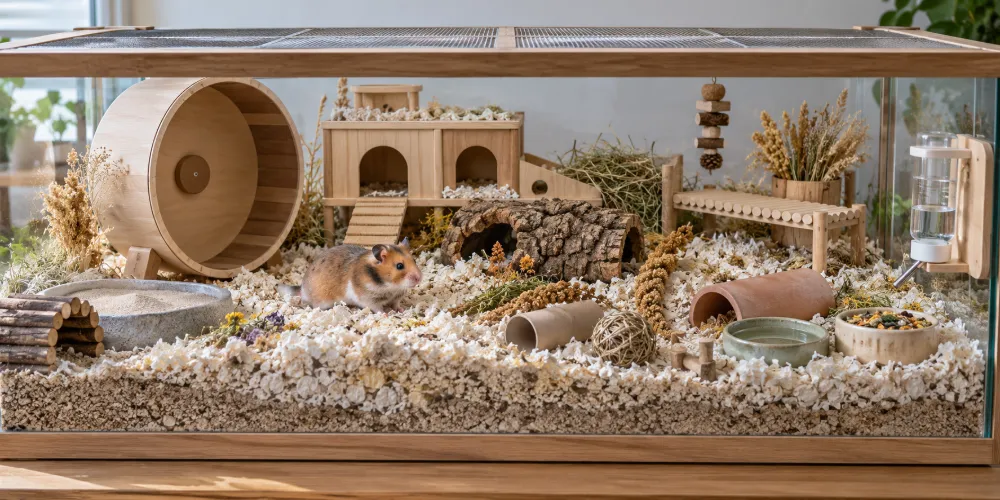
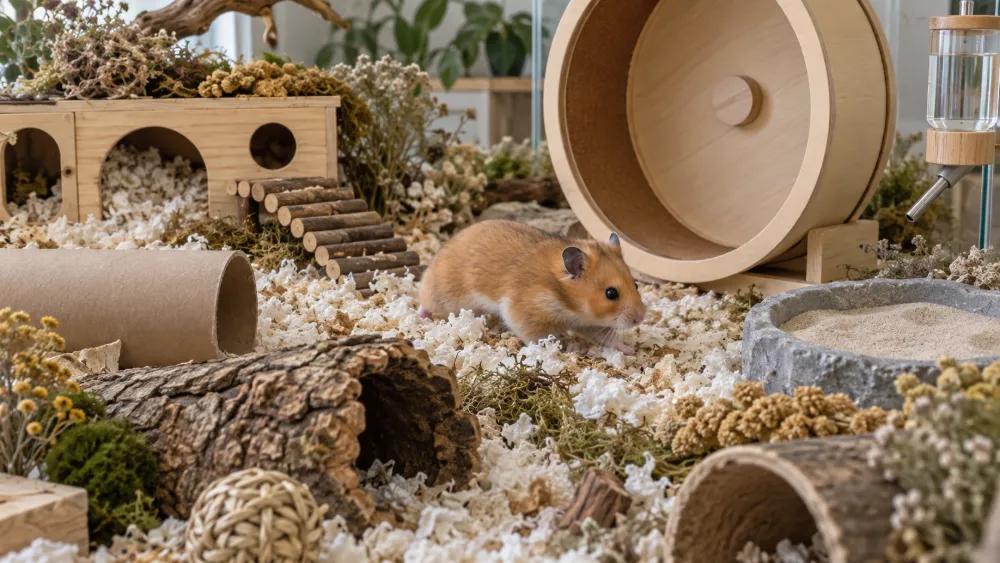
Spot-clean a hamster cage regularly—often daily or every few days—and do a deeper clean only when the enclosure actually needs it. For many large, well-maintained hamster habitats, a deeper refresh every two to four weeks is reasonable, while smaller cages may need cleaning more often. Remove wet bedding, spoiled food and dirty toilet areas promptly, but avoid throwing away every piece of clean bedding each time. Keeping some clean old bedding helps preserve familiar scent and can reduce unnecessary stress.
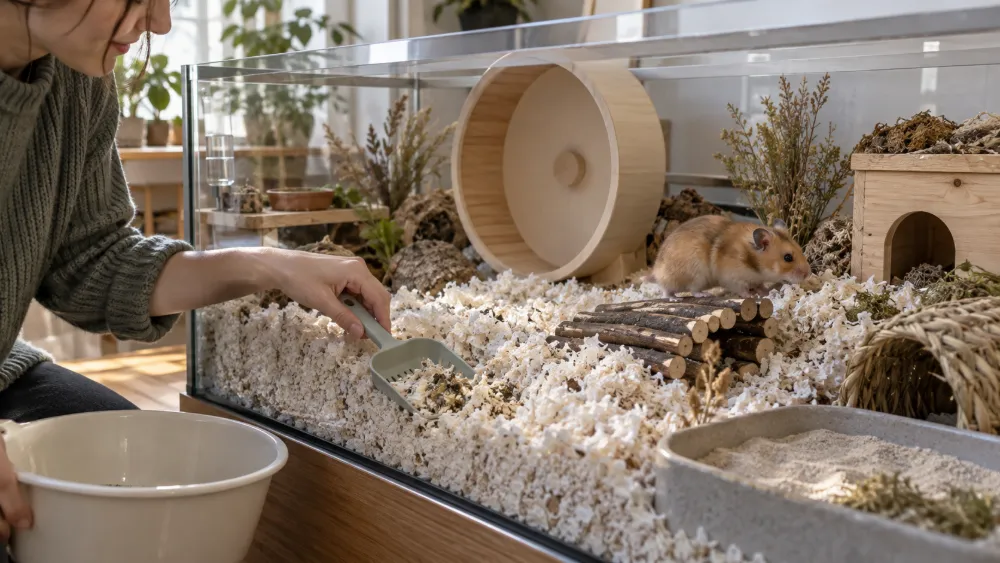
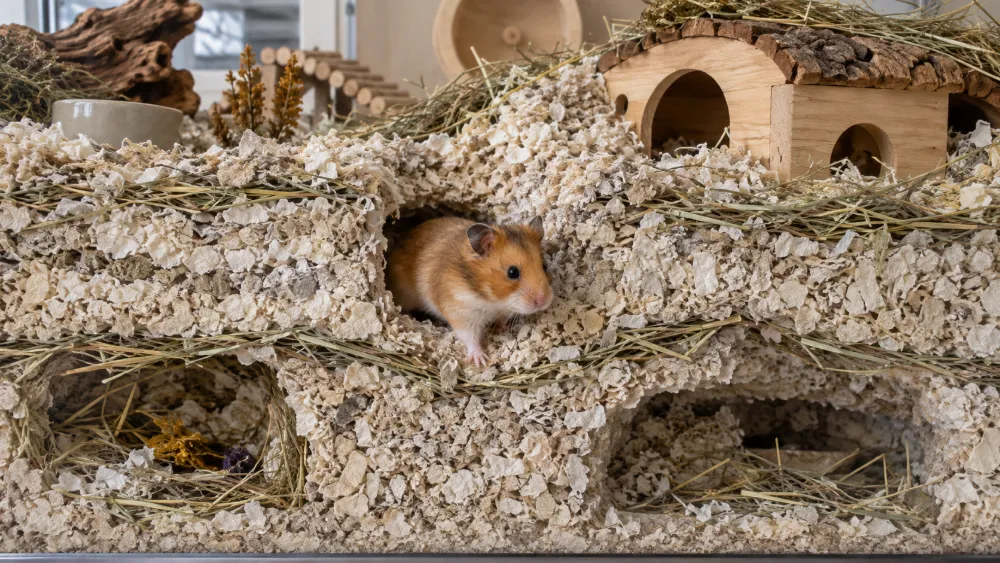
Regular spot cleaning removes waste without unnecessarily destroying the hamster's burrows and familiar scent.
Hamster Cage Cleaning Schedule
| How Often? | What to Do |
|---|---|
| Daily or every few days | Remove wet bedding, spoiled fresh food and obvious dirty areas |
| As needed | Clean a dirty wheel, sand bath, food dish or toilet corner |
| About every 2–4 weeks | Refresh larger areas of bedding and clean soiled accessories |
| Earlier if necessary | Clean immediately if bedding becomes damp, strongly smelly or contaminated |
This is a guide rather than a rigid calendar.
A small cage with shallow bedding may become dirty much faster than a large enclosure with deep substrate and a hamster that uses one toilet area.
What Should You Spot-Clean?
Spot cleaning means removing the dirty material while leaving clean parts of the habitat in place.
Check for:
wet urine-soaked bedding;
dirty toilet corners;
spoiled fruit or vegetables;
heavily soiled sand;
food that has become damp or mouldy;
a dirty wheel.
Replace only the bedding you remove.
If your hamster consistently urinates in one corner or in the sand bath, routine cleaning becomes much easier.
How Often Should You Deep-Clean the Cage?
There is no single frequency that suits every hamster.
RSPCA states that in most cases a deeper clean once or twice a month is sufficient, depending on cage size and toilet habits.
Woodgreen recommends a refresh clean approximately every two to three weeks.
PDSA notes that small cages may require a full clean about once a week, whereas larger setups may only need one every few weeks.
The practical lesson is simple:
The larger and better-managed the enclosure, the less often you usually need to strip it completely.
Do You Need to Replace All the Bedding?
Usually, no.
If most of a deep bedding layer is clean and dry, throwing all of it away can be unnecessary.
Hamsters rely heavily on scent to recognize their environment.
When doing a larger clean:
Remove wet and heavily soiled bedding.
Discard spoiled food.
Keep some clean, dry old bedding.
Add fresh bedding.
Mix some retained clean bedding back in.
RSPCA, PDSA and Woodgreen all recommend retaining some clean old bedding so the enclosure still smells familiar.
Why Cleaning Too Often Can Be a Problem
A hamster cage needs to be hygienic, but “completely sterile all the time” is not the goal.
Frequent total clean-outs can:
destroy established burrows;
remove familiar scent;
disturb food stores;
force the hamster to rebuild its nest repeatedly;
create unnecessary stress.
A large deep-bedded enclosure is designed to support natural burrowing, so cleaning should preserve clean sections whenever possible.
For suitable substrate and depth, see Best Hamster Bedding: Safe Materials, Depth & What to Avoid.
How to Clean a Hamster Cage
Clean the enclosure when the hamster is naturally awake rather than waking it during the day.
Place the hamster in a secure carrier or play area.
Remove spoiled food and wet or heavily soiled bedding.
Set aside some clean old bedding.
Clean dirty bowls, bottles, wheel and accessories.
Wipe genuinely dirty enclosure surfaces with a pet-safe cleaner.
Allow cleaned surfaces to dry.
Add fresh bedding.
Mix back some clean familiar bedding.
Return hides, wheel and enrichment.
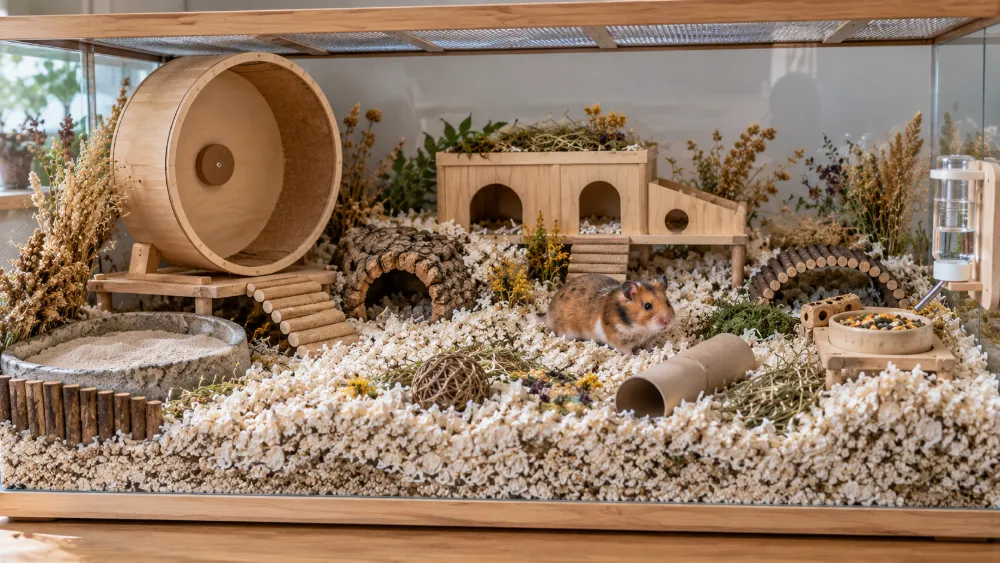
After a larger clean, mixing some clean old bedding with fresh bedding helps preserve familiar scent.
What Should You Use to Clean a Hamster Cage?
Use a cleaner suitable for small-animal housing when disinfection is necessary.
Avoid leaving strong chemical residues or fragrances inside the enclosure.
After cleaning:
rinse where the product instructions require it;
allow surfaces to dry completely;
do not return the hamster to a wet enclosure.
Routine spot cleaning often does not require disinfecting every surface.
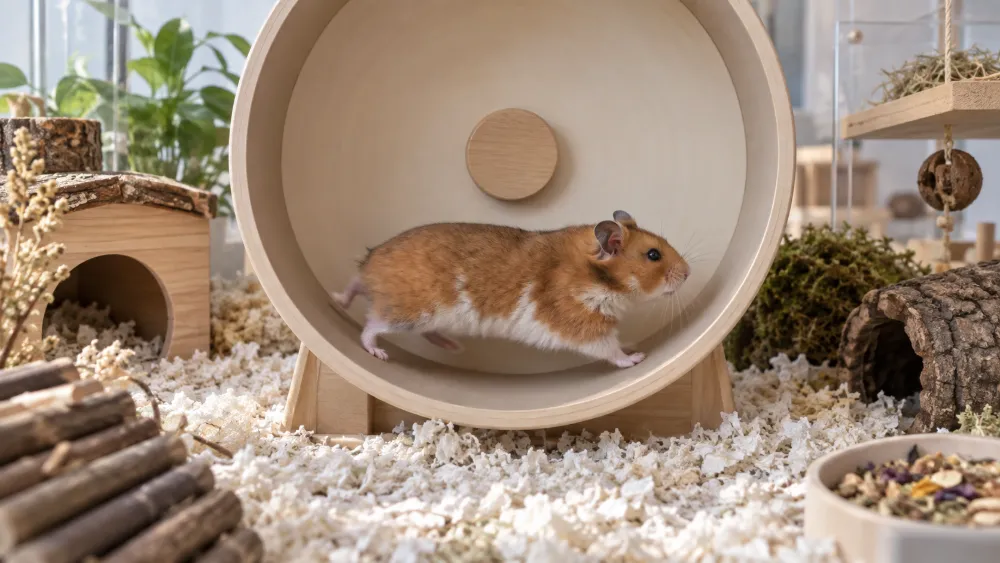
How Often Should You Clean a Hamster Wheel?
Clean the wheel when it becomes dirty.
Some hamsters urinate while running and may need their wheel cleaned frequently, while others keep it relatively clean.
Do not allow urine and waste to build up on the running surface.
Make sure the wheel is fully dry before putting it back.
If you are still choosing equipment, see Hamster Wheel Size: What Size Does Your Hamster Need?.
How Often Should You Clean the Sand Bath?
Check the sand frequently.
If your hamster uses the sand bath as a toilet, remove wet or dirty areas regularly and replace contaminated sand.
You do not necessarily need to throw away all clean sand every day.
What About the Hamster's Food Hoard?
Hamsters naturally store food underground.
Do not automatically destroy every food cache.
Instead, remove:
spoiled vegetables;
rotting fruit;
damp food;
mouldy food.
Clean dry staple food can often be left alone if the surrounding area is hygienic.
For feeding guidance, see What Can Hamsters Eat? Complete Safe Food List.
How Do You Know the Cage Needs Cleaning?
Do not rely only on the calendar.
Clean sooner if you notice:
strong urine odor;
wet bedding;
mould;
spoiled fresh food;
dirty water equipment;
heavy waste buildup;
persistent dampness.
A properly maintained hamster enclosure should remain dry and reasonably odor-free without perfumes or scented bedding.
Does a Bigger Cage Need Less Cleaning?
Often, yes.
A larger enclosure generally spreads waste over a bigger area and can hold much more clean bedding.
That does not mean it should never be cleaned.
It means targeted spot cleaning becomes much more effective than repeatedly replacing an entire deep substrate layer.
For enclosure dimensions and layout, see Hamster Cage Size & Setup.
Frequently Asked Questions
Should I clean my hamster cage every week?
Not necessarily. Small cages may need weekly cleaning, but larger deep-bedded enclosures can often go several weeks between deeper refreshes when they are regularly spot-cleaned.
Can I clean a hamster cage too often?
Yes. Repeatedly removing all bedding and familiar scent can unnecessarily disturb the hamster. Clean dirty material promptly while preserving clean areas when possible.
Should I remove all hamster bedding when cleaning?
No. Unless the bedding is contaminated, keep some clean, dry old bedding and mix it with fresh bedding after cleaning.
How often should I spot-clean a hamster cage?
Check it daily and remove wet bedding, spoiled food and dirty toilet areas whenever needed. RSPCA recommends spot cleaning every few days, while other welfare guidance suggests daily checks.
Why does my hamster cage smell so quickly?
Look for a concentrated toilet area, a dirty wheel, wet sand, spoiled food or inadequate cage size. Strong fragrance should not be used to hide an underlying hygiene problem.
Should I wake my hamster to clean the cage?
No. RSPCA recommends cleaning when the hamster is awake rather than disturbing it during its daytime sleep.
Complete Hamster Care Cluster
How Often Should You Clean a Hamster Cage?
Animal-Welfare Sources
RSPCA — Creating a Good Home for Hamsters
PDSA — Hamsters as Pets
Woodgreen Pets Charity — Hamster Habitat Guide