One moment your dog or cat seems fine. The next, you’re at the vet in the US or Europe, staring at an estimate for hundreds or even thousands of dollars or euros. Your pet needs help now – but your bank account is not ready.
If you feel scared or ashamed in that moment, you’re not alone. Many loving pet owners struggle with big vet bills. The key is to know your options before you’re in crisis, so you can act calmly instead of panicking.
In this guide, we’ll walk through 10 realistic ways to pay for expensive vet bills – what they are, when they make sense, and what to watch out for.
This article is for general information only and does not replace professional financial or veterinary advice. Always read the fine print and talk to your vet about your specific situation.
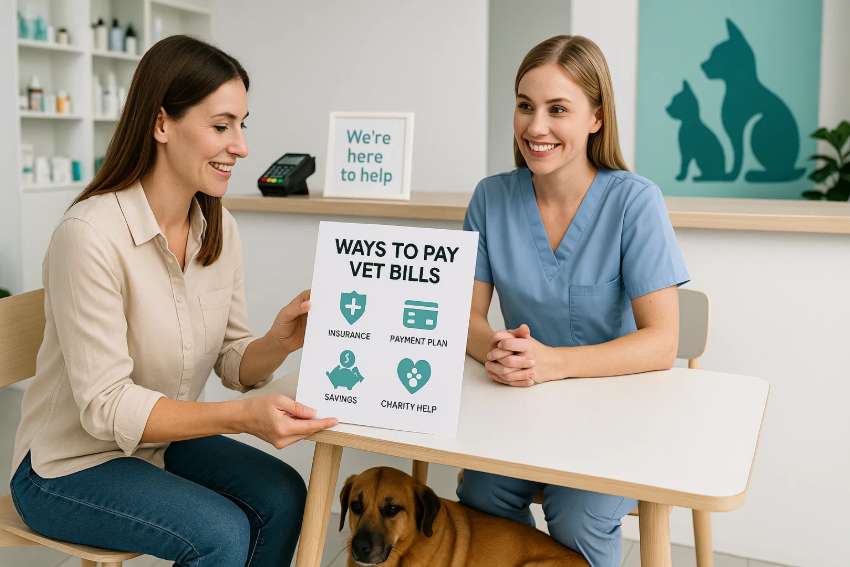
1. Talk Honestly With Your Vet First
Before you start searching for money, start by talking. Many owners quietly accept an estimate they don’t understand, then feel overwhelmed later. Instead, say something like:
“I want to do the best I can for my pet, but my budget is limited. Can we walk through lower-cost options?”
“Can you explain which tests and treatments are essential, and which are optional or can wait?”
1.1 Ask for a prioritized plan
Level 1: Life-saving, urgent and non-negotiable for safety.
Level 2: Strongly recommended but can sometimes be staged over time.
Level 3: Helpful extras, “nice to have” but not critical right now.
This doesn’t magically make the bill cheap, but it often reduces the total and turns one giant number into steps you can manage.
2. Use Your Pet Emergency Fund (If You Have One)
If you’ve already built a pet emergency fund, this is exactly the moment it was designed for.
Use it for urgent exams, tests, procedures and medications your vet says are needed now.
Combine it with any available insurance payout (see below) to stretch your resources further.
After the crisis, rebuild the fund slowly with small monthly contributions.
Don’t feel guilty about “emptying” your fund. The purpose of that money is to save your pet’s life or relieve serious suffering.
3. Claim Through Pet Insurance
If you have pet insurance, contact your insurer as soon as possible. Ask:
Is this condition covered under my policy?
What is my deductible and co-pay for this claim?
What documentation does the vet need to provide?
How long does reimbursement usually take?
3.1 Direct payment vs reimbursement
In some cases, the insurer can pay the clinic directly (rare, but worth asking about).
More commonly, you pay first and then get reimbursed later.
This is another reason savings are important: insurance reduces the final cost, but you often still need cash for the initial bill.
4. Ask About In-House Payment Plans
Some clinics are willing to split large bills into smaller payments, especially for long-standing clients with a good history.
4.1 How to ask
“This estimate is more than I can pay today. Do you ever offer payment plans for existing clients?”
“If I can pay [realistic upfront amount] now, could I pay the rest over [number] months?”
4.2 Understand the agreement
Get the payment plan in writing.
Know the exact monthly amount and due dates.
Ask if there are late fees or interest.
Not all clinics can do this – many are small businesses with their own bills to pay. But it’s always worth asking politely.
5. Third-Party Veterinary Financing (Use Carefully)
In some countries, there are companies that provide credit specifically for vet bills. Clinics may offer to help you apply on the spot.
5.1 Potential advantages
Fast approvals in urgent situations.
Structured monthly payments instead of one big bill.
Sometimes promotional 0% or low-interest periods (if paid on time).
5.2 Important risks
Interest rates can jump sharply after promotional periods.
Missed payments may lead to fees and damage to your credit score.
It’s easy to accept more debt than you can truly manage.
Before signing anything, ask:
“What is the interest rate after the promotional period?”
“What happens if I miss a payment?”
“What is the total amount I will repay if I follow the schedule?”
6. General Credit Options (Credit Cards, Personal Loans)
If clinic financing isn’t available, you might consider:
Using an existing credit card
Taking a small personal loan from your bank or credit union
6.1 When it can make sense
When the vet bill is urgent and you have no other immediate option.
When you have a clear plan to repay the balance quickly.
When the interest rate is not extreme.
6.2 What to be careful about
High-interest credit card balances can turn one emergency into years of expensive debt.
Multiple loans or cards can create a long-term financial strain.
Never hide the reality of new debt from yourself; write down a repayment plan.
Credit can save a pet’s life in an emergency, but it should be a last resort, not your main strategy.
7. Support from Family and Friends
It can feel embarrassing to ask for help – but many people would rather support you than see you lose a pet or face impossible choices.
7.1 How to ask respectfully
Explain the situation calmly and honestly.
Share the vet’s estimate and what you can pay yourself.
Offer a repayment plan if you can realistically afford to pay them back over time.
You can also:
Combine several small contributions from different people.
Use a crowdfunding platform (see next section) to organize help more publicly if you’re comfortable doing so.
8. Crowdfunding and Community Help
Online crowdfunding for vet bills has become more common. While not guaranteed, it can sometimes provide lifesaving support.
8.1 How to make a transparent fundraising page
Explain your pet’s situation clearly and emotionally, but truthfully.
Share the vet estimate or invoice (hiding any sensitive personal details).
Explain how the money will be used and what you can already contribute yourself.
Update supporters with outcomes (tests, treatments, recovery or difficult decisions).
Remember:
Crowdfunding is unpredictable – treat it as a possible bonus, not your main plan.
Be prepared for both generosity and for the possibility that you may raise little or nothing.
9. Charities, Welfare Organizations and Low-Cost Clinics
Depending on where you live, there may be:
Animal charities that offer subsidized emergency care for low-income owners.
Low-cost clinics for basic services such as vaccines, spay/neuter and simple procedures.
Special funds for particular diseases or breeds.
9.1 How to find help
Ask your vet if they know of any local welfare schemes.
Search for animal charities and welfare organizations in your city or region.
Contact local shelters; some have lists of financial aid resources for vet care.
These programs often have strict rules and limited funds, so they may not cover everything, but they can significantly reduce the total you need to find.
10. Adjusting the Treatment Plan If Money Is Truly Limited
Sometimes, even after exploring all options, you simply cannot afford the ideal treatment. This is a painful reality for many owners – but you still have the right to ask about compromise plans.
10.1 Discuss “Plan B” and “Plan C” with your vet
“If we can’t afford the full gold-standard option, what is the next best safe option?”
“Is there a conservative management plan that focuses on comfort and quality of life?”
10.2 Palliative care and difficult decisions
In some cases, the kindest option may be palliative care focused on comfort, not cure.
In very severe situations with a poor prognosis and no affordable treatment, humane euthanasia may be discussed.
These decisions are heavy and emotional. A good vet will not judge you for having financial limits; they will help you find the kindest possible option within what is realistically possible for you.
11. After the Crisis: How to Be Better Prepared Next Time
Once the immediate emergency is over – whether the outcome was happy or heartbreaking – take some time later to review and plan:
Could a stronger emergency fund have reduced stress?
Would insurance have helped, or a different level of coverage?
Do you need to adjust your monthly pet budget to build more protection?
If you have multiple pets, do you need a combined plan for all of them?
You can’t change the past, but you can use the experience to create a plan that makes the next crisis (if it ever comes) less financially terrifying.
12. Final Thoughts: You’re Not a Bad Owner Because You Have a Budget
Many pet owners feel ashamed that money is even part of the conversation. But veterinary care in the US and Europe is advanced and expensive; needing a plan to pay for it is normal, not a moral failure.
You are not a bad owner if you:
Have a limited budget.
Ask for cheaper safe options.
Use payment plans or financial aid.
Say “I need a moment to think about this estimate.”
What matters is that you:
Act as early as you can when your pet is unwell.
Communicate honestly with your vet.
Use the tools available – savings, insurance, plans and support – to protect both your pet and your own financial stability.
Planning how to pay for vet bills is not cold or selfish; it is part of being a responsible, long-term guardian for a life that fully depends on you.