Summer is one of the best times to be a dog owner—longer days, more outdoor time, beach trips, and patio life. It’s also the season when preventable emergencies spike: heatstroke, burned paw pads, dehydration, saltwater stomach upset, and drowning risk. The tricky part is that dogs don’t sweat like humans, and overheating can happen faster than most people expect—sometimes in minutes.
This guide gives you practical, real-life rules for keeping your dog safe in hot weather, including how to avoid heatstroke, how to judge pavement temperature, and a beach-day checklist that actually works in the US/Europe.
1. Why Dogs Overheat So Easily
Dogs cool themselves mainly by panting and by limited sweating through paw pads. In hot, humid weather—or when airflow is poor—panting becomes less effective. Add excitement, exercise, a thick coat, or direct sun, and body temperature can rise quickly.
Heat + humidity: humidity makes panting less effective, so overheating happens sooner.
Limited shade/airflow: cars, enclosed patios, and crowded beaches can trap heat.
Body type and health: some dogs are at much higher risk (see Section 2).
2. Dogs at Higher Risk for Heatstroke
Any dog can overheat, but these groups need extra caution and shorter outdoor windows.
Flat-faced (brachycephalic) breeds: Bulldogs, Pugs, Frenchies, Shih Tzus—short airways struggle to cool.
Puppies and seniors: less temperature regulation and stamina.
Overweight dogs: extra insulation and higher workload on the body.
Dogs with heart/airway disease: less ability to compensate.
Thick-coated or double-coated dogs: can do fine with good management, but still overheat during hard exercise.
Dark-coated dogs: may absorb more radiant heat in direct sun.
Rule of thumb: If your dog pants hard on mild days, treat summer outings as “short and shaded” by default.
3. Heatstroke Basics: Signs, Stages, and Why It’s an Emergency
Heatstroke is a medical emergency. Waiting “to see if they improve” can be dangerous, because internal organs can be affected even after your dog seems calmer.
3.1 Early Warning Signs (Stop Immediately)
Heavy, noisy, or frantic panting
Bright red gums or tongue
Glassy eyes, restlessness, pacing
Reluctance to walk, lagging behind, seeking shade suddenly
Drooling more than usual
3.2 Serious Signs (Emergency Care Now)
Weakness, wobbling, collapse
Vomiting or diarrhea (especially if persistent)
Pale gums, blue/purple tongue, or very dark red gums
Confusion, seizures, unresponsiveness
4. What to Do If You Suspect Heatstroke (Step-by-Step)
Your goal is to lower body temperature safely while getting professional help. Do not “wait it out.”
Step 1: Move to Shade and Stop All Activity
Get your dog out of the sun immediately.
Move to an air-conditioned space if possible (car AC, building, shaded breezeway).
Step 2: Start Cooling the Right Way
Use cool (not ice-cold) water on the body—especially belly, inner thighs, paws.
Use a fan or car AC to increase airflow and evaporation.
Offer small sips of water if your dog is alert (don’t force water).
Avoid: ice baths, covering your dog with wet towels for long periods, or anything that traps heat against the body. The goal is steady cooling with airflow, not shocking the system.
Step 3: Call a Vet or Emergency Clinic Immediately
Tell them you suspect heatstroke and you’re actively cooling.
Follow their instructions and head in. Even if your dog seems better, internal effects can continue.
5. Hot Pavement Safety: The Simple Rules That Prevent Burns
Sidewalks, asphalt, and sand can reach temperatures that burn paw pads quickly. Paw burns are painful and can take weeks to heal.
5.1 The “7-Second Hand Test”
Place the back of your hand on the pavement for 7 seconds.
If it’s too hot for you, it’s too hot for your dog.
If you can barely tolerate it, choose shade/grass or skip the walk.
5.2 Best Walking Times in Summer
Early morning or later evening (when surfaces have cooled)
Choose shaded routes, parks, or grassy areas
Short “sniff walks” instead of long cardio walks in heat
5.3 Paw Protection Options
Booties: helpful for very hot cities, but train your dog to wear them before summer peaks.
Stick to grass/dirt: simplest option if available.
Carry your small dog over hot zones: short lifts can prevent burns.
5.4 Signs of Hot-Paw Injury
Limping or refusing to walk
Licking paws intensely
Darkened pads, blisters, peeling, or raw spots
If you see blisters or raw pads, contact your vet—these can get infected.
6. Beach Rules for Dogs: A Practical Checklist
Beach days can be great for dogs, but they come with unique risks: overheating on sand, saltwater ingestion, sharp shells, strong currents, and off-leash chaos. Use this plan.
6.1 Before You Go
Check local rules: many beaches have seasonal dog restrictions or leash rules.
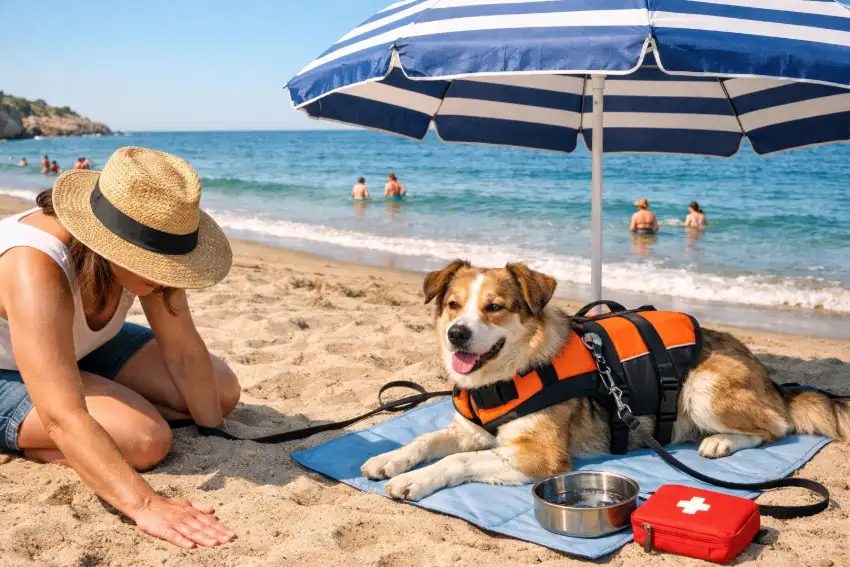
Pack shade: an umbrella or pop-up tent is not optional on hot days.
Bring fresh water and a bowl: plan more water than you think you’ll need.
Bring a long line if allowed: safer than off-leash for recall-proofing.
Choose timing: go early or late to avoid the hottest sand and crowded peak hours.
6.2 Heat and Sun: Sand Can Be Hotter Than Pavement
Do the hand test on sand too.
Set up your shade immediately and encourage breaks.
Avoid intense fetch in full sun—excitement hides overheating until it’s severe.
6.3 Water Safety: Not Every Dog Is a Strong Swimmer
Use a dog life jacket for: small dogs, seniors, brachycephalic dogs, anxious swimmers, or strong waves.
Watch currents and waves: dogs can panic in surf and tire fast.
Don’t throw balls into rough water: repeated launches can exhaust a dog quickly.
Rinse after swimming: salt and sand can irritate skin and paws.
6.4 Saltwater, Sand, and “Beach Belly”
Many dogs drink saltwater when playing or panting. This can cause vomiting/diarrhea and worsen dehydration. Eating sand can irritate the gut and, in serious cases, cause blockage.
Offer frequent fresh-water breaks (every 15–30 minutes during active play).
Bring a toy that encourages chewing, not gulping water.
Discourage digging-and-licking sand from paws.
6.5 Beach Hazards People Forget
Fish hooks and lines: keep your dog away from fishing areas and discarded tackle.
Dead fish/seaweed: can cause stomach upset and may be contaminated.
Sharp shells/rocks: check paws for cuts.
Wildlife: birds, seals, and other animals can trigger chasing and conflict—use a leash/long line.
Hot cars after the beach: a wet dog in a warm car can still overheat fast.
7. Summer Walk Routine That Actually Works (Daily Plan)
If you want a simple summer routine you can repeat without overthinking, use this.
Morning: main walk (coolest part of the day), longer sniffing and training.
Midday: short potty breaks only, mostly shade/grass, avoid pavement.
Evening: second walk after surfaces cool; keep it relaxed, not “all-out.”
Indoor enrichment: puzzle feeders, short training sessions, scent games to replace midday exercise.
8. Cooling Tools: What Helps and What Doesn’t
8.1 What Helps
Shade + airflow: the biggest difference-maker.
Cool water access: frequent small drinks and paw/belly cooling.
Cooling mats: useful for dogs who choose to lie on them.
Wet bandana/vest (with airflow): can help if it’s not overly humid and your dog isn’t trapped in heat.
8.2 What Often Doesn’t Help Much (Or Can Backfire)
Shaving double-coated dogs “to keep them cool”: it can increase sunburn risk and may not improve cooling. Talk to a groomer/vet before major coat changes.
Overexercising to “tire them out”: heat safety is about calm, controlled activity.
Leaving a wet towel draped on your dog for long periods: it can trap heat if there’s not enough airflow.
9. When to See a Vet Immediately
Don’t “monitor at home” when heat risk is involved. Call a vet promptly if you see:
Collapse, weakness, or severe lethargy after heat exposure
Vomiting/diarrhea that’s persistent or combined with heavy panting
Confusion, tremors, seizures, or unresponsiveness
Burned/blistered paw pads
Signs your dog swallowed a fish hook, line, or sharp object
Extra caution: If your dog is brachycephalic (flat-faced), assume emergencies can escalate faster and seek help earlier.
Final Thoughts: Summer Fun Is Safe Fun When You Control Heat, Surfaces, and Water
Most summer pet emergencies are preventable with a few consistent rules: walk during cooler hours, treat hot pavement and sand like a burn risk, build in shade-and-water breaks, and take heatstroke signs seriously. At the beach, focus on controlled play, fresh water, and water safety—because excitement is what makes dogs ignore their own limits.
Your action step: create a “summer kit” today (portable water, bowl, shade, treats, and a towel) and commit to the 7-second pavement test before every midday walk. Small habits are what keep summer memories happy.