Dolphins are among the most intelligent and social marine mammals. One of the best-known species is the bottlenose dolphin (Tursiops truncatus), often called the “bottlenose” for its long, narrow snout. It is widely distributed, adaptable, and frequently studied, which is why it appears so often in documentaries, research programs, and coastal wildlife watching.
What Does the Bottlenose Dolphin Look Like?
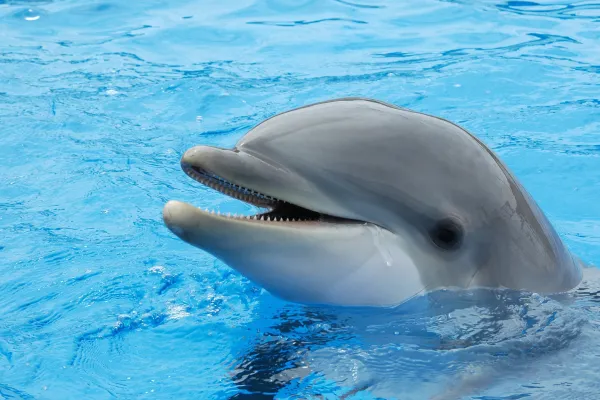
The bottlenose dolphin has a streamlined body built for speed, endurance, and agile turns in the water. Several features make it easy to recognize.
Main physical characteristics
Snout (“bottlenose”): A long, relatively narrow rostrum (snout). It isn’t the dolphin’s “nose”—the true breathing opening is the blowhole on top of the head.
Blowhole and forehead: A single blowhole sits near the top of the head. In front of it is a rounded forehead area (the “melon”) that helps focus sound for echolocation.
Coloration: Usually dark to medium gray on the back with a paler underside. This contrast helps camouflage the dolphin from above and below.
Skin texture: Smooth and glossy, reducing drag as it swims.
Dorsal fin: A curved, sickle-shaped fin on the back that is often visible when the dolphin surfaces—one of the easiest ways to spot it from shore or a boat.
Size: Typically under 3 meters in length, though some individuals can be larger. Adults commonly weigh around 150–300 kg, depending on region and body condition.

Where Do Bottlenose Dolphins Live?
Bottlenose dolphins have a broad, near-cosmopolitan distribution. They occur in tropical and temperate waters across many parts of the world, and they are especially common in coastal areas.
Typical habitats
Coastal waters: Bays, estuaries, lagoons, and nearshore zones where fish and squid are abundant.
Continental shelf areas: Many populations prefer productive shelf waters rather than the open ocean.
Occasional offshore groups: Some communities live farther from land and can behave differently from coastal dolphins.
Because they often stay near coastlines and productive fishing grounds, bottlenose dolphins frequently overlap with human activity—both an advantage (easy to observe) and a risk (more exposure to threats).

What Do Bottlenose Dolphins Eat?
Bottlenose dolphins are toothed whales (odontocetes). They use sharp teeth to grasp prey, usually swallowing it whole or in large pieces rather than chewing.
Common foods
Fish: Many species of small to medium fish, depending on local availability.
Squid and other cephalopods: A frequent part of the diet in many regions.
Crustaceans: Some populations also take shrimp and similar prey, especially in coastal waters.
How they hunt
Echolocation: They “see” with sound, emitting clicks and listening for echoes to detect prey and navigate.
Teamwork: Often hunt in groups to herd fish into tighter balls, increasing success rates.
Local techniques: Hunting strategies can vary by region and may be learned socially within a community.
Behavior and Intelligence
Bottlenose dolphins are famous for complex social lives and flexible problem-solving. They are curious animals, highly vocal, and quick to learn.
Social structure and communication
Social groups: They commonly form pods that change in size and membership over time.
Vocal signals: Use clicks, whistles, and burst-pulse sounds. Body slaps and jumps can also function as communication or social signaling.
Curiosity: They often approach boats or swimmers (though humans should keep respectful distance and never feed or chase them).
Play and complex behavior
Playful movement: Surfing waves and leaping can occur even when not directly linked to feeding.
Cooperative interactions: They can coordinate within pods, and in some places they are observed interacting alongside other marine animals during feeding events.

Reproduction and Calf Care
Bottlenose dolphins are mammals, so they give birth to live young and nurse them with milk. Reproductive timing can vary by region, but calves are often born in warmer seasons when conditions are favorable.
Breeding cycle
Interval: Females commonly reproduce every 2–3 years, depending on resources and calf survival.
Gestation: Pregnancy lasts about 12 months (roughly one year).
Nursing and learning: Calves drink milk and also learn hunting and social skills through long-term association with the mother.
Community support
In many populations, calves grow up around other females and young dolphins, providing a social environment where they learn communication, group movement, and how to respond to danger.
Threats and Conservation
Globally, bottlenose dolphins are considered widespread and relatively common. However, some regional populations face heavier pressure and may decline without strong protection.
Major threats
Bycatch (accidental capture): Entanglement in gillnets and other fishing gear can injure or drown dolphins.
Deliberate harm: In some areas dolphins may be hunted for meat, used as bait, or killed due to perceived competition with fisheries.
Overfishing: Reduces prey availability, forcing dolphins to travel farther or take more risks to feed.
Pollution: Chemical contaminants and oil spills can accumulate through the food web and affect dolphin health and reproduction.
Noise disturbance: Heavy boat traffic and industrial noise can interfere with communication and echolocation.
Climate change: Shifts in ocean temperature and prey distribution can alter where dolphins feed and breed.
Why some areas are more vulnerable
Regions with intense fishing, heavy maritime traffic, and coastal development can place extra pressure on local dolphins—especially where populations are small, isolated, or strongly tied to specific bays and coastal habitats.

Quick Facts About Bottlenose Dolphins
Self-recognition: They are among the animals that can show signs of recognizing themselves in mirrors under research conditions.
Speed and diving: They can swim fast in short bursts and are capable of deep dives, though typical dives are much shallower during everyday coastal feeding.
Blowhole breathing: They must surface regularly to breathe air—dolphins do not breathe through their mouths.
Calf “whiskers”: Newborns may have tiny sensory hairs around the snout area that disappear as they grow.
Average lifespan: Often around 20–30 years in the wild, with variation by sex, region, and human impacts.