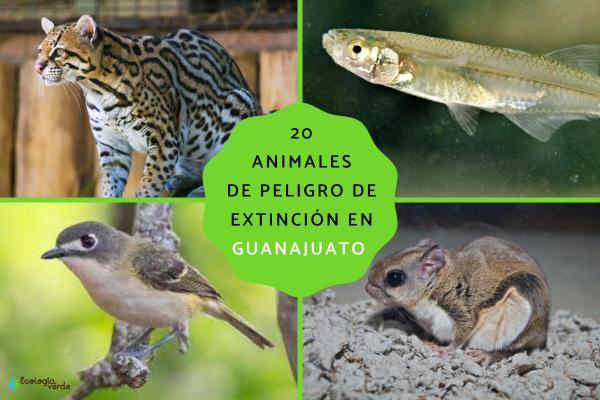
Quick answer: Guanajuato is home to many animals that are legally protected, threatened, or of high conservation concern, including the jaguar, ocelot, margay, jaguarundi, nectar-feeding bats, the Transvolcanic Yellowthroat, Mexican mud turtle, several endemic reptiles, and highly threatened native fishes. In March 2026, Mexico's National Commission of Natural Protected Areas (CONANP) announced the first confirmed jaguar record in the Sierra Gorda de Guanajuato Biosphere Reserve, highlighting how important the state's remaining connected habitats are.
One important clarification: “endangered animals” is used here in the broad search sense of wildlife at risk. Mexico's NOM-059 system uses categories such as P (En peligro de extinción), A (Amenazada), and Pr (Sujeta a protección especial), while the IUCN Red List uses a separate global system. A species can therefore be legally threatened in Mexico even when its global IUCN category is different.
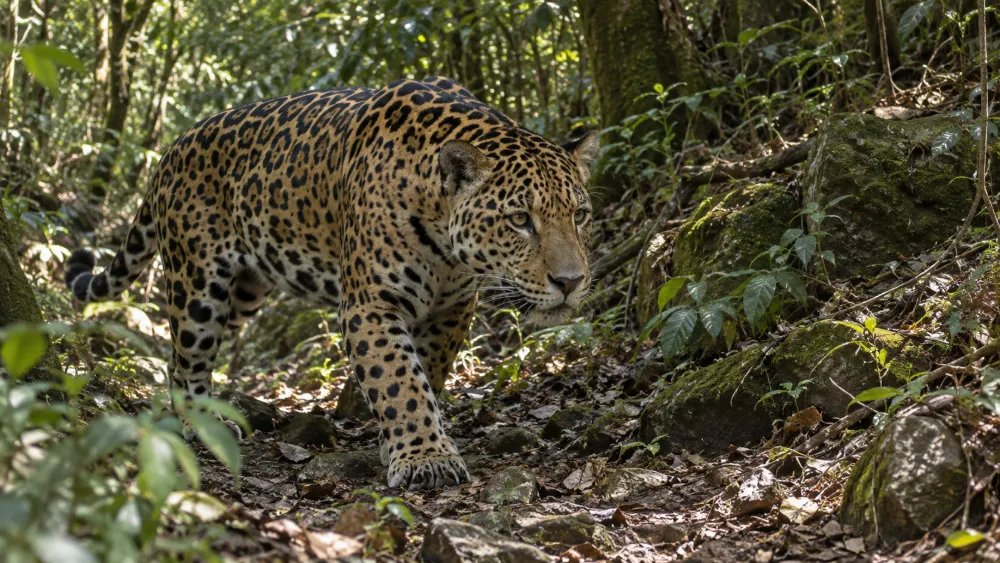
In March 2026, CONANP announced the first confirmed jaguar record inside the Sierra Gorda de Guanajuato Biosphere Reserve.
20 Endangered and At-Risk Animals in Guanajuato at a Glance
| Animal | Scientific name | Why it matters in Guanajuato |
|---|---|---|
| Jaguar | Panthera onca | First confirmed Sierra Gorda de Guanajuato record announced in 2026; endangered under Mexico's NOM-059 system |
| Ocelot | Leopardus pardalis | Protected wildcat documented in Guanajuato; NOM-059 category P |
| Margay | Leopardus wiedii | Rare arboreal wildcat; NOM-059 category P |
| Jaguarundi | Herpailurus yagouaroundi | Documented in protected areas; NOM-059 category A |
| Greater Long-Nosed Bat | Leptonycteris nivalis | Threatened nectar-feeding bat and important agave pollinator |
| Lesser Long-Nosed Bat | Leptonycteris yerbabuenae | Important pollinator listed in Guanajuato conservation inventories |
| Mexican Long-Tongued Bat | Choeronycteris mexicana | Nectar-feeding bat; NOM-059 category A in state inventory |
| Neotropical River Otter | Lontra longicaudis | River-dependent carnivore; NOM-059 category A in state inventory |
| American Badger | Taxidea taxus | Grassland and open-country predator; NOM-059 category A in state inventory |
| White-Sided Jackrabbit | Lepus callotis | Globally Vulnerable and dependent on increasingly pressured grasslands |
| Transvolcanic Yellowthroat | Geothlypis speciosa | Endemic wetland bird; NOM-059 category P |
| Black-Capped Vireo | Vireo atricapilla | Recorded among Guanajuato birds under NOM-059 protection |
| Aztec Rail | Rallus tenuirostris | Wetland bird included among protected species monitored in state natural areas |
| Mexican Mud Turtle | Kinosternon integrum | Mexican endemic; NOM-059 category Pr |
| Mexican Garter Snake | Thamnophis eques | NOM-059 category A and documented across Guanajuato protected areas |
| Mexican Plateau Horned Lizard | Phrynosoma orbiculare | Mexican endemic; NOM-059 category A |
| Querétaro Dusky Rattlesnake | Crotalus aquilus | Mexican endemic; NOM-059 category Pr |
| Mexican Lance-Headed Rattlesnake | Crotalus polystictus | Mexican endemic; NOM-059 category Pr |
| Picotee Goodeid | Zoogoneticus quitzeoensis | Endangered and declining freshwater fish historically present in Guanajuato waters |
| Lerma Livebearer | Skiffia lermae | Endangered and declining fish historically found in Lake Yuriria and the Laja River system |
What Does “Endangered” Mean in Guanajuato?
Mexico and the IUCN do not use exactly the same conservation categories.
Mexico's official NOM-059 framework includes:
P — En peligro de extinción: in danger of extinction in Mexico;
A — Amenazada: threatened in Mexico;
Pr — Sujeta a protección especial: subject to special protection.
The IUCN Red List assesses global extinction risk using categories such as Critically Endangered, Endangered, Vulnerable, Near Threatened and Least Concern.
This distinction is essential. For example, the ocelot has a broad geographic range in the Americas, but Mexico still gives the species a high national protection category. Local habitat loss can be serious even when a species is not globally classified as Endangered.
CONANP reported in 2026 that the Sierra Gorda de Guanajuato Biosphere Reserve alone supports 2,894 species. Within the reserve, 12 species were listed as endangered, 39 as threatened and 51 under special protection according to NOM-059.
Jaguar
The jaguar (Panthera onca) is the most important recent addition to Guanajuato's documented large-mammal fauna.
On March 23, 2026, CONANP announced the first confirmed record of a jaguar inside the Sierra Gorda de Guanajuato Biosphere Reserve. The evidence came from a camera-trap research project carried out between August 2024 and May 2025 using 75 camera stations and support from community monitors.
The record occurred in an area with extensive patches of relatively undisturbed forest that functions as a corridor connecting wildlife populations in central and eastern Mexico.
With the jaguar record, all six felid species occurring in Mexico had been documented in the reserve: jaguar, ocelot, margay, jaguarundi, bobcat and puma.
The jaguar is listed as En peligro de extinción (P) under Mexico's NOM-059 framework. Habitat fragmentation, killing associated with livestock conflict, depletion of prey and loss of biological corridors remain major threats.
Ocelot

Ocelots are documented in Guanajuato and are classified as in danger of extinction under Mexico's NOM-059 system.
The ocelot (Leopardus pardalis) is a medium-sized spotted cat associated with forest, scrub and other habitats that provide enough cover and prey.
Guanajuato's official protected-area mammal inventory records the species and lists it in NOM-059 category P.
Ocelots need connected habitat because roads, agriculture and expanding settlements can divide populations into smaller patches. Illegal killing and wildlife trafficking have also affected the species historically.
The 2026 jaguar announcement is especially encouraging because CONANP confirmed that ocelots remain part of the same Sierra Gorda felid community.
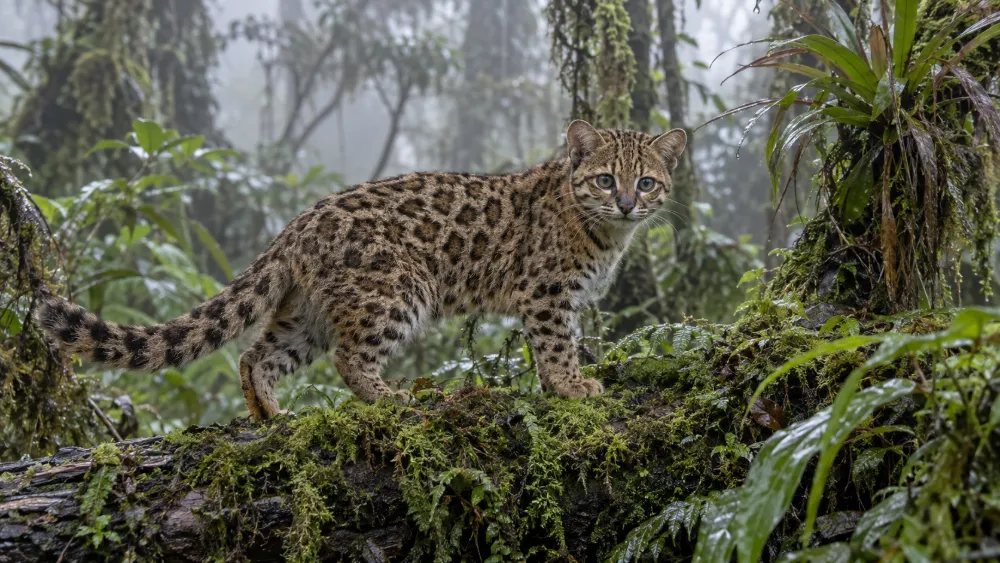
Margay
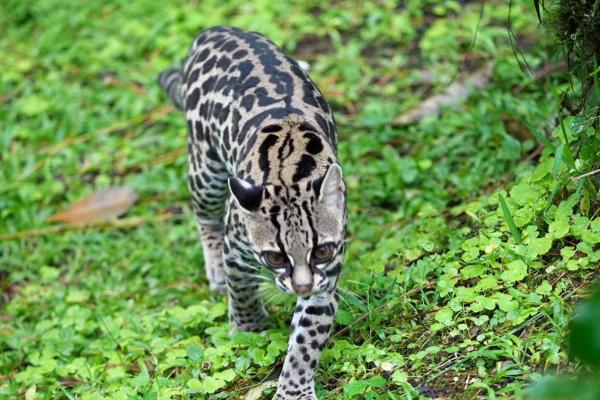
The margay is an arboreal wildcat documented in Guanajuato and protected under Mexico's NOM-059 system.
The margay (Leopardus wiedii) is smaller than an ocelot and is exceptionally adapted to life in trees.
Its flexible ankles allow it to descend trunks head-first and move through complex forest canopies. That specialization also makes loss and fragmentation of wooded habitat a serious problem.
Guanajuato's protected-area mammal inventory lists the margay in NOM-059 category P. The state's biodiversity strategy also highlights recent records of margays and ocelots as evidence of the conservation value of remaining natural landscapes.
Jaguarundi
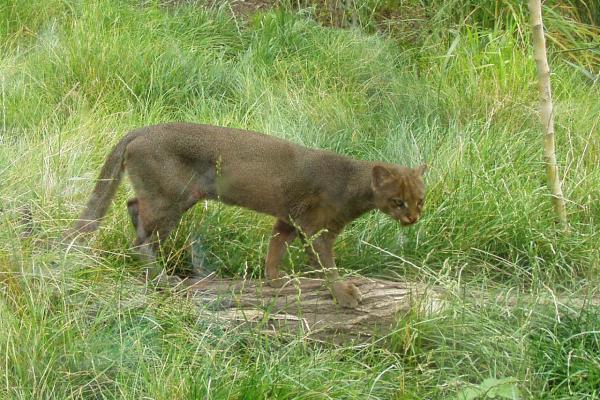
Jaguarundis are small, long-bodied wildcats and are listed as threatened in Mexico's NOM-059 system.
The jaguarundi (Herpailurus yagouaroundi) looks very different from Guanajuato's spotted wildcats. It has a long body, short legs, a small flattened head and a long tail.
The official Guanajuato mammal inventory lists it as A — Amenazada under NOM-059.
Its survival depends on maintaining vegetation corridors across landscapes increasingly divided by roads, agriculture and development.
Greater Long-Nosed Bat
The greater long-nosed bat (Leptonycteris nivalis) is one of the most important migratory pollinators in Mexico.
It feeds heavily on nectar and pollen from agaves and other flowering plants. By transporting pollen between widely separated plants, it helps maintain both wild plant populations and desert and montane ecosystems.
Guanajuato's official mammal inventory lists the species as A under NOM-059 and also identifies it as a conservation-priority species.
Threats include disturbance of roosting caves, loss of foraging habitat and disruption of flowering resources along migration routes.
Lesser Long-Nosed Bat
The lesser long-nosed bat (Leptonycteris yerbabuenae) is another migratory nectar specialist associated with agaves and columnar cacti.
Guanajuato conservation inventories record the species in protected areas and historically list it under a Mexican risk category.
The species is a good example of why global and national status should not be confused. Conservation assessments have improved in parts of its range, but cave protection and maintenance of continuous nectar corridors remain essential.
Mexican Long-Tongued Bat
The Mexican long-tongued bat (Choeronycteris mexicana) has an elongated muzzle and tongue specialized for reaching nectar inside flowers.
Guanajuato's official inventory lists it as A — Amenazada under NOM-059.
Because nectar-feeding bats move pollen among agaves and cacti, protecting them also protects important plant reproduction networks.
Neotropical River Otter
The Neotropical river otter (Lontra longicaudis) depends on rivers, streams and riparian vegetation.
Guanajuato's protected-area mammal inventory lists it as A under NOM-059.
River otters are especially vulnerable to declining water quality, riparian habitat removal, disturbance and reductions in aquatic prey. Their presence can therefore be a useful indicator that a river system still retains important ecological functions.
American Badger
The American badger (Taxidea taxus)—known in Mexico as the tlalcoyote—is a powerful burrowing predator of open habitats.
Guanajuato's mammal inventory records the species in multiple protected areas and lists it as A under NOM-059.
Badgers depend on grassland and open-country ecosystems with healthy populations of rodents and other burrowing prey. Conversion of grasslands, road mortality and persecution can reduce local populations.
White-Sided Jackrabbit
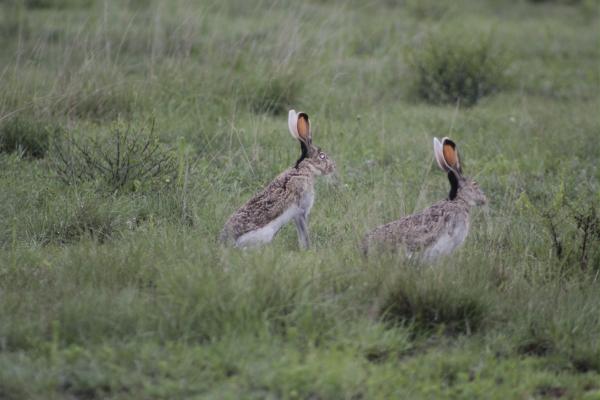
The White-Sided Jackrabbit is a grassland specialist currently classified as Vulnerable on the IUCN Red List.
The White-Sided Jackrabbit (Lepus callotis) is a Mexican grassland hare with conspicuous pale flanks and very long ears.
The Mammal Diversity Database reports its current IUCN status as Vulnerable.
Its principal conservation problem is the degradation and conversion of grassland. Overgrazing, agricultural expansion and shrub encroachment can reduce the open habitat the species requires.
Claims that the species is declining by an exact percentage every decade should be used only when a specific population study supports that number. The older version of this article presented a fixed 40% decline per decade as a universal fact; the revised article does not.
Transvolcanic Yellowthroat
The Transvolcanic Yellowthroat (Geothlypis speciosa) is one of Guanajuato's most important wetland birds.
It is endemic to wetlands of Mexico's Trans-Mexican Volcanic Belt and depends heavily on marsh vegetation.
The Guanajuato government confirmed the species again at Laguna de Yuriria in 2016 after approximately 10 years without a local record. The state described it as in danger of extinction under NOM-059.
Drainage, water extraction, pollution, fires and removal of marsh vegetation can all reduce the small amount of suitable habitat that remains.
Black-Capped Vireo
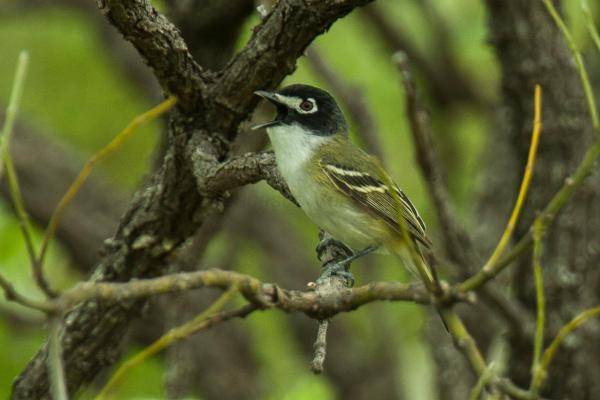
The Black-Capped Vireo is among the bird species monitored under Mexico's NOM-059 conservation framework in Guanajuato.
The Black-Capped Vireo (Vireo atricapilla) is a small migratory songbird associated with shrubby habitats.
Guanajuato's state monitoring program includes the species among birds in protected areas that have NOM-059 conservation status.
Its conservation history also shows why old status labels need regular updating: populations can improve in one part of the range while habitat protection remains important elsewhere.
Aztec Rail
The Aztec Rail (Rallus tenuirostris) is a secretive marsh bird found in central Mexican wetlands.
Guanajuato's environmental authorities list it among bird species in the state's protected areas with NOM-059 status.
Like the Transvolcanic Yellowthroat, it depends on healthy marsh vegetation. Wetland drainage, pollution, altered water levels and reed-bed destruction can remove habitat very quickly.
Mexican Mud Turtle
The Mexican mud turtle (Kinosternon integrum) is endemic to Mexico and occurs in freshwater habitats across parts of central and western Mexico.
Guanajuato's official reptile inventory lists it as Pr — Sujeta a protección especial and documents it in many protected areas.
The turtle can use ponds, streams and seasonal aquatic habitats, but wetland alteration, road mortality, collection and water-quality decline can create local pressure.
Mexican Garter Snake
The Mexican garter snake (Thamnophis eques) is closely associated with wetlands, streams and other aquatic habitats.
The official Guanajuato reptile inventory lists the species as A — Amenazada.
Because it depends on aquatic and riparian prey networks, drying wetlands, contaminated water and habitat fragmentation can affect both the snake and the animals it feeds on.
Mexican Plateau Horned Lizard
The Mexican Plateau Horned Lizard (Phrynosoma orbiculare) is an endemic Mexican reptile with a flattened body and crown of head spines.
Guanajuato's protected-area inventory lists it as A under NOM-059 and identifies it as endemic.
Horned lizards rely heavily on ants and other small invertebrates. Habitat conversion and insect declines can therefore affect them indirectly as well as through direct habitat loss.
Querétaro Dusky Rattlesnake
The Querétaro Dusky Rattlesnake (Crotalus aquilus) is a Mexican endemic associated with highland habitats.
Guanajuato's official reptile inventory lists the species as Pr under NOM-059.
Rattlesnakes frequently suffer deliberate killing because of fear, even though they play an important ecological role by controlling rodents and other small vertebrates.
Mexican Lance-Headed Rattlesnake
The Mexican Lance-Headed Rattlesnake (Crotalus polystictus) is another Mexican endemic recorded in Guanajuato.
The state reptile inventory lists it as Pr under NOM-059.
It is associated with central Mexican highland grasslands and agricultural mosaics. Loss of native grassland and direct persecution are important conservation concerns for many rattlesnake populations.
Picotee Goodeid
The Picotee Goodeid or Picotee Splitfin (Zoogoneticus quitzeoensis) is a small livebearing freshwater fish endemic to central Mexico.
This species was incorrectly called the “Tequila Splitfin” in the old version of this page. The true Tequila Splitfin is a different species, Zoogoneticus tequila.
Research on Mexican goodeids classifies Z. quitzeoensis as Endangered and declining. Historically it occurred in the Turbio and Laja drainages, Lake Yuriria and other parts of the middle Lerma and Cuitzeo systems.
It has disappeared from many former localities because of water pollution, habitat loss caused by water diversion and the introduction of non-native species.
Lerma Livebearer
The Lerma Livebearer or Olive Skiffia (Skiffia lermae) is another native goodeid whose history is closely tied to central Mexican freshwater systems.
Scientific assessments describe the species as Endangered and declining.
Its historical range included Lake Yuriria and the Laja River in the middle Lerma basin, but surveys show major losses from former localities. Pollution, habitat degradation and introduced fishes have all contributed to the decline.
What Happened to the Caldera Silverside?
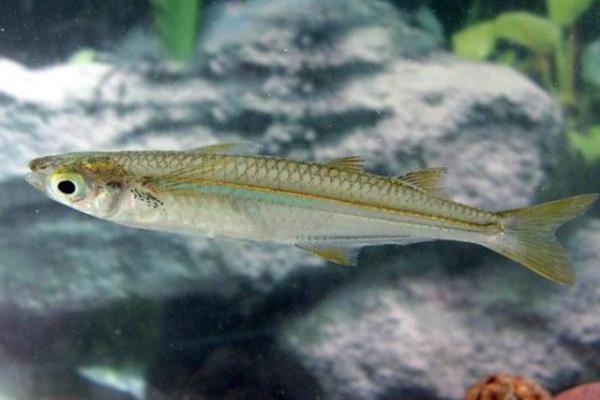
CONABIO's Guanajuato biodiversity study reports the endemic Caldera Silverside as extinct because of human-caused environmental change.
The Caldera Silverside (Chirostoma bartoni) deserves a separate section because it is no longer simply an “endangered animal.”
CONABIO's official Guanajuato biodiversity study states that this fish, once endemic to Guanajuato waters, is now extinct due to anthropogenic activity.
The old article described it as possibly “temporarily extinct” after a drought. That wording is misleading. Extinction is not a temporary conservation category.
The species is a warning of what can happen when small endemic freshwater populations face pollution, water extraction, habitat alteration and prolonged ecological degradation.
Why Freshwater Wildlife Is Especially Vulnerable in Guanajuato
Guanajuato lies within river and lake systems that have experienced intensive human use for agriculture, cities and industry.
CONABIO identifies pollution, drying of water bodies and groundwater extraction as major threats across priority hydrological regions of central Mexico. These pressures are especially dangerous for endemic fishes that may occur in only one lake, spring or drainage.
When a mammal loses one habitat patch, it may sometimes move through a corridor to another. A fish restricted to a single spring cannot do that if the spring dries or becomes polluted.
Why the Sierra Gorda de Guanajuato Matters
The Sierra Gorda de Guanajuato Biosphere Reserve protects roughly 236,883 hectares in the northeastern part of the state.
CONANP reports that it contains a mosaic of habitats supporting thousands of species and hundreds of endemic taxa.
The 2026 jaguar record is particularly important because large predators require connected habitat, sufficient prey and relatively low human disturbance. The presence of all six Mexican felids inside the reserve indicates that the landscape still functions as an important wildlife corridor.
Main Threats to Guanajuato's At-Risk Wildlife
The exact threats vary by species, but several pressures occur repeatedly:
habitat fragmentation from urban expansion, roads and agriculture;
water extraction and wetland drying;
river and lake pollution;
loss of grassland and forest cover;
invasive and non-native species in freshwater systems;
cave disturbance affecting bats;
illegal hunting, persecution and wildlife trafficking;
direct killing of snakes and carnivores;
climate-related changes that intensify drought and habitat stress.
How Is Guanajuato Protecting Wildlife?
Conservation in Guanajuato includes federal and state protected areas, biological monitoring, camera trapping, wetland protection, community participation and species-specific programs.
State authorities reported that dozens of bird, amphibian, reptile and mammal species recorded in protected areas fall under NOM-059 categories.
Monitoring matters because conservation status is not static. The rediscovery of the Transvolcanic Yellowthroat at Laguna de Yuriria after a long gap and the first Sierra Gorda jaguar record show that field surveys can reveal wildlife that would otherwise remain undocumented.
Frequently Asked Questions
What endangered animals live in Guanajuato?
Important examples include jaguars, ocelots, margays, jaguarundis, greater long-nosed bats, Transvolcanic Yellowthroats, Mexican mud turtles, threatened snakes and several declining freshwater fishes.
Are jaguars found in Guanajuato?
Yes. CONANP announced the first confirmed jaguar record inside the Sierra Gorda de Guanajuato Biosphere Reserve on March 23, 2026. The record came from camera traps used between August 2024 and May 2025.
How many wild cat species live in Sierra Gorda de Guanajuato?
CONANP reports six Mexican felids in the reserve: jaguar, ocelot, margay, jaguarundi, bobcat and puma.
Is the ocelot endangered in Guanajuato?
Mexico's NOM-059 framework lists the ocelot in category P, meaning En peligro de extinción. Its global status is assessed separately by the IUCN.
What is the rare endangered bird at Laguna de Yuriria?
The Transvolcanic Yellowthroat (Geothlypis speciosa) is a Mexican endemic wetland bird classified as in danger of extinction under NOM-059. Guanajuato authorities confirmed it again at Laguna de Yuriria in 2016 after about a decade without a local record.
What endangered fish live in Guanajuato?
Freshwater conservation concerns include the Picotee Goodeid (Zoogoneticus quitzeoensis) and Lerma Livebearer (Skiffia lermae), both of which have suffered major range declines in central Mexican waters.
Is the Tequila Splitfin found in Guanajuato?
The old version of this article incorrectly called Zoogoneticus quitzeoensis the Tequila Splitfin. The Tequila Splitfin is Zoogoneticus tequila, a different species. Z. quitzeoensis is usually called the Picotee Goodeid or Picotee Splitfin.
Is the Caldera Silverside endangered?
CONABIO's Guanajuato biodiversity study reports Chirostoma bartoni as extinct because of human activity, so it should not be described simply as a currently endangered species.
What does NOM-059 mean?
NOM-059-SEMARNAT is Mexico's official framework for identifying native species at risk. Its categories include P for species in danger of extinction, A for threatened species and Pr for species subject to special protection.
What is the biggest threat to wildlife in Guanajuato?
There is no single threat for every species. Habitat fragmentation, water extraction, pollution, wetland loss, invasive species, direct persecution and degradation of forest and grassland habitats are among the most important pressures.
Official and Scientific Sources
CONANP — First Jaguar Record in Sierra Gorda de Guanajuato, March 2026
Guanajuato SMAOT — Mammals Recorded in State Protected Areas
Guanajuato SMAOT — Amphibians and Reptiles Recorded in Protected Areas
Government of Guanajuato — Transvolcanic Yellowthroat at Laguna de Yuriria
ZooKeys — Distribution and Conservation Status of Mexican Goodeidae
Final Takeaway
Guanajuato's threatened wildlife includes much more than a list of globally “Endangered” species. The state contains animals protected under Mexico's national risk categories, globally threatened species, narrow-range endemics and freshwater species that have already disappeared from parts of their historical range.
The strongest recent evidence that conservation still matters is the 2026 jaguar record in Sierra Gorda de Guanajuato. At the same time, the extinction of the Caldera Silverside shows what can happen when habitat degradation goes too far. Protecting connected forests, grasslands, caves, rivers and wetlands is therefore essential for keeping Guanajuato's remaining biodiversity intact.