Endangered birds are bird species whose populations have fallen so low that they may disappear from the wild if threats continue. Some are threatened by habitat loss, climate change, pollution, hunting, invasive predators, illegal trade, and collisions with human-made structures. From the California condor of North America to the kakapo of New Zealand and the giant ibis of Southeast Asia, many endangered birds are also warning signs of damaged ecosystems.
Birds live on every continent and in nearly every type of habitat, from tropical rainforests and deserts to oceans, wetlands, mountains, grasslands, and cities. They pollinate plants, spread seeds, clean up carrion, control insects, and help scientists understand the health of the environment. When bird populations collapse, it often means that forests, wetlands, coastlines, or grasslands are also under serious pressure.
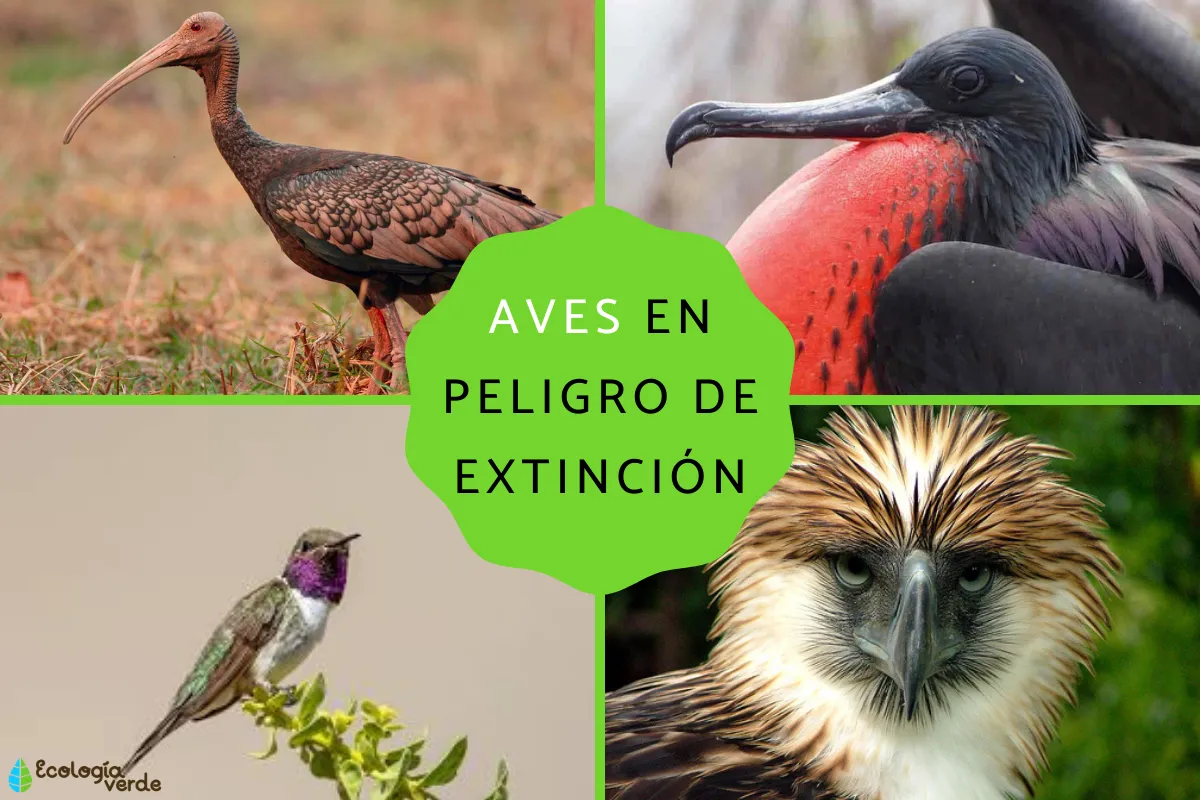
Conservation organizations have warned that more than one in eight bird species is at risk of extinction, and nearly half of the world’s bird species are declining. That makes endangered birds one of the clearest signs that biodiversity loss is not a distant problem—it is already happening in the places where birds breed, migrate, feed, and nest.
Endangered Birds at a Glance
| Bird Species | Scientific Name | Region | Main Threats | Why It Matters |
|---|---|---|---|---|
| California Condor | Gymnogyps californianus | United States and Baja California | Lead poisoning, habitat disturbance, low reproduction rate | One of North America’s most famous conservation recovery stories |
| Kakapo | Strigops habroptilus | New Zealand | Introduced predators, low breeding frequency, small population | The world’s only flightless parrot |
| Philippine Eagle | Pithecophaga jefferyi | Philippines | Deforestation, hunting, habitat fragmentation | One of the largest and most powerful forest eagles |
| Helmeted Hornbill | Rhinoplax vigil | Malay Peninsula, Sumatra, Borneo | Illegal hunting, wildlife trade, rainforest loss | Targeted for its solid casque, sometimes called hornbill ivory |
| Hooded Grebe | Podiceps gallardoi | Patagonia | Invasive predators, climate change, wetland changes | A rare waterbird discovered only in the 20th century |
| Giant Ibis | Thaumatibis gigantea | Cambodia, Laos, Vietnam | Wetland loss, hunting, disturbance | A symbol of vanishing Southeast Asian wetlands |
| Christmas Island Frigatebird | Fregata andrewsi | Christmas Island | Habitat loss, mining, marine pollution, climate pressure | A seabird with a very restricted breeding range |
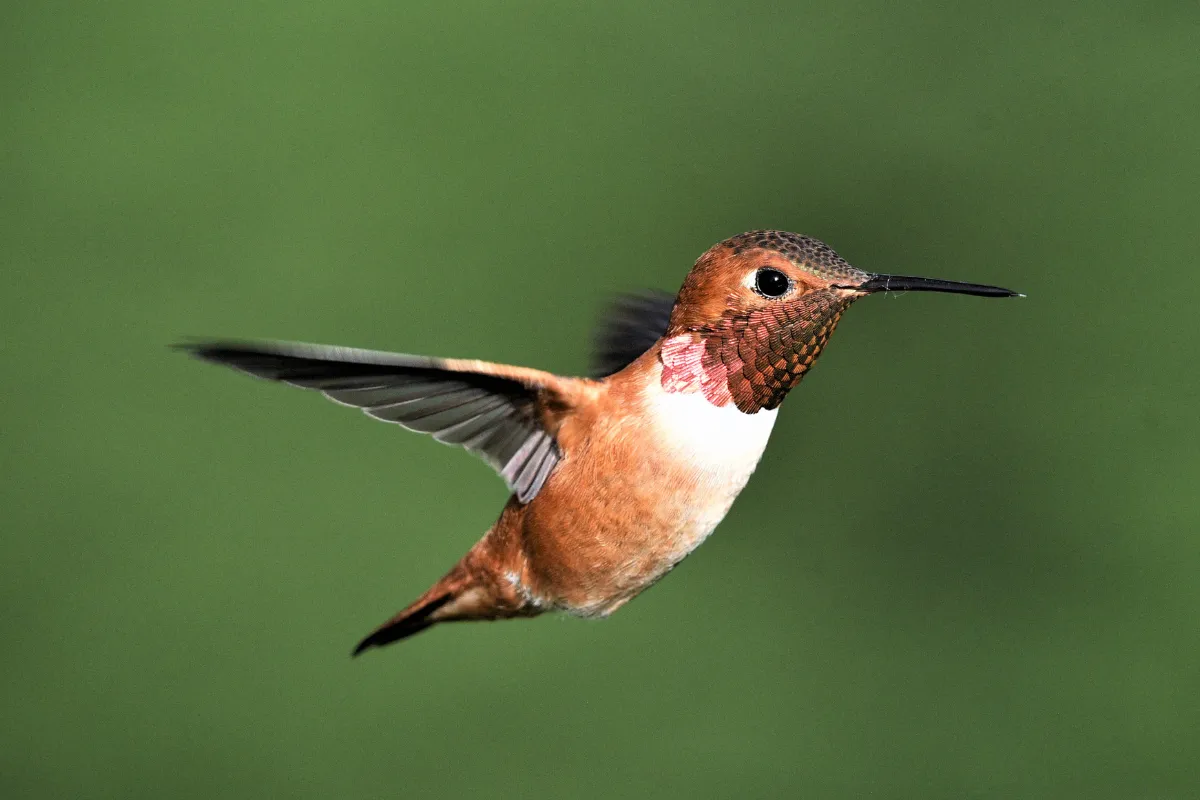
| Chilean Woodstar | Eulidia yarrellii | Northern Chile | Habitat loss, agriculture, competition, small range | One of the smallest and rarest birds in Chile |
| Akohekohe | Palmeria dolei | Hawaii | Disease, invasive species, habitat loss | A rare Hawaiian honeycreeper linked to native forest health |
What Makes a Bird Endangered?
A bird is considered endangered when its population, habitat, or breeding success has declined enough to place the species at serious risk of extinction. Some species still have thousands of individuals, but their numbers are falling quickly. Others survive as only a few hundred birds or fewer, often in isolated areas where a single disease outbreak, storm, wildfire, or human disturbance could cause major damage.
Not all endangered birds face the same level of risk. Some are listed as vulnerable, some as endangered, and some as critically endangered. Critically endangered species are the closest to extinction in the wild. In many cases, they need active human help, such as predator control, protected reserves, captive breeding, nest monitoring, habitat restoration, and laws against hunting or illegal trade.
California Condor
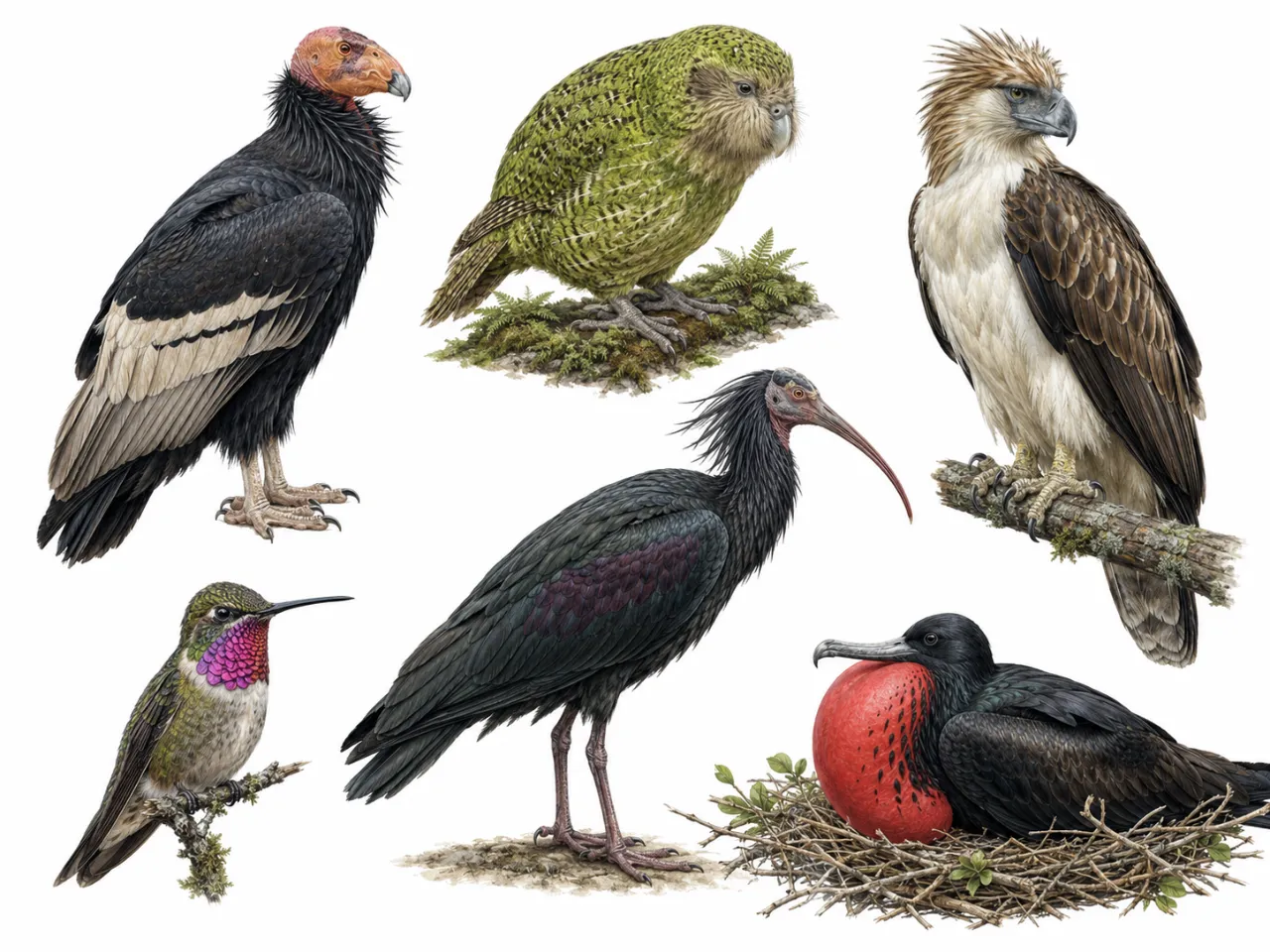
The California condor is one of the most famous endangered birds in the world. It is the largest flying bird in North America, with an enormous wingspan and a body built for soaring over mountains, canyons, and open landscapes. As a scavenger, it feeds mainly on carcasses, helping clean the environment and recycle nutrients.
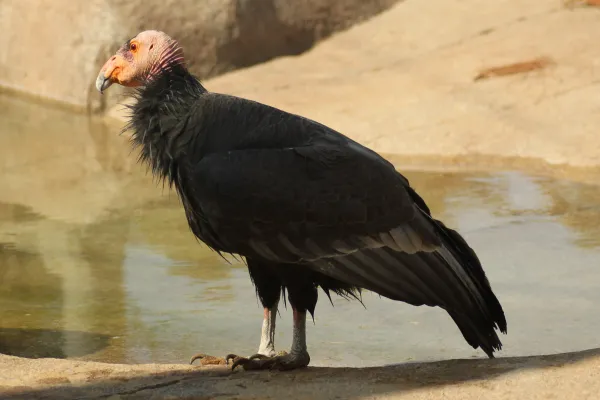
This species came extremely close to extinction in the 20th century. Conservationists captured the last wild condors for an intensive breeding program, then slowly reintroduced birds back into the wild. Today, the California condor is still carefully monitored. Its biggest modern threat is lead poisoning, which can happen when condors feed on carcasses containing fragments of lead ammunition.
The condor shows that endangered birds can recover when science, government agencies, local communities, zoos, and conservation groups work together. However, it also shows that recovery is rarely quick. Long-lived birds that reproduce slowly may need decades of protection before they become secure.
Kakapo
The kakapo is one of the strangest and most beloved endangered birds on Earth. Native to New Zealand, it is a large, nocturnal, ground-dwelling parrot that cannot fly. It has mossy green feathers, a rounded body, a strong smell, and a gentle, curious nature that has made it famous among bird lovers.
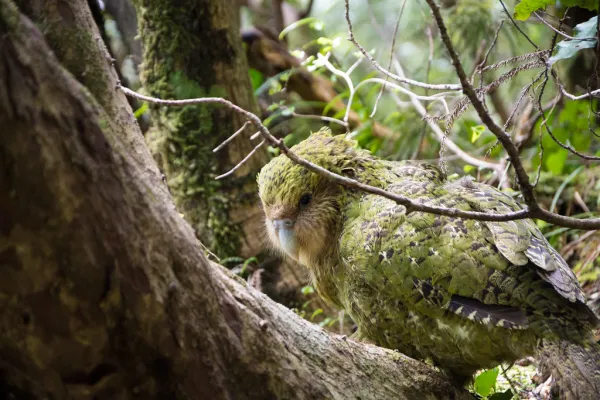
For thousands of years, the kakapo evolved in a land without many mammalian predators. Because of this, it did not need flight in the same way as many other birds. When humans and introduced animals such as cats, rats, and stoats arrived, kakapo numbers collapsed. Ground-nesting, flightless birds were especially vulnerable.
Today, the kakapo survives through one of the most intensive bird recovery programs in the world. The remaining birds are protected on predator-free islands, where conservation teams track individuals, monitor nests, support chicks, and manage breeding. The species is still at risk because it has a small population and breeds only in certain years when food conditions are right.
Philippine Eagle
The Philippine eagle is a powerful forest raptor and one of the largest eagles in the world. It is found only in the Philippines and is considered a national symbol. With its shaggy crest, massive beak, strong talons, and broad wings, it is an apex predator of tropical forests.
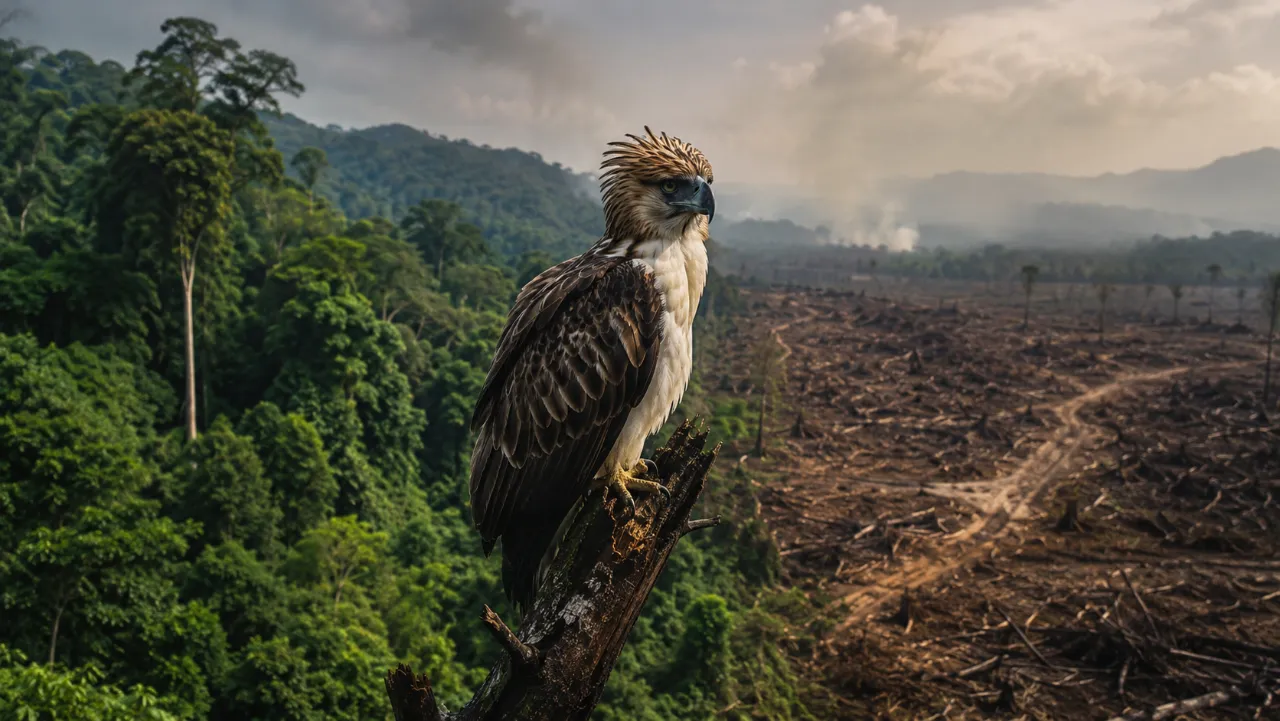
Despite its old nickname, the Philippine eagle does not eat only monkeys. Its diet may include flying lemurs, snakes, monitor lizards, birds, and other forest animals. This makes it an important predator in the food web.
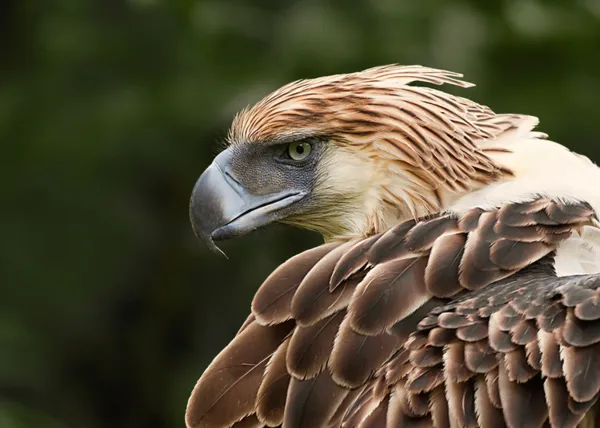
The greatest threat to the Philippine eagle is deforestation. A pair of eagles needs a large area of mature forest to hunt and breed successfully. When forests are cut, burned, or fragmented, nesting territories disappear. Because these eagles reproduce slowly and raise only one chick at a time, every adult bird is extremely valuable to the survival of the species.
Helmeted Hornbill
The helmeted hornbill is a remarkable bird of Southeast Asian rainforests. It lives in places such as the Malay Peninsula, Sumatra, and Borneo. Unlike many hornbills, it has a large solid casque on top of its bill. This casque has made the bird a target for illegal wildlife trade.
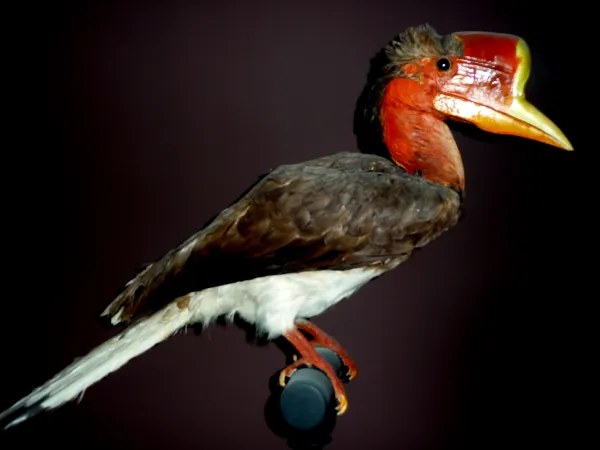
The casque is sometimes carved and sold as “hornbill ivory,” which has caused intense poaching pressure. This is especially dangerous because hornbills reproduce slowly. A female hornbill seals herself inside a tree cavity while nesting, depending on the male to bring food. If the male is killed, the female and chick may also die.
Protecting the helmeted hornbill requires both forest conservation and strong action against illegal trade. Without mature rainforest trees, hornbills lose nesting sites. Without enforcement, poaching continues to remove breeding adults from the wild.
Hooded Grebe
The hooded grebe, also known as the macá tobiano, is a rare waterbird from Patagonia in Argentina and Chile. It is a small, elegant bird with a compact body, pale plumage, and a distinctive dark head pattern during the breeding season.
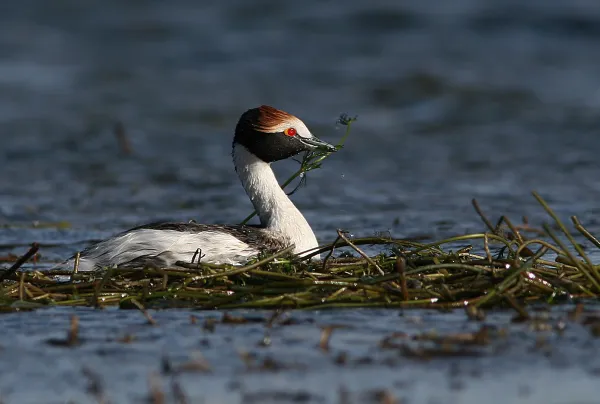
This species was discovered relatively recently compared with many well-known birds, which shows that even modern science is still learning about wildlife. Unfortunately, soon after it became known to science, researchers realized that it was in serious trouble.
The hooded grebe depends on specific highland lakes for breeding. Changes in water conditions, climate pressure, invasive predators, and competition from introduced species have all affected its survival. Because the bird has a narrow breeding range, protecting the lakes it depends on is essential.
Giant Ibis
The giant ibis is a large, dark, long-legged bird found in parts of Southeast Asia, especially Cambodia. It uses wetlands, seasonally flooded forests, pools, and open habitats where it searches for small animals in mud and shallow water.
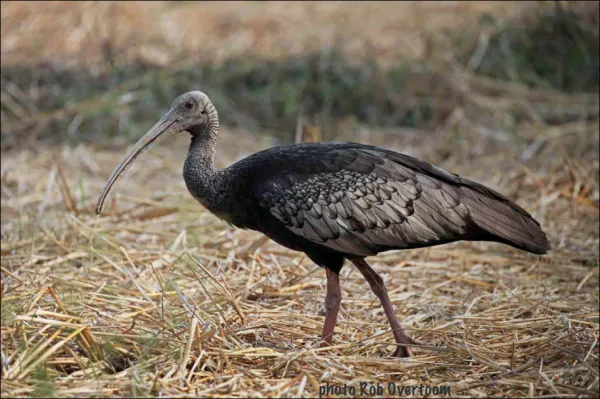
This bird is threatened by wetland drainage, forest loss, hunting, disturbance, and changes in traditional land use. Many of the quiet feeding and nesting areas it once used have been converted for agriculture, infrastructure, or settlement.
The giant ibis is often described as a symbol of Southeast Asia’s disappearing wetlands. Saving it means protecting more than a single bird species. It also means protecting wetland ecosystems that support fish, amphibians, reptiles, insects, local communities, and many other birds.
Christmas Island Frigatebird
The Christmas Island frigatebird is a large seabird that breeds only on Christmas Island in the Indian Ocean. Like other frigatebirds, it has long wings, a deeply forked tail, and a graceful flight style that allows it to stay in the air for long periods.
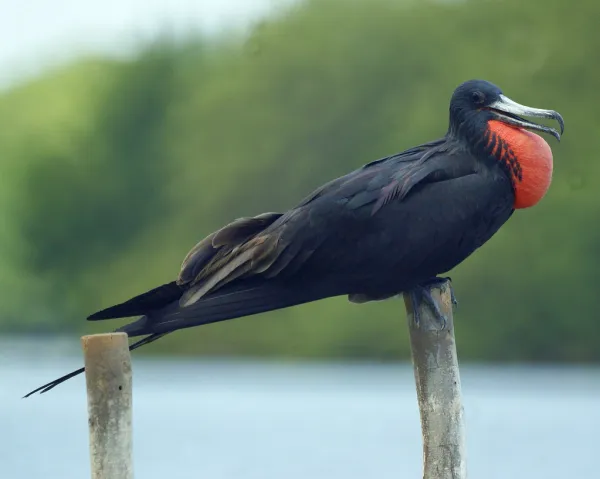
Its restricted breeding range makes it highly vulnerable. If nesting habitat is damaged, there are few alternative places for the species to breed. Threats include habitat degradation, mining, invasive species, marine pollution, and changes in ocean conditions.
Seabirds like the Christmas Island frigatebird also remind us that endangered birds are not only a forest or mountain issue. Oceans are changing too. Plastic pollution, overfishing, warming seas, and extreme weather can all affect seabirds by reducing food availability or damaging nesting colonies.
Chilean Woodstar
The Chilean woodstar, also called the Arica hummingbird, is a tiny hummingbird from northern Chile. Measuring only a few centimeters long, it is one of the smallest birds in its region. Its size makes it easy to overlook, but its conservation importance is enormous.
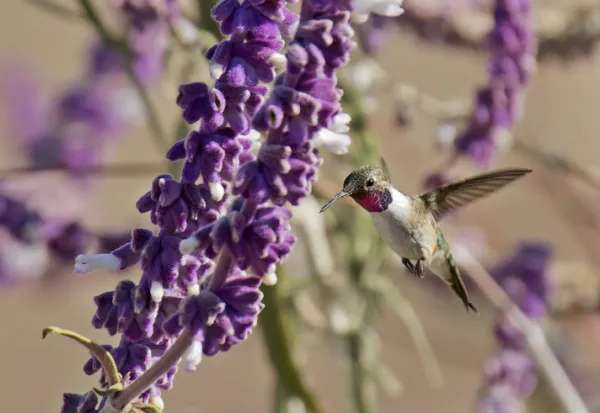
This hummingbird depends on suitable flowering plants, scrublands, gardens, and valley habitats where it can feed on nectar and tiny insects. Habitat conversion, pesticide use, changes in agriculture, and competition with other hummingbirds have all contributed to its decline.
Small birds can be just as endangered as large, dramatic species. In fact, tiny species with limited ranges may be especially vulnerable because their entire population can depend on a few valleys, wetlands, islands, or forest patches.
Akohekohe
The akohekohe is a rare Hawaiian honeycreeper found in native forests of Maui. It has striking plumage, a distinctive crest, and a diet that includes nectar, fruit, and insects. Like many Hawaiian birds, it is deeply connected to native plants and forest ecosystems.
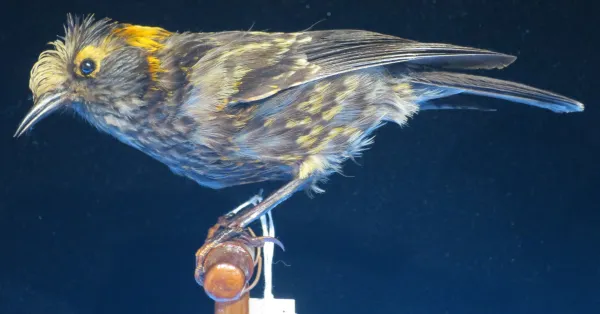
Hawaiian honeycreepers are among the most threatened bird groups in the world. They have been affected by habitat loss, invasive species, introduced mosquitoes, and avian diseases. Climate change can worsen these threats by allowing mosquitoes to move into higher elevations where some native birds once found refuge.
Protecting the akohekohe requires native forest restoration, disease control, invasive species management, and long-term monitoring. Its survival is part of a much larger effort to protect Hawaii’s unique island biodiversity.
More Endangered Birds Around the World
The following birds are also endangered, critically endangered, or otherwise facing serious population pressure in different parts of the world. Their situations vary, but most are affected by the same broad problems: habitat loss, hunting, invasive species, pollution, climate change, and human disturbance.
Miahuatlán hummingbird — Eupherusa cyanophrys
Scissor-tailed hummingbird — Hylonympha macrocerca
Kagu — Rhynochetos jubatus
Sierra Madre sparrow — Xenospiza baileyi
Gran Canaria blue chaffinch — Fringilla polatzeki
Tricolored blackbird — Agelaius tricolor
Ashy storm petrel — Oceanodroma homochroa
Guadalupe murrelet — Synthliboramphus hypoleucus
Worthen’s sparrow — Spizella wortheni
Belding’s yellowthroat — Geothlypis beldingi
Red siskin — Carduelis cucullata
Kiritimati reed warbler — Acrocephalus aequinoctialis
Dwarf tinamou — Taoniscus nanus
Vinaceous-breasted amazon — Amazona vinacea
African grey parrot — Psittacus erithacus
Lilac-crowned amazon — Amazona finschi
Sun parakeet — Aratinga solstitialis
Carnaby’s black cockatoo — Calyptorhynchus latirostris
Baudin’s black cockatoo — Calyptorhynchus baudinii
Black-fronted piping guan — Pipile jacutinga
Horned guan — Oreophasis derbianus
Helmeted curassow — Pauxi pauxi
Apolinar’s wren — Cistothorus apolinari
Antioquia wren — Thryophilus sernai
Grey crowned crane — Balearica regulorum
Whooping crane — Grus americana
Abbott’s booby — Papasula abbotti
Forest owlet — Athene blewitti
Egyptian vulture — Neophron percnopterus
Galápagos penguin — Spheniscus mendiculus
White-headed duck — Oxyura leucocephala
South Island takahe — Porphyrio hochstetteri
Black-eared miner — Manorina melanotis
Regent honeyeater — Anthochaera phrygia
Tahiti monarch — Pomarea nigra
Bugun liocichla — Liocichla bugunorum
Marquesan kingfisher — Todiramphus godeffroyi
Red-lored amazon — Amazona lilacina
Red-fronted macaw — Ara rubrogenys
Sumba hornbill — Rhyticeros everetti
Sulu hornbill — Anthracoceros montani
Sumatran ground-cuckoo — Carpococcyx viridis
Guadalupe storm petrel — Oceanodroma macrodactyla
Galápagos petrel — Pterodroma phaeopygia
Cantabrian capercaillie — Tetrao urogallus cantabricus
Tuamotu ground dove — Pampusana erythroptera
Great Indian bustard — Ardeotis nigriceps
New Caledonian owlet-nightjar — Aegotheles savesi
Bengal florican — Houbaropsis bengalensis
Socorro mockingbird — Mimodes graysoni
Balearic shearwater — Puffinus mauretanicus
Townsend’s shearwater — Puffinus auricularis
Blue-billed curassow — Crax alberti
Milky stork — Mycteria cinerea
Eskimo curlew — Numenius borealis
Why Are So Many Birds Endangered?
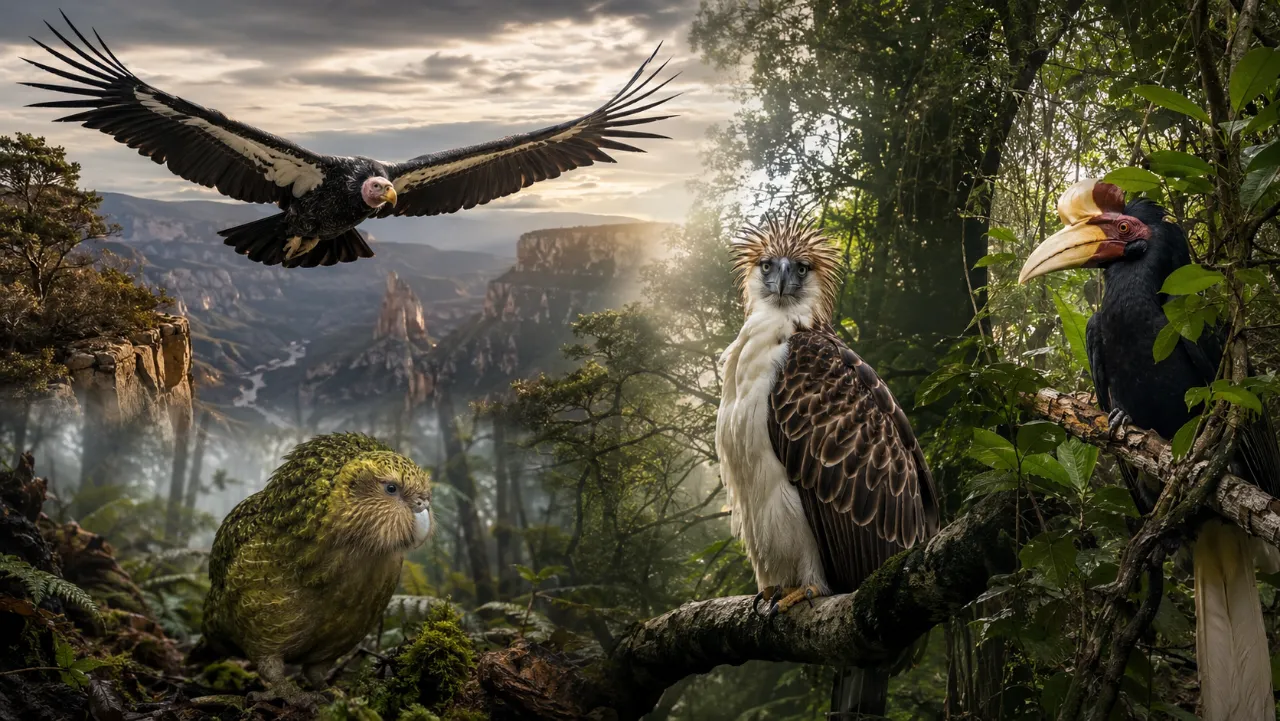
The main reason birds become endangered is human impact. Birds can adapt to many natural challenges, but rapid habitat destruction, pollution, overhunting, invasive species, and climate change can push populations down faster than they can recover.
Habitat Loss
Habitat loss is one of the most serious threats to birds. Forest birds lose nesting trees when rainforests are cut. Wetland birds lose feeding grounds when marshes are drained. Grassland birds decline when open habitats are converted to farms, roads, or cities. Seabirds suffer when coastal nesting sites are disturbed or destroyed.
Illegal Hunting and Wildlife Trade
Some endangered birds are hunted for feathers, meat, pets, traditional objects, or valuable body parts. Parrots are often trapped for the pet trade. Hornbills may be targeted for their casques. Raptors can be persecuted because people misunderstand their role in nature. Illegal trade is especially dangerous when a species already has a small population.
Invasive Predators
Island birds are highly vulnerable to introduced animals such as cats, rats, stoats, pigs, and mongooses. Many island species evolved without these predators, so they nest on the ground or show little fear. Eggs, chicks, and even adult birds can be killed quickly after invasive predators arrive.
Climate Change
Climate change affects birds in many ways. It can shift food availability, change migration timing, dry wetlands, flood nesting areas, increase wildfire risk, and alter ocean food chains. Mountain and island birds may have nowhere to move when temperatures rise or habitats shift.
Pollution
Pollution harms birds through plastic, chemicals, oil, pesticides, heavy metals, noise, and artificial light. Seabirds may swallow plastic. Raptors and scavengers may be poisoned by lead or toxic chemicals. City birds may become disoriented by light pollution during migration.
Collisions
Many birds die after colliding with windows, power lines, communication towers, wind turbines, vehicles, aircraft, and boats. Collisions are especially harmful during migration, when large numbers of birds travel long distances at night or in poor weather.
Why Endangered Birds Matter
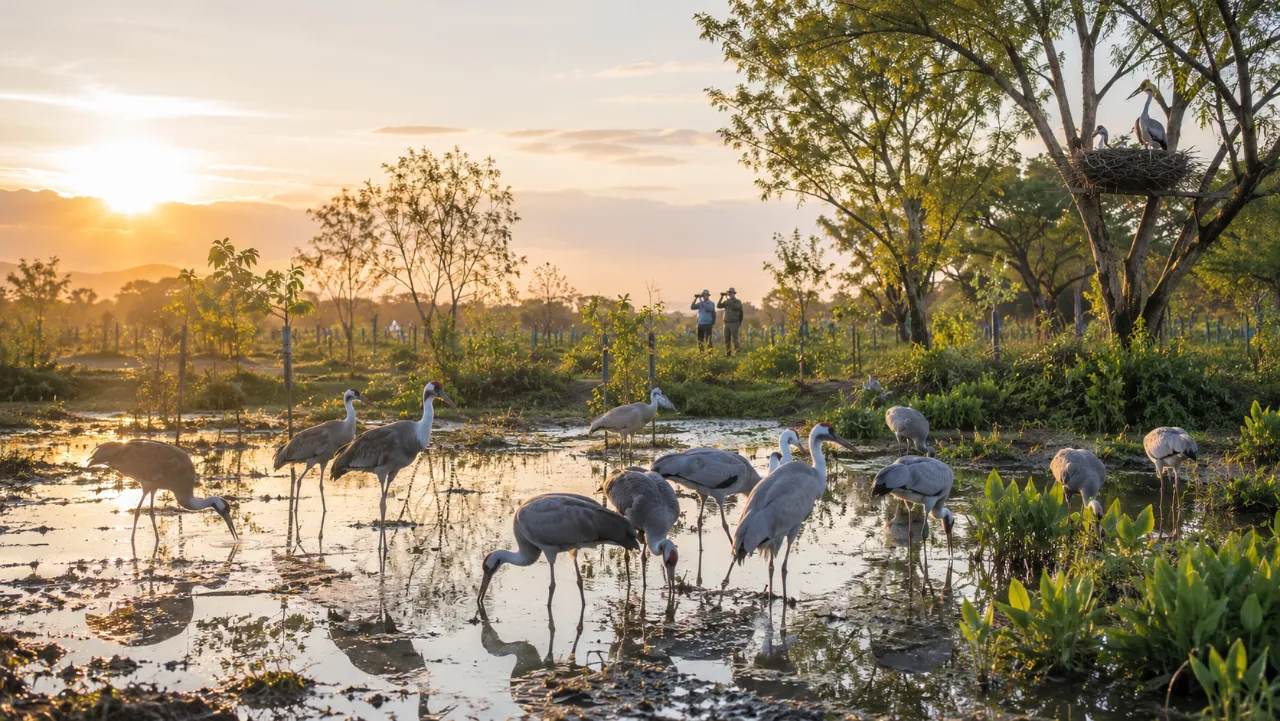
Endangered birds matter because they are part of larger ecosystems. A vulture is not just a scavenger; it helps remove carcasses and reduce disease risk. A hummingbird is not just beautiful; it can pollinate flowers. A seabird is not just a coastal animal; it can indicate the health of ocean food chains. A forest eagle is not just a predator; it shows that large areas of healthy forest still exist.
Birds also have cultural, scientific, and economic value. They appear in national symbols, traditional stories, ecotourism, photography, research, and education. Losing a bird species means losing a unique branch of life that cannot be replaced.
How Can Endangered Birds Be Protected?
Protecting endangered birds requires both local and global action. The best conservation plans usually combine habitat protection, law enforcement, scientific monitoring, community involvement, and long-term funding.
Protect habitats: Forests, wetlands, grasslands, islands, cliffs, and coastlines must be conserved and restored.
Control invasive species: Predator-free islands and protected breeding sites can save ground-nesting and flightless birds.
Stop illegal trade: Strong enforcement can reduce poaching and trafficking of parrots, hornbills, raptors, and rare songbirds.
Reduce poisoning: Switching away from lead ammunition and dangerous pesticides can protect scavengers, raptors, and wetland birds.
Make cities bird-safe: Window treatments, reduced night lighting, and safer power lines can lower collision deaths.
Support conservation breeding: Captive breeding and carefully managed releases can help species with extremely small populations.
Protect migration routes: Migratory birds need safe breeding, resting, and wintering areas across multiple countries.
Educate communities: Local people are often the most important partners in protecting nests, forests, wetlands, and islands.
What You Can Do to Help Birds
You do not need to be a scientist to help birds. Simple actions can reduce pressure on local and migratory species. Keep cats indoors or supervised, avoid buying wild-caught birds, reduce pesticide use, plant native flowers and trees, keep bird feeders clean, support wetland and forest conservation, and make windows safer for birds.
If you enjoy birdwatching, follow ethical guidelines: keep a respectful distance, do not disturb nests, avoid playing bird calls repeatedly, and stay on marked paths in sensitive habitats. Responsible wildlife tourism can give communities a reason to protect rare birds and their habitats.
Final Thoughts
Endangered birds are more than rare animals on a list. They are living signals of what is happening to the planet’s forests, wetlands, oceans, islands, and grasslands. Some, like the California condor and kakapo, show that recovery is possible when humans take responsibility. Others remain dangerously close to extinction and need urgent protection.
Saving birds means saving habitats, reducing pollution, fighting illegal wildlife trade, and making room for nature in the modern world. Every species protected today keeps the sky, forests, wetlands, and oceans richer for future generations.
FAQs About Endangered Birds
What is an endangered bird?
An endangered bird is a bird species whose population has declined so much that it faces a serious risk of extinction. Some endangered birds have only a few hundred individuals left, while others still have larger populations but are declining quickly.
What is the most endangered bird in the world?
There is no single permanent answer because conservation status changes over time. Some of the world’s most endangered birds include the kakapo, California condor, Philippine eagle, helmeted hornbill, giant ibis, and several island birds with extremely small populations.
Why are birds becoming endangered?
Birds become endangered mainly because of habitat loss, illegal hunting, invasive predators, pollution, climate change, disease, and collisions with windows, power lines, vehicles, or other human-made structures.
Are parrots endangered?
Many parrots are endangered or threatened. They are often affected by habitat loss and the illegal pet trade. Examples include the kakapo, African grey parrot, sun parakeet, vinaceous-breasted amazon, and several macaw and cockatoo species.
Are birds important to ecosystems?
Yes. Birds pollinate flowers, spread seeds, control insects, clean up carrion, and serve as indicators of ecosystem health. When bird populations decline, it can signal deeper environmental problems.
How can people help endangered birds?
People can help by protecting habitats, keeping cats indoors, reducing pesticide use, preventing window collisions, avoiding wild-caught pet birds, supporting conservation organizations, and choosing responsible wildlife tourism.
Why are island birds often endangered?
Island birds often evolved without many predators. When cats, rats, stoats, pigs, or other introduced animals arrive, ground-nesting or flightless birds can decline quickly. Island species also usually have small ranges, which makes them more vulnerable.
Can endangered birds recover?
Yes, some endangered birds can recover with long-term protection. The California condor and kakapo show that intensive conservation can help, but recovery usually takes many years and requires continued support.