

Canis simensis
The Ethiopian Wolf (scientific name: Canis simensis) is a small dog with two subspecies.Every morning, Ethiopian wolf packs spend several minutes performing a greeting ritual, sniffing, barking, biting, scratching, licking, and staring at each other. This daily ritual strengthens the unity of the wo...
Bagarius bagarius
The Latin name of the fish is Bagarius bagarius, which is one of the species of the genus Bagarius in the family Siluridae of the order Siluriformes of the class Actinopterygii. It is commonly known as the melon fish.The fish is a carnivorous fish, fierce and predatory. It feeds on mollusks and smal...
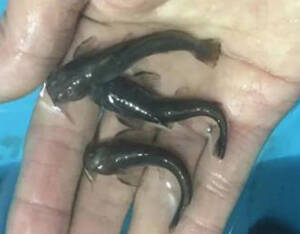
Glyptosternum maculatum
It is the species with the highest distribution altitude among the family of fish, and can be found in waters with an altitude of about 4,500 meters.The black-spotted yao mainly lives in rock crevices and feeds on insect eggs or young fish. The number of chromosomes of the black-spotted protist is 2...
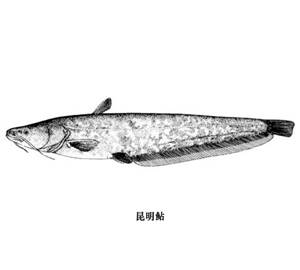
Silurus mento
Kunming catfish (scientific name: Silurus mento), foreign name Kunming-lakecatfish, belongs to the genus Silurus of the family Siluridae of the order Siluriformes, and is endemic to China.Kunming catfish is a carnivorous fish that likes to live in lakeshores with abundant aquatic plants. It hides at...
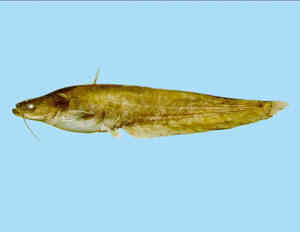
Silurus asotus
Catfish is commonly known as pond catfish, also called catfish, belonging to the genus Siluridae and the family Siluridae. It is a ferocious carnivorous fish. It has strong adaptability, lives on the bottom, swims slowly, tolerates low oxygen, and can survive below 1 mg/L. During the day, it rarely...
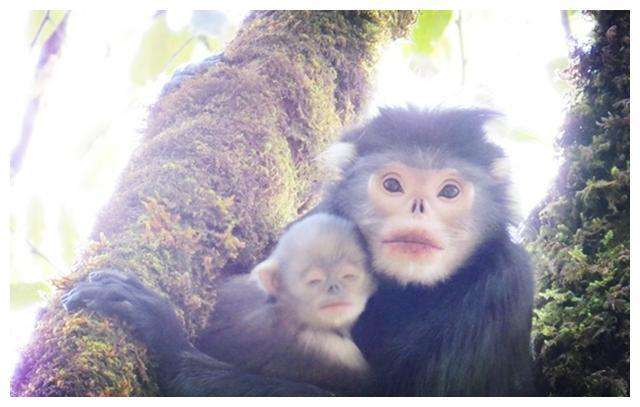
Rhinopithecus strykeri
Nujiang golden monkey is also known as Myanmar Snub-nosed Monkey and Burmese Snub-nosed Monkey in foreign languages. It has no subspecies and is the fifth golden monkey species discovered in the world in modern times.In early 2010, Fauna & Flora International collected a complete golden monkey c...
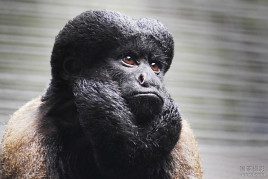
Black-beared saki
The black-bearded saki is a species of the Capuchin family, Saki genus.The Saki monkey was first discovered around the 1930s, more than 80 years ago. Naturalists from Ecuador discovered this new species near the Eru River and called it the Saki monkey. Since then, it has disappeared for various reas...
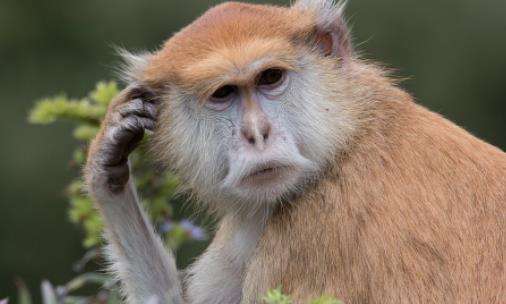
Erythrocebus patas
One thing that makes red monkeys different from other monkeys is that they generally live on the ground, and most of them are distributed in the desert. The harsh climate in the desert makes it difficult for other creatures to survive, so there are very few trees. Over time, the red monkeys' climb...
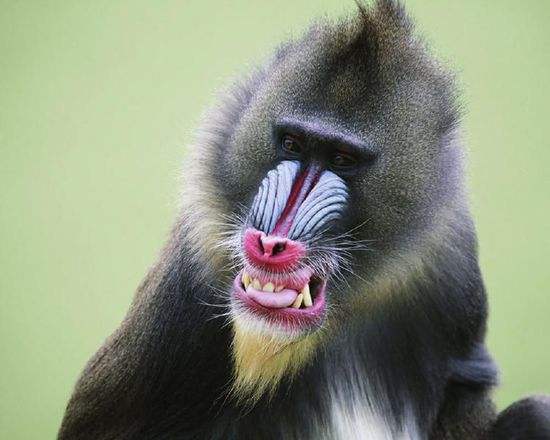
Mandrillus sphinx
It is a monkey, but it is not as docile as other monkeys. It is ferocious by nature and has strong fighting power. It is not afraid even when facing medium-sized ferocious animals, because it is smart and holds grudges. After losing a fight, it will always harass the opponent, and even lions have to...

Tuojiangosaurus
Tuojiangosaurus was a plated herbivorous dinosaur from Jurassic China. It belonged to the stegosaur group, known for body armor made of upright plates and a spiked tail. Although it is sometimes compared with the more famous Stegosaurus from North America, Tuojiangosaurus had its own distinct look,...

Yangchuanosaurus
Yangchuanosaurus was a large meat-eating theropod dinosaur from Jurassic China. It is one of the best-known predatory dinosaurs from Asia and is especially famous for its powerful skull, sharp teeth, and strong hunting build. Although it is sometimes described as an Asian equivalent of Allosaurus be...

Shunosaurus
Shunosaurus was a plant-eating sauropod dinosaur from Jurassic China. It was not one of the largest sauropods, but it is one of the most unusual because it appears to have carried a bony tail club. That feature makes it stand out from many other long-necked dinosaurs. Shunosaurus also had a relative...

Omeisaurus
Omeisaurus was a large long-necked plant-eating dinosaur that lived in what is now China during the Jurassic. It is one of the most famous sauropods from Asia and is especially well known for its very long neck, heavy body, and classic “high-browsing” silhouette. Although it is sometimes overshado...

Barrosasaurus
Barrosasaurus (Barrosasaurus casamiquelai) was a titanosaur sauropod from the Late Cretaceous of Patagonia, Argentina. Titanosaurs were long-necked, plant-eating dinosaurs that became especially diverse in the Southern Hemisphere near the end of the dinosaur era. Barrosasaurus is known from limited...

Famous beasts in nature
1、African elephantAfrican elephants are the largest land mammals, and males and females are dimorphic (both sexes differ in shape or physical characteristics). An adult African male elephant is taller than 3.5 meters, and can reach up to 4.1 meters. Weighing approximately 2.7 to 6 tons, females are...