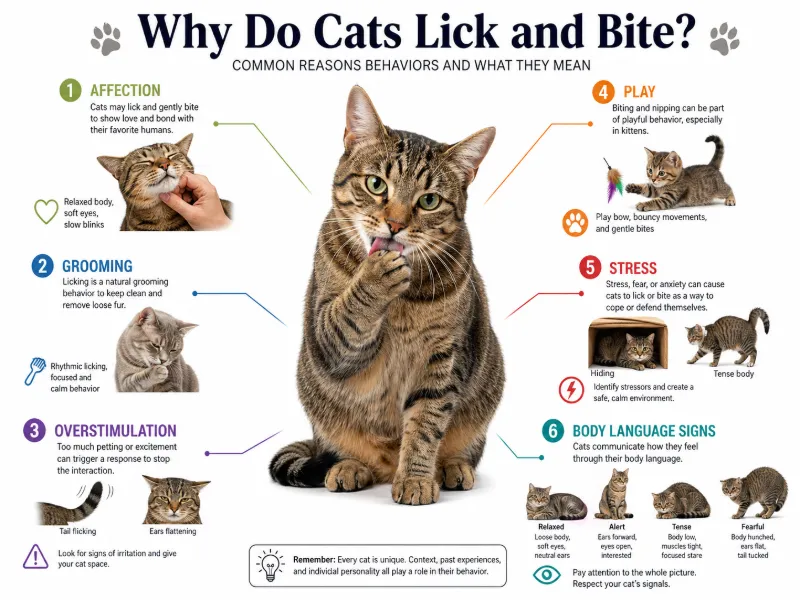
If your cat licks and then bites you, the behavior is usually not random. In many cases, it means your cat is showing affection, grooming you, getting overstimulated, or switching from calm social contact to playful or irritated behavior. The meaning depends on how hard the bite is, your cat’s body language, and what happened right before it. Gentle licking and nibbling are often normal, while sudden hard biting may signal stress, discomfort, or too much handling.
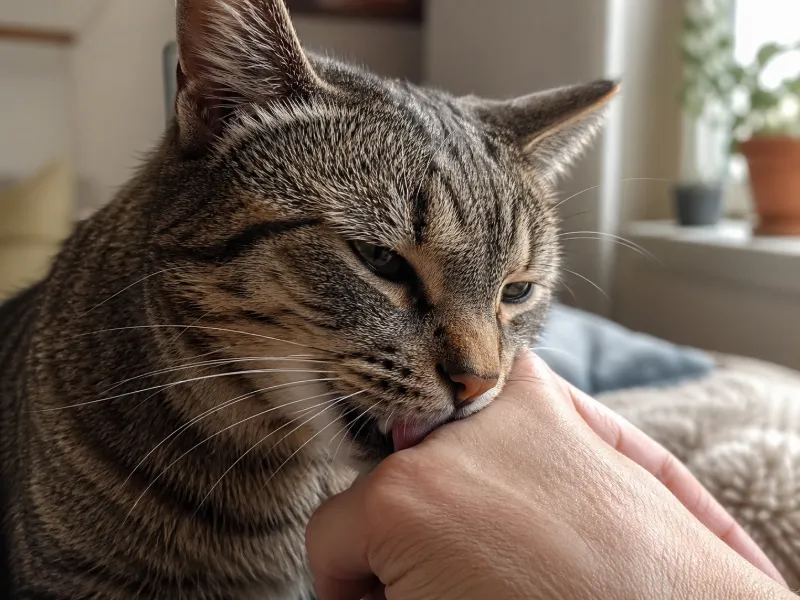
Many cat owners are confused by this behavior because licking seems loving, but biting feels like the opposite. In reality, cats often combine social grooming, play, communication, and boundary-setting in very quick ways. A cat can be relaxed one second and overstimulated the next.
In this guide, you will learn why cats lick and bite people, how to tell the difference between affection and irritation, and what you should do if the behavior becomes painful or frequent.
Quick answer
| Behavior | What it often means | How it usually feels |
|---|---|---|
| Licking | Affection, grooming, bonding, or attention-seeking | Rough tongue, repeated strokes |
| Gentle bite after licking | Social grooming, love bite, play, or mild overstimulation | Light nibble or quick mouth contact |
| Sudden harder bite | Overstimulation, annoyance, fear, pain, or a request to stop | Sharp, fast, more intense |
| Lick-bite during petting | Your cat may have reached its handling limit | Comes after a few seconds or minutes of petting |
| Lick-bite during play | Excitement, hunting behavior, or redirected energy | Often paired with grabbing or kicking |
Why cats lick people in the first place
Cats lick for several reasons, and not all of them mean the same thing. One common reason is social bonding. In cat groups, friendly individuals may groom each other, especially around the head and neck. When your cat licks you, it may be treating you as part of its social circle.
Licking can also be attention-seeking. Some cats learn that licking gets a reaction, whether that reaction is petting, talking, or movement. Other cats lick because your skin tastes interesting from sweat, lotion, salt, or food traces.
In many homes, licking is simply one form of contact behavior. It is your cat’s way of interacting with you, much like rubbing, head-butting, purring, or sitting close.
Why a cat may bite right after licking
The lick-then-bite pattern often happens because the cat’s emotional state changes quickly. A cat may begin with grooming or affectionate licking and then shift into light nibbling, playful behavior, or irritation. What looks contradictory to a human can be normal cat communication.
Sometimes the bite is very gentle and is best understood as a social or grooming bite. In other cases, the cat becomes overstimulated by the interaction and uses a bite as a way to say, “That is enough now.”
The key is to look at the strength of the bite, the context, and your cat’s full body language instead of focusing on the bite alone.
It may be a form of social grooming
One of the most common explanations is grooming behavior. Cats grooming each other may lick and then give gentle little nibbles with the front teeth. This is normal in feline social life.
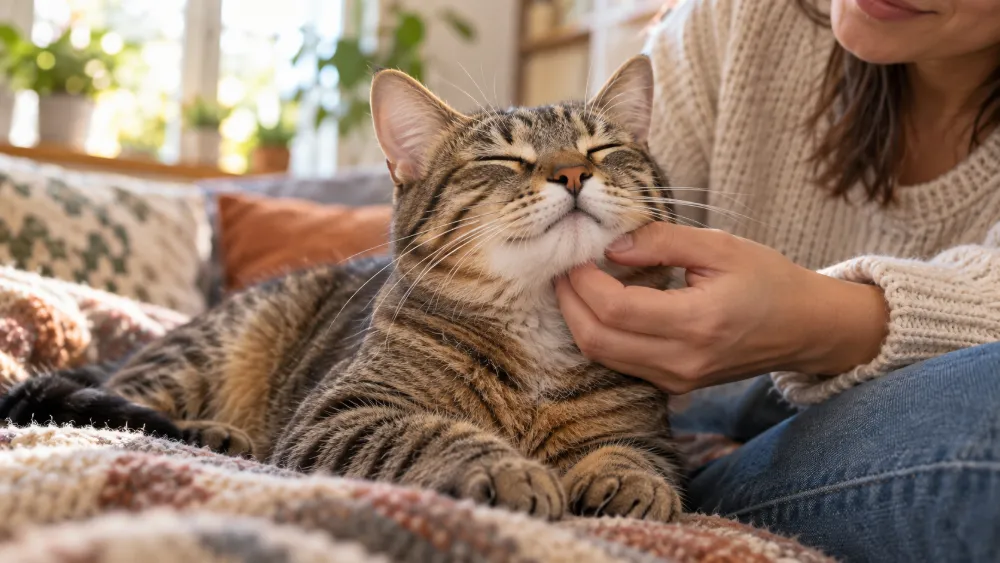
If your cat licks your hand or arm and then gives a soft bite that does not seem aggressive, it may be doing a version of this grooming behavior with you. In this case, the bite is not really an attack. It is closer to a social grooming nibble.
This is especially likely if your cat seems relaxed, stays close, and does not show tense or defensive body language.
Some cats give “love bites”
Many owners describe these gentle bites as love bites. The term is informal, but it often fits the behavior well. A love bite is usually brief, not very hard, and not followed by hissing, swatting, or retreat.
These bites may happen when a cat is happy, cuddly, and emotionally engaged. They can occur during petting, lap time, or relaxed interaction. The cat is not trying to hurt you, but it is still using its mouth as part of communication.
Even so, a love bite should remain gentle. If the bite becomes painful, the behavior may be crossing into overstimulation or rough play instead.
Overstimulation is a very common reason
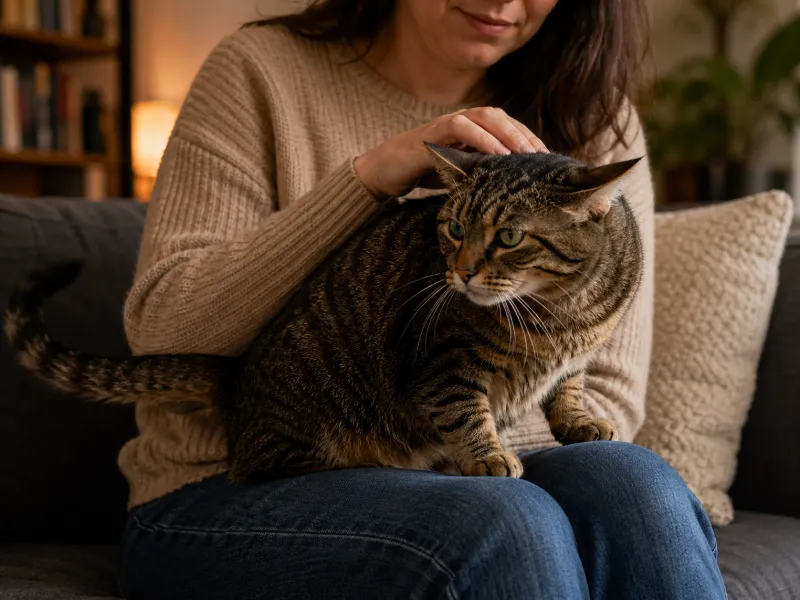
Many cats enjoy petting only up to a point. Once they reach that point, their body shifts from relaxed enjoyment to irritation or sensory overload. This is called petting-induced overstimulation.
A cat may start by purring, rubbing, and licking, then suddenly bite when it has had enough. To people, the change can feel abrupt. To the cat, it is simply a fast transition from “this feels good” to “please stop.”
This is especially common in sensitive cats or in cats that dislike long petting sessions. Areas like the lower back, belly, or tail base may trigger a quicker negative reaction in some individuals.
Body language tells you which meaning is most likely
Your cat’s body language often reveals more than the licking or biting itself. A relaxed cat usually has soft eyes, a loose body, normal ears, and calm tail movement. In this case, gentle licking and nibbling are more likely to be affectionate or social.
A cat that is becoming overstimulated may show tail flicking, skin twitching, ears turning sideways, a tense body, dilated pupils, or a sudden pause before biting. These signs often appear seconds before the cat decides to use its teeth.
If your cat bites after showing these warning signs, the bite is more likely a request for space than a loving gesture.
It may happen during play
Cats are predators by nature, and play often includes grabbing, nibbling, kicking, and mock hunting. A cat that licks and bites during play may be shifting from social interaction into playful hunting behavior.
This is especially common in younger cats, energetic cats, or cats that have not learned good bite control with people. If the cat grabs your hand, bunny-kicks, or becomes more excited after the bite, play is probably part of the explanation.
In that case, the solution is usually not punishment. It is better play redirection with toys, wand games, and less hand-based roughhousing.
Sometimes your skin simply tastes interesting
Not every lick-bite pattern is deeply emotional. Some cats are attracted to the taste of salt on skin, the smell of lotion, soap residue, or tiny food traces. They may lick because your skin is interesting, then bite lightly as part of exploration.
This is more likely if the behavior happens after exercise, after cooking, or when you have a product on your skin. In these cases, curiosity may play a larger role than affection or irritation.
If this is the cause, the behavior may be more common on hands, wrists, or fingers.
Stress or anxiety can also play a role
Some cats show mixed behavior when they are conflicted. They may seek contact because they want comfort, then bite because they feel tense, uncertain, or overstimulated. This can happen in homes with changes in routine, new pets, visitors, noise, or general stress.
A stressed cat may not bite out of aggression in the classic sense. Instead, it may be struggling to regulate arousal. The licking may begin as self-soothing or social contact, but the bite appears once the cat becomes overwhelmed.
If the behavior has increased recently, it is worth asking whether anything in the environment has changed.
Pain or discomfort should not be ignored
If your cat suddenly starts licking and biting more than before, especially if the bites are harder or the cat seems touchy, pain may be part of the picture. Cats in discomfort may tolerate contact poorly and switch quickly from seeking closeness to rejecting touch.
Dental pain, skin irritation, arthritis, or other health issues can lower a cat’s patience. A cat that once enjoyed petting may begin to bite sooner if touching feels unpleasant.
If the behavior is new, intense, or paired with other changes such as hiding, reduced appetite, or unusual grooming, a veterinary check is a smart next step.
How hard the bite matters
A very gentle nibble usually means something very different from a hard bite that breaks skin. Soft mouth contact or tiny grooming nips are often normal. A hard, fast bite with tension in the body is more serious.
Think about the bite on a scale. Was it more like a cat using its teeth as part of interaction, or was it clearly a warning or aggressive response? The answer changes how you should respond.
Any bite that punctures skin should be taken seriously, both behaviorally and medically, because cat bites can lead to infection.
What you should do when your cat licks and bites you
The best response depends on the cause, but in most cases, staying calm works better than reacting dramatically. Pulling away too suddenly, yelling, or pushing the cat can increase arousal and make the pattern worse.
If the bite seems linked to overstimulation, stop petting earlier next time. Learn your cat’s warning signs and end the interaction before the bite happens. If the behavior happens during play, redirect the cat to a toy instead of letting it focus on your hands.
If the bites are gentle and harmless, you may simply choose to tolerate them or gently move away when they start. If the behavior is painful or frequent, create more structure around handling and play so the cat has clearer boundaries.
How to reduce licking and biting without punishment
Punishment usually does not help and can damage trust. Cats do better with prediction, redirection, and shorter interactions.
Keep petting sessions short if your cat gets overstimulated easily
Watch for tail flicking, skin twitching, ear changes, or body tension
Use toys for play instead of hands or fingers
Reward calm, gentle interaction
Give your cat ways to release energy through play and climbing
Stop interaction before the cat feels the need to bite
Over time, many cats become easier to read once their owners learn the early signs.
When to worry
You should pay closer attention if the behavior suddenly changes, becomes more intense, or seems linked to other signs of stress or illness. Frequent hard bites, growling, hissing, hiding, or obvious sensitivity to touch may mean something more than normal social behavior.
It is also worth worrying if the cat bites unpredictably, bites multiple people, or seems unable to calm down during ordinary interaction. In these cases, the behavior may need medical evaluation or a behavior-focused plan.
If a bite breaks skin, clean the wound promptly and seek medical advice when appropriate, because cat bites can cause infection even when they seem small.
Final takeaway
If your cat licks and bites you, the behavior usually means one of a few things: affection, grooming, playful excitement, overstimulation, or a request for space. Gentle licking and nibbling are often normal, especially in relaxed cats. Harder bites, sudden changes, or signs of stress may point to discomfort, fear, or frustration instead.
The most useful clue is context. Watch your cat’s body language, notice when the behavior happens, and learn whether the bite comes from bonding, play, or too much stimulation. Once you understand that pattern, the behavior becomes much easier to manage.
FAQs
Why does my cat lick me and then bite me softly?
A soft lick-then-bite pattern often means social grooming, affection, or a mild love bite rather than true aggression.
Is my cat angry when it licks and bites me?
Not always. Some cats do this when they are affectionate, but others do it when they become overstimulated or want interaction to stop.
Why does my cat bite me during petting?
Many cats bite during petting because they reach a sensory limit and become overstimulated. Warning signs often appear just before the bite.
Should I punish my cat for licking and biting me?
No. Punishment usually makes things worse. It is better to read the body language, shorten interaction, and redirect the behavior appropriately.