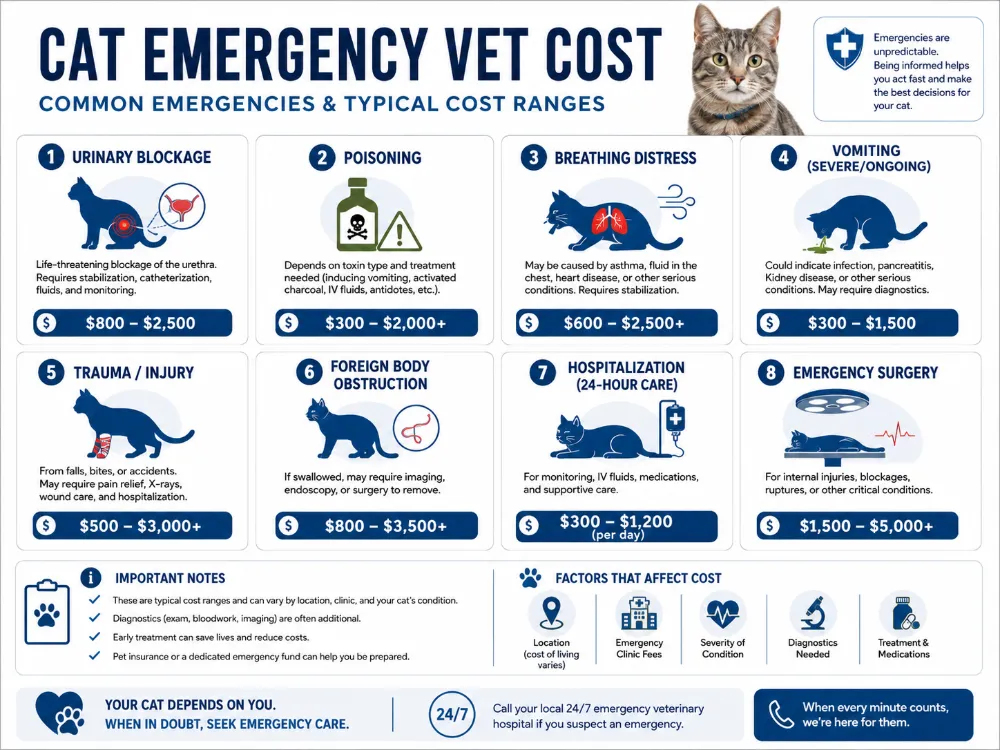
Cat emergency vet care usually costs about $100 to $250 for the emergency exam alone, $300 to $1,000 for many basic urgent visits, and $1,500 to $8,000 or more for serious emergencies such as urinary blockage, poisoning, trauma, breathing distress, hospitalization, or emergency surgery. The final bill depends on your cat’s condition, diagnostics, treatment, clinic location, overnight care, and whether a specialist is needed.
| Cat Emergency Situation | Typical Cost Range | Common Services Included | Urgency Level |
|---|---|---|---|
| Emergency exam only | $100–$250 | Urgent evaluation by an emergency veterinarian | Moderate to high |
| Minor wound or mild illness visit | $300–$800 | Exam, basic medication, wound cleaning, simple testing | Moderate |
| Vomiting or diarrhea emergency | $400–$1,500 | Exam, fluids, anti-nausea medication, bloodwork, X-rays if needed | Moderate to high |
| Poisoning or toxin ingestion | $500–$3,000+ | Toxin consultation, bloodwork, fluids, medication, monitoring | High |
| Male cat urinary blockage | $1,500–$4,000+ | Catheterization, hospitalization, fluids, pain control, bloodwork | Very high |
| Breathing distress | $800–$5,000+ | Oxygen therapy, imaging, lab work, emergency stabilization | Critical |
| Trauma or fall injury | $800–$6,000+ | X-rays, pain control, wound repair, hospitalization, surgery if needed | High to critical |
| Foreign body or intestinal obstruction | $2,000–$8,000+ | Imaging, surgery, anesthesia, hospitalization, pain medication | Critical |
| Emergency surgery | $2,000–$8,000+ | Surgery, anesthesia, monitoring, medications, recovery care | Critical |
| ICU or multi-day hospitalization | $1,500–$10,000+ | Continuous care, oxygen, IV fluids, medications, repeated testing | Critical |
What Is the Average Cat Emergency Vet Cost?
The average cat emergency vet cost depends on how sick or injured the cat is. A simple emergency exam may cost a little over $100, but that fee only covers the veterinarian’s urgent evaluation. Once diagnostics, medication, fluids, hospitalization, oxygen, surgery, or specialist care are added, the bill can rise quickly.
For many cat owners, a realistic emergency bill falls into one of these groups:
Exam-only emergency visit: about $100 to $250.
Basic urgent care visit: about $300 to $1,000.
Moderate emergency with testing and treatment: about $800 to $2,500.
Serious emergency with hospitalization: about $1,500 to $5,000.
Critical care, surgery, or specialist emergency: about $3,000 to $10,000 or more.
These are planning estimates, not guaranteed prices. Emergency hospitals usually provide a written treatment estimate after examining the cat. The final cost may change if the cat’s condition worsens, if more testing is needed, or if surgery becomes necessary.
Why Cat Emergency Vet Visits Are Expensive
Emergency veterinary hospitals operate differently from regular daytime clinics. They must be ready for sudden trauma, breathing crises, poisoning, blocked cats, seizures, severe pain, and life-threatening collapse. That requires trained emergency staff, overnight teams, imaging equipment, oxygen support, lab equipment, anesthesia, surgical supplies, and constant monitoring.
The cost is also higher because emergency care often happens after regular business hours. A cat that becomes critically ill at night, on a weekend, or during a holiday may need immediate care from a 24-hour emergency hospital instead of waiting for a regular appointment.
Another major factor is that cats hide illness extremely well. By the time an owner notices obvious symptoms, the disease may already be advanced. A cat that has been quietly sick for several days may need urgent stabilization, not just a simple exam.
What Is Usually Included in a Cat Emergency Vet Bill?
A cat emergency bill may include several separate services. The emergency exam is only the first part of the cost. After the veterinarian evaluates the cat, they may recommend tests and treatment based on the suspected problem.
Common items on a cat emergency vet bill include:
Emergency examination
Bloodwork
Urinalysis
X-rays
Ultrasound
Blood pressure measurement
Electrolyte testing
IV catheter placement
IV fluids
Pain medication
Anti-nausea medication
Antibiotics when medically necessary
Oxygen therapy
Sedation
Anesthesia
Urinary catheterization
Wound repair
Hospitalization
Emergency surgery
Specialist consultation
When reviewing an estimate, ask which services are essential immediately, which may be optional, and which may be needed only if the cat does not improve. In a true emergency, however, delaying stabilization to reduce the bill can be dangerous.
Emergency Exam Cost for Cats
An emergency exam is the initial urgent evaluation. The veterinarian checks your cat’s breathing, heart rate, temperature, gum color, hydration, pain level, mental state, and major symptoms. This exam helps determine whether the cat is stable or needs immediate life-saving care.
Typical emergency exam fees for cats often fall around $100 to $250, depending on the hospital and location. This fee usually does not include blood tests, X-rays, medication, oxygen, fluids, or hospitalization.
Owners should understand that an emergency exam is not the complete treatment. It is the starting point that helps the veterinarian decide what must happen next.
Cat Urinary Blockage Cost
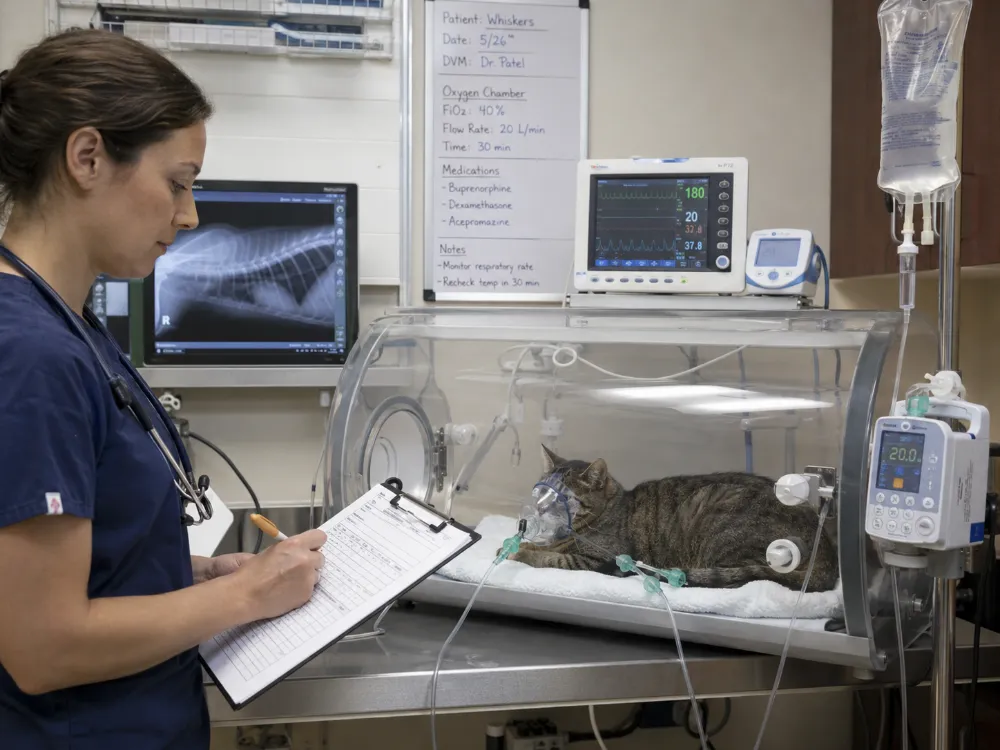
Male cat urinary blockage is one of the most important feline emergencies. A blocked cat cannot pass urine normally. Toxins and potassium can build up in the blood, the bladder becomes painful and overfilled, and the condition can become fatal if not treated quickly.
Treatment often includes emergency exam, bloodwork, pain medication, sedation or anesthesia, urinary catheter placement, bladder flushing, IV fluids, hospitalization, and repeated monitoring. A typical cost range is often about $1,500 to $4,000 or more. If the cat re-blocks, needs longer hospitalization, or requires surgery, the cost can increase further.
Warning signs of urinary blockage include:
Straining in the litter box with little or no urine
Crying while trying to urinate
Frequent trips to the litter box
Blood in the urine
Licking the genital area repeatedly
Vomiting
Lethargy
Hiding
Painful or tense abdomen
Collapse in advanced cases
A cat that cannot urinate should be treated as an emergency immediately. This is not a condition to monitor at home overnight.
Cat Poisoning Emergency Cost
Poisoning emergencies can vary widely in cost because the treatment depends on the toxin, dose, timing, and symptoms. A mild exposure caught early may cost several hundred dollars, while a serious poisoning case requiring hospitalization can cost several thousand dollars.
Common cat toxins include:
Lilies
Human medications
Rodenticides
Insecticides
Essential oils
Antifreeze
Some flea and tick products made for dogs
Onions, garlic, and certain human foods
Household cleaners
Recreational drugs
Treatment may include poison control guidance, bloodwork, activated charcoal when appropriate, anti-nausea medication, IV fluids, kidney monitoring, seizure control, or hospitalization. Lily exposure is especially dangerous in cats because it can cause acute kidney failure, even when the cat only chews part of the plant or drinks vase water.
If poisoning is suspected, bring the package, plant, medication bottle, or product label to the emergency hospital. Do not try home remedies unless a veterinarian or poison control professional gives specific instructions.
Cat Breathing Emergency Cost
Breathing distress is one of the most serious cat emergencies. Cats with breathing trouble may need oxygen before the veterinarian can safely perform a full exam. Stress can make breathing worse, so emergency teams often stabilize the cat first and handle diagnostics carefully.
Breathing emergency costs may range from about $800 to $5,000 or more, depending on the cause and severity. Costs may include oxygen therapy, chest X-rays, ultrasound, bloodwork, fluid removal from the chest, medication, hospitalization, or specialist care.
Emergency signs include:
Open-mouth breathing
Blue or gray gums
Rapid breathing at rest
Labored breathing
Neck extended while breathing
Elbows held away from the body
Collapse
Extreme weakness
Open-mouth breathing in a cat is never normal after resting. A cat with obvious breathing difficulty should go to an emergency veterinarian immediately.
Cat Vomiting and Diarrhea Emergency Cost
Vomiting and diarrhea can be mild, but they can also signal poisoning, pancreatitis, intestinal obstruction, infection, kidney disease, liver disease, or severe dehydration. The cost depends on whether the cat needs simple medication or a full emergency workup.
A vomiting or diarrhea emergency may cost about $400 to $1,500 for exam, fluids, medication, and basic diagnostics. If imaging, hospitalization, or surgery is needed, the bill can rise to several thousand dollars.
Emergency care is especially important if your cat has:
Repeated vomiting
Vomiting with blood
Bloody diarrhea
Severe lethargy
Weakness or collapse
Refusal to eat for more than a day
Known toxin exposure
Possible string, ribbon, toy, or foreign object ingestion
Signs of dehydration
Cats should not go long periods without eating. A cat that has stopped eating and is also vomiting, hiding, or weak should be evaluated quickly.
Cat Trauma and Injury Cost
Trauma emergencies include car accidents, falls, bite wounds, crush injuries, broken bones, deep cuts, and attacks by dogs or wildlife. The cost depends on how badly the cat is injured and whether surgery is needed.
A minor wound may cost a few hundred dollars. A serious trauma case with X-rays, pain control, hospitalization, wound repair, fracture repair, or emergency surgery may cost $1,500 to $6,000 or more.
After trauma, cats may hide instead of crying. Even if a cat appears calm, internal bleeding, chest injury, fractures, or shock may be present. Emergency care is recommended if the cat was hit by a car, attacked, fell from a height, cannot walk normally, has pale gums, has trouble breathing, or is bleeding.
Cat Foreign Body and Intestinal Obstruction Cost
Cats may swallow string, ribbon, thread, hair ties, rubber bands, plastic, toy pieces, or other objects. Linear foreign bodies such as string are especially dangerous because they can bunch the intestines and cause severe damage.
If the object is still in the stomach and can be removed by endoscopy, the cost may be lower than surgery. If the object causes an intestinal blockage, emergency surgery may be needed. Foreign body and obstruction cases may cost about $2,000 to $8,000 or more, depending on diagnostics, surgery, hospitalization, and complications.
Warning signs include:
Repeated vomiting
Loss of appetite
Abdominal pain
Hiding
Lethargy
Drooling
Straining to defecate
Known missing string, ribbon, toy, or sewing material
If string is hanging from a cat’s mouth or anus, do not pull it. Pulling can damage the intestines. Contact an emergency veterinarian immediately.
Cat Emergency Surgery Cost
Emergency surgery for cats is expensive because it involves anesthesia, monitoring, sterile equipment, surgical time, pain control, hospitalization, and follow-up care. Surgery may be needed for intestinal obstruction, severe wounds, bladder stones, internal bleeding, pyometra in unspayed females, abscesses, eye injuries, or traumatic injuries.
Emergency surgery often costs about $2,000 to $8,000 or more. The price may be higher if the cat needs ICU care, blood transfusion, specialist surgery, or several days of hospitalization.
Before surgery, the emergency team usually provides an estimate and explains the risks, likely outcome, and alternatives. In some cases, surgery is the only realistic way to save the cat’s life.
Cat Hospitalization and ICU Cost
Hospitalization costs depend on how much care your cat needs. A stable cat receiving fluids and medication may cost less than a critical cat needing oxygen, constant monitoring, repeated blood tests, or intensive nursing care.
Hospitalization may include:
IV fluids
Injectable medication
Oxygen support
Pain control
Temperature support
Feeding support
Urinary catheter monitoring
Blood pressure checks
Repeated lab work
Overnight nursing care
A short hospital stay may cost hundreds of dollars. Multi-day hospitalization can cost $1,500 to $5,000 or more. ICU-level care can exceed that, especially if the cat has breathing failure, kidney failure, severe trauma, poisoning, or sepsis.
Why Costs Vary by Location and Clinic Type
Emergency vet costs vary widely by region. Clinics in large cities and high-cost-of-living areas often charge more because rent, wages, equipment, and operating costs are higher. A 24-hour specialty hospital may also cost more than a small urgent care clinic because it offers more advanced diagnostics, surgery, and monitoring.
Clinic type also matters:
Regular daytime veterinarian: Usually less expensive but may not be open after hours or equipped for critical care.
Urgent care clinic: Helpful for non-life-threatening but time-sensitive problems.
24-hour emergency hospital: Best for critical or after-hours emergencies.
Specialty hospital: Needed for advanced surgery, cardiology, neurology, oncology, ophthalmology, or intensive care.
When a cat is unstable, the closest capable emergency hospital is usually the best choice. For less critical problems, calling ahead can help you choose the right level of care.
When a Cat Needs an Emergency Vet Immediately
Some symptoms should never wait for a regular appointment. Cats can decline quickly, and they often hide pain or illness until the problem is serious.
Go to an emergency veterinarian immediately if your cat has:
Difficulty breathing
Open-mouth breathing
Blue, gray, white, or very pale gums
Collapse
Seizures
Unconsciousness
Severe bleeding
Inability to urinate
Repeated straining in the litter box with little or no urine
Known or suspected poisoning
Hit-by-car injury
Major fall
Severe pain
Paralysis or dragging the back legs
Bloated or painful abdomen
Repeated vomiting with weakness
String, ribbon, or thread ingestion
Severe eye injury
If you are unsure whether it is an emergency, call an emergency hospital. A quick phone call can help determine whether your cat should be seen immediately.
What to Do Before Going to the Emergency Vet
When your cat has an emergency, staying calm and acting quickly matters. Call the emergency hospital before arrival if possible. This lets the team prepare, especially for breathing distress, seizures, poisoning, or trauma.
Helpful steps include:
Place your cat in a secure carrier.
Keep the carrier quiet, warm, and stable.
Bring medication bottles or toxin packaging if poisoning is possible.
Bring a list of current medications and known medical conditions.
Bring recent veterinary records if available.
Do not give human medication unless a veterinarian instructs you.
Do not force food or water into a weak or vomiting cat.
Do not pull string from the mouth or anus.
Call ahead and ask about payment policies.
For cats with breathing distress, reduce handling as much as possible. Stress can worsen respiratory emergencies.
How to Read a Cat Emergency Vet Estimate
Emergency clinics often provide an estimate after the initial exam. This estimate may show a range because the veterinarian may not know exactly how your cat will respond to treatment.
Ask these questions when reviewing the estimate:
What is needed immediately to stabilize my cat?
Which tests are most important right now?
What could make the final cost higher?
How long may my cat need hospitalization?
Is surgery possible or likely?
Are there lower-cost medically safe options?
What is the prognosis with treatment?
What is the prognosis without treatment?
Will my cat need follow-up care with my regular veterinarian?
Do you offer payment options or financing?
In a crisis, it is reasonable to ask for a clear explanation. A good emergency team should help you understand the problem, the estimated cost, and the likely outcome.
Does Pet Insurance Cover Cat Emergency Vet Costs?
Pet insurance may cover many cat emergency vet costs if the problem is not pre-existing and the policy includes accident-and-illness coverage. Eligible emergency costs may include exams, diagnostics, hospitalization, surgery, medication, and specialist care, depending on the plan.
Insurance is usually most helpful when purchased before the cat becomes sick. If a cat already has urinary disease, kidney disease, diabetes, asthma, heart disease, or a history of recurring symptoms before enrollment, future related claims may be limited or excluded.
Before buying a policy, ask whether it covers:
Emergency exam fees
Hospitalization
Specialist care
Urinary blockage
Poisoning
Foreign body surgery
Trauma
Diagnostic imaging
Prescription medication
Chronic conditions that begin after enrollment
Most pet insurance reimburses you after you pay the veterinary bill, so an emergency fund or credit option may still be needed at the time of treatment.
How to Prepare Financially for Cat Emergencies
Emergency costs are stressful because they happen suddenly. The best time to prepare is before your cat becomes sick or injured.
Practical preparation steps include:
Build a cat emergency fund: Even a small monthly amount can help.
Consider pet insurance early: Coverage is usually more useful before health problems appear.
Know your nearest emergency hospital: Save the address and phone number.
Ask your regular vet about after-hours options: Some clinics refer to specific emergency centers.
Keep medical records organized: This helps emergency teams make faster decisions.
Cat-proof the home: Remove toxic plants, string, ribbons, small objects, and unsafe chemicals.
Monitor litter box habits: Early urinary changes can prevent a crisis.
Schedule regular checkups: Chronic disease is often cheaper to manage when found early.
For many cat owners, the strongest strategy is a combination of pet insurance, emergency savings, and preventive care.
How to Reduce Cat Emergency Costs Safely
The safest way to reduce emergency costs is prevention and early treatment. Waiting too long often makes a condition more dangerous and more expensive.
Ways to reduce risk include:
Keep cats indoors or supervised outdoors.
Remove lilies and toxic plants from the home.
Store human medications securely.
Use only cat-safe flea and tick products.
Keep string, ribbon, thread, and hair ties away from cats.
Feed an appropriate diet and encourage water intake.
Watch for litter box changes.
Keep senior cats on regular veterinary checkups.
Maintain a healthy weight.
Seek care early when symptoms appear.
Do not reduce cost by delaying emergency care for breathing trouble, urinary blockage, poisoning, trauma, or collapse. In these cases, waiting can increase both the medical risk and the final bill.
Why Cats Hide Emergencies
Cats evolved as both predators and vulnerable small animals. In the wild, showing weakness can attract danger, so many cats instinctively hide pain and illness. A sick cat may not cry or act dramatic. Instead, it may hide under furniture, eat less, move less, stop grooming, avoid people, or use the litter box differently.
Subtle signs can be important. A cat that suddenly hides, refuses food, breathes differently, vocalizes in the litter box, or acts unusually weak may be much sicker than it looks.
Because cats are so good at masking illness, owners should take changes seriously. Early veterinary care can prevent a manageable problem from becoming a costly emergency.
Final Takeaway
Cat emergency vet cost can range from a small exam fee to several thousand dollars for critical care. A basic urgent visit may cost hundreds, while urinary blockage, poisoning, breathing distress, trauma, foreign body surgery, or hospitalization can cost $1,500 to $8,000 or more.
The most important rule is to treat true emergencies quickly. A cat that cannot urinate, cannot breathe normally, collapses, has seizures, ingests poison, or suffers trauma needs immediate veterinary care. Delaying treatment can be life-threatening and may make the final cost higher.
The best preparation is simple: know your nearest emergency vet, keep a pet emergency fund, consider insurance before illness appears, remove household hazards, and watch your cat’s litter box, appetite, breathing, and behavior closely.
FAQs About Cat Emergency Vet Cost
How much does a cat emergency vet visit cost?
A cat emergency vet visit usually costs about $100 to $250 for the emergency exam alone. With diagnostics and treatment, many visits cost $300 to $1,000. Serious emergencies with hospitalization or surgery can cost $1,500 to $8,000 or more.
Why are emergency vet visits for cats so expensive?
Emergency hospitals must provide urgent care after hours, trained staff, lab testing, X-rays, oxygen, surgery, anesthesia, hospitalization, and monitoring. The cost reflects the equipment, staffing, and speed needed to treat life-threatening problems.
How much does a blocked cat cost at the emergency vet?
A male cat urinary blockage commonly costs about $1,500 to $4,000 or more. The bill may include catheterization, anesthesia or sedation, bloodwork, IV fluids, pain medication, hospitalization, and monitoring.
Is a cat not peeing an emergency?
Yes. A cat that is straining but producing little or no urine may have a urinary blockage. This is a life-threatening emergency, especially in male cats, and requires immediate veterinary care.
How much does cat poisoning treatment cost?
Cat poisoning treatment may cost about $500 to $3,000 or more depending on the toxin and severity. Costs may include poison control guidance, bloodwork, IV fluids, medication, monitoring, and hospitalization.
How much does cat emergency surgery cost?
Cat emergency surgery often costs about $2,000 to $8,000 or more. The price depends on the condition, anesthesia time, surgical complexity, hospitalization, medications, and whether a specialist is needed.
Does pet insurance cover emergency vet visits for cats?
Pet insurance may cover emergency vet visits if the condition is eligible under the policy and is not pre-existing. Accident-and-illness plans are usually more useful for emergencies than wellness-only plans.
Can I wait until morning to take my cat to the vet?
Do not wait if your cat has trouble breathing, cannot urinate, collapses, has seizures, has pale gums, is bleeding heavily, may have eaten poison, or has severe pain. For mild symptoms, call an emergency clinic and ask for guidance.
What should I bring to the emergency vet?
Bring your cat in a secure carrier, any medication bottles, toxin packaging, recent medical records, and a list of symptoms. If poisoning is possible, bring the product label or plant sample if it is safe to do so.
How can I lower emergency vet costs for my cat?
The best way is to prepare before an emergency: build a savings fund, consider pet insurance, cat-proof your home, monitor litter box habits, keep toxic items away, and seek veterinary care early before problems become severe.