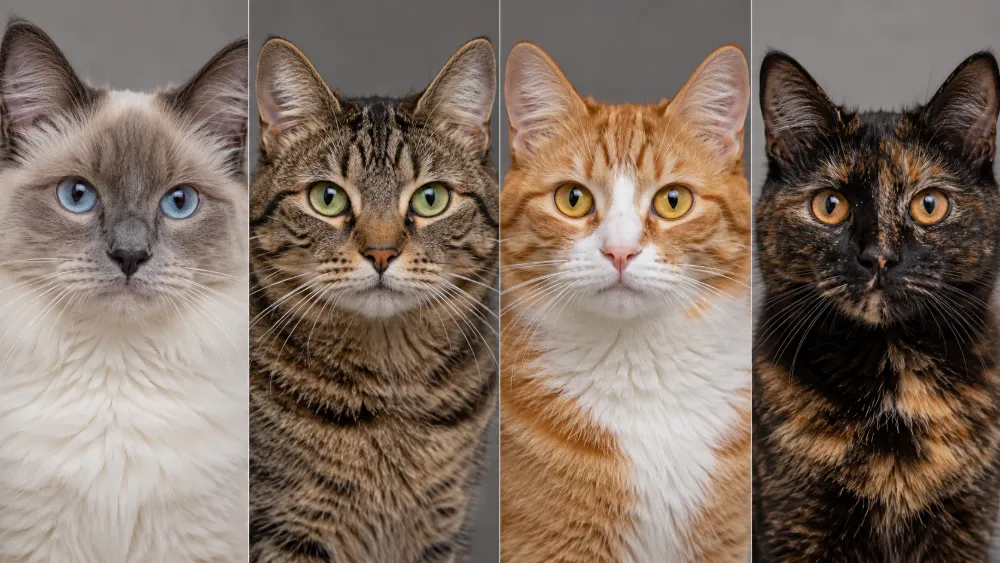
Male and female cats can both make affectionate, playful, and loyal pets. The biggest differences are usually linked to whether the cat is neutered or spayed, not sex alone. Intact males are more likely to roam, spray, fight, and seek mates. Intact females go into heat and may vocalize loudly. After neutering or spaying, personality depends more on genetics, socialization, age, breed, and individual temperament.
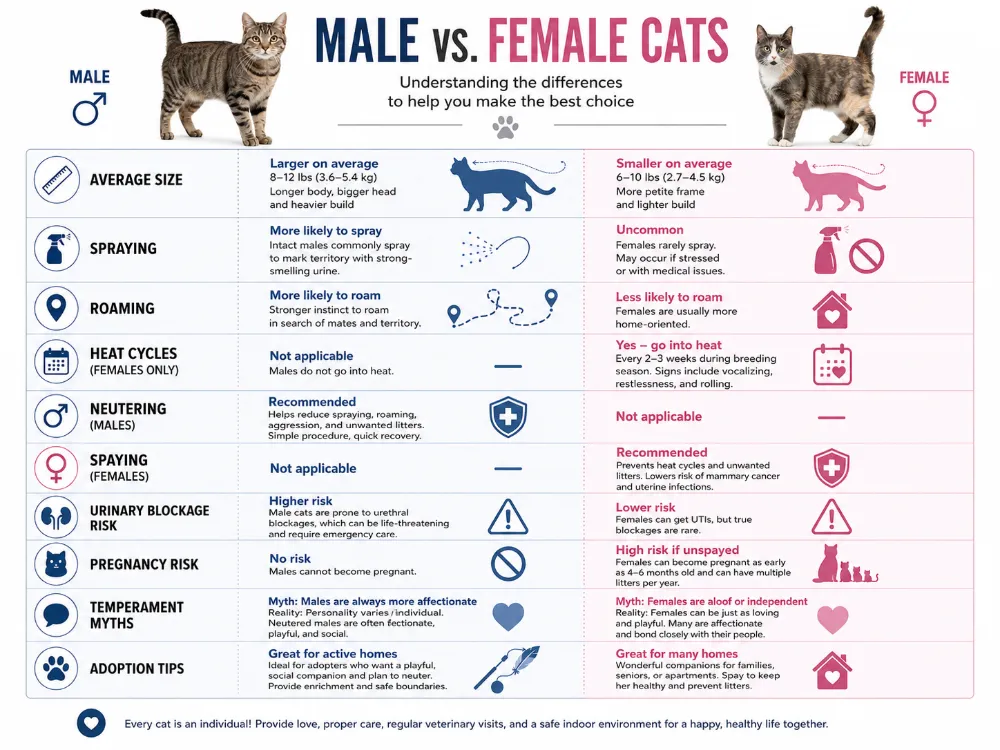
| Comparison Point | Male Cats | Female Cats | Key Takeaway |
|---|---|---|---|
| Average size | Often larger and heavier | Often smaller and lighter | Sex affects size, but breed and genetics matter more. |
| Personality | Often described as social or easygoing, but varies widely | Often described as independent or selective, but varies widely | Individual temperament is more reliable than sex stereotypes. |
| Spraying | More common in intact males | Can happen, especially during heat or stress | Neutering greatly reduces hormone-driven spraying. |
| Roaming | More likely if intact | May roam when in heat | Sex hormones strongly influence roaming behavior. |
| Fighting risk | Higher in intact outdoor males | Usually lower, but still possible | Neutering and indoor living reduce injuries. |
| Heat cycle | No heat cycle | Intact females go into heat repeatedly | Spaying prevents heat behavior and pregnancy. |
| Health concerns | Urinary blockage risk is higher in males | Pregnancy, uterine infection, and mammary tumor risk if unspayed | Preventive veterinary care matters for both sexes. |
| Best for families | Can be excellent | Can be excellent | Choose based on personality, not sex alone. |
Are Male or Female Cats Better Pets?
Neither male nor female cats are automatically better pets. A friendly male cat and a friendly female cat can both be affectionate, clean, playful, gentle, and deeply bonded to their owners. A shy male and a shy female may both need patience and socialization. The best choice depends on the cat’s individual personality, early experiences, health, and whether the cat has been neutered or spayed.
Many cat owners believe male cats are more cuddly and female cats are more independent. This can be true for some individual cats, but it is not a rule. A female cat may be extremely affectionate, and a male cat may be reserved. In real life, personality is shaped by several factors:
Genetics
Breed or breed mix
Age
Early socialization
Past trauma or shelter experience
Neutering or spaying status
Indoor or outdoor lifestyle
Household environment
Relationship with people and other pets
If you are adopting a cat, it is usually smarter to choose the cat whose temperament fits your home than to choose based only on male or female sex.
Physical Differences Between Male and Female Cats
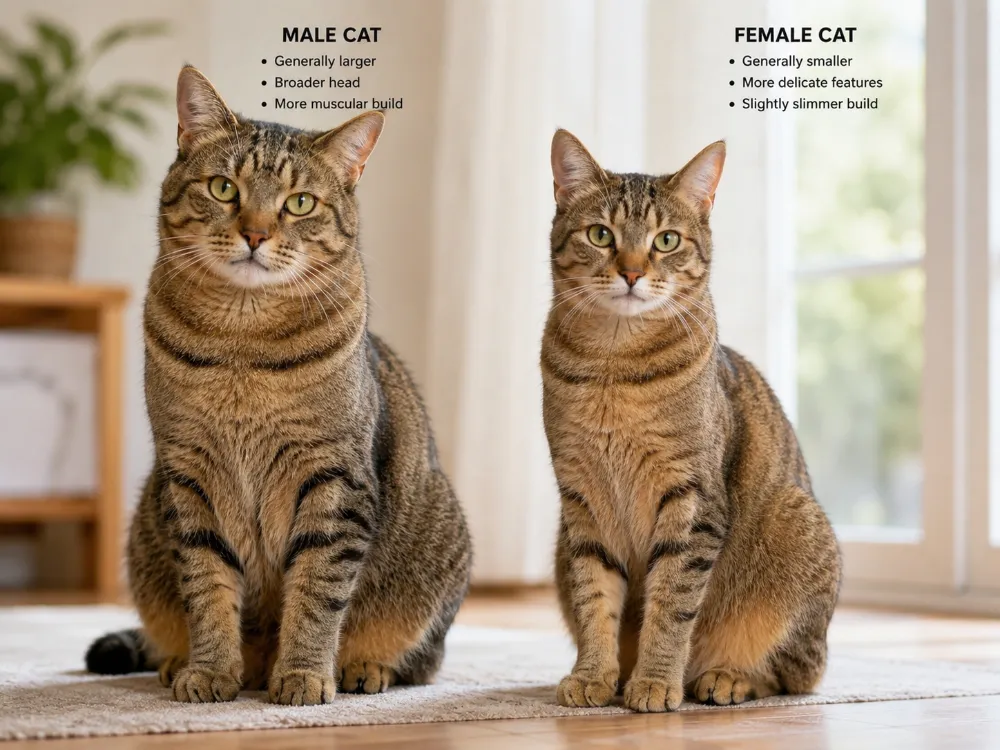
Male cats are often larger than female cats, especially if they are not neutered until after sexual maturity. They may have broader heads, thicker necks, heavier bodies, and more muscular shoulders. Intact adult males can develop large cheek pads, sometimes called “tomcat jowls,” because of testosterone.
Female cats are often smaller, lighter, and more compact. However, this difference is not always obvious. A large female Maine Coon may be much bigger than a small male domestic shorthair. Breed, nutrition, genetics, and overall health can be more important than sex.
Typical physical differences include:
Male cats: Often larger, heavier, more muscular, and broader-headed.
Female cats: Often smaller, lighter, and more delicate in build.
Neutered males: May not develop strong tomcat features if neutered young.
Spayed females: Usually keep a smaller average body size but may gain weight if overfed.
Behavior Differences Before Neutering or Spaying
The clearest behavioral differences between male and female cats appear when they are not neutered or spayed. Sex hormones can strongly influence roaming, vocalizing, marking, fighting, mating behavior, and territorial behavior.
Intact male cats are often more likely to:
Spray strong-smelling urine
Roam far from home
Fight with other males
Show territorial aggression
Try to escape outdoors
Seek females in heat
Develop injuries from fights
Intact female cats are more likely to:
Go into heat repeatedly
Vocalize loudly
Roll, rub, and raise the hindquarters
Become restless or clingy
Try to escape to find a mate
Attract male cats
Become pregnant if allowed outside
Once cats are neutered or spayed, many of these hormone-driven behaviors decrease or disappear. This is why comparing intact males with intact females can be misleading for people planning to adopt a fixed indoor cat.
Behavior Differences After Neutering or Spaying
After neutering or spaying, male and female cats become much more similar in everyday household behavior. Neutered males are usually less likely to roam, spray, fight, or search for mates. Spayed females no longer go into heat and cannot become pregnant.
After surgery, the differences that remain are often subtle. Some owners still feel that male cats are more relaxed or physically affectionate, while female cats may be more selective or cautious. However, this is not a dependable rule. A spayed female raised with gentle handling may be more social than a poorly socialized male.
For pet owners, the most useful question is not “male or female?” but:
Is this cat friendly with people?
Does this cat tolerate handling?
Is this cat confident or shy?
Does this cat like other cats?
Is this cat playful, calm, vocal, or independent?
Has this cat been neutered or spayed?
Does this cat match my home environment?
Male Cat Personality: Common Traits and Myths
Male cats are often described as affectionate, playful, silly, confident, and people-oriented. Many neutered males enjoy attention and may be physically cuddly. Some owners say male cats are more likely to follow people around the house, sit on laps, or act like “big kittens” even as adults.
However, this is a general impression, not a biological guarantee. Some male cats are independent, shy, territorial, or sensitive. A male cat that was poorly socialized as a kitten may not enjoy being held. An intact male may be more driven by mating and territory than by human companionship.
Male cats may be a good fit for owners who want:
A potentially larger cat
A playful companion
A social indoor pet
A cat that may bond strongly with people
A cat that is already neutered
The word “may” is important. Meet the individual cat whenever possible instead of relying on sex-based expectations.

Female Cat Personality: Common Traits and Myths
Female cats are often described as intelligent, tidy, selective, observant, and independent. Some female cats are affectionate but prefer attention on their own terms. Others are intensely loyal and bond closely with one person or the whole family.
It is a myth that female cats are always aloof. Many female cats are extremely loving, vocal, playful, and people-focused. It is also a myth that female cats are always cleaner or calmer than males. Litter box habits and calmness are shaped by health, stress, training, and environment.
Female cats may be a good fit for owners who want:
A potentially smaller cat
A cat that may be observant and selective
A companion that may enjoy routine and quiet spaces
A cat that is already spayed
A pet chosen for individual personality rather than stereotypes
As with males, the individual cat matters more than the general category.
Spraying and Marking: Male vs Female Cats
Urine spraying is more common in intact male cats, but both male and female cats can spray. Spraying is different from normal urination. A spraying cat usually backs up to a vertical surface, raises the tail, and releases a small amount of urine. It is often a communication behavior related to territory, mating, stress, or conflict.
Intact males are especially likely to spray because testosterone increases territorial and mating behavior. Neutering greatly reduces this risk, especially when done before the behavior becomes a long-term habit.
Female cats may spray when they are in heat, stressed, threatened by other cats, or experiencing household changes. A spayed female that suddenly starts spraying may have stress, pain, urinary disease, or litter box conflict.
Common causes of spraying include:
Being intact
Other cats outside the window
Multi-cat tension
New pets or people in the home
Dirty litter boxes
Too few litter boxes
Moving house
Urinary tract pain
Anxiety or environmental stress
If a cat suddenly sprays or urinates outside the litter box, a veterinary check is important. Urinary problems can be painful and sometimes dangerous, especially in male cats.
Roaming and Outdoor Risks
Intact male cats are more likely to roam long distances in search of females. This increases the risk of car accidents, fights, abscesses, parasites, infectious disease, getting lost, and wildlife conflict. Intact females may also roam when in heat, especially if they are trying to find a mate.
Outdoor males that fight frequently are at higher risk of bite wounds. Cat bites often create deep punctures that close on the surface while trapping bacteria underneath. This can lead to painful abscesses.
Indoor living, neutering or spaying, microchipping, and supervised outdoor access can greatly reduce these risks. For cats that enjoy the outdoors, safer options include:
Catio enclosures
Harness training
Supervised garden time
Secure fencing systems
Window perches for enrichment
Heat Cycles in Female Cats
Female cats that are not spayed can go into heat many times during the breeding season. Unlike dogs, cats may cycle repeatedly until they mate or the season changes. Indoor lighting and warm homes can sometimes influence cycling patterns.
Signs of a female cat in heat include:
Loud yowling
Restlessness
Rolling on the floor
Rubbing against people or objects
Raising the hindquarters
Tail held to the side
Increased affection or agitation
Trying to escape outdoors
Heat behavior can be intense and stressful for owners. It is not usually a sign of pain, but it is a strong reproductive behavior. Spaying prevents heat cycles, pregnancy, and several reproductive health risks.
Health Differences Between Male and Female Cats
Male and female cats share many of the same health risks, including dental disease, obesity, kidney disease, diabetes, arthritis, parasites, infections, and injuries. However, some health concerns are sex-specific or more common in one sex.
Male cats have a narrower urethra than female cats, which makes urinary blockage a major concern. A blocked male cat may strain in the litter box but produce little or no urine. This is a medical emergency and can become fatal quickly.
Female cats have reproductive health risks if they are not spayed. These include pregnancy complications, uterine infection, and mammary tumors. Spaying at an appropriate time greatly reduces or prevents many of these risks.
| Health Issue | More Relevant To | Why It Matters |
|---|---|---|
| Urinary blockage | Male cats | The male urethra is narrower, making blockage more dangerous. |
| Fight wounds | Intact outdoor males | Territorial fighting can cause abscesses and disease exposure. |
| Pregnancy | Intact females | Pregnancy can lead to medical risk and unwanted kittens. |
| Pyometra | Intact females | A serious uterine infection that can be life-threatening. |
| Mammary tumors | Unspayed females | Risk is much lower when cats are spayed early. |
| Obesity | Both sexes | Neutered and spayed cats may gain weight if overfed. |
Neutering Male Cats
Neutering is the surgical removal of a male cat’s testicles. It prevents reproduction and greatly reduces testosterone-driven behavior. The procedure is generally shorter and less invasive than spaying a female cat.
Benefits of neutering male cats include:
Prevents unwanted kittens
Reduces roaming
Reduces fighting
Reduces urine spraying in many cats
Reduces mating-related stress
Prevents testicular cancer
May make indoor living easier
Neutering does not completely change a cat’s core personality. A playful male usually remains playful. A friendly male usually remains friendly. The main change is a reduction in mating-driven behaviors.
Spaying Female Cats
Spaying is the surgical removal of a female cat’s ovaries and usually the uterus. It prevents pregnancy and heat cycles. It is a more invasive procedure than neutering because it involves abdominal surgery, but it is a very common veterinary procedure.
Benefits of spaying female cats include:
Prevents unwanted pregnancy
Stops heat cycles
Reduces loud heat-related vocalizing
Prevents uterine infection
Greatly reduces mammary tumor risk when done early
Reduces escape attempts during heat
Helps reduce cat overpopulation
After spaying, a female cat may become calmer because heat cycles stop. However, her basic personality remains her own. A confident female remains confident, and a shy female may still need patience and gentle socialization.
Male vs Female Cats in Multi-Cat Homes
Sex can influence cat relationships, but it is not the only factor. Age, temperament, social history, territory, litter box access, food competition, and introduction method are often more important.
Some common patterns include:
Two neutered males can become very close companions.
Two females can live peacefully together if properly introduced.
A male and female pair can work well, especially if both are fixed.
Intact cats are more likely to show mating or territorial conflict.
Poor introductions can cause conflict regardless of sex.
For multi-cat homes, choose cats with compatible energy levels and temperaments. A playful young male may annoy a quiet senior female. A confident female may intimidate a timid male. Matching personalities matters more than matching sexes.
To reduce conflict, provide:
Multiple litter boxes
Separate feeding stations
Several water bowls
Vertical space such as cat trees
Hiding places
Scratching posts
Slow introductions
Individual attention
Male vs Female Kittens
Male and female kittens are often more similar than different. Most kittens are playful, curious, energetic, and highly trainable. At a young age, personality is still developing, and early handling can strongly shape confidence around people.
When choosing a kitten, look for signs of healthy temperament:
Curiosity
Comfort with gentle handling
Playfulness
Interest in people
Normal appetite
Clear eyes and clean nose
Good movement
Appropriate social behavior with littermates
If you adopt a kitten, plan ahead for neutering or spaying. Once kittens reach sexual maturity, hormone-driven behaviors can develop quickly. Early veterinary guidance helps prevent unwanted litters and reduces future behavior problems.
Male vs Female Cats for Families With Children
Both male and female cats can be excellent family pets. The best cat for children is not defined by sex, but by temperament and socialization. A good family cat should be tolerant, confident, gentle, and comfortable with normal household activity.
For families, look for a cat that:
Does not panic with gentle handling
Recovers quickly from mild surprises
Shows curiosity rather than fear
Enjoys play without becoming too rough
Has a history of living with children if possible
Can retreat to a quiet safe space
Children should be taught to respect the cat’s body language. Tail flicking, flattened ears, growling, hiding, and trying to leave are signs that the cat needs space. This matters for male and female cats equally.
Male vs Female Cats for First-Time Owners
First-time owners can succeed with either a male or female cat. A neutered male may be a good fit if he has a relaxed, social personality. A spayed female may be a good fit if she is calm, confident, and friendly. The individual cat’s behavior is more important than sex.
For first-time cat owners, an adult cat from a shelter or rescue can be a smart choice because the personality is already more visible. With kittens, future temperament is less predictable.
A good beginner-friendly cat is usually:
Already neutered or spayed
Comfortable with people
Not extremely fearful
Not highly aggressive with handling
Healthy or medically well-managed
Matched to the owner’s lifestyle
Cost Differences Between Male and Female Cats
Daily costs are usually similar for male and female cats. Both need food, litter, toys, scratching surfaces, vaccines, parasite prevention, checkups, and dental care. The main cost difference is often the neuter or spay surgery.
Neutering a male cat is usually less expensive because the surgery is simpler and does not enter the abdomen. Spaying a female cat is usually more expensive because it is abdominal surgery and requires more time and surgical care.
However, not spaying or neutering can lead to much higher costs later. Intact males may have fight wounds or roaming injuries. Intact females may become pregnant or develop reproductive disease. Preventive surgery is usually less expensive than emergency care.
How to Tell If a Cat Is Male or Female
Determining the sex of a cat is easiest in adults, but it can be harder in young kittens. In general, the distance between the anus and genital opening is greater in males and shorter in females. Male kittens may also have small testicles visible as they mature.
A simple way to describe the difference:
Male kittens: The anus and genital opening are farther apart, often looking like a colon shape.
Female kittens: The anus and genital opening are closer together, often looking like an upside-down exclamation mark.
If you are unsure, ask a veterinarian, shelter worker, or experienced breeder. Young kittens can be misidentified, especially when they are very small.
Which Cat Should You Choose?
Choose the cat that fits your home, not the stereotype. A calm female may be perfect for a quiet apartment. A playful male may be ideal for an active family. A bonded male-female pair may be easier than introducing two unfamiliar cats. A senior cat of either sex may be calmer than a kitten.
Before choosing, ask:
Is the cat neutered or spayed?
Is the cat friendly with people?
Does the cat enjoy being touched?
Is the cat good with other cats?
Has the cat lived with children or dogs?
Does the cat have medical needs?
Is the cat active or calm?
Does the cat match my daily routine?
A cat’s sex can give you some clues, especially before neutering or spaying, but it should not be the main decision. Personality, health, lifestyle, and responsible care matter more.
Final Takeaway
The real difference between male and female cats is most obvious in intact cats. Intact males are more likely to roam, spray, fight, and seek mates. Intact females go into heat, vocalize, and can become pregnant. After neutering or spaying, the behavioral gap becomes much smaller.
Male cats may be slightly larger on average, while female cats may be slightly smaller. Male cats have a higher risk of urinary blockage, while unspayed females face pregnancy and reproductive disease risks. Both can be affectionate, clean, playful, gentle, independent, or social.
The best cat is not simply male or female. The best cat is healthy, well-matched to your home, properly neutered or spayed, and given a safe, enriched, loving environment.
FAQs About Male vs Female Cats
Are male or female cats more affectionate?
Many owners describe male cats as more openly affectionate, but this is not a reliable rule. Female cats can be extremely loving, and male cats can be independent. Socialization, genetics, age, and individual personality matter more than sex alone.
Are male cats more friendly than female cats?
Some male cats are very friendly, especially when neutered, but female cats can be just as friendly. A cat’s early experiences with people are usually more important than whether the cat is male or female.
Are female cats more independent?
Female cats are often described as selective or independent, but this is a stereotype. Some females are highly social and cuddly, while some males prefer more personal space.
Do male cats spray more than female cats?
Yes, intact male cats are more likely to spray strong-smelling urine. However, female cats and neutered males can also spray because of stress, territorial conflict, or urinary problems.
Do female cats spray?
Yes, female cats can spray, especially when in heat or under stress. A spayed female that suddenly sprays should be checked for stress, litter box issues, or urinary disease.
Are male cats bigger than female cats?
Male cats are often larger and heavier than female cats, especially if they mature before neutering. However, breed and genetics can make a bigger difference than sex.
Are male cats more aggressive?
Intact male cats are more likely to fight, roam, and defend territory. Neutered males are usually much less aggressive. Female cats can also be aggressive if frightened, poorly socialized, in pain, or protecting kittens.
Are female cats calmer than male cats?
Not always. Calmness depends on the cat’s personality, age, environment, and health. A mature neutered male may be calmer than a young unspayed female in heat.
Should I get a male or female cat if I already have a cat?
Choose based on temperament and introduction style rather than sex alone. A calm, social cat of either sex is usually easier to introduce than a territorial or fearful cat. Both cats should ideally be neutered or spayed.
Is it better to adopt a male or female kitten?
Both can be excellent. With kittens, personality is still developing, so early socialization, gentle handling, and proper veterinary care are more important than sex.
Do male cats have more health problems?
Male cats have a higher risk of urinary blockage because of their narrower urethra. However, female cats have their own risks if unspayed, including pregnancy, uterine infection, and mammary tumors.
Do female cats need to be spayed?
Yes, spaying is strongly recommended for most pet female cats. It prevents heat cycles, unwanted pregnancy, uterine infection, and greatly reduces certain reproductive health risks.
Do male cats need to be neutered?
Yes, neutering is strongly recommended for most pet male cats. It prevents reproduction and reduces roaming, fighting, spraying, and mating-related stress.
Can male and female cats live together?
Yes, male and female cats can live together peacefully, especially if both are neutered or spayed and properly introduced. Compatibility depends more on personality, territory, and resources than sex alone.
Which is better for first-time cat owners, male or female?
Either can be a good choice. First-time owners should look for a healthy, friendly, neutered or spayed cat with a temperament that matches their home. An adult cat with a known personality is often easier to choose than a kitten.