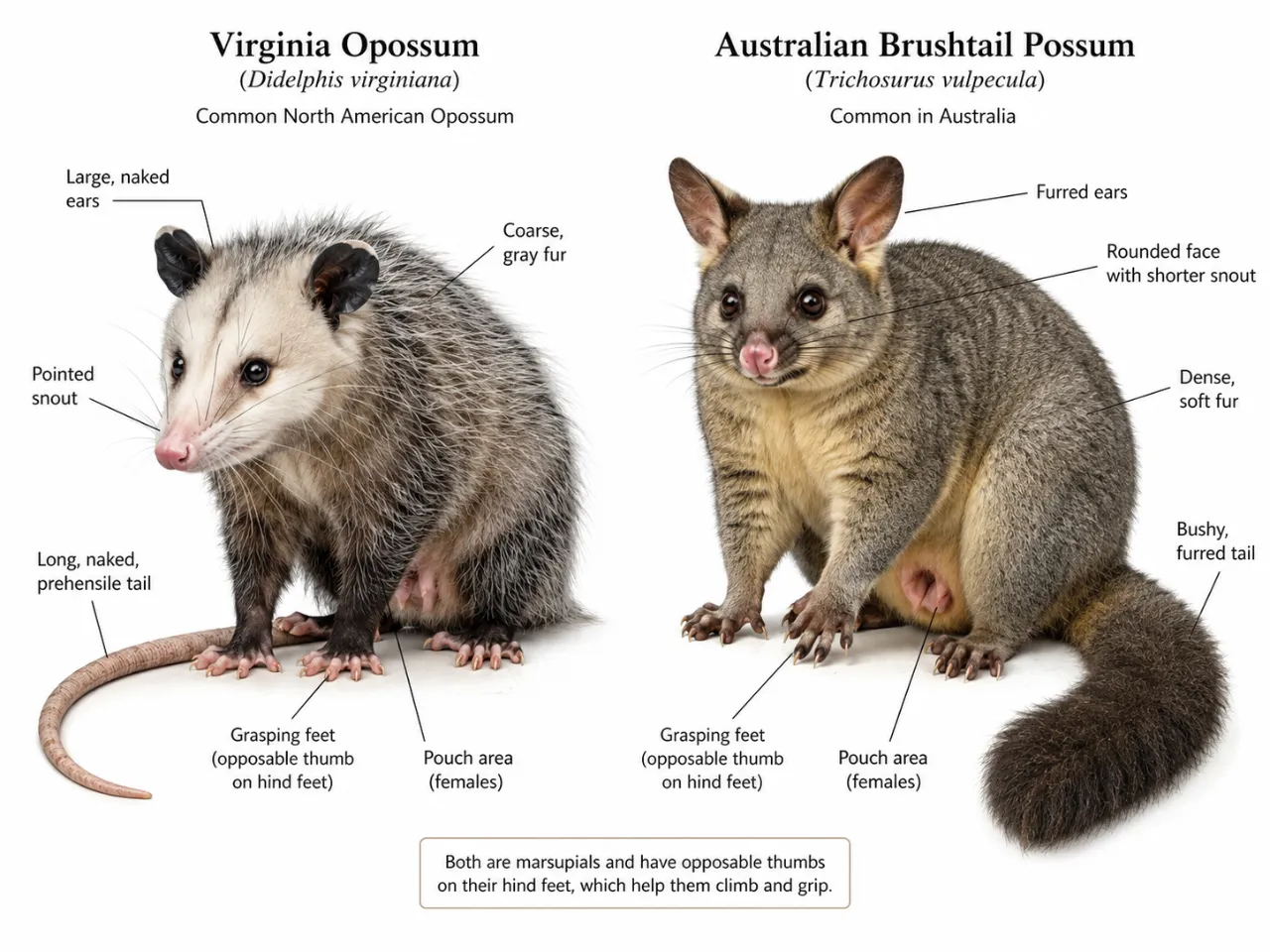
Alligators and crocodiles look so similar that many people mix them up. That is understandable: both belong to the reptile order Crocodylia, both have armored bodies, powerful tails, and long snouts, and both spend much of their lives in water. But they are not the same animal. Alligators belong to the family Alligatoridae, while true crocodiles belong to Crocodylidae. In practical terms, that means they share the same broad crocodilian body plan, but differ in anatomy, habitat use, and distribution.
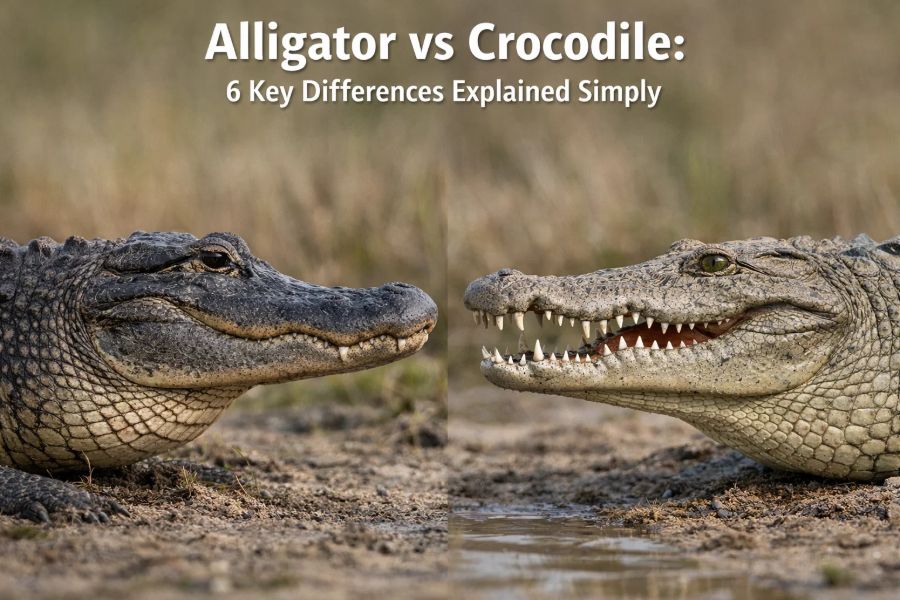
The easiest way to remember the comparison is this: alligators usually have broader snouts, darker color, and a more freshwater lifestyle, while crocodiles usually have narrower snouts, more visible teeth, and better saltwater tolerance. That summary is simple, but it captures most of the biggest real-world differences.
Quick comparison table
| Feature | Alligator | Crocodile |
|---|---|---|
| Family | Alligatoridae | Crocodylidae |
| Snout shape | Broad, rounded, U-shaped | Narrower, more pointed, V-shaped |
| Teeth when mouth is closed | Lower teeth usually hidden | Some lower teeth visible, especially the 4th lower tooth |
| Color | Dark gray to black | Olive, tan, or gray-green |
| Habitat tendency | Mostly freshwater | Many species tolerate brackish or saltwater better |
| Salt glands | Not functional for long-term salt tolerance | Functional salt glands |
| Distribution | Mainly southeastern U.S. and China | Africa, Asia, the Americas, Australia, and more tropical/subtropical regions |
| General size pattern | Large, but usually smaller than the biggest crocodiles | Some species become extremely large |
These are the “big picture” differences. Individual species can blur the pattern a little, but the table works well for most common comparisons.
Snout shape: U vs V
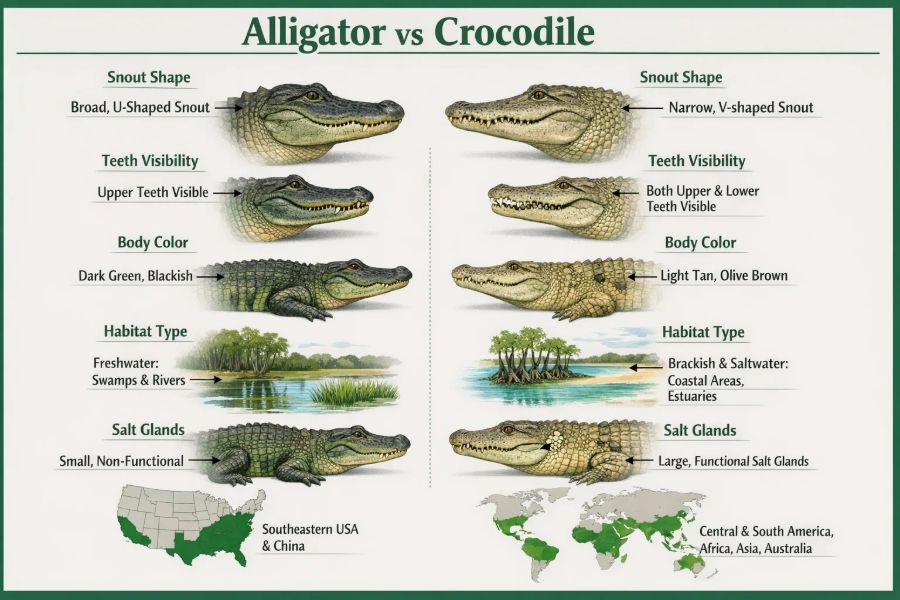
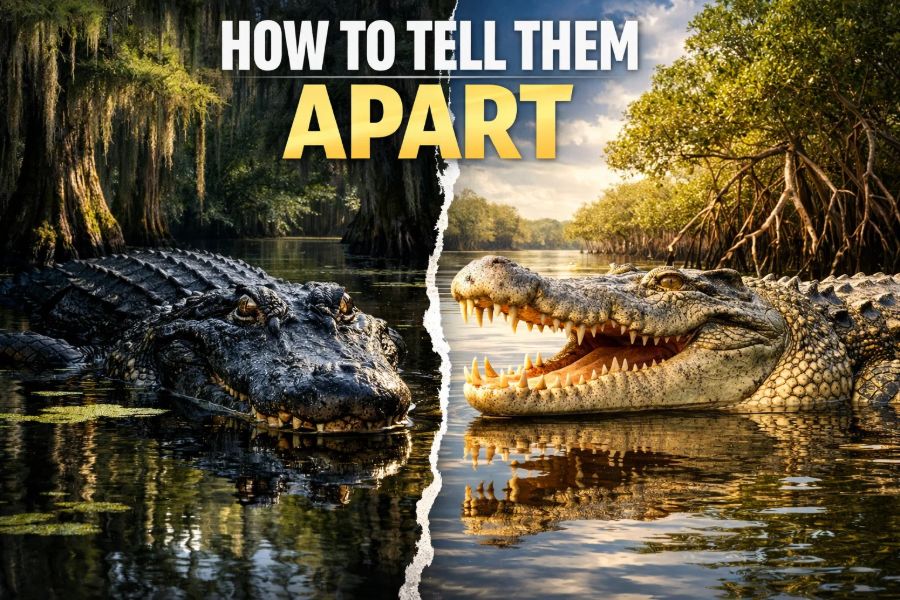
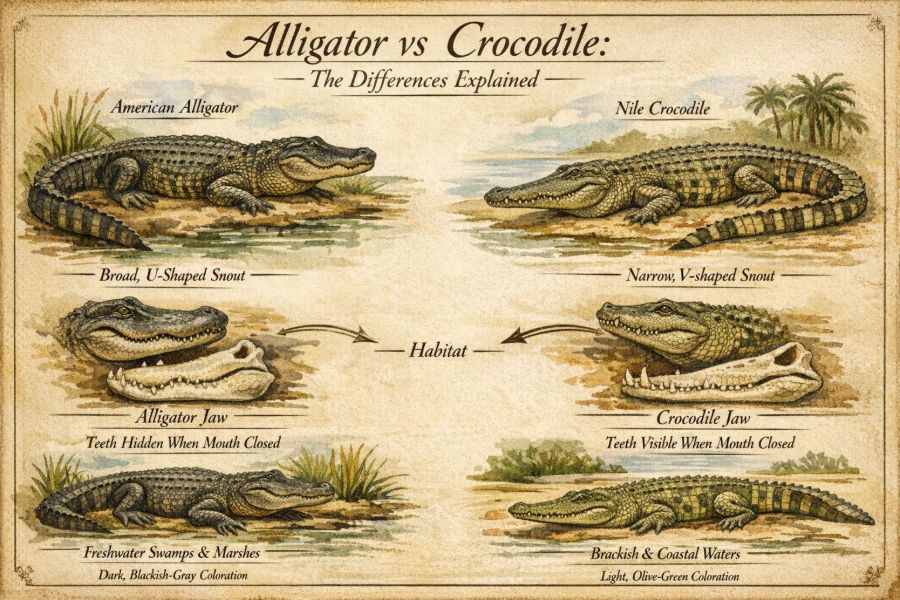
The most famous difference is the shape of the snout. Alligators usually have a broader, more rounded U-shaped snout, while crocodiles usually have a narrower, more pointed V-shaped snout. Britannica states this directly, and National Geographic likewise notes that alligators have broader, rounder heads than crocodiles.
That difference is not just cosmetic. Broad snouts are often associated with stronger crushing ability for harder prey, while narrower snouts can be more streamlined in water and suited to different feeding styles. Still, it is important not to oversimplify: some crocodiles, such as the mugger crocodile, can have relatively broader snouts than the “classic” crocodile look. So snout shape is useful, but it is best used together with the other clues below.
Teeth: hidden in alligators, visible in crocodiles
The second easy field mark is the teeth. Smithsonian’s National Zoo explains that in alligators, the large fourth tooth in the lower jaw fits into a socket in the upper jaw and is not visible when the mouth is closed. In crocodiles, that lower tooth does not disappear into a socket in the same way, so some bottom teeth remain visible. Britannica describes this as an alligator “overbite,” with the lower jaw teeth fitting within the upper jaw line.
This is why crocodiles often look like they are showing a toothy grin even with the mouth shut, while alligators usually look smoother-jawed. If you see obvious lower teeth sticking out, especially a large fourth lower tooth, you are much more likely to be looking at a crocodile.
Habitat: freshwater for alligators, more salt tolerance for crocodiles
Habitat is one of the biggest ecological differences. American alligators are usually found in freshwater places such as swamps, marshes, lakes, and slow-moving rivers. Smithsonian’s National Zoo states that they can tolerate salt water only briefly because they do not have salt glands.
Crocodiles, by contrast, are generally much better adapted to brackish and saltwater environments. This is because many crocodiles have functional salt glands in the tongue that let them excrete excess salt. A crocodile physiology study on the estuarine crocodile specifically describes salt excretion through lingual salt glands, and NSF’s summary contrasts crocodiles’ salt-secreting glands with alligators’ lack of them.
This does not mean all crocodiles live only in saltwater, because many species still use rivers, marshes, and freshwater wetlands. It means that, compared with alligators, crocodiles are far more comfortable in coastal lagoons, estuaries, mangroves, and other saline habitats. That is why the American crocodile is strongly associated with brackish and coastal wetlands in south Florida, while the American alligator is more strongly associated with inland freshwater habitats.
Color: dark gators, lighter crocs
Color is not as reliable as teeth or snout shape, but it is still helpful. Britannica summarizes the usual pattern clearly: gray or black is more typical of an alligator, while olive or tan is more typical of a crocodile.
This makes ecological sense because alligators are often seen in darker, murkier freshwater habitats, while crocodiles are frequently found in lighter-colored coastal and estuarine settings. But color can vary with age, lighting, algae, mud, and water conditions, so it should be treated as a supporting clue rather than the deciding one.
Range: alligators are much more limited
Another major difference is where they live in the world. Alligators are much more restricted. Britannica’s alligator entry notes that living alligators are represented mainly by the American alligator and the Chinese alligator.
Crocodiles are far more widespread. Britannica’s crocodile overview notes that true crocodiles occur across tropical and subtropical parts of Africa, Asia, the Americas, and Australia.
This is one reason crocodiles feel more “globally familiar” as a group, while alligators feel more regional. In the United States, south Florida is famous because it is one of the few places where an alligator and a crocodile—the American alligator and American crocodile—can be found in the same broad ecosystem.
Size and temperament: crocodiles often get bigger and are often considered more aggressive
As a broad rule, crocodiles include more of the very largest species, such as the saltwater crocodile and Nile crocodile. Britannica’s crocodile entry notes that some crocodiles grow extremely large, while popular and reference comparisons often point out that adult crocodiles can exceed the size of most alligators.
Behavior is trickier, because temperament varies by species, individual, season, and context. Still, general educational comparisons often note that crocodiles are more likely to be aggressive toward humans than alligators. Britannica’s comparison article includes behavior as one of the key differences and presents crocodiles as the more aggressive of the two in general.
That does not mean alligators are safe. Large alligators are powerful apex predators and can be dangerous. It simply means that, in broad public-education terms, crocodiles have the stronger reputation for being reactive and hazardous. The safest field rule is to treat both with extreme caution and never rely on stereotypes about one being harmless.
A simple memory trick
A common memory trick is:
Alligator = Arounder snout
Crocodile = more visible toothy Closed-mouth grin
It is not scientific terminology, but it is surprisingly useful in the field and matches the main anatomical differences documented by Britannica and Smithsonian.
Why they look so similar in the first place
The reason these animals are so easy to confuse is that they share a deep evolutionary body plan. Both are crocodilians with armored skin, elongated bodies, powerful tails, eyes and nostrils placed high on the head, and strong jaws built for ambush predation. Their similarities reflect shared ancestry, while their differences reflect later specialization into different families and ecological roles.
So when you compare them, you are not comparing unrelated reptiles. You are comparing two close branches of the same broader crocodilian lineage—similar enough to confuse people, different enough to matter in anatomy and habitat.
Final takeaway
If you only remember six things, remember these:
Alligators have broader U-shaped snouts.
Crocodiles have narrower V-shaped snouts.
Alligator lower teeth are usually hidden when the mouth is closed.
Crocodile lower teeth are often visible.
Alligators are mostly freshwater animals.
Crocodiles handle saltwater much better because of salt glands.
So the cleanest summary is: alligators are broader-snouted, darker, more freshwater crocodilians; crocodiles are narrower-snouted, toothier-looking, and generally more salt-tolerant.
References
Britannica. What’s the Difference Between Alligators and Crocodiles?
Britannica. Alligator.
Britannica. Crocodile.
Smithsonian’s National Zoo. American Alligator.
National Geographic. How Nile Crocodiles Are Bigger and Badder Than Alligators.
NSF. Alligators, rulers of the swamps, link marine and freshwater ecosystems.
Cramp, R. L. et al. Functional and morphological plasticity of crocodile lingual salt glands. PubMed summary.
Marine Sanctuary. American Crocodile.