A bobcat can look surprisingly similar to an oversized house cat—especially when you see one alone without anything nearby for scale.
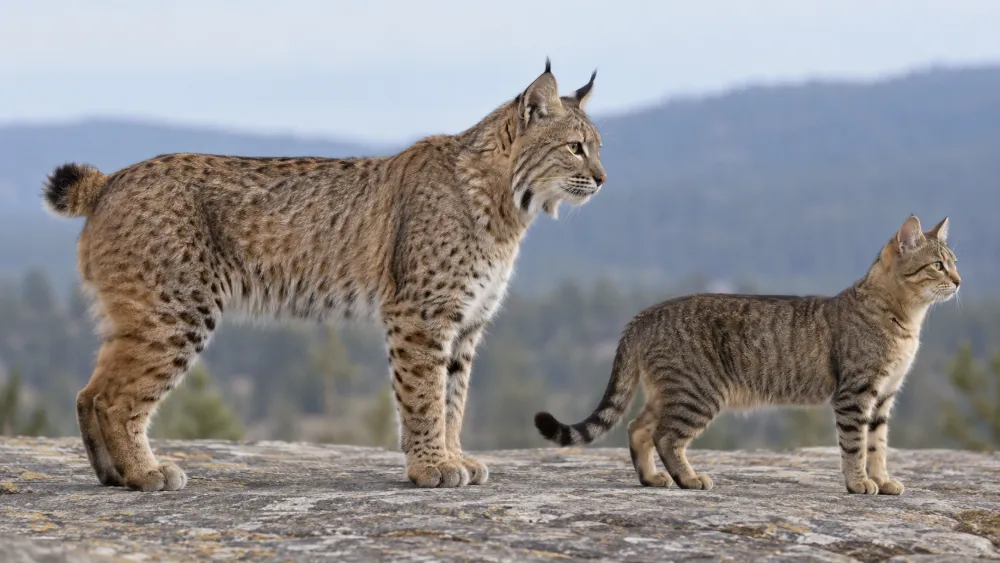
But put an adult bobcat beside an average domestic cat and the difference becomes much easier to see.
Bobcats are generally taller, heavier, longer-legged and much more robust than ordinary house cats. Their paws are larger, their heads look broader, and their short “bobbed” tails immediately separate them from most domestic cats.
A typical bobcat weighs around 11–35 pounds (5–15 kilograms), although size varies by sex and region. An average healthy domestic cat is often around 8–12 pounds.
In simple terms, a bobcat is often around twice the size of an ordinary house cat by overall build and can be considerably heavier.
Bobcat vs House Cat Size at a Glance
| Feature | Bobcat | House Cat |
|---|---|---|
| Typical weight | About 11–35 lb (5–15 kg) | Often about 8–12 lb (3.6–5.4 kg) |
| Shoulder height | Often around 18–20 in (46–50 cm) | Noticeably lower in most ordinary domestic cats |
| Body build | Robust, muscular, long-legged | Usually lighter and finer-boned |
| Paws | Large and broad | Much smaller in an average cat |
| Tail | Very short, usually only several inches long | Usually long and flexible |
| Ears | Short ear tufts may be visible | Usually lacks bobcat-style ear tufts |
How Big Is a Bobcat?
The bobcat (Lynx rufus) is a medium-sized wild cat native to North America.
According to the U.S. National Park Service, adults commonly weigh about 11–35 pounds and can stand around 20 inches at the shoulder. Body length can reach approximately 25–41 inches, not including the short tail.
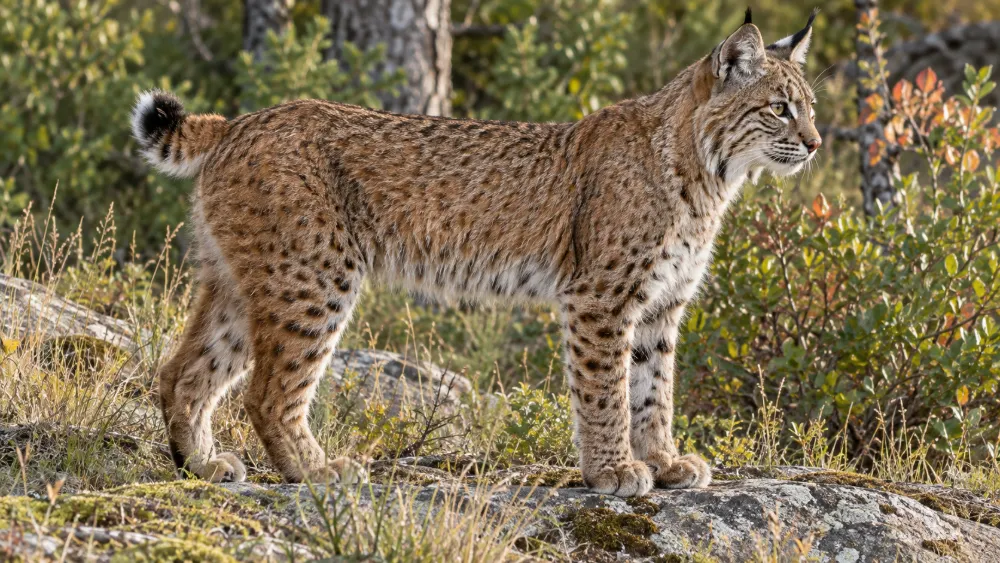
Other National Park Service populations fall within similar but not identical ranges. Bobcats in the Santa Monica Mountains, for example, average about 20 pounds, about 30 inches in body length and almost 18 inches tall.
That variation is normal.
A female bobcat from one region can be considerably smaller than a large adult male from another. Food availability, genetics, sex and geography all influence body size.
How Big Is an Average House Cat?
Domestic cats vary more than many people realize.
A typical healthy domestic shorthair often weighs around 8–12 pounds, but there is no single correct weight for every house cat.
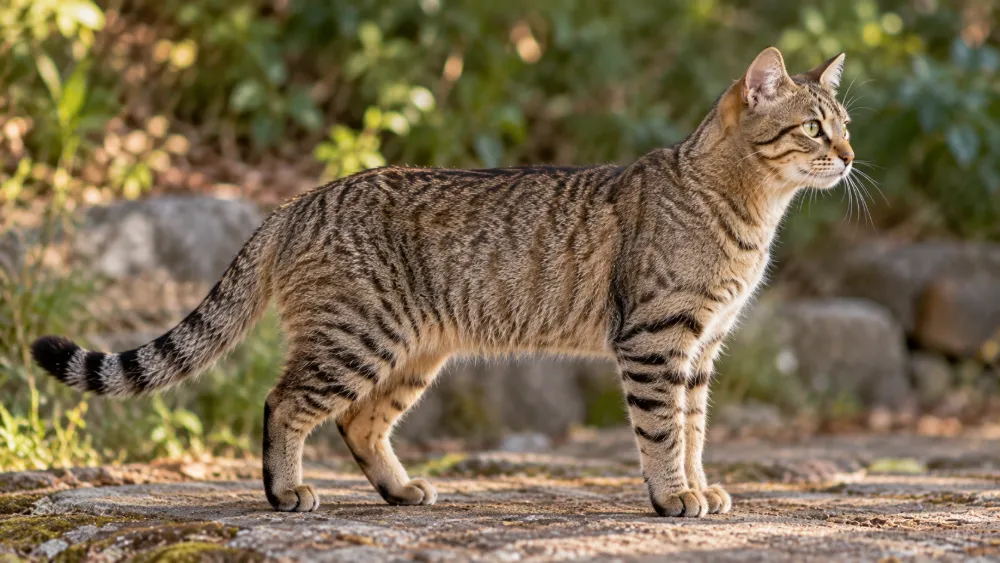
Sex, breed, skeletal frame and muscle mass all affect size.
A naturally petite adult cat may weigh much less, while a large male Maine Coon can exceed the typical domestic-cat range.
That is why saying “a bobcat is exactly twice the size of every house cat” would be inaccurate.
The useful comparison is between a typical adult bobcat and an average mixed-breed domestic cat.
Is a Bobcat Twice the Size of a House Cat?
Often, roughly—but it depends on what you mean by “size.”
The National Park Service describes bobcats as approximately two to three times the size of an average domestic cat in some populations.
Weight makes the difference especially obvious.
An ordinary 10-pound house cat compared with a 20-pound bobcat gives a simple two-to-one body-mass difference. A large 30-pound male bobcat would weigh three times as much.
However, the ranges overlap at their edges.
A small female bobcat may not weigh dramatically more than an exceptionally large domestic breed. Even then, the bobcat usually looks different because of its longer legs, broader body, larger paws and wild-cat proportions.
Why Does a Bobcat Look So Much Bigger?
Body weight is only part of the reason.
Several structural features make a bobcat appear more powerful than a house cat.
Longer legs
Bobcats stand noticeably higher off the ground than most domestic cats.
The legs are built for jumping, stalking and moving through varied terrain.
Larger paws
A bobcat's feet look oversized compared with those of a typical house cat.
Larger paws provide a broader contact area with the ground and support a much more muscular body.
More muscular shoulders and hindquarters
Bobcats are wild ambush predators capable of overpowering prey such as rabbits and hares and, under some circumstances, animals considerably larger than themselves.
Their bodies therefore look deeper and more powerful than those of most pet cats.
A broader wild-cat head
The cheek ruff and muscular head can also make a bobcat's face appear much larger than the head of an ordinary domestic cat.
Bobcat Tail vs House Cat Tail
The tail is one of the fastest ways to distinguish the two animals.
The bobcat gets its name from its short, “bobbed” tail.
National Park Service sources describe bobcat tails as only several inches long, with regional measurements generally around 3.5 to 9 inches.
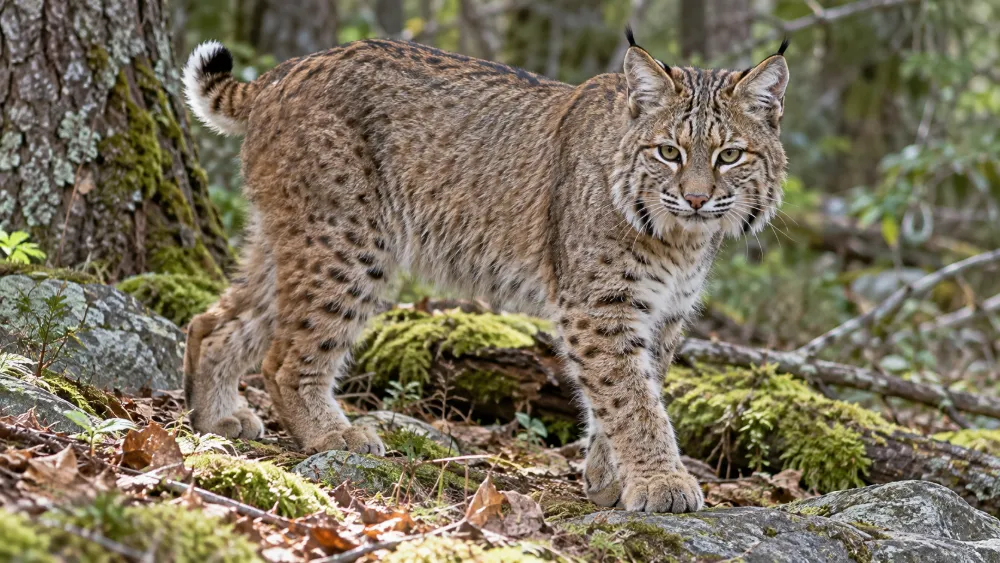
A normal domestic cat, by contrast, usually has a long flexible tail that forms a much larger proportion of its overall length.
Some domestic breeds and individual cats can naturally have short tails, so tail length alone should not be used as the only identification feature.
Bobcat Paws vs House Cat Paws
Bobcat paws are substantially larger than those of a typical domestic cat.
Both animals belong to the cat family, so their footprints have the same general feline pattern:
four visible toes;
a broad central heel pad;
and usually no obvious claw marks because the claws are retractable.
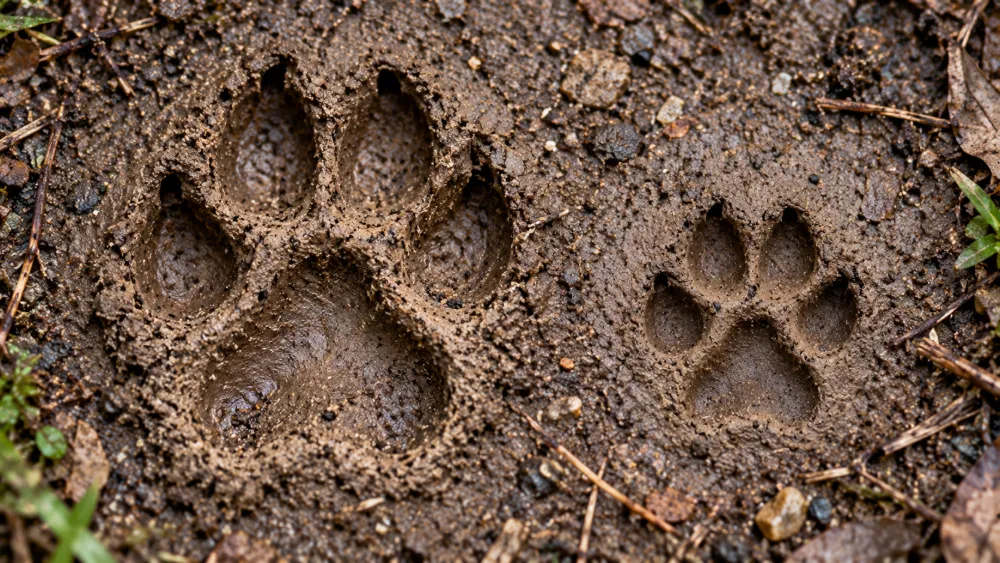
The main difference is scale.
Bobcat tracks are commonly around 2 inches across, while ordinary house-cat prints are noticeably smaller.
Track size still varies with the individual animal, substrate and how deeply the foot sinks into the ground, so a single blurry footprint should not be treated as perfect identification.
Can a Large House Cat Be as Big as a Bobcat?
In weight, there can be some overlap.
Large domestic breeds such as Maine Coons can weigh more than small bobcats.
But body weight alone can be misleading.
A large domestic cat usually retains domestic-cat proportions, including a long tail, smaller feet relative to its body, different facial structure and different leg proportions.
A bobcat remains a distinct wild species, not simply an unusually large version of Felis catus.
If you are interested in why house-cat size varies so much, see our Why Is My Cat So Small? guide.
Bobcat vs House Cat Face
A bobcat's face provides several useful identification clues.
Look for:
a pronounced facial ruff extending from the cheeks;
small tufts of dark hair at the ear tips;
a broader, heavier-looking muzzle;
and wild spotted or streaked facial markings.
Ear tufts are usually much less dramatic than those of a Canada lynx, so a bobcat should not be identified solely by pointed ears.
Our Bobcat vs. Lynx comparison explains those differences in more detail.
Bobcat vs House Cat Coat
Bobcat coat color varies geographically and seasonally.
Common colors include gray-brown, yellowish-brown and reddish-brown, usually with darker spots, streaks or bars.
The belly is pale and spotted.
Domestic cats, meanwhile, have an enormous range of selectively bred and naturally occurring colors and patterns.
A brown spotted tabby house cat can therefore resemble a bobcat superficially.
Body shape, tail, paws and facial structure are much more useful when several features are considered together.
Could I Mistake a Bobcat for a House Cat at Night?
Yes.
This happens because judging size without a reference object is surprisingly difficult.
A bobcat seen through a security camera, across a yard or in darkness may look like a large tabby until it walks past something of known size.
Look for the combination of:
a very short tail;
long legs;
large paws;
a muscular body;
a cheek ruff;
and an unusually tall stance.
A clear full-body view is much more useful than judging color alone.
Is a Bobcat Dangerous to a House Cat?
A bobcat is considerably more powerful than a typical domestic cat and is a wild predator.
Its usual prey includes rabbits, rodents, birds and other wildlife, but wildlife authorities document that bobcats can occasionally prey on domestic cats.
That does not mean every bobcat entering a neighborhood is actively hunting pets.
The simplest way to reduce the risk is to prevent unsupervised outdoor roaming, particularly where bobcats and other predators are regularly present.
For the broader predator picture, see What Animals Eat Cats?.
What Should You Do If You See a Bobcat?
Observe it from a distance.
Do not approach, corner or attempt to touch a bobcat—even if it appears calm.
If you have pets nearby, bring them indoors when it is safe to do so.
Do not leave pet food outside, because outdoor food can attract wildlife and the smaller animals that predators hunt.
Most wild bobcats want to avoid close contact with people and should be given an easy route to leave.
Bobcat vs Mountain Lion: Which Is Bigger?
The mountain lion is dramatically larger.
A bobcat is a medium-sized wild cat, while an adult mountain lion can weigh many times more.
This distinction matters because bobcats are sometimes mistaken for young mountain lions in areas where both species occur.
Our Bobcat vs. Mountain Lion guide covers that comparison separately.
FAQ
How big is a bobcat compared to a house cat?
A bobcat is usually noticeably larger, taller and more muscular. Bobcats commonly weigh about 11–35 pounds, while an average healthy domestic cat is often around 8–12 pounds. Wildlife authorities sometimes describe bobcats as roughly two to three times the size of an average house cat.
Can a bobcat be the same size as a house cat?
The size ranges can overlap. A small female bobcat may weigh only slightly more than a large domestic cat, while some large domestic breeds can equal or exceed the weight of a small bobcat. Their body proportions remain different.
How tall is a bobcat?
Adults are often around 18–20 inches tall at the shoulder, although size varies with sex, region and individual animal.
How much does a bobcat weigh?
Common adult ranges are approximately 11–35 pounds, although different populations and sources give slightly different ranges.
Is a bobcat bigger than a Maine Coon?
Usually in overall wild-cat build, but weight can overlap. A very large Maine Coon may weigh as much as or more than a small bobcat. Bobcats generally stand taller, have larger paws, longer legs and a much shorter tail.
Can a bobcat mate with a house cat?
There is no accepted evidence of an established bobcat–domestic cat hybrid population. Bobcats belong to the genus Lynx, while domestic cats are Felis catus. Claims about supposed “bobcat hybrids” should not be accepted based on appearance alone.
How can I tell a bobcat from a big tabby cat?
Look for a short bobbed tail, taller legs, large paws, facial ruff, subtle ear tufts and a much more muscular build. A large tabby house cat normally retains a long tail and ordinary domestic-cat proportions.
Final Thoughts
A bobcat is not simply a slightly bigger house cat.
Although there can be some overlap in body weight, an adult bobcat is usually much more robust. It stands taller, has longer legs, broader paws, a stronger-looking head and a distinctive short tail.
A useful general rule is that a typical bobcat looks about twice the size of an average domestic cat, although individual animals vary enough that this should never be treated as an exact mathematical ratio.
If you see a cat-sized animal outside and cannot tell what it is, the tail is often the quickest clue: a bobcat's short tail combined with long legs and large paws creates a very different silhouette from that of an ordinary house cat.
For more about this North American wild cat, continue with our Bobcat guide, Bobcat vs. Lynx and Bobcat vs. Mountain Lion.
Sources Used for Fact Checking
U.S. National Park Service — White Sands National Park: Bobcat
U.S. National Park Service — Jewel Cave National Monument: Bobcat
U.S. National Park Service — Santa Monica Mountains: Bobcat Identification
U.S. National Park Service — Yellowstone National Park: Bobcat
Merck Veterinary Manual — Domestic Cat Size and Nutrition
PetMD — Average Healthy Cat Weight