Caimans and crocodiles look similar at first glance, and many people confuse them. Both are crocodilians, which means they belong to the same reptile order and share features such as long bodies, powerful tails, tough scales, and eyes positioned high on the head for life in and around water.
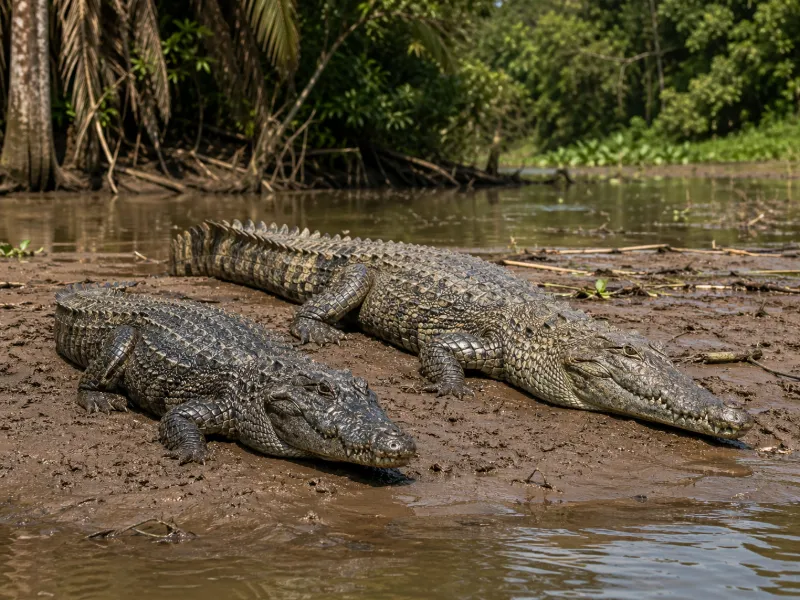
However, a caiman is not the same thing as a crocodile. Caimans belong to the alligator family, while crocodiles belong to a different family of crocodilians. They differ in size, range, snout shape, skin texture, and habitat preferences.
In this guide, you will learn the main differences between caimans and crocodiles, how to tell them apart, and which one is usually larger and more dangerous.
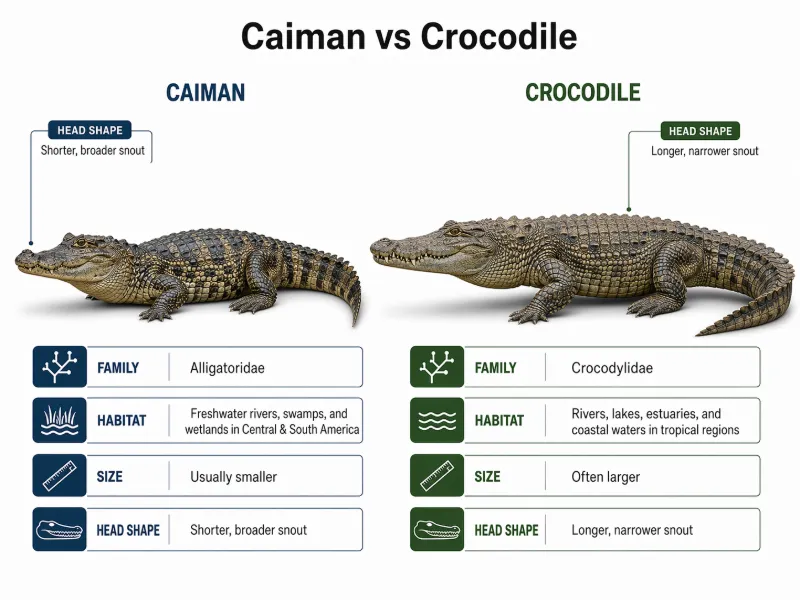
Caiman vs Crocodile: Quick Comparison Table
| Feature | Caiman | Crocodile |
|---|---|---|
| Family | Alligator family (Alligatoridae) | Crocodile family (Crocodylidae) |
| Main range | Central and South America | Africa, Asia, Australia, and the Americas |
| Typical size | Usually smaller, depending on species | Often larger overall, especially in the biggest species |
| Snout shape | Often shorter and broader, though it varies by species | Often narrower or more pointed, though it also varies by species |
| Body armor | Often heavier bony armor on the belly and back | Tough skin, but usually less heavily armored underneath than many caimans |
| Salt tolerance | Mainly freshwater | Many species handle brackish or saltier water better |
| Examples | Spectacled caiman, black caiman, yacare caiman | Nile crocodile, saltwater crocodile, American crocodile |
A Caiman Is Not a Crocodile
The most important difference is taxonomic. Caimans and crocodiles are related, but they are not the same group.
Caimans belong to the family Alligatoridae, the same broader family that includes alligators. More specifically, caimans are part of the caiman branch within that family. Crocodiles belong to the family Crocodylidae.
This means a caiman is generally more closely related to an alligator than to a true crocodile. So while all of them are crocodilians, not all crocodilians are crocodiles.
Crocodiles Usually Have a Wider Global Range
Caimans are limited to the Americas. They live mainly in Central America and South America, with different species found in countries such as Brazil, Colombia, Venezuela, Peru, Bolivia, and surrounding regions.
Crocodiles have a much broader global distribution. Different crocodile species occur in Africa, Asia, Australia, and parts of the Americas. Some species live in rivers and wetlands, while others use estuaries, mangroves, and coastal habitats.
So if you see one of these reptiles in Africa or Australia, it is a crocodile, not a caiman. If you see one in tropical South America, it could be either a caiman or, in some places, a crocodile, depending on the local species.
Crocodiles Are Usually Larger Overall
Another major difference is size. In general, crocodiles include some of the largest living reptiles on Earth. Species such as the saltwater crocodile and Nile crocodile can grow extremely large and clearly exceed the size of most caimans.
Caimans are often smaller or medium-sized by comparison, although this depends on the species. The black caiman is an important exception because it can grow very large and is one of the biggest predators in South American wetlands. Even so, crocodiles still include the largest species overall.
So if you are comparing the biggest caimans with the biggest crocodiles, crocodiles usually win on maximum size.
Their Snouts Often Look Different
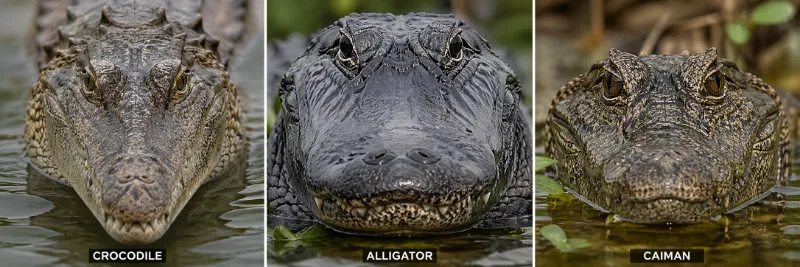
Snout shape can help with identification, although it is not always as simple as the classic alligator-versus-crocodile comparison.
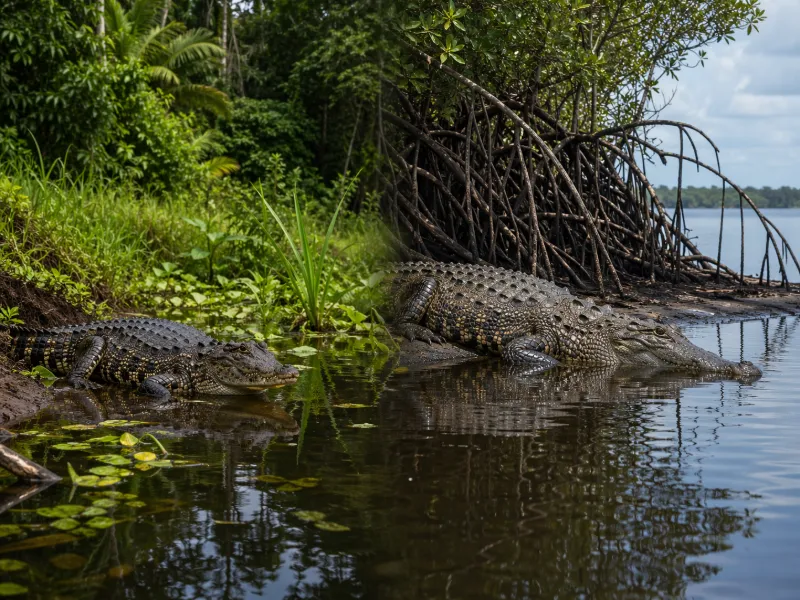
Many caimans have a relatively shorter, broader snout than many crocodiles. For example, a spectacled caiman often looks shorter-faced and less pointed than an American crocodile. Some caimans also have a head shape that looks heavier or deeper.
Many crocodiles have a more elongated and narrower snout, especially species adapted for catching fish or moving efficiently through the water. However, crocodile snout shape varies by species, and some caimans can also look fairly narrow-snouted.
Because of that, snout shape is useful, but it should be combined with location, size, and overall appearance rather than used alone.
Caimans Often Have Heavier Bony Armor
One feature that often stands out in caimans is their heavy body armor. Many caiman species have well-developed bony plates called osteoderms in the skin, including strong armor on the back and sometimes underneath the body as well.
This can make a caiman look especially rugged and heavily built. In some species, the body appears stiff, hard, and more strongly armored than that of many crocodiles.
Crocodiles also have tough, armored skin, but many caimans are known for particularly heavy bony plating. Historically, this made caiman hides less desirable than crocodile or alligator hides in some leather markets because the armor made the skin harder to process.
Crocodiles Usually Handle Saltier Water Better
Caimans are mainly freshwater reptiles. They are commonly found in rivers, marshes, flooded forests, lakes, and swamps. Most species are associated with inland tropical freshwater habitats.
Crocodiles, by contrast, often have better salt tolerance. Many crocodile species can live in brackish habitats, and some can use coastal zones, estuaries, lagoons, and mangroves much more effectively than caimans can.
This greater tolerance for salty or brackish water is one reason crocodiles occupy a broader range of habitats worldwide.
Their Color and Overall Look Can Be Different
Caimans are often dark olive, brown, or grayish in color. Many species have a rough, strongly armored appearance. Some, such as the spectacled caiman, may also show a bony ridge between the eyes, which helps create a “spectacled” look.
Crocodiles vary widely by species, but many have a longer, leaner appearance with a more elongated head. Depending on the species and habitat, they may appear gray, tan, olive, or brown.
Color alone is not enough for a confident identification, because mud, age, light conditions, and water quality can all change how the animal looks.
Which Is More Dangerous?
Both caimans and crocodiles can be dangerous, especially large individuals. Neither should be approached in the wild.
However, crocodiles generally include the species that are more notorious for serious attacks on humans. Large crocodiles such as the Nile crocodile and saltwater crocodile are among the most dangerous reptiles in the world.
Many caiman species are smaller and usually less feared globally than large crocodiles, but that does not mean caimans are harmless. A large black caiman, for example, is a powerful apex predator and can be extremely dangerous.
How to Tell a Caiman From a Crocodile Quickly
If you need a fast identification guide, use these clues together:
Location: Caimans live only in Central and South America, while crocodiles are found much more widely around the world.
Size: Caimans are often smaller, while crocodiles often grow larger overall.
Snout: Many caimans look shorter-snouted and broader-faced, while many crocodiles look longer-snouted and more pointed.
Armor: Caimans often appear more heavily armored and rugged.
Habitat: Freshwater inland wetlands suggest a caiman; brackish coastal habitats more often suggest a crocodile.
Why People Confuse Caimans and Crocodiles
People confuse them because both belong to the crocodilian group and have the same basic body plan. From a distance, they can look almost identical: long tail, low body, ridged back, and eyes just above the waterline.
In zoos, wildlife videos, and travel photos, many viewers simply label any crocodilian as a “crocodile,” even when it is actually a caiman or an alligator. This is especially common with smaller South American species.
The best way to avoid confusion is to remember the combination of family, location, size, and habitat.
Final Answer
The main difference between a caiman and a crocodile is that a caiman belongs to the alligator family and usually lives in Central or South America, while a crocodile belongs to the crocodile family and has a much wider global range. Caimans are often smaller and more heavily armored, while crocodiles are often larger overall and better adapted to brackish or saltier habitats.
Both are fascinating reptiles, but they are not the same animal.
FAQs
Is a caiman a crocodile?
No. A caiman is a crocodilian, but it is not a true crocodile. Caimans belong to the alligator family, while crocodiles belong to the crocodile family.
Which is bigger, a caiman or a crocodile?
Crocodiles are usually bigger overall, although some caimans, especially the black caiman, can also become very large.
Do caimans and crocodiles live in the same places?
Sometimes they can overlap in parts of the Americas, but caimans are limited to Central and South America, while crocodiles have a much broader worldwide distribution.
Which is more dangerous, a caiman or a crocodile?
Both can be dangerous, but crocodiles generally include the species most often considered highly dangerous to humans.