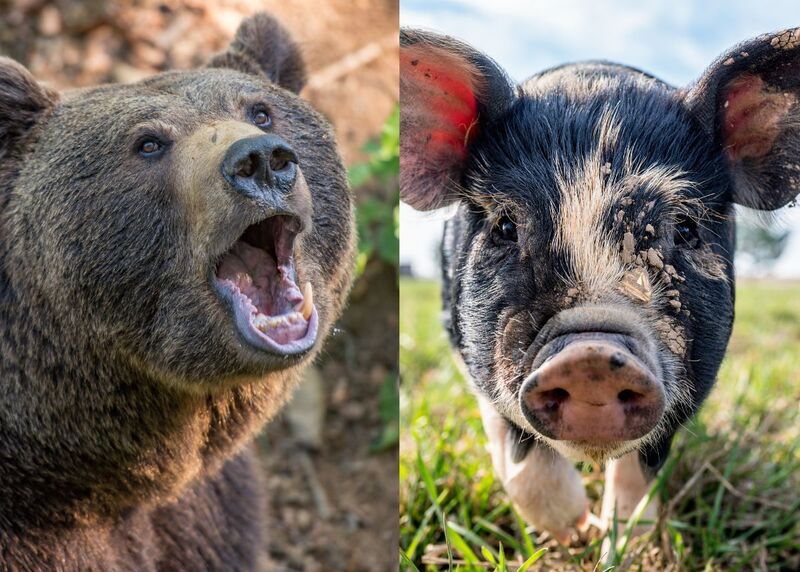
A boar and a pig are closely related, but the words are not always used the same way. “Pig” usually refers to a domestic pig, while “boar” can mean either an adult male pig or a wild boar. In common comparisons, boar usually means wild boar: a tougher, hairier, tusked, free-living animal, while a domestic pig is bred by humans for farming, meat, or companionship.
Boar vs Pig Quick Answer
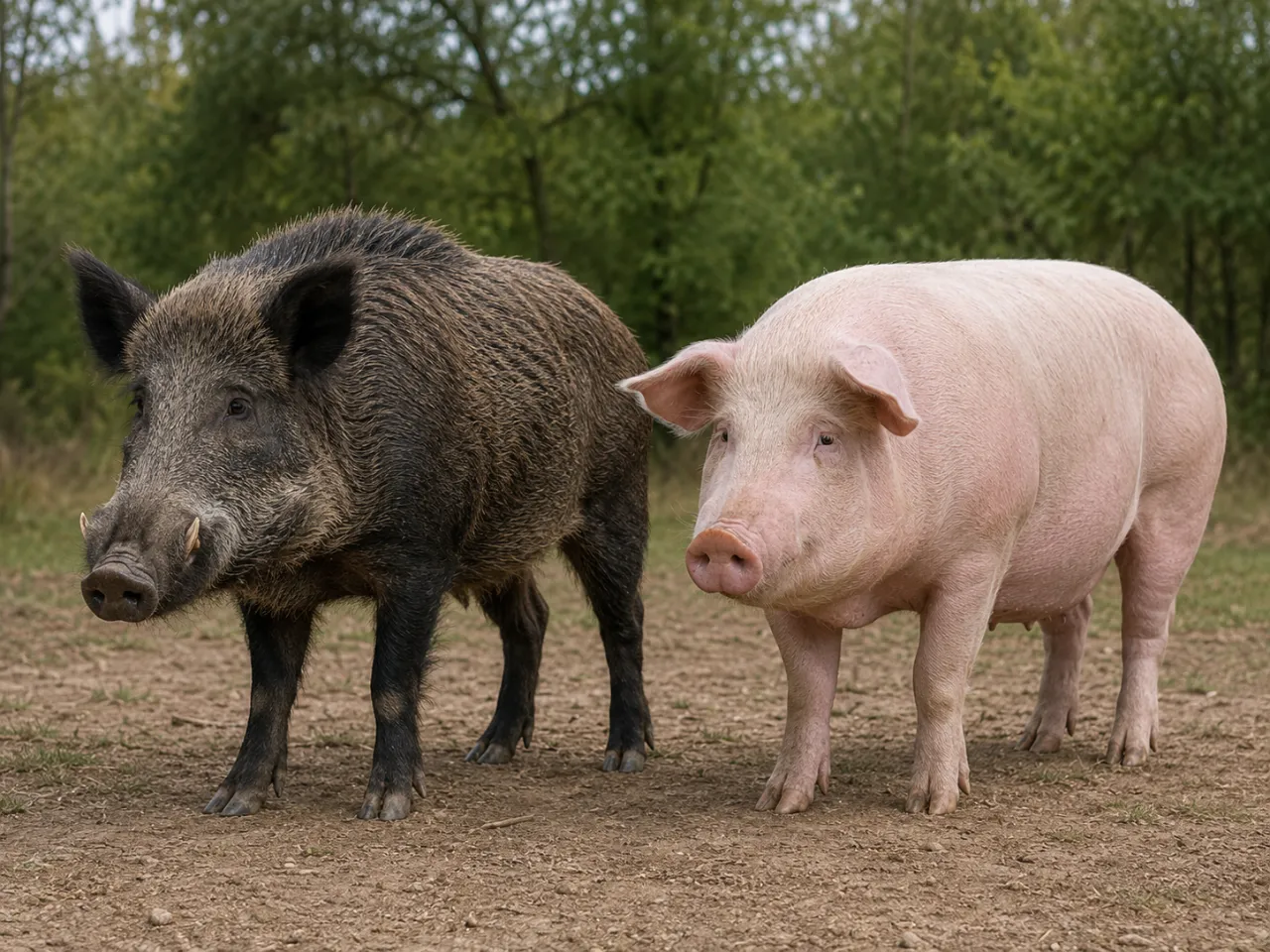
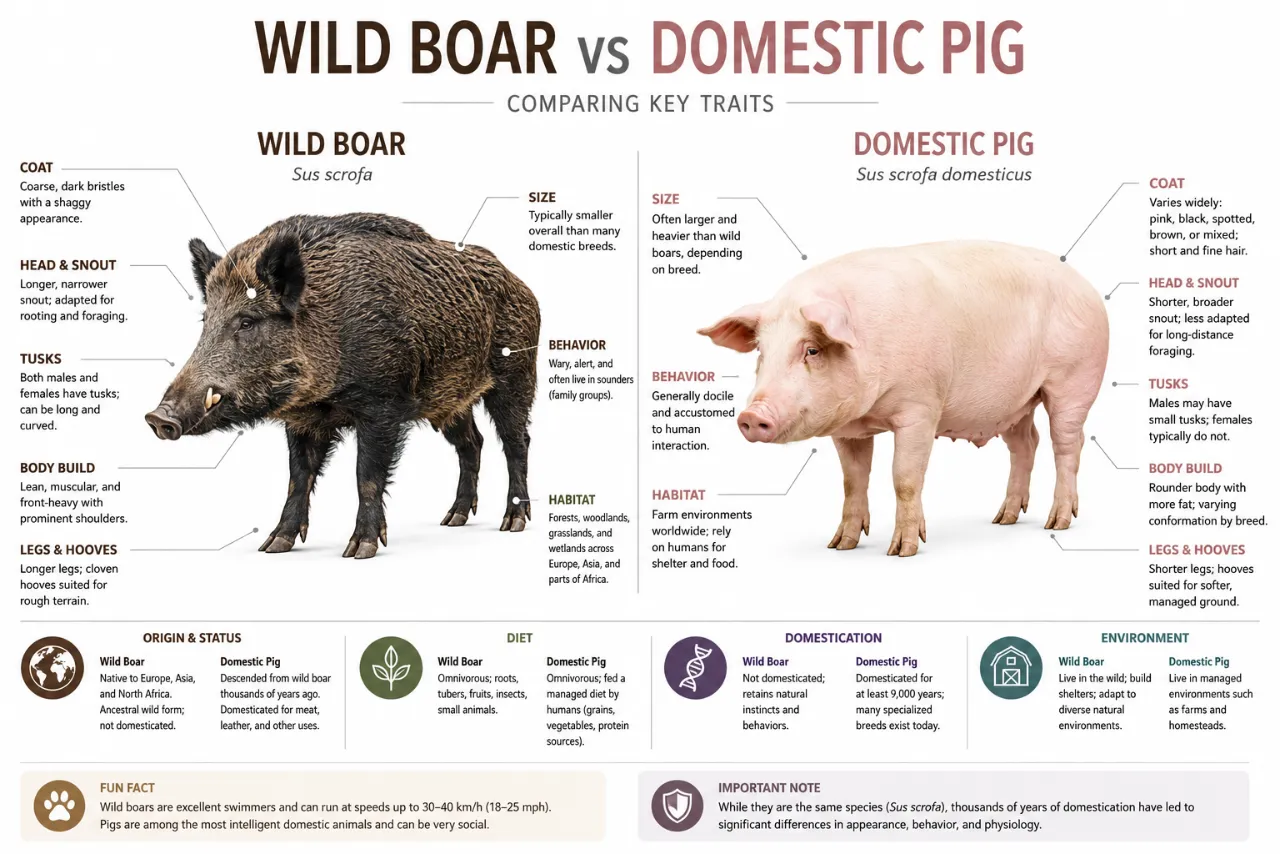
The main difference is domestication. A domestic pig is a human-bred form of Sus scrofa domesticus, usually raised on farms or kept as a pet. A wild boar is the wild ancestor or close wild relative of domestic pigs, usually called Sus scrofa. Wild boars are generally more muscular, more alert, hairier, and more defensive, while domestic pigs are usually calmer, heavier-bodied, and shaped by selective breeding.
Boar vs Pig Summary Table
| Feature | Boar / Wild Boar | Domestic Pig |
|---|---|---|
| Common meaning | Often means wild boar; can also mean adult male pig | Usually means domesticated pig |
| Scientific identity | Sus scrofa | Sus scrofa domesticus |
| Domestication | Wild animal | Domesticated animal |
| Body shape | Lean, muscular, high-shouldered, wedge-shaped head | Often rounder, heavier, and more variable by breed |
| Coat | Coarse bristles, usually dark brown, gray, or blackish | May be pink, black, brown, spotted, red, white, or hairy depending on breed |
| Tusks | Often obvious, especially in adult males | May have tusks, but often less visible or managed by humans |
| Temperament | Wary, defensive, powerful, sometimes dangerous | Usually more manageable around humans, depending on breed and handling |
| Habitat | Forests, wetlands, grasslands, scrublands, farmland edges | Farms, pastures, barns, smallholdings, sanctuaries, homes as pets |
| Diet | Omnivorous: roots, acorns, crops, insects, carrion, small animals | Omnivorous but usually fed managed diets by humans |
| Social group | Females and young live in sounders; adult males often solitary | Social, often kept in managed groups |
| Danger level | Can be dangerous if cornered, wounded, or protecting young | Can also be dangerous because of size, but usually less wild and defensive |
| Quick identification clue | Hairy, dark, tusked, long snout, wild posture | Rounder body, domestic setting, breed-specific colors and shape |
What Is a Boar?
The word “boar” has two common meanings. In farming language, a boar is an adult male pig, especially one used for breeding. In wildlife language, a boar often means a wild boar, the free-living wild pig species Sus scrofa.
When people search “boar vs pig,” they usually want to compare a wild boar with a domestic pig. A wild boar is a strong, intelligent, adaptable animal with coarse hair, a long snout, powerful shoulders, and tusks. It can live in forests, wetlands, grasslands, agricultural areas, and many other habitats.
Wild boars are not simply “dirty pigs in the forest.” They are successful omnivores with excellent smell, strong digging ability, good memory, and a flexible diet. In many places, they are important wildlife; in other places, they are invasive or overabundant and can damage crops, native plants, soil, and ecosystems.
What Is a Pig?
A pig is usually a domesticated member of the species Sus scrofa. Domestic pigs were bred from wild boar ancestors and have been shaped by thousands of years of human selection. People have bred pigs for meat, fat, temperament, growth rate, fertility, size, color, and sometimes companionship.
Domestic pigs vary enormously. A commercial farm pig may be large, pale-skinned, fast-growing, and heavy-bodied. A heritage breed may be dark, spotted, hairy, or adapted to outdoor life. A miniature pig may be much smaller than a farm hog, although many “mini pigs” still grow much larger than new owners expect.
Domestic pigs are intelligent, social, and curious animals. They can learn routines, recognize individuals, root in soil, explore objects, and form social relationships. They are domesticated, but they still retain many natural pig behaviors.
Quick Visual Difference
The fastest way to tell a wild boar from a domestic pig is to look at the body shape, coat, head, and setting.
Wild boar: dark, hairy, bristly coat; long snout; strong shoulders; visible tusks in many adults.
Domestic pig: rounder body; more variable colors; often less bristly; usually seen on farms or around people.
Wild boar: alert, wary, low-headed, ready to run or defend itself.
Domestic pig: often calmer, heavier, and shaped by breeding and human handling.
Boar Has Two Meanings
This is one of the most important points. In agriculture, “boar” means a male pig that has not been castrated. A female pig is called a sow, and a young pig is called a piglet. In this sense, a boar can be domestic, not wild.
In everyday wildlife conversations, “boar” often means wild boar. This can create confusion. A farmer may say “boar” and mean a breeding male domestic pig. A hiker may say “boar” and mean a wild animal seen in the forest.
So the comparison depends on context:
Boar as male pig: adult male domestic pig.
Boar as wild boar: wild pig species or wild-living pig.
Pig: general term for domestic pigs or young swine.
Wild Boar vs Domestic Pig Origin
Domestic pigs come from wild boar ancestors. Over many generations, humans selected animals that were easier to manage, grew well, reproduced efficiently, and produced useful meat or fat. This process changed their bodies and behavior.
Wild boars remained adapted to survival without human care. They must find food, avoid predators, compete with rivals, protect young, survive bad weather, and escape danger. These pressures favor alertness, strength, speed, tough skin, coarse hair, and defensive behavior.
Because they are closely related, wild boars and domestic pigs can interbreed. When domestic pigs escape and live in the wild, they may become feral pigs. Feral pigs can look like domestic pigs, wild boars, or a mixture of both.
Size and Weight
Size varies greatly in both wild boars and domestic pigs. A wild boar may be medium-sized or very large depending on region, age, sex, food supply, and genetics. Adult males are usually larger than females and may develop heavier shoulders and larger tusks.
Domestic pigs can be even more variable. Some farm breeds are bred to become very heavy. Large domestic pigs may outweigh many wild boars. Miniature pig breeds are much smaller, though they are rarely as tiny as advertisements suggest.
In general, wild boars often look leaner and more athletic, while domestic pigs often look rounder and heavier. But a large farm pig can be much heavier than a wild boar.
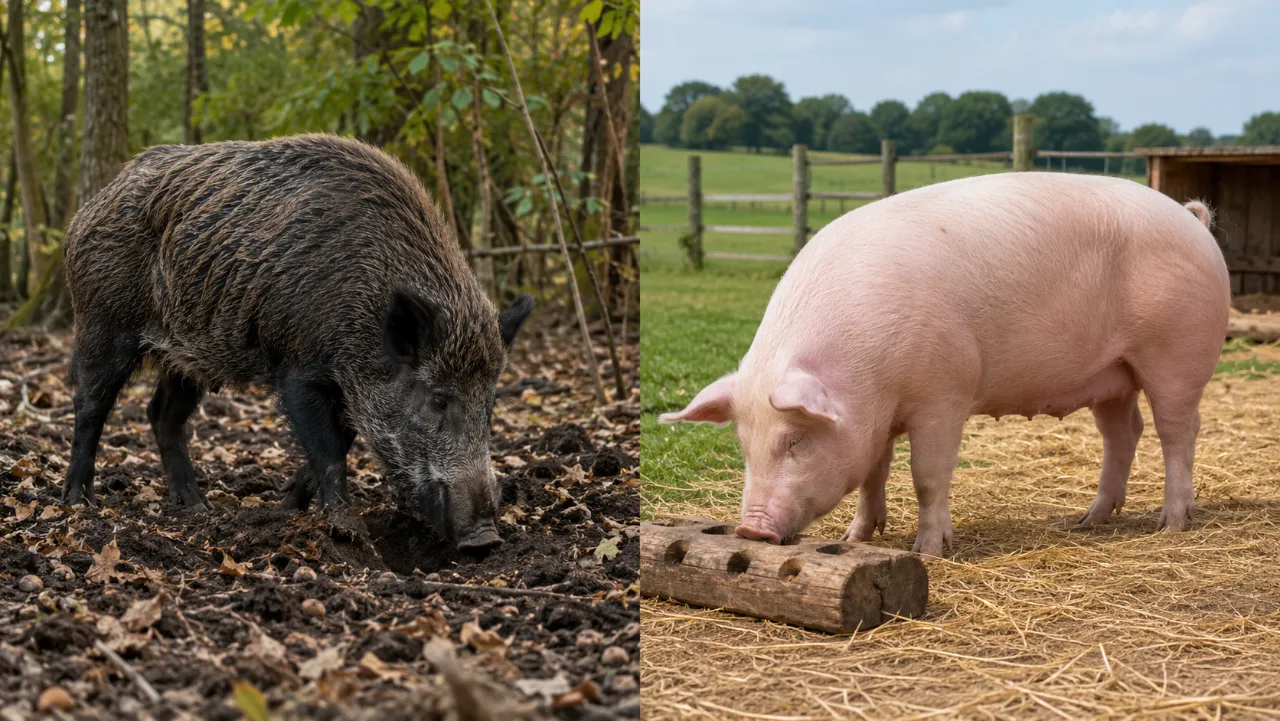
Body Shape and Appearance
A wild boar usually has a front-heavy body. The shoulders and neck are powerful, the head is long and wedge-shaped, and the back may slope downward toward the rear. This body shape helps the animal push through vegetation, dig, fight, and move through rough terrain.
A domestic pig often has a more rounded body, broader belly, and heavier hindquarters, depending on breed. Many commercial breeds are selected for meat production, so their bodies may look fuller and less rugged than wild boars.
Wild boars look built for survival. Domestic pigs often look built for human-managed environments.
Coat and Color
Wild boars usually have coarse bristles and a dark coat. Their colors may include dark brown, blackish, gray, reddish-brown, or mixed earthy tones. Young wild boar piglets often have pale stripes that help camouflage them in vegetation.
Domestic pigs come in many colors and coat types. Some are pink and mostly hairless-looking. Others are black, red, white, spotted, belted, or hairy. Heritage breeds may retain thick coats and outdoor toughness, while commercial pigs may have lighter skin and shorter hair.
Color alone is not enough to identify a pig. A dark hairy domestic breed can resemble a wild boar, and a feral pig may look partly domestic and partly wild.
Tusks and Teeth
Tusks are one of the most obvious wild boar features. In wild boars, the canine teeth can grow outward and upward, especially in adult males. These tusks are used in fighting, defense, display, and digging. Male wild boars may develop large tusks that can cause serious injuries.
Domestic pigs can also have tusks, especially intact males. However, tusks may be less obvious in many domestic settings because of breed differences, management practices, age, or human care. Pet pigs may have tusks that need monitoring by a veterinarian or experienced professional.
If an animal has a bristly coat, long snout, and visible curved tusks in a wild setting, it is likely a wild boar or feral pig.
Behavior and Temperament
Wild boars are usually wary of humans. They prefer to avoid contact, but they can be dangerous if cornered, injured, surprised, or protecting piglets. Adult males can be especially formidable because of their size, tusks, and strength.
Domestic pigs are generally more accustomed to people. Well-handled pigs may be curious, calm, and social. However, domestic pigs are still strong animals. Large pigs can knock people down, bite, push, or become aggressive if frightened, poorly handled, or competing for food.
The main difference is that wild boars are survival-driven and defensive, while domestic pigs are usually more manageable because of domestication and human handling.
Habitat and Range
Wild boars live in many habitats, including forests, wetlands, grasslands, agricultural edges, scrublands, mountains, and river valleys. They are highly adaptable and can survive in both wild and human-altered landscapes. In some regions, wild boars are native; in others, feral pigs or introduced wild boars are invasive.
Domestic pigs live in human-managed environments. These may include farms, barns, pastures, smallholdings, sanctuaries, research settings, or homes where pigs are kept as pets. They depend on humans for food, shelter, veterinary care, and protection.
Feral pigs blur the line. They are domestic pigs or domestic-wild hybrids living without human care. Over generations, feral pigs may become leaner, hairier, more alert, and more boar-like.
Diet and Feeding Behavior
Both wild boars and domestic pigs are omnivores. They can eat plant and animal matter. Wild boars feed on roots, tubers, acorns, nuts, fruits, grasses, crops, fungi, insects, worms, eggs, carrion, reptiles, amphibians, and small mammals when available.
Domestic pigs are usually fed managed diets designed for health, growth, reproduction, or maintenance. They may eat grains, formulated feed, vegetables, forage, and approved supplements. Pet pigs need carefully controlled diets because obesity is common when they are overfed.
Wild boars must search, dig, and forage. Domestic pigs usually receive food from humans, though they still love rooting and exploring.
Rooting and Digging
Rooting is a natural pig behavior. Pigs use their strong snouts to push into soil, leaves, mud, and plant matter. This helps them find roots, insects, worms, and hidden food.
Wild boars root extensively in forests, fields, and wetlands. This can help turn soil and expose food, but in large numbers it can also damage crops, lawns, native plants, and fragile habitats.
Domestic pigs also root if given the chance. In a farm or pet setting, rooting can be managed with safe outdoor areas, enrichment, straw, soil patches, or feeding games. Preventing all rooting can frustrate pigs because it is a deeply natural behavior.
Social Structure
Wild boar females and young often live in groups called sounders. A sounder may include related females and their offspring. Adult males are more likely to be solitary outside the breeding season, though they may approach groups when mating opportunities arise.
Domestic pigs are also social animals. They form relationships, recognize individuals, and establish social hierarchies. In farms, good management considers group size, space, enrichment, feeding competition, and stress reduction.
Both wild and domestic pigs are intelligent social mammals. The difference is that wild boar social life develops under natural pressures, while domestic pig social life is shaped by human management.
Intelligence and Learning
Pigs are highly intelligent animals. Both wild boars and domestic pigs can learn from experience, remember food locations, recognize routines, and solve problems. Domestic pigs can be trained with positive reinforcement, much like dogs in some simple tasks.
Wild boars use intelligence for survival. They learn where food is available, where danger occurs, and how to avoid threats. This adaptability helps explain why wild boars and feral pigs can thrive in many environments.
Domestic pigs use the same basic intelligence in human environments. Without enrichment, they may become bored, stressed, or destructive. This is one reason good pig care requires mental stimulation, not just food and shelter.
Reproduction and Piglets
Female pigs are called sows. Young pigs are called piglets. Wild boar piglets are often born with stripes, which help them blend into vegetation. They stay close to the mother and rely on her protection.
Domestic pigs have been selected for high reproductive output in many breeds. Farm sows may have large litters, and piglet survival depends heavily on management, nutrition, warmth, and health care.
Wild boar reproduction can contribute to rapid population growth, especially where food is abundant and predators are limited. This is one reason feral pigs can become a serious ecological problem in some regions.
Are Boars More Dangerous Than Pigs?
Wild boars are generally more dangerous in natural encounters because they are not domesticated and may defend themselves aggressively. Their tusks, speed, strength, and low body position make them difficult animals to handle or approach.
Domestic pigs can also be dangerous, especially large adults or intact males. A large pig may weigh hundreds of pounds and can injure a person through biting, pushing, or charging. However, domestic pigs are usually more familiar with people and easier to manage when properly trained and housed.
Never approach a wild boar. If you see one, keep distance, do not feed it, and avoid getting between a sow and her piglets.
Wild Boar vs Feral Pig
A wild boar is a wild form of Sus scrofa. A feral pig is a domestic pig or domestic pig descendant living in the wild. Feral pigs may interbreed with wild boars, creating hybrids. In many places, people use “wild hog,” “feral hog,” “wild pig,” and “boar” loosely, even when the animals have mixed ancestry.
Feral pigs can become more boar-like over time. They may develop thicker hair, longer snouts, stronger survival behavior, and more wary temperaments. However, they can still show domestic traits such as unusual colors, spotted coats, or body shapes.
The difference matters for wildlife management, but in the field, wild boars and feral pigs can be difficult to separate without genetic or population history.
Boar vs Hog vs Pig
These words overlap, but they are not always identical.
| Term | Common Meaning | Example |
|---|---|---|
| Pig | General word for domestic swine; sometimes young animal | Farm pig, pet pig, piglet |
| Hog | Often means a larger domestic pig or wild pig in American usage | Market hog, feral hog |
| Boar | Adult male pig or wild boar | Breeding boar, wild boar |
| Sow | Adult female pig | Domestic sow, wild sow |
| Piglet | Young pig | Newborn piglet |
Can Boars and Pigs Interbreed?
Yes. Wild boars and domestic pigs are close enough to interbreed. Their offspring may be fertile, and hybrid populations can form where domestic pigs escape or where wild boars are introduced near pig farms.
This interbreeding is one reason feral pig populations are so variable. Some look almost like wild boars, while others look more domestic. Their coat color, size, tusk length, and behavior can vary widely.
Hybridization can complicate wildlife management because feral pigs may combine domestic reproductive potential with wild survival ability.
Ecological Impact
Wild boars can play natural ecological roles in their native range. Their rooting can disturb soil, spread seeds, create feeding opportunities for other animals, and recycle nutrients. They are also prey for large predators in some ecosystems.
In regions where feral pigs or introduced wild boars are invasive, the impact can be severe. They may damage crops, eat native plants, disturb soil, prey on eggs and young animals, compete with native wildlife, spread disease, and harm wetlands or forests.
Whether wild boars are considered normal wildlife or serious pests depends on location, population density, and ecosystem history.
Domestic Pigs as Pets
Some domestic pigs are kept as pets, but they require serious care. Pigs are intelligent, strong, social, and long-lived. They need proper diet, outdoor access or enrichment, hoof care, veterinary care, secure fencing, and realistic owners.
Many people underestimate pig size. A “mini pig” is still a pig and may grow much larger than expected. When pigs become too large, loud, destructive, or difficult, they are sometimes surrendered to sanctuaries. This is why research before getting a pet pig is essential.
A pig can be a rewarding companion for the right home, but it is not a simple substitute for a dog or cat.
How to Identify One in a Photo
When looking at a photo, use several clues together:
Check the setting: forest, brush, or farmland edge suggests wild boar or feral pig; barn or farm pen suggests domestic pig.
Check the coat: coarse dark bristles suggest wild boar; smooth pink or breed-colored coat suggests domestic pig.
Check the body shape: lean, front-heavy, high-shouldered body suggests wild boar.
Check the snout: long wedge-shaped snout suggests wild boar.
Check the tusks: large visible tusks suggest adult male wild boar or domestic boar.
Check the color pattern: spotted or pale domestic colors may suggest farm pig or feral domestic ancestry.
Common Misidentifications
One common mistake is assuming every wild-looking pig is a pure wild boar. Many wild-living pigs are actually feral domestic pigs or hybrids. They may have wild behavior but domestic ancestry.
Another mistake is assuming a domestic pig cannot have tusks. Male domestic pigs can grow tusks, and even some females may have smaller tusks. Tusks alone do not prove that an animal is a wild boar.
A third mistake is thinking domestic pigs are harmless because they are farm animals. Large pigs are strong and should be handled with respect, especially around food, breeding animals, or mothers with piglets.
Which Is Smarter, a Boar or a Pig?
Both are intelligent because they are closely related. Wild boars use intelligence to survive in changing environments, avoid danger, find food, and remember landscapes. Domestic pigs use intelligence in social life, learning, exploration, and interaction with humans.
It is not accurate to say one is simply smarter than the other. Their intelligence is expressed differently. A wild boar is better adapted to survival; a domestic pig may be easier to train and study around humans.
Which Is Stronger?
A wild boar is usually stronger in a rugged, athletic sense. It is built for pushing through vegetation, digging, running, fighting rivals, and surviving outdoors. It may have more muscle definition and tougher defensive behavior than a typical domestic pig of similar size.
A domestic pig may be heavier, especially in large farm breeds. Weight alone can make a domestic pig very powerful. However, many domestic pigs are less agile and less defensive than wild boars.
So the wild boar is usually the tougher natural athlete, while the domestic pig may be heavier depending on breed.
Final Comparison
Boars and pigs are closely connected, but the difference depends on how the word “boar” is used. If boar means an adult male pig, then it is simply a sex and age term. If boar means wild boar, then the contrast is between a wild animal and a domesticated one.
A wild boar is usually hairier, leaner, more muscular, more defensive, and better adapted to survival outdoors. A domestic pig is bred by humans, more variable in appearance, often calmer, and usually managed for farming, breeding, or companionship. Both are intelligent omnivores, both can be powerful, and both belong to one of the most adaptable mammal lineages on Earth.
Related Animal Comparisons
Wild Boar vs Feral Pig
Hog vs Pig
Pig vs Warthog
Boar vs Warthog
Pig vs Peccary
Domestic Pig vs Mini Pig
FAQs About Boar vs Pig
Is a boar the same as a pig?
Not always. A boar can mean an adult male pig, but it can also mean a wild boar. A pig usually refers to a domestic pig or young swine in everyday language.
What is the main difference between a wild boar and a pig?
A wild boar is a wild animal adapted to survive outdoors, while a domestic pig has been bred and managed by humans. Wild boars are usually hairier, leaner, more defensive, and more likely to have visible tusks.
Can domestic pigs turn into wild boars?
Domestic pigs do not literally turn into wild boars, but escaped pigs can become feral. Over time, feral pigs may develop more wild-looking traits and may interbreed with wild boars.
Can boars and pigs mate?
Yes. Wild boars and domestic pigs are closely related and can interbreed. Their offspring may be fertile, which is why feral pig populations can be genetically mixed.
Are wild boars dangerous?
Yes, they can be dangerous, especially if cornered, wounded, surprised, or protecting young. Adult males with tusks can cause serious injuries. It is best to keep a safe distance.
Are domestic pigs dangerous?
Domestic pigs can be dangerous because they are strong, heavy animals. Most are manageable with proper handling, but large pigs, breeding males, or protective mothers should always be respected.
Why do wild boars have tusks?
Tusks are enlarged canine teeth. Wild boars use them for defense, fighting rivals, display, and digging. Adult males usually have the most noticeable tusks.
Is a hog different from a pig?
The terms overlap. In many places, “hog” is used for larger domestic pigs or wild-living pigs, while “pig” is a more general word. Usage varies by region and context.