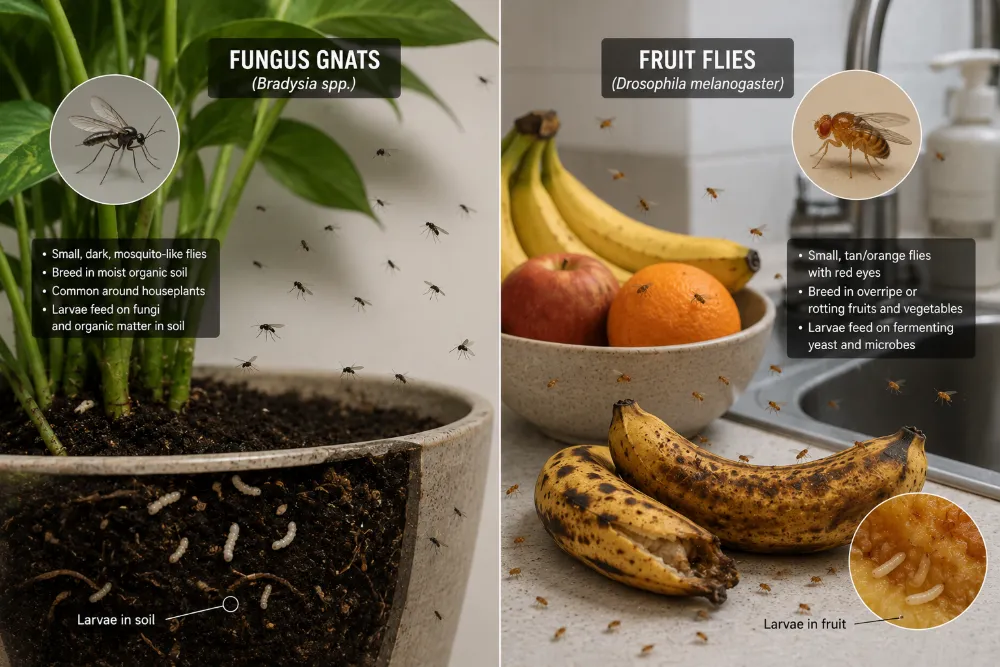
Gnats and fruit flies are both tiny flying insects, but they are not the same thing. “Gnat” is a broad informal name for several small flies, often fungus gnats found around damp houseplant soil. Fruit flies are usually Drosophila flies attracted to ripe, rotting, or fermenting fruit. If tiny flies hover around plants, they are likely gnats; if they gather near fruit, drains, or sweet liquids, they are likely fruit flies.
Quick Comparison Table
| Feature | Gnats | Fruit Flies |
|---|---|---|
| Scientific meaning | Informal name for many small flies | Usually small flies in the family Drosophilidae |
| Common indoor type | Fungus gnats | Drosophila fruit flies |
| Typical size | Very small, often about 1/16–1/8 inch | Small, often about 1/8 inch |
| Body shape | Slender, mosquito-like body with long legs | Rounder, compact body |
| Color | Usually black, gray, or dark brown | Tan, brownish, yellowish, or light brown |
| Eyes | Usually dark and less obvious | Often bright red or dark red |
| Main attraction | Damp soil, fungi, decaying plant matter | Overripe fruit, fermenting liquids, sugary residues |
| Common location | Houseplants, potting soil, greenhouses | Kitchen counters, fruit bowls, trash bins, drains |
| Larval habitat | Moist organic soil | Fermenting fruit or organic residues |
| Do they bite? | Fungus gnats do not bite; some outdoor “gnats” may bite | No, fruit flies do not bite people |
| Best control method | Dry soil, reduce overwatering, treat plant pots | Remove ripe fruit, clean spills, seal trash, trap adults |
What Are Gnats?
The word “gnat” is not a precise scientific name. It is a general term people use for many tiny flying insects, especially small flies that hover around faces, lights, windows, plants, or damp places. Depending on the situation, “gnats” may refer to fungus gnats, biting midges, eye gnats, black flies, or other small dipterans.
Inside homes, the most common “gnats” are usually fungus gnats. These are small, dark, delicate flies that often appear around houseplants. Adult fungus gnats look a little like tiny mosquitoes, with long legs, narrow bodies, and clear wings. They are weak fliers and often run or hop across soil surfaces.
Fungus gnats are attracted to moist potting soil because their larvae feed on fungi, algae, decaying organic matter, and sometimes tender plant roots. They are usually more annoying than dangerous, but heavy infestations can stress seedlings, young plants, or already weak houseplants.
What Are Fruit Flies?
Fruit flies are small flies most often associated with the genus Drosophila. They are common around ripe fruit, rotting produce, spilled juice, wine, beer, vinegar, drains, garbage cans, and food waste. They are especially attracted to fermentation, which is why they often appear around overripe bananas, apples, grapes, tomatoes, and compost scraps.
Fruit flies are usually tan, yellowish-brown, or light brown, with compact bodies and relatively rounded shapes. Many have red eyes, which can be an important identification clue. They fly actively around food sources and may appear suddenly when fruit is left out too long.
Unlike fungus gnats, fruit flies do not need houseplant soil. Their larvae develop in moist, fermenting organic material. A single neglected fruit bowl, sticky bottle, dirty recycling bin, or food residue in a drain can support a fruit fly population.
Gnats vs Fruit Flies: The Main Difference
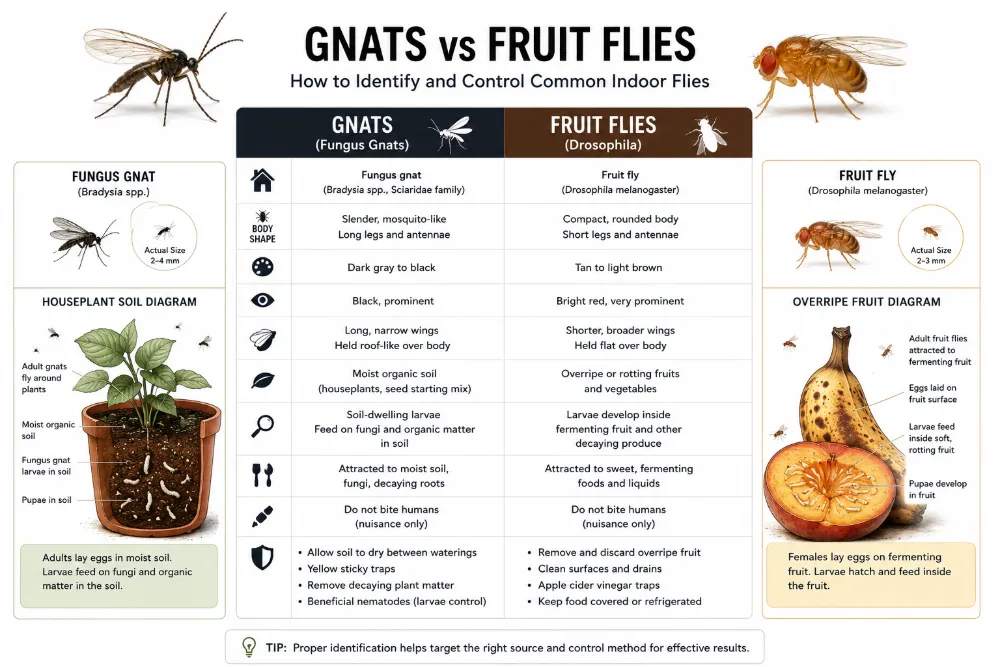
The main difference is that “gnats” is a broad common name, while fruit flies are a more specific group of tiny flies. In a home, gnats usually mean fungus gnats around plants. Fruit flies usually mean small Drosophila flies around fermenting foods.
If the insects are coming from damp potting soil, they are probably fungus gnats. If they are coming from fruit, trash, drains, or sugary liquids, they are probably fruit flies.
This difference matters because the control method is different. Fungus gnats are controlled by managing soil moisture and plant conditions. Fruit flies are controlled by removing fermenting food sources and cleaning kitchen areas.
Appearance and Body Shape
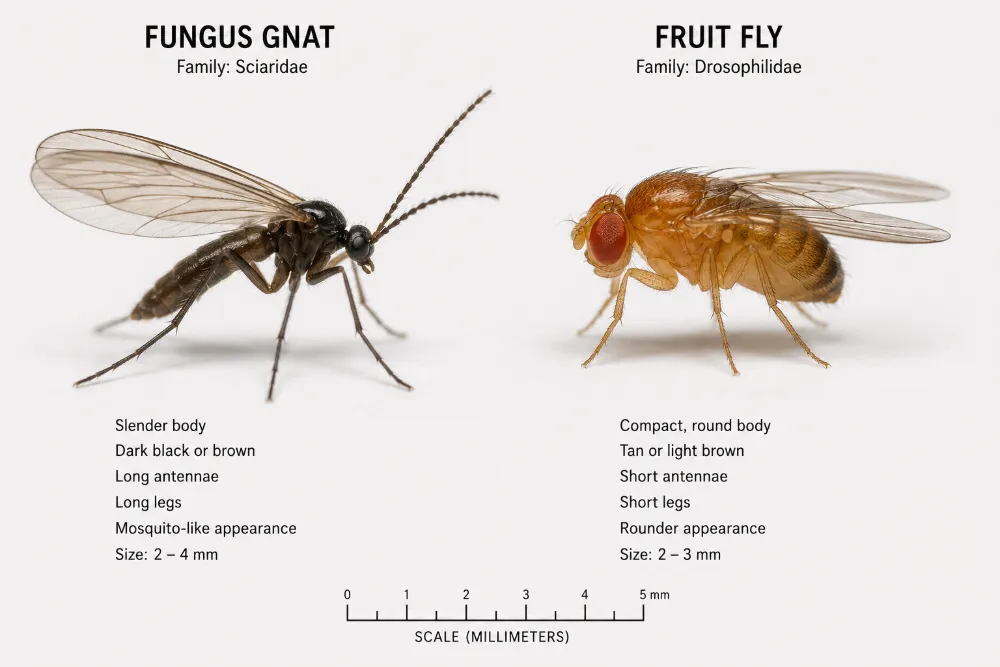
Gnats, especially fungus gnats, tend to look more delicate and mosquito-like. They have thin bodies, long legs, long antennae, and clear wings. Their color is usually black, dark gray, or dark brown. Because they are weak fliers, they often flutter slowly and stay near potted plants.
Fruit flies look shorter and rounder. Their bodies are often tan or brownish, and their eyes may be red. They are usually more compact than fungus gnats and may look like tiny versions of regular flies. Their flight is quick, active, and often centered around food or liquid residue.
A simple visual rule is: long-legged and dark near plants usually means fungus gnat; rounder, tan, red-eyed, and near fruit usually means fruit fly.
Where You Find Them
Location is often the fastest clue. Fungus gnats are most often seen around houseplants, seed trays, greenhouses, damp potting mix, and containers with organic soil. They may rest on soil, crawl around pot rims, or fly up when the plant is watered or disturbed.
Fruit flies are most often found in kitchens, pantries, garbage areas, drains, recycling bins, compost containers, and fruit bowls. They may gather around bananas, peaches, tomatoes, onions, potatoes, wine bottles, beer cans, vinegar, or spilled sweet liquids.
If you are unsure, watch where the insects return after flying. Tiny flies that keep returning to a plant pot are likely gnats. Tiny flies that return to a fruit bowl or drain are likely fruit flies.
Eggs and Larvae
Both gnats and fruit flies have complete metamorphosis: egg, larva, pupa, and adult. The difference is where the immature stages develop.
Fungus gnat females lay eggs in moist soil. The larvae are small, pale, worm-like, and often have dark heads. They live in the top layer of soil, feeding on fungi, decomposing plant material, and sometimes fine plant roots. Overwatered plants create ideal conditions for them.
Fruit fly females lay eggs on or near fermenting organic material. The larvae are tiny pale maggots that feed in soft, wet, decaying food. Overripe fruit, residue in drains, dirty trash cans, and damp food scraps can all become breeding sites.
Because larvae are hidden, killing only the adult flies usually does not solve the problem. You must remove or treat the breeding source.
Diet and Food Sources
Fungus gnats are linked to fungi and moisture. Adult fungus gnats do not eat much and are mainly focused on reproduction. Their larvae feed on fungi, algae, decaying organic matter, and sometimes tender roots. This is why they are common in wet potting soil with a lot of organic material.
Fruit flies are linked to fermentation. Adults and larvae are attracted to yeasts, sugars, and decaying plant material. They are not just interested in fresh fruit; they prefer fruit that is ripe, damaged, soft, or beginning to ferment.
This difference explains why an apple sitting on a dry table may not cause a problem immediately, but a soft banana, sticky juice spill, or dirty compost bin can quickly attract fruit flies.
Do Gnats or Fruit Flies Bite?
Fruit flies do not bite people. They do not have biting mouthparts, and they are not interested in blood. Their main concern is fermenting organic material.
Fungus gnats also do not bite people. They may fly around your face or computer screen, which can be annoying, but they are not blood-feeding insects.
However, the word “gnat” can also refer to some outdoor biting flies, such as biting midges or black flies. These are different from fungus gnats. So if someone says “gnats are biting me,” they may be talking about a different kind of small fly, not the harmless fungus gnats commonly found around houseplants.
Are They Harmful?
Fruit flies are mostly a sanitation nuisance. They can move between decaying food, trash, drains, and kitchen surfaces, so they are not welcome around food preparation areas. Their presence usually means there is a fermenting food source somewhere nearby.
Fungus gnats are mostly a plant-care nuisance. Adult fungus gnats do little direct harm, but larvae can damage delicate roots if the infestation is heavy. Seedlings, cuttings, and young plants are more vulnerable than mature houseplants.
In most cases, neither fruit flies nor fungus gnats are dangerous to humans. The bigger issue is finding and correcting the conditions that allow them to breed.
Why They Suddenly Appear
Fruit flies can seem to appear overnight because they reproduce quickly and are strongly attracted to ripe or fermenting food. They may enter through open doors, windows, grocery bags, or produce brought from the store. Once inside, they can breed wherever moist organic residue is available.
Fungus gnats often appear after houseplants are overwatered or after new plants are brought indoors. Eggs or larvae may already be present in potting soil. Warm indoor temperatures and consistently wet soil allow their population to grow.
A sudden swarm usually means the insects have already found a breeding site. The adults you see are only part of the problem.
How to Tell Them Apart at Home
Start by checking where the flies gather. If they hover around houseplants, especially after watering, suspect fungus gnats. If they gather around fruit, sinks, bottles, or trash, suspect fruit flies.
Next, look at body shape. Fungus gnats look dark, thin, and long-legged. Fruit flies look tan, rounder, and more compact, often with red eyes.
You can also use simple traps for diagnosis. A shallow cup of apple cider vinegar may attract fruit flies strongly. Yellow sticky cards placed near plant soil often catch fungus gnats. The trap that catches more insects can help confirm the source.
How to Control Fungus Gnats
The best way to control fungus gnats is to reduce excess soil moisture. Let the top layer of potting mix dry between waterings when the plant species allows it. Fungus gnat larvae need moist conditions, so drying the soil surface makes the pot less suitable for breeding.
Remove dead leaves and decaying plant material from the soil surface. Avoid leaving pots sitting in standing water. Use well-draining potting mix and containers with drainage holes. Yellow sticky traps can catch adult gnats and help monitor the infestation.
For persistent infestations, biological controls such as beneficial nematodes or bacteria-based larval treatments may be used in plant care settings. The key is to target the larvae in the soil, not just the adults flying around the room.
How to Control Fruit Flies
The best way to control fruit flies is to remove their breeding sources. Throw away or refrigerate overripe fruit. Clean sticky spills, rinse bottles and cans before recycling, seal trash bags, and empty compost containers regularly.
Check drains, garbage disposals, trash bins, and under appliances for hidden organic residue. Fruit flies can breed in small amounts of moist food material that are easy to overlook.
Vinegar traps can reduce adult numbers. A common trap uses apple cider vinegar with a drop of dish soap in a small container. The vinegar attracts the flies, and the soap breaks the surface tension. However, traps work best when combined with cleaning. If the breeding source remains, fruit flies will return.
Common Identification Mistakes
Many people call every tiny indoor fly a fruit fly, but not all small flies are fruit flies. Fungus gnats, drain flies, phorid flies, and fruit flies can all appear indoors. Correct identification helps you choose the right solution.
Drain flies are fuzzy, moth-like flies often found near sinks or drains. Phorid flies have a humpbacked shape and may run quickly across surfaces. Fungus gnats are plant-associated, while fruit flies are food- and fermentation-associated.
If you keep treating fruit bowls but the flies keep coming from plant pots, you likely have fungus gnats. If you dry out plant soil but the flies keep gathering around the sink or fruit bowl, you likely have fruit flies or another kitchen-breeding fly.
Simple Identification Checklist
| Question | Likely Gnats | Likely Fruit Flies |
|---|---|---|
| Where are they flying? | Near houseplants or damp soil | Near fruit, trash, drains, or sweet liquids |
| What do they look like? | Dark, slender, long-legged | Tan or brown, rounder, compact |
| Are red eyes visible? | Usually no | Often yes |
| What do the larvae feed on? | Fungi and organic matter in wet soil | Fermenting fruit and food residue |
| What condition causes them? | Overwatered plants | Overripe fruit or dirty food areas |
| Best first step | Let soil dry and use sticky traps | Remove fruit, clean drains, and seal trash |
Final Verdict: Gnats vs Fruit Flies
Gnats and fruit flies are both tiny flies, but they usually come from different sources. Indoors, gnats are often fungus gnats associated with damp houseplant soil. Fruit flies are usually Drosophila flies associated with overripe fruit, fermentation, sugary liquids, and food waste.
The fastest way to tell them apart is by location and body shape. Dark, slender flies near plants are probably fungus gnats. Tan, rounder flies with red eyes near fruit or drains are probably fruit flies. Once you identify the source, control becomes much easier.
FAQs About Gnats and Fruit Flies
Are gnats and fruit flies the same thing?
No. Fruit flies are a specific type of small fly, while “gnat” is a broad informal name for many tiny flies. Indoors, gnats often mean fungus gnats around houseplants.
How can I tell if I have gnats or fruit flies?
Look at where they gather. Flies around houseplants and damp soil are usually fungus gnats. Flies around fruit, trash, drains, or sweet liquids are usually fruit flies.
Do fruit flies bite?
No. Fruit flies do not bite humans. They are attracted to fermenting organic material, not blood.
Do gnats bite?
Fungus gnats do not bite people. However, some outdoor insects called gnats, such as biting midges or black flies, can bite. The common houseplant gnat is not a biting insect.
Why are gnats in my houseplants?
Gnats appear in houseplants when the soil stays too wet and contains fungi or decaying organic matter. Overwatering is one of the most common causes.
Why are fruit flies in my kitchen?
Fruit flies appear when there is ripe fruit, fermenting food, sticky residue, dirty drains, trash, compost, or spilled sweet liquid available for feeding and breeding.
Will vinegar traps get rid of gnats?
Vinegar traps work better for fruit flies than fungus gnats. Fungus gnats are usually better controlled with yellow sticky traps and by drying the top layer of soil.
Will drying soil kill fungus gnats?
Drying the top layer of soil helps reduce fungus gnat larvae because they need moisture to survive. It is one of the most effective first steps for houseplant infestations.
Can fruit flies come from drains?
Yes. Fruit flies can breed in organic residue inside drains, garbage disposals, or dirty sink areas. However, fuzzy moth-like flies near drains may be drain flies instead.
Which is harder to get rid of, gnats or fruit flies?
It depends on the source. Fruit flies can be eliminated quickly if all fermenting food sources are removed. Fungus gnats may take longer because eggs and larvae remain hidden in plant soil.