When you have young children at home, choosing a dog is a big decision. You’re not just picking a cute puppy – you’re choosing a new family member who will share your kids’ playtime, naps, holidays and everyday chaos for years.
The truth is: there is no single “perfect” family breed. Temperament, training and how you manage dog–child interactions matter more than the label on the pedigree. But some breeds and types are more likely to be patient, gentle and adaptable with small kids.
This guide will help you:
Understand what really makes a good “family dog”
See which breeds often do well with young children
Learn key “watch-outs” for each breed type
Make a safer, more realistic choice for your family
Important: every dog is an individual. Always meet the specific dog, talk honestly with breeders/rescues, and supervise all interactions with children.
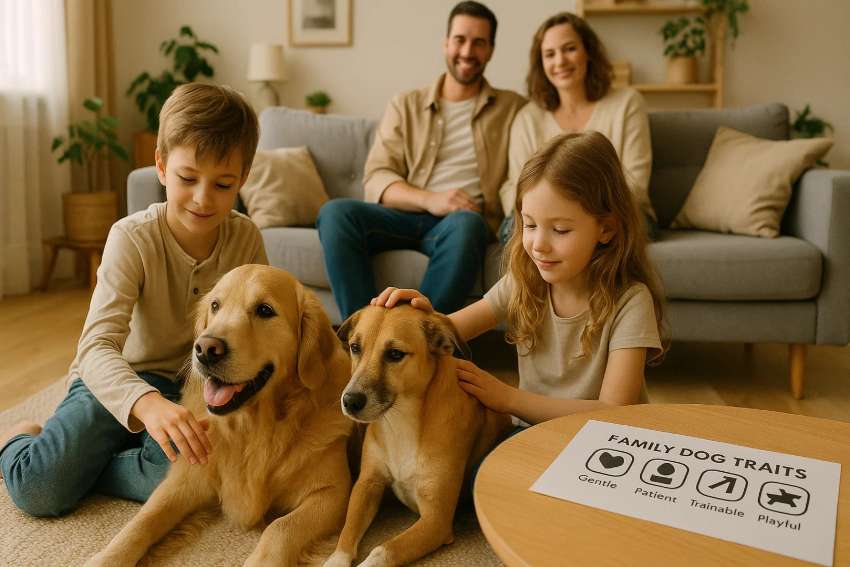
1. What Really Makes a “Family Dog” for Young Children?
Instead of starting with breed names, start with temperament traits. For busy homes with little kids, you usually want a dog that is:
Gentle and tolerant: not easily annoyed by noise, sudden movement or occasional clumsiness.
Stable and predictable: not overly nervous, reactive or explosive when startled.
People-focused: enjoys human company and wants to be part of family life.
Trainable: willing to learn basic manners, recall and house rules.
Physically sturdy: not so tiny that an accidental bump from a toddler is dangerous.
You should also consider:
Energy level: Will daily life with your kids naturally give the dog enough exercise, or will they need much more?
Grooming needs: Do you realistically have time and money for frequent brushing and professional grooming?
Size and space: Can your home, car and budget handle a large dog, or is a medium/small size more realistic?
2. Safety First: Non-Negotiable Ground Rules for Kids and Dogs
Before looking at breeds, it’s essential to accept one fact:
No breed is “100% safe” with children.
Good family dogs are created by management + training + supervision, not just genetics.
2.1 Supervision rules
Never leave young children alone with any dog, no matter how gentle.
Watch for signs of stress in the dog: licking lips, turning away, yawning, stiff posture, hiding.
Separate dog and child (baby gates, crates, safe rooms) when you can’t actively supervise.
2.2 Teaching kids to respect the dog
No pulling ears, tail or fur.
No climbing on the dog like a toy or horse.
No disturbing the dog while eating, chewing or sleeping.
Use gentle hands and quiet voices, especially around nervous or older dogs.
A great family dog is not the one who “puts up with anything”. It’s the dog whose needs are respected and whose stress signals are taken seriously.
3. Gentle, People-Loving Retrievers
When people imagine “family dogs”, they often think of retrievers – and there’s a reason why.
3.1 Golden Retriever
Why they’re often great for families:
Friendly, soft-natured and usually very people-oriented.
Generally patient with children when properly socialized.
Highly trainable and eager to please, which helps with manners.
Things to keep in mind:
Need daily exercise (walks, play, mental games) to avoid boredom.
Thick coat sheds a lot and needs regular brushing.
Some lines may be prone to joint and health issues; choose breeders carefully.
3.2 Labrador Retriever
Why they’re often great for families:
Friendly, outgoing and usually good with people of all ages.
Often tolerant of the noise and activity of children.
Smart and food-motivated, making training easier.
Things to keep in mind:
High energy; need real daily exercise and play.
Can be “mouthy” as youngsters – training and safe chew toys are essential.
Prone to weight gain if overfed and under-exercised.
4. Medium-Sized, Easygoing Companions
If you want a family-friendly dog that doesn’t take up the whole sofa, these medium-sized breeds and types are often a good fit.
4.1 Beagle
Why families like them:
Friendly and generally good with people.
Playful without being extremely large.
Short coat is easy to care for (but they do shed).
Watch-outs:
Strong nose and hunting instincts – can follow scents and wander off if not supervised.
Can be vocal (baying/howling), which may annoy neighbors.
Need patient, consistent training; can be a bit stubborn.
4.2 Cocker Spaniel (English or American)
Why families like them:
Affectionate, people-loving nature.
Typically enjoy gentle play and cuddles.
Manageable size for most homes.
Watch-outs:
Need regular grooming, especially ears and feathering.
Some lines can be more sensitive or reactive – good breeders and early socialisation are important.
4.3 Mixed-Breed “Family Dog” from a Shelter
Why this can be a fantastic option:
Adult shelter dogs may have known histories with children and other pets.
Staff and foster carers can tell you about temperament in real life, not just on paper.
You give a home to a dog who really needs one.
Watch-outs:
You may know less about genetic health and early socialisation.
Always arrange multiple meet-and-greets with kids present and ask lots of questions.
5. Small but Sturdy Breeds for Families
If your home or lifestyle suits a smaller dog, look for breeds that are robust enough for life around kids but still easy to handle.
5.1 Cavalier King Charles Spaniel
Why families like them:
Very people-oriented and affectionate.
Gentle, soft temperament when responsibly bred.
Small enough for apartments but not too fragile.
Watch-outs:
Serious health concerns exist in some lines (heart and neurological issues); choose breeders extremely carefully.
Need daily companionship; not a good choice if left alone all day.
5.2 Bichon Frise / Havanese
Why families like them:
Cheerful, social and usually love being with people.
Often good with respectful children.
Small size but typically not ultra-fragile like some toy breeds.
Watch-outs:
Coats need regular grooming and professional trims.
Can develop separation anxiety if never taught to be alone calmly.
5.3 Pug and similar companion breeds (with caution)
Why families like them:
Clownish, affectionate personalities.
Often very people-centered and tolerant.
Watch-outs:
Short-nosed (brachycephalic) breeds can have serious breathing and health issues.
May struggle in heat, with exercise, and can require higher vet bills over a lifetime.
If you consider such breeds, look for breeders who prioritize health and breathing over extreme looks.
6. Big Gentle Giants (For Space-Rich, Well-Prepared Families)
Some large breeds are famous for their “gentle giant” nature with children – but they also eat more, cost more and take up serious space.
6.1 Bernese Mountain Dog
Why families love them:
Calm, friendly, often very gentle with kids.
Generally people-focused and affectionate.
Watch-outs:
Shorter average lifespan compared with many smaller breeds.
Heavy shedding and large amounts of fur indoors.
Higher feeding and vet costs due to size.
6.2 Newfoundland
Why families love them:
Often extremely gentle and tolerant.
Calm nature once mature, good with respectful children.
Watch-outs:
Massive size – need space, sturdy floors, strong humans.
Lots of drool, heavy grooming needs and high running costs.
Big gentle dogs can be amazing with kids, but they’re rarely practical for small apartments or tight budgets.
7. Breeds That Are Often More Challenging for Homes with Young Kids
Any breed can be wonderful in the right hands – but some are more demanding or better suited to experienced owners without toddlers.
Very high-energy working and herding breeds (e.g. Border Collies, Malinois, some working-line German Shepherds) may become frustrated and reactive if they don’t get enough mental and physical work.
Terriers bred for independence and strong prey drive may be less tolerant of rough handling and may chase small pets.
Very tiny toy breeds can be physically fragile around clumsy toddlers.
None of this makes them “bad dogs” – just less forgiving in a noisy home with very young children and limited time for training.
8. How to Choose the Right Individual Dog (Not Just the Breed)
Once you narrow down your list of suitable breeds or mixes, focus on the actual dog in front of you.
8.1 Questions to ask breeders or rescues
“How does this dog react to noise, sudden movement and new people?”
“Has this dog spent time around children? How did they behave?”
“Are there any known fears or triggers we should be aware of?”
“What kind of daily exercise and mental stimulation does this dog need?”
8.2 Meet-and-greet tips
Meet the dog more than once if possible, in different settings.
Watch how the dog recovers from mild surprises or new situations.
Introduce children calmly, one at a time, and supervise closely.
8.3 Match energy and lifestyle
If your family loves hiking and outdoor adventures, a higher-energy breed may thrive.
If you live in a small flat and prefer quiet evenings, look for calmer, lower-energy types.
9. Final Thoughts: A Family Dog Is Built, Not Bought
The best family dogs for young children are not defined just by breed charts or popularity lists. They are dogs who:
Have a naturally gentle, stable temperament,
Are matched realistically to your home, time and budget, and
Grow up in a family that teaches kids and dog to respect each other’s boundaries.
Golden Retrievers, Labradors, many spaniels, sturdy small companions, gentle giants and well-chosen mixed-breed dogs can all be wonderful choices – in the right home, with the right preparation.
Take your time, ask honest questions, involve your children in learning how to behave around dogs, and think long-term. A well-chosen, well-supported family dog won’t just survive life with young kids – they’ll help your children grow up with empathy, responsibility and a very special four-legged friend.