Getting your first dog is exciting – and a little scary. You want a friendly, easy-going companion who will fit into your life without turning every day into a training challenge or a constant trip to the vet or groomer.
The truth is, no dog is truly “zero maintenance”. All dogs need time, training, exercise and money. But some breeds and types are more forgiving for beginners than others: easier to train, more stable in temperament, and simpler to care for.
In this guide, we’ll look at:
What “low-maintenance” and “easy to train” really mean
Beginner-friendly dog traits to look for
Specific breeds and types that often suit first-time owners
Breeds that are beautiful but more challenging for beginners
How to choose the right individual dog, not just the right label
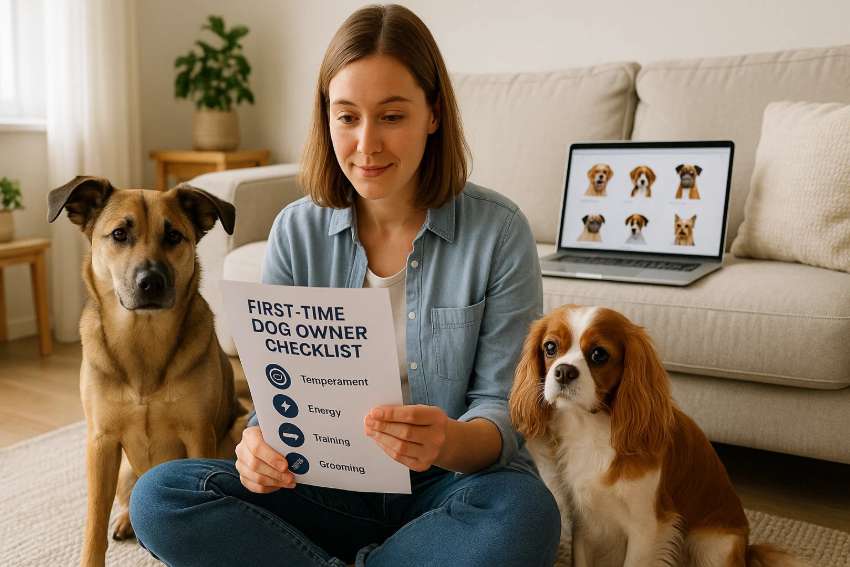
1. What “Low-Maintenance” Really Means (Reality Check)
When first-time owners say they want a “low-maintenance” dog, they usually mean:
Not extremely hyper or demanding
Reasonably easy to train basic manners
Coat that isn’t a constant grooming project
Stable, friendly temperament, not easily triggered or aggressive
But all dogs – even the easiest – still need:
Daily toilet breaks and basic exercise
Training for house manners and walking on leash
Regular vet care, parasite prevention and dental care
Company and mental stimulation (they are not furniture!)
So instead of “no effort”, think about dogs who are:
Forgiving of beginner mistakes
More relaxed than intense
More interested in pleasing humans than ignoring them
2. Traits That Make a Dog Beginner-Friendly
Before looking at breed names, focus on traits that tend to help first-time owners succeed:
2.1 Temperament traits
Stable and friendly: enjoys meeting people, not overly fearful or suspicious.
Low to moderate reactivity: doesn’t explode at every sound, passing dog or movement.
Gentle mouth: less likely to nip or grab hard in normal play.
2.2 Trainability and focus
Enjoys food or toys, so rewards work well.
Can focus long enough to learn basic cues (sit, stay, come, leave it).
Not bred to be extremely independent or stubborn.
2.3 Energy and lifestyle match
Moderate energy: happy with daily walks + play, doesn’t need constant intense activity.
Can live comfortably in your kind of home (apartment vs house, kids vs no kids, working hours).
2.4 Coat and grooming needs
Short or medium coats that need brushing but not complicated scissoring every month.
No extreme grooming requirements unless you’re genuinely happy to invest time and money.
3. Retriever-Type “Good Students” (With Enough Exercise)
If you’re active and don’t mind a larger dog, some retrievers can be wonderful for beginners – as long as you respect their need for exercise and training.
3.1 Labrador Retriever
Why they’re often good for first-time owners:
Friendly, people-loving and usually good with kids and other dogs.
Smart and food-motivated, so basic training often goes smoothly.
Short coat (but heavy shedding) – easy to wash, no complicated cuts.
What beginners must know:
High energy when young – they need real daily exercise and brain work.
Can be boisterous and “mouthy” without training.
Prone to weight gain if overfed and under-exercised.
3.2 Golden Retriever
Why they’re often good for first-time owners:
Gentle, affectionate nature with many families.
Usually eager to please and enjoy training.
Often tolerant of beginner mistakes if raised kindly.
What beginners must know:
Need daily physical and mental exercise – they are not lazy couch toys.
Longer coat means more brushing and cleaning (shedding and mud).
Choose health-focused breeders; some lines have serious inherited health issues.
4. Calm, Medium-Sized Companions
If you prefer something smaller than a retriever but still sturdy and friendly, these breeds are often good for first-time dog owners.
4.1 Whippet
Why they surprise people as great first dogs:
Gentle, sensitive and affectionate with their families.
Love a good sprint, then often become couch potatoes at home.
Short, low-maintenance coat.
What beginners must know:
Strong chase instinct – must be kept on leash or in secure areas.
Can be sensitive to cold; may need coats in winter.
Benefit from gentle, positive training (they don’t respond well to harsh handling).
4.2 Cocker Spaniel (English or American, well-bred)
Why they often work for beginners:
Affectionate, people-focused and usually eager to please.
Manageable size for most homes and cars.
Enjoy training and games but don’t usually need extreme exercise.
What beginners must know:
Need regular grooming and ear care.
Some lines can have more sensitive or reactive temperaments – choose breeder carefully and socialise early.
5. Small, Friendly Companions for First-Time Owners
If you live in an apartment or simply prefer a smaller dog, these breeds can be good choices as long as kids are gentle and rules are clear.
5.1 Cavalier King Charles Spaniel
Why they’re popular with beginners:
Very people-oriented, affectionate and gentle.
Moderate exercise needs – daily walks and play, but not extreme.
Good size for smaller homes and families who want a “lap dog plus”.
What beginners must know:
Serious inherited health issues are common (especially heart and neurological problems) – you must choose breeders who health-test.
Do not do well being left alone for long hours every day.
5.2 Bichon Frise / Havanese
Why they can be good first dogs:
Cheerful, social and usually friendly with visitors.
Often good with older, respectful children.
Small but not ultra-fragile like some toy breeds.
What beginners must know:
Coat requires regular brushing and professional grooming.
Can develop separation anxiety if never taught to relax alone.
5.3 Mixed-Breed Small Dog from a Rescue
Why this is worth considering:
Many adult small dogs in shelters or rescues have known personalities.
Staff can guide you: “This one is calm, cuddly, good with kids, low energy.”
Often already house-trained or partly trained.
What beginners must know:
Ask specifically for a first-time-friendly dog with a gentle nature.
Meet the dog several times and question the rescue about history and behavior.
6. Poodles and “Doodles”: Smart but Grooming-Heavy
Poodles (and many poodle mixes) are popular with first-time owners because they are:
Highly intelligent and trainable.
Often low-shedding, which can help with allergies.
Available in several sizes (Toy, Miniature, Standard).
But there’s a big catch: the curly coat.
They need very regular brushing and professional grooming.
Neglected coats quickly become matted and uncomfortable.
If you’re happy to invest in grooming (time and/or money) and enjoy training, a well-bred Poodle or carefully chosen doodle mix can be a fantastic first dog. If not, choose a simpler coat.
7. Beautiful but Challenging Breeds for First-Time Owners
Some breeds are amazing – in the right hands. But they are often a poor match for beginners because they need experienced training, huge amounts of exercise or very careful management.
High-drive herding and working breeds (e.g. Border Collies, Belgian Malinois, working-line German Shepherds):
Extremely intelligent and energetic.
Boredom can produce serious behavior problems.
Guarding and protection breeds (some mastiffs, certain shepherds):
Bred to be suspicious and protective.
Need skilled, consistent socialisation and management.
Very tiny toy breeds:
Physically fragile; easy for children to injure accidentally.
Can become anxious if handled roughly or constantly carried.
This doesn’t mean beginners can never succeed with these dogs – but the risk of frustration, behavior issues and rehoming is higher.
8. Puppy vs Adult: Which Is Easier for First-Time Owners?
Many first-time owners assume they “must” start with a puppy. In reality:
8.1 Puppies
Adorable, but a lot of work: toilet training, biting, chewing, socialisation.
Unpredictable: you’re shaping their personality from scratch.
Need several months of intense time and attention.
8.2 Adult dogs
Personality is mostly visible – you can see energy level, sociability, sensitivity.
Often already house-trained and past the biting/chewing baby stages.
Rescues can match you with dogs that fit first-time owners.
If your life is busy or chaotic, an easy-going adult dog can be far more “low-maintenance” than any puppy, no matter the breed.
9. A Simple Checklist for Choosing Your First Dog
Before you sign anything, run through this checklist:
Is this dog’s energy level a match for my real lifestyle, not my fantasy?
Can I afford grooming, food, vet bills and training for the next 10–15 years?
Does this breed/type have any serious health issues I should understand?
Have I met this specific dog at least once (preferably more), and seen them around people?
Do I have a plan for training (classes, online courses, time every day)?
What will this dog do for the 6–8 hours I’m at work or out of the house?
10. Final Thoughts: Choose With Your Head and Your Heart
The best dog breeds for first-time owners are not just “popular” or “cute” – they are dogs whose typical temperament and care needs match your real life.
Friendly retrievers, calm sighthounds like Whippets, many spaniels, small companion breeds like Cavaliers and Bichons, and well-matched mixed-breed dogs can all be great beginner choices – if you choose carefully and commit to training and care.
Let your heart fall in love, but let your head check:
Can I meet this dog’s needs every day?
Will this dog still fit my life 5 or 10 years from now?
If the answer is yes, you’re not just picking your “first dog” – you’re choosing a long-term partner who will teach you what it really means to share life with another species.