Chewing is normal dog behavior. Puppies chew to explore the world and relieve teething discomfort. Adult dogs chew to relax, relieve stress, and keep their jaws busy. The problem isn’t chewing itself—it’s destructive chewing: baseboards, shoes, couches, remote controls, door frames, and anything else your dog shouldn’t eat.
This guide explains why destructive chewing happens in puppies vs adult dogs, what actually works to stop it (and why), what doesn’t work (and can make it worse), and how to build a practical plan that protects your home while teaching your dog better habits.
1. Why Dogs Chew (Puppies vs Adult Dogs)
1.1 Puppies: Teething + Exploration
Puppies use their mouths like hands. During teething, chewing helps relieve gum soreness and helps baby teeth fall out.
Most common ages: chewing ramps up during early puppyhood and again during the main teething stage.
Common targets: furniture legs, cords, rugs, hands, shoes (they smell like you).
1.2 Adult Dogs: Stress, Boredom, Habit, or Anxiety
Adult dogs often chew destructively when their needs aren’t being met or when they’re stressed.
Boredom/under-enrichment: no outlets, long alone time, repetitive days.
Stress/anxiety: moving homes, schedule changes, noise, separation anxiety.
Overarousal: too much stimulation, not enough rest.
Habit: chewing is self-rewarding once it becomes routine.
2. Step One: Identify the “Chewing Pattern” (This Changes the Fix)
Before you buy more toys, answer these simple questions:
When does chewing happen? (when alone, evenings, after walks, during Zoom calls)
What gets chewed? (soft items, wood, plastic, door frames, trash)
Where does it happen? (near doors/windows, on the couch, in one room)
Is your dog eating pieces? (danger of obstruction)
Big clue: If destruction happens mainly when you leave, treat it like a separation-related issue, not a “toy shortage.”
3. What Works: The Most Effective Strategy (Management + Training + Outlets)
The fastest progress comes from using three pillars at the same time.
3.1 Management: Prevent “Practice” of Destruction
If your dog keeps getting opportunities to chew the couch, the habit becomes stronger. Management is not failure—it’s training support.
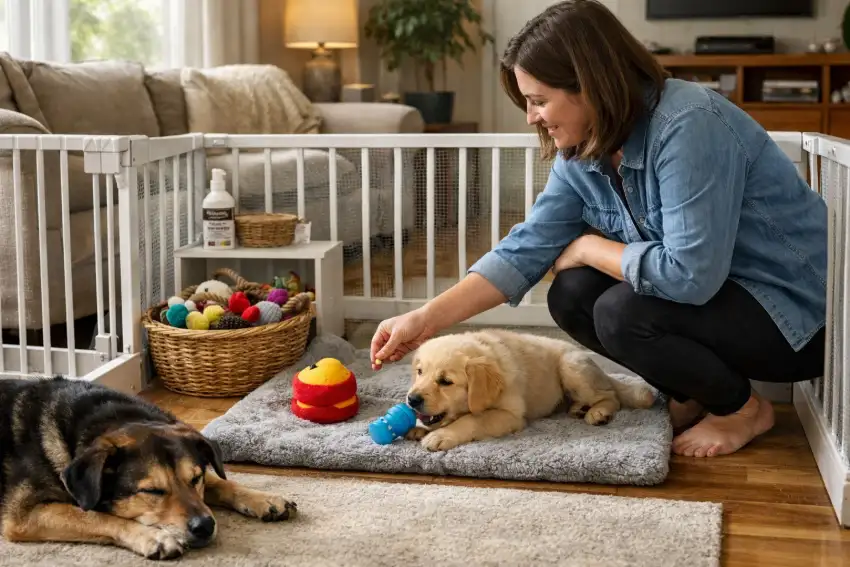
Use a crate or pen (if your dog is comfortable): especially for puppies and when you can’t supervise.
Puppy-proof one room: remove rugs, shoes, kids’ toys, and exposed cords.
Use baby gates: to block hallways and bedrooms.
Put tempting items away: shoes in a closed closet, remotes in a bin.
Safety note: If a crate causes panic, don’t force it. Use a safer confined area and focus on calm alone-time training.
3.2 Training: Teach “Chew This” and “Leave That”
Catch the right choice: reward your dog for chewing appropriate items.
Redirect early: if you see them approach a forbidden object, offer a legal chew.
Teach “drop it” and “leave it”: for faster interruption without a chase game.
3.3 Provide Better Chewing Outlets (Not More Toys)
Most dogs need 1–2 truly satisfying chew options daily, not a toy box full of forgotten items.
Rotate chews: keep novelty high by offering a few at a time.
Match chew to chew style: some dogs shred soft toys, others gnaw hard items.
Use food-based enrichment: stuffed toys and lick mats can help many dogs settle.
4. What Works for Puppies (Teething-Proof Plan)
4.1 Provide Gum-Soothing Chews
Soft rubber chew toys that can be chilled
Cold wet washcloth twisted and frozen (supervised)
Appropriate puppy chews sized for your pup
Tip: Offer a chew before your puppy starts hunting for furniture. Prevention beats interruption.
4.2 Supervision and Naps
Overtired puppies become bitey and destructive.
Use a nap schedule (many puppies need frequent naps)
When your puppy gets wild, it’s often “needs sleep,” not “needs more play”
4.3 Teach Gentle Mouth Habits
Redirect nipping to toys consistently
Reward calm chewing on appropriate items
Keep sessions short and positive
5. What Works for Adult Dogs (The Real Fix Depends on the Cause)
5.1 If It’s Boredom: Add Purposeful Enrichment
Sniff walks: slower, exploratory walks reduce stress and increase satisfaction.
Food puzzles: feed part of meals through enrichment to add “work” to the day.
Short training games: 5 minutes of training can reduce destructive behavior more than 30 minutes of chaotic play.
5.2 If It’s Anxiety (Including Separation Anxiety): Treat the Emotion
Chews alone won’t fix panic. You’ll need a plan that prevents full anxiety episodes and builds alone-time tolerance gradually.
Use a camera to confirm the pattern
Start with very short calm absences and build up slowly
Consider professional support early if destruction is severe
5.3 If It’s Under-Exercise: Add the Right Kind of Activity
More exercise helps, but the type matters.
Better: sniffing, training, and calm play that lowers arousal
Not always better: endless fetch that creates a “high-energy athlete” who can’t settle
6. What Doesn’t Work (Or Often Backfires)
6.1 Punishing After the Fact
Scolding when you find a chewed item doesn’t teach your dog what happened.
It often teaches your dog to hide chewing, or fear you near damaged items.
6.2 “Just Give More Toys” Without Structure
Dogs don’t automatically choose the right toy when stressed or teething.
Without supervision and rewards, they may keep choosing the couch.
6.3 Bitter Sprays as the Main Plan
They may help temporarily on a specific object, but they don’t teach a new habit.
Some dogs ignore them; some dogs chew around the spray zone.
6.4 Giving Very Hard Chews That Risk Tooth Fractures
Many owners try to stop destructive chewing by offering extremely hard items. This can lead to expensive dental injuries.
If a chew is hard enough that you can’t dent it with your fingernail, it may be too hard for many dogs.
6.5 Letting Your Dog “Cry It Out” With a Chew (If Panic Is the Problem)
Dogs with separation anxiety may refuse chews and still destroy doors/crates.
They need behavior support, not just distraction.
7. A Simple Step-by-Step Plan You Can Start Today
Step 1: Confine and puppy-proof to stop new damage this week.
Step 2: Choose 2–3 safe, satisfying chew options and rotate them daily.
Step 3: Reward your dog every time you see them chewing the right thing.
Step 4: Add one enrichment activity daily (sniff walk, food puzzle, short training).
Step 5: If chewing happens when alone, set up a camera and treat it as separation-related.
8. Safety and Vet Notes: When Chewing Is an Emergency
Chewing can become dangerous if your dog swallows pieces.
Emergency risks: string, socks, underwear, rubber pieces, corn cobs, bones, toys that break.
Red flags after chewing: repeated vomiting, no appetite, bloated belly, lethargy, straining to poop, or obvious abdominal pain.
If you suspect your dog swallowed something: call a veterinarian or emergency clinic promptly. Intestinal blockage can become life-threatening.
9. When to Get a Trainer or Behavior Professional
Get help sooner (not later) if:
Chewing is paired with panic, nonstop barking, or escape attempts when alone
Your dog is injuring themselves on crates/doors
Chewing is intense and daily despite management and enrichment
You suspect resource guarding or aggression around items
A good trainer can build a plan that fits your schedule and your dog’s triggers, and can help you avoid common mistakes that slow progress.
Final Thoughts: Stop the Damage First, Then Teach Better Habits
Destructive chewing improves fastest when you stop giving your dog chances to practice it, provide truly satisfying chew outlets, and reward the right choices every day. Puppies need teething support, structure, and naps. Adult dogs often need better enrichment, lower stress, or separation anxiety training. If you focus on the cause—not just the symptom—you’ll see real change.
Your action step: today, set up a “safe zone” and put 3 appropriate chew options on rotation. Then spend 3 minutes rewarding calm chewing on the right item. Those small reps build the habit that saves your furniture.