Raccoons are common in many neighborhoods across the US and parts of Europe, especially anywhere there’s easy food—trash bins, outdoor pet bowls, compost piles, fruit trees, or even bird feeders. Most of the time raccoons avoid people, but they can be dangerous to pets in the right (or wrong) situation. Conflicts usually happen when a dog rushes a raccoon, a cat corners one, or a raccoon feels trapped near food or babies.
This guide explains when raccoons are a real threat, what injuries and diseases to worry about, and practical steps to keep your dog or cat safe at home and on walks.
1. Are Raccoons Dangerous to Dogs and Cats?
They can be—mainly due to fights, bites/scratches, and disease exposure. Most raccoon encounters end with the raccoon running away, but you should treat any close contact as a safety issue.
Physical risk: raccoons have sharp teeth and claws and can seriously injure a pet, especially a cat or small dog.
Disease risk: raccoons can carry rabies in some areas, and they can spread parasites that affect pets.
Behavior risk: a cornered or food-guarding raccoon is more likely to fight than flee.
2. Situations That Increase Risk (The “Most Likely to Go Wrong” Moments)
Raccoons are usually active at dusk, night, and early morning—exactly when many dogs go out for last potty breaks.
Nighttime potty trips: low visibility and surprise encounters near bushes or dumpsters.
Food around the yard: outdoor pet bowls, unsecured trash, compost, fallen fruit.
Cornering: a cat under a porch or a dog trapping a raccoon near a fence.
Raccoon moms with babies: defensive behavior if a pet approaches a den.
Off-leash dogs: they can chase and escalate conflict fast.
3. What Can Happen in a Fight?
Even a short scuffle can lead to injuries and infections.
Bite wounds: punctures can look small but become infected quickly.
Scratches: can damage eyes and face, especially in cats.
Abscesses: common after animal fights, sometimes appearing days later.
Fear and reactivity: dogs may become more reactive on walks after a scary encounter.
4. Disease and Parasite Risks (What Pet Owners Should Know)
You don’t need to panic, but you should be informed—especially if your pet had any physical contact or could have been bitten.
4.1 Rabies (High-Stakes, Even If Rare)
Rabies is the biggest “don’t mess around” risk because it’s fatal once symptoms start. The actual risk depends on your region, vaccination rates, and wildlife patterns.
Most important prevention: keep your dog or cat’s rabies vaccine up to date as required in your area.
Red flag behavior in raccoons: unusually friendly approach, disorientation, staggering, seizures, aggression without clear cause, or being active in bright daytime without obvious reason.
4.2 Parasites: Fleas, Roundworms, and More
Fleas: raccoons can carry fleas that spread to pets and your home.
Intestinal parasites: raccoon feces can contain parasites that may infect dogs (and rarely people).
Tick exposure: raccoon habitats overlap with tick habitats, increasing risk on walks.
Practical prevention: keep your pet on vet-recommended parasite prevention and avoid letting pets sniff or roll in unknown feces.
5. How to Keep Your Dog Safe (Simple, Practical Steps)
5.1 Night Walk and Yard Habits
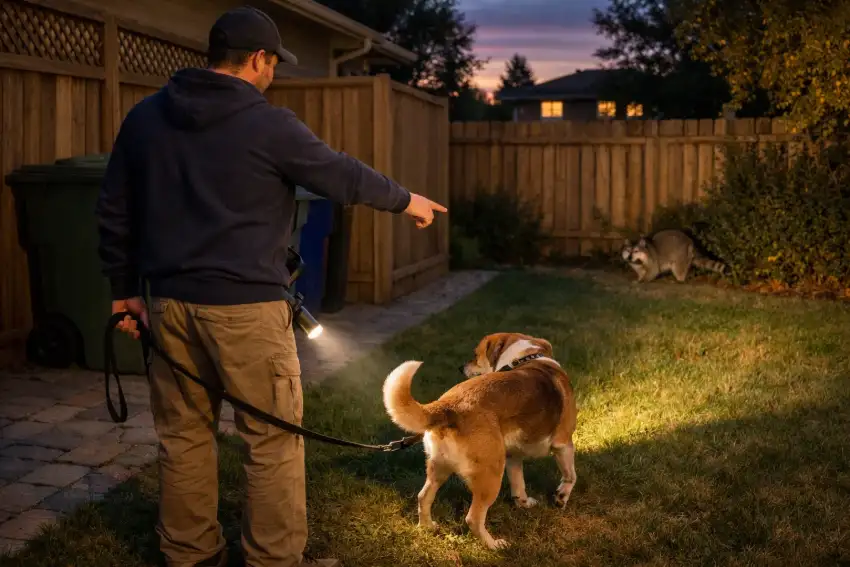
Use a leash at night: even in your own yard if raccoons are common.
Use a flashlight: scan bushes, fences, and around trash bins.
Short, boring potty trips: less wandering reduces encounter chance.
5.2 Manage Food and Trash
Bring pet food bowls inside (especially at night)
Use raccoon-resistant trash cans or secure lids with a latch
Clean up fallen fruit and cover compost
Limit birdseed spills (bird feeders attract raccoons indirectly)
5.3 Train Two Safety Cues
“Leave it”: so your dog stops investigating wildlife or feces.
Emergency U-turn cue (“this way!”): so you can quickly create distance if you spot a raccoon.
Why this matters: prevention is mostly about control and distance.
6. How to Keep Your Cat Safe
Outdoor cats are at higher risk of raccoon conflict, especially near feeding areas or shelters.
Keep cats indoors at night: dusk-to-dawn reduces wildlife encounters dramatically.
Don’t leave food outside: it attracts raccoons and increases territorial conflict.
Use secure cat enclosures (“catios”): if your cat needs outdoor time.
Check vaccination and parasite prevention: especially rabies and flea/tick control.
7. What to Do If Your Pet Encounters a Raccoon
7.1 If You See a Raccoon (No Contact)
Stay calm and avoid approaching
Leash your dog and increase distance
Go inside if the raccoon is in your yard
7.2 If There Was a Fight or Bite/Scratch
Separate safely: don’t grab your dog’s collar near a fight (risk of redirected bites); use loud noise or water if needed.
Check for wounds: look under fur and around face/legs.
Clean superficial wounds: rinse with clean water if safe to do so.
Call a vet promptly: bite wounds often need antibiotics and proper assessment.
Important: If your pet may have been bitten by wildlife, treat it as urgent—especially if rabies vaccination status is unclear.
8. When to See a Vet Immediately (Red Flags After an Encounter)
Any bite or deep scratch (even small punctures)
Limping, swelling, heat, or pain that worsens over 24–48 hours
Eye injuries (squinting, pawing at eye, redness)
Lethargy, fever, not eating, or sudden behavior changes
Any concern about rabies exposure (especially if vaccination is not current)
Final Thoughts: Most Raccoons Avoid Pets—But Smart Prevention Matters
Raccoons can be dangerous to pets mainly through fights, bite wound infections, and disease exposure. The best protection is simple: keep vaccines and parasite prevention current, avoid leaving food outdoors, use a leash and light at night, and train “leave it” plus an emergency U-turn. If your pet has any physical contact with a raccoon, take it seriously and contact your veterinarian promptly.
Your action step: tonight, remove any outdoor pet food and do your last potty trip on leash with a flashlight. Those two habits alone prevent most raccoon conflicts.