Chewing is a normal dog behaviour – but when your puppy destroys every shoe or your adult dog eats the sofa, it becomes a serious problem. Many owners in the US and Europe feel frustrated and embarrassed when guests see shredded cushions or chewed door frames.
The good news: with the right mix of management, training and enrichment, most destructive chewing can be greatly reduced. This guide explains:
Why dogs chew (puppies vs adult dogs)
Which chewing is normal and which is a red flag
How to protect your home while you train
Step-by-step ways to teach your dog what they can chew
What absolutely does not work (and may make things worse)
1. Why Dogs Chew: Normal vs Problem Behaviour
To fix destructive chewing, you first need to understand why it’s happening. Common reasons include:
1.1 Normal reasons for chewing
Teething in puppies (3–6 months):
Puppies chew to relieve gum discomfort and explore the world.
Jaw exercise and stress relief:
Chewing releases feel-good chemicals in the brain and helps dogs relax.
Exploring textures and tastes:
Many young dogs simply enjoy testing different objects – wood, fabric, plastic, leather.
1.2 Problem reasons for chewing
Boredom and lack of exercise:
Dogs left alone all day with nothing to do often “invent” entertainment – like eating the couch.
Separation anxiety or stress:
Dogs with anxiety may chew doors, windows or crates when their person leaves.
Frustration or lack of training:
The dog simply doesn’t know the difference between a chew toy and a shoe.
Medical issues:
Dental pain, nausea or other health problems can cause unusual chewing in adult dogs.
Chewing itself is not “bad” – but you must channel it into safe, appropriate objects and address any underlying stress or pain.
2. Puppy Chewing: Surviving the Teething Phase
Puppies chew a lot. This is normal and temporary, but it can still be destructive if you don’t manage it.
2.1 Puppy-proof your home
Keep shoes, socks, remote controls, chargers, children’s toys and bags out of reach.
Use baby gates to block access to certain rooms.
Hide electrical cables in covers or behind furniture.
2.2 Provide a variety of safe chew options
Soft rubber toys for young puppies.
Durable rubber toys (like KONG-type toys) for stronger chewers.
Food-stuffed toys (frozen wet food, puppy-safe paste) to keep them busy longer.
Always supervise new chews and follow your vet’s advice about bones and hard chews.
2.3 Teach what’s allowed: “Toy, not shoe”
If your puppy picks up something they shouldn’t:
Stay calm – don’t chase (it can turn into a fun game).
Offer a swap: show them a high-value treat or toy.
Say “Thank you” or “Drop it”, take the forbidden item, and give them the chew instead.
Repeat many times so your puppy learns: “Chew this, not that.”
For puppies, the real “fix” is a mix of management, redirection and time. They grow out of the worst chewing if you guide them correctly.
3. Destructive Chewing in Adult Dogs: What It Often Means
When an adult dog suddenly starts chewing destructively, or never grows out of chewing everything, it’s time to look deeper.
3.1 Boredom and under-stimulation
Does your dog get:
Enough physical exercise (walks, play)?
Enough mental stimulation (training, sniffing, puzzle toys)?
Healthy adult dogs need more than just one quick walk and then sleeping all day.
3.2 Separation-related distress or anxiety
Chewing focused on:
Doors, door frames, window areas
Crate bars or edges
Often combined with:
Whining, howling or barking when left alone
House-soiling only when you’re gone
In this case, the chewing is a symptom of emotional distress, not “naughtiness”. You’ll need to address the anxiety itself (see your vet and a trainer/behaviourist).
3.3 Medical causes
Sudden, unusual chewing in an adult dog can be linked to:
Dental pain or discomfort
Gastrointestinal problems
Neurological issues or cognitive decline in seniors
If you’re unsure, always check with your vet first.
4. Protect Your Home: Management That Actually Works
Training takes time. In the meantime, protect your dog and your furniture with smart management.
4.1 Use confinement wisely
Crates:
Great for many dogs if introduced slowly and positively.
Choose the right size (can stand, turn around and lie down comfortably).
Never use a crate to “punish” chewing – it should feel like a safe den.
Playpens or dog-proof rooms:
Ideal for dogs who don’t like crates or need a bit more space.
4.2 Chew-proof zones
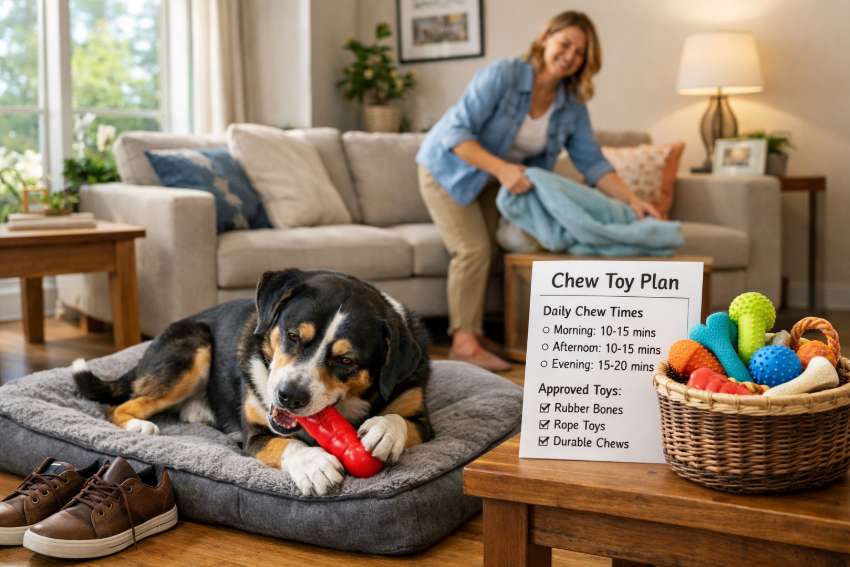
Set up an area with:
Safe chew toys and food puzzles
Comfy bed or mat
Water bowl
Remove tempting items (shoes, cushions, remote controls) from that zone completely.
4.3 Taste deterrent sprays (with caution)
Bitter sprays can sometimes reduce chewing on furniture or cords.
They’re not magic – they work best alongside training and providing alternatives.
Always test on a small hidden area first and follow product instructions.
5. Training: Teach Your Dog What to Chew
Management prevents damage. Training teaches your dog new habits.
5.1 Make chew toys amazing
Rotate toys so they stay interesting.
Stuff toys with food:
Wet dog food, soaked kibble, mashed banana, a little peanut butter (xylitol-free).
Freeze stuffed toys to make them last longer and soothe teething puppies.
5.2 “Chew this, not that” routine
When you see your dog pick up an allowed chew:
Calmly praise: “Good chew!” and give a treat or a gentle rub.
When they pick up something forbidden:
Don’t shout or chase.
Offer a swap: “Drop it” → treat → give chew toy.
Over time, your dog learns that chew toys = rewards and attention, while other objects are boring or unavailable.
5.3 Teach “leave it”
Hold a treat in your closed hand. Let your dog sniff, lick or paw.
As soon as they stop trying and move their head away even slightly, say “Yes!” and give a different treat from your other hand.
Add the cue “Leave it” just before you present your closed hand.
Practice with safe objects on the floor, rewarding your dog for choosing to ignore them.
“Leave it” is extremely useful for stopping your dog from grabbing shoes, cables, or random trash on walks.
6. Destructive Chewing When Home Alone
If your dog only chews when you’re out, ask:
Is this boredom (chewing random objects)?
Or anxiety (targeted chewing near doors/windows, plus vocalisation)?
6.1 For boredom chewers
Increase physical exercise before you leave (walk or play).
Use “meal toys”:
Give breakfast inside food puzzles and stuffed toys, not just a bowl.
Leave a safe variety of chew toys in their confined area.
Rotate toys daily so they don’t become boring.
6.2 For anxious chewers
Look for other anxiety signs (howling, pacing, drooling).
Talk to your vet and consider working with a behaviour professional.
Use gradual alone-time training rather than just “hoping they get used to it”.
Treating destructive chewing from anxiety is really about treating the anxiety itself, not just blocking access to objects.
7. What Definitely Does Not Work (and Can Make Things Worse)
Some “traditional” advice still circulates online – but it’s outdated and harmful.
7.1 Rubbing their nose in the damage
Dogs do not understand this as “punishment for chewing”.
They only learn that you are scary around destroyed objects, which can:
Damage your bond
Make them hide chewing or other behaviour from you
7.2 Punishing after the fact
If you come home and find a destroyed shoe, the chewing happened long ago.
Scolding now does not connect to the past act in your dog’s mind.
They may look “guilty”, but that is usually fear of your angry body language, not real understanding of cause and effect.
7.3 Harsher collars or physical corrections
Choke chains, prong collars or hitting do not teach what to chew – they just add fear and pain.
Fearful dogs often become more anxious, which can increase stress-related chewing.
Modern, science-based training focuses on prevention, redirection and positive reinforcement, not punishment.
8. When to See a Vet or Behaviour Specialist
Get professional help if:
Your dog is damaging doors, walls or crates badly and may hurt themselves.
Destructive chewing started suddenly in an adult dog with no clear reason.
You see signs of anxiety, fear or other behaviour issues alongside chewing.
Management and basic training have not improved things after a few weeks of consistent effort.
A vet can:
Check for dental pain, illness or age-related changes.
Discuss whether calming medication or supplements might help in severe anxiety cases.
A qualified trainer or behaviourist (who uses positive methods) can:
Assess whether this is boredom, anxiety, or something else.
Design a personalised plan that fits your home and schedule.
9. Quick Checklist: What Works vs What Doesn’t
9.1 Things that WORK
Puppy-proofing and dog-proofing your home
Providing plenty of appropriate chew toys (and making them fun)
Using crates, pens or dog-safe rooms to limit access when you’re gone
Swapping forbidden objects for chew toys instead of chasing and yelling
Increasing exercise, play and mental enrichment
Addressing separation anxiety or medical issues with professional help
9.2 Things that DON’T work
Punishing your dog after you find the damage
Rubbing their nose in chewed items
Leaving tempting objects around and hoping they “learn” not to touch them
Relying only on bitter sprays without training or alternatives
Ignoring signs of stress, fear or pain
10. Final Thoughts: Chewing Is Normal – Destruction Doesn’t Have to Be
Chewing is part of being a dog, at every age. Your goal is not to stop chewing completely – it’s to:
Meet your dog’s natural chewing needs in safe ways
Protect your home with smart management
Teach clear rules: “Chew this, not that”
With patience, consistency and a bit of creativity, you can turn a “furniture destroyer” into a dog who happily works on their own toys and chews – while your shoes and sofa stay intact.