Many people in the US and Europe reach the same question when they’re ready for a pet: “Should I get a dog or a cat – and which one will cost less?”
Both dogs and cats bring huge emotional value, but they also bring long-term financial responsibility. Over 10–15 years, the difference in total cost can be thousands of dollars or euros depending on species, size, lifestyle and your own choices.
In this guide, we’ll compare dogs vs cats from a money perspective, including:
First-year costs: adoption, vaccines, basic supplies
Typical yearly costs for adult dogs and cats
Food, litter, vet care, grooming, training and pet sitting
How lifestyle (city vs rural, indoor vs outdoor) changes the numbers
Which pet is usually cheaper – and when that might not be true
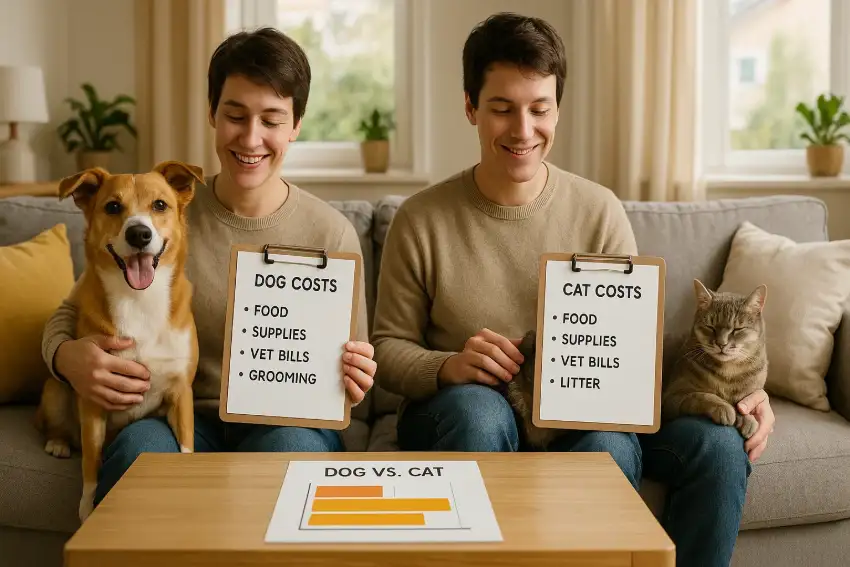
1. First-Year Costs: Puppy vs Kitten vs Adult Adoption
The first year with any new pet is usually the most expensive. You’re paying for setup, vaccines and often spay/neuter surgery.
1.1 Adoption and purchase fees
Dogs: Adoption fees for dogs are often higher than for cats, especially for popular small or young dogs. Buying from a responsible breeder usually costs significantly more.
Cats: Cat adoption fees are usually lower, and many shelters include initial vaccines, deworming and microchipping. Buying purebred kittens from reputable breeders can still be expensive, but there is often more affordable choice in shelters.
1.2 Starter supplies
Both dogs and cats need basic supplies in the first weeks:
Bed, bowls, brushes and nail clippers
Collar, ID tag and possibly a harness (especially for dogs)
Carrier for vet trips and travel
Toys and simple enrichment items
Dogs usually need extra items:
Leash and long line
Crate or puppy pen
Puppy pads and more training tools
Cats need:
Litter box, litter scoop and litter
Scratching posts or boards
Overall, first-year setup for a dog often costs more than for a cat, especially if you invest in crates, gates and more training equipment.
1.3 First-year vet care
For both dogs and cats, the first year usually includes:
Initial vaccination series and boosters
Spay/neuter surgery (if not already done)
Parasite prevention (fleas, ticks, worms)
Microchipping and registration (where required)
However:
Dog vaccines and surgeries are often more expensive, especially for larger breeds.
Cat procedures are usually cheaper because cats are smaller and require lower doses of drugs.
In the first year, the average dog almost always costs more than the average cat.
2. Ongoing Costs: Dogs vs Cats in a “Normal” Year
After the first year, costs settle into a more predictable pattern – but dogs and cats still differ.
2.1 Food
Dogs: Food costs depend heavily on size. A small dog might be quite cheap to feed, while a large dog can be one of your biggest monthly expenses. Higher-quality food costs more but can support better health.
Cats: Even though good-quality cat food is not “cheap”, cats eat less and don’t vary in size as dramatically. Indoor cats on balanced rations can be relatively affordable to feed.
In general, dogs cost more in food, especially medium and large breeds.
2.2 Litter vs outdoor toileting
Cats: Indoor cats require litter for their entire lives. Litter is a significant recurring cost that dog owners don’t face.
Dogs: Dogs toilet outdoors, so there is no litter cost – but you may spend more on poop bags and cleaning products.
A cat’s yearly litter bill can partly offset the dog’s higher food bill. Still, for medium and large dogs, food usually remains more expensive than cat food + litter combined.
2.3 Routine vet care
For healthy adults, both dogs and cats need:
Regular check-ups
Vaccine boosters as recommended
Flea, tick and worm prevention depending on lifestyle and region
However:
Dog treatments (especially for large dogs) often cost more because doses are based on body weight.
Cats, particularly indoor-only cats, may need slightly fewer parasite treatments than dogs that go outside daily.
Routine vet care is therefore typically more expensive for dogs, especially large ones, though some outdoor cats may generate more costs due to fights and accidents.
2.4 Pet insurance
Dogs: Insurance premiums are usually higher, especially for purebred, large or high-risk breeds.
Cats: Cat insurance tends to be more affordable with similar coverage limits and reimbursement rates.
If you plan to insure your pet, dogs will usually add more to your monthly budget than cats.
2.5 Grooming
Dogs: Some breeds need regular professional grooming (poodle mixes, long-haired and curly-coated breeds), which can be a major yearly expense. Short-haired dogs are cheaper if you can handle basic baths and brushing at home.
Cats: Many short-haired cats require only basic brushing at home. Long-haired cats may need professional help if mats form, but overall professional grooming costs for cats are often lower than for many dog breeds.
Grooming is one area where cats are usually cheaper, unless you have a heavy-maintenance long-haired cat.
2.6 Training and behavior
Dogs: Almost all dogs benefit from group classes for basic obedience and socialization, and some need ongoing training or behavior support. This is a non-trivial cost but pays off in fewer problems.
Cats: Cats rarely go to formal training classes. Some may need behavior help for issues like inappropriate urination or aggression, but it’s less common to pay for structured training.
Training is therefore another category where dogs tend to cost more.
2.7 Walking, daycare and pet sitting
Dogs: Many owners pay for dog walkers if they work long hours, or for daycare during busy periods. Boarding kennels for holidays can be expensive, especially for large dogs or those with special needs.
Cats: Most cats are fine with a sitter visiting once or twice a day, or a friend staying in your home. Full-time boarding is needed less often, and costs per day are usually lower.
Lifestyle services (walking, daycare, boarding) can make dog ownership noticeably more expensive than cat ownership for people who travel or work long hours outside the home.
3. Senior Years and Medical Costs: Dogs vs Cats
As pets age, vet costs often increase for both species – but there are some differences.
3.1 Lifespan patterns
Dogs: Lifespan varies widely by size and breed. Small dogs can live as long as many cats, while giant breeds often have shorter lives but may develop health issues sooner.
Cats: Indoor cats commonly live 14–18 years or more, meaning more years of senior care – but each year’s cost may still be lower than for many dogs.
3.2 Typical senior health issues
Senior dogs: Arthritis, heart disease, cancer, endocrine disorders and dental disease are common. Medications and special diets for large dogs can be costly.
Senior cats: Chronic kidney disease, hyperthyroidism, diabetes, dental disease and arthritis are frequent issues. Ongoing medication and special diets add to yearly costs.
In both cases, senior pets are more expensive than healthy adults. However, because dog medications and procedures are often more expensive, the senior phase of a dog’s life can still cost more per year than a cat’s, especially for large dogs.
4. Lifestyle Factors That Change the Comparison
The basic rule “dogs cost more than cats” is often true, but your personal situation can tip the balance.
4.1 Space and housing
In big cities, dog-friendly apartments may require higher rent, deposits or “pet rent”.
Cats are generally more accepted in smaller spaces and may be easier to keep quietly in apartments.
4.2 Time and work schedule
If you work long hours away from home, you might pay for dog walkers or daycare – but probably not for a cat.
If you work from home and enjoy long walks, a dog may not create extra service costs.
4.3 Outdoor access and risk
Outdoor cats can incur more costs from injuries, infections and traffic accidents.
High-risk adventure dogs (hiking, running, sports) might also have more injuries than a calm indoor cat.
4.4 Your own priorities
Choosing ultra-premium food, frequent grooming and many paid services for a cat could easily make that cat more expensive than someone else’s simple-lifestyle dog.
Two or three cats may cost the same as one large, well-insured dog, depending on your choices.
5. Quick Category-by-Category Comparison
Here is a simplified way to think about it:
First-year costs: Dogs > Cats (especially puppies vs kittens)
Food: Dogs > Cats (particularly medium/large dogs)
Litter: Cats > Dogs (dogs don’t use litter)
Routine vet care: Dogs > Cats (larger bodies, more medication)
Insurance: Dogs > Cats (higher premiums)
Grooming: Often Dogs > Cats (except very high-maintenance cat coats)
Training and services: Dogs > Cats (classes, walking, daycare, boarding)
For a typical small/medium dog and a typical indoor cat in the US or Europe, the dog will almost always cost more per year, sometimes significantly more. The gap gets even larger with big dogs.
6. So… Which Pet Is Cheaper Overall?
If you’re looking purely at money:
A single indoor cat is usually cheaper to own than a small or medium dog over a similar lifespan.
Large dogs cost the most, especially once you add food, medications, insurance and possible joint issues.
Multiple cats vs one dog can equalize or even reverse the comparison depending on how many cats and what services you use.
But “cheaper” is not the same as “better”. When choosing between a dog and a cat, ask:
How much time do I have each day for walks, training and play?
Am I more of a “go outside with a companion” person or a “quiet home buddy” person?
Can I realistically afford this animal for 10–15 years, including emergencies and senior care?
If your budget is limited and you still want a pet, a cat (especially adopted from a shelter) is often the more affordable choice. If your heart is set on a dog, a smaller mixed-breed from a shelter with a simple lifestyle will usually be cheaper than a large, high-maintenance purebred with many services and activities.
7. Final Thoughts: Choose With Both Heart and Calculator
Dogs and cats both bring huge emotional value, but they’re not “free love”. They are multi-year financial commitments in the US and Europe – food, vet care, insurance, housing, and more.
When you:
Compare dog vs cat costs honestly,
Look at your own lifestyle and income, and
Build a simple pet budget and emergency plan,
you’re not being cold – you’re being responsible. That responsibility allows you to give your future dog or cat a life that is not just loving, but also secure and sustainable.
In the end, the “cheapest” pet is the one you can care for properly without constant financial stress. Choose the species, size and lifestyle that fits your real life, not just your Instagram dreams, and both your heart and your bank account will thank you.