Halloween is fun for people—but for many pets it’s a perfect storm of stress and hazards: doorbells ringing nonstop, strangers in masks, excited kids running through the house, open doors, and candy everywhere. Add costumes that can irritate skin or restrict breathing, and Halloween can quickly turn from cute photos to an emergency vet visit.
This guide covers practical Halloween safety tips for dogs and cats, including costume rules, candy and toxin risks, and a realistic plan for managing doorbell stress and escape attempts.
1. The 3 Biggest Halloween Risks for Pets
Candy and food toxins: chocolate, xylitol products, wrappers, and fatty treats.
Escape and door-dashing: frequent door opening + excited visitors increases runaway risk.
Stress and fear: doorbell sounds, costumes/masks, and chaotic energy can trigger anxiety or aggression.
2. Costume Safety: What Works and What Doesn’t
A safe costume should feel like a comfortable harness—not a restriction.
2.1 Costume Safety Checklist
Breathing and movement: your pet can pant freely and walk normally.
No tight neck or chest pressure: avoid anything that compresses the throat or chest.
Secure but not constricting: it stays on without digging into skin.
No small pieces: buttons, beads, and dangling parts can be chewed and swallowed.
Safe fabric: not itchy, not irritating, and not overheating.
2.2 Signs Your Pet Hates the Costume
Freezing, refusing to move, or hiding
Pawing at the face or body repeatedly
Heavy panting, drooling, wide eyes
Growling or snapping when you adjust it
Rule: If your pet looks uncomfortable, skip the costume. A bandana or themed collar tag is often safer and still cute.
2.3 Practice Before Halloween Night
Try the costume for 1–3 minutes indoors
Reward with treats and praise
Increase duration gradually if your pet stays relaxed
3. Candy, Chocolate, and Dangerous Treats
Halloween candy is one of the most common seasonal reasons pets end up at emergency clinics.
3.1 The Biggest Candy Hazards
Chocolate: dangerous in many amounts for dogs and can cause vomiting, diarrhea, agitation, and worse.
Xylitol products: some sugar-free gum, candy, and baked goods can be extremely dangerous for dogs.
Raisins/grapes: sometimes found in snack mixes and can be dangerous to dogs.
Fatty foods: rich leftovers can trigger severe GI upset and pancreatitis in some dogs.
3.2 Wrappers and Candy Bags
Foil and plastic wrappers can cause choking or blockage.
Candy bags themselves can be chewed and swallowed.
3.3 Safe Candy Storage Rules
Keep candy in a closed cabinet, not on a counter
Use a lidded container, not an open bowl
Remind kids to keep candy in backpacks or high places
4. Doorbell Stress: How to Keep Your Dog Calm (Step-by-Step Plan)
Many dogs bark, panic, or guard the door on Halloween. Your goal is to reduce arousal, prevent rehearsing, and keep everyone safe.
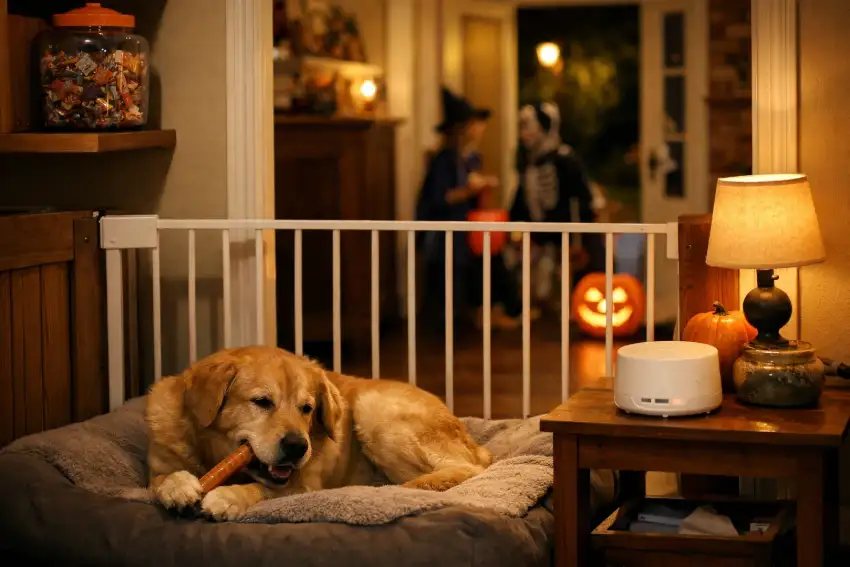
4.1 Set Up a “Safe Room” Before Trick-or-Treat Starts
Choose a quiet room away from the front door
Add a comfortable bed, water, and a long-lasting chew
Use white noise or calming music to mask door sounds
Close curtains if your dog reacts to movement outside
4.2 Use a Physical Barrier
Baby gate the hallway, or keep the safe room door closed
This prevents door-dashing and reduces barking practice
4.3 Train a Simple “Place” Routine (Even a Quick Version Helps)
Teach “go to bed” on calm days with treats
On Halloween, send your dog to the bed before opening the door
Reward for staying there while visitors appear
4.4 If Your Dog Is Very Reactive
Keep them fully separated in the safe room during peak hours
Do short potty breaks away from front-door traffic
Skip “introductions” to costumed strangers
5. Cat Safety: The Halloween Risks Are Different
Cats often hide during Halloween, which is normal. The biggest dangers are open doors and accidental escapes.
Keep cats indoors: ideally in a closed room during trick-or-treat hours.
Check before opening doors: cats may dart out silently.
Decorations risk: string, fake cobwebs, and dangling items can be swallowed.
Stress reduction: provide hiding spots, litter, water, and quiet.
6. Decorations and Household Hazards
Candles and jack-o’-lanterns: open flames + wagging tails are a risky mix.
Glow sticks: chewing can cause mouth irritation and drooling.
Electrical cords: especially with excited puppies.
Fake spiderwebs and string: can cause GI blockage if swallowed.
7. If Your Pet Eats Candy or a Wrapper: What to Do
Don’t wait for symptoms if you know your pet ate something risky.
Remove remaining candy: prevent more ingestion.
Identify what was eaten: chocolate type, amount, xylitol product, wrapper size, time.
Call a veterinarian or emergency clinic promptly: early guidance matters.
Watch for symptoms: vomiting, diarrhea, restlessness, tremors, weakness, abdominal pain.
Important: Wrappers and bags can cause obstruction even if the candy itself was not highly toxic.
8. A Simple Halloween Night Checklist (Dog and Cat Friendly)
Pets in a safe room with water + chew
Baby gate or closed doors to prevent escapes
Candy stored in a closed cabinet
No open flames at pet level
Leash handy for controlled potty breaks
ID tag and microchip info up to date (just in case)
Final Thoughts: Make Halloween Calm and Boring for Your Pet
The safest Halloween for pets is often the least exciting one: a quiet room, predictable routine, and zero access to candy. If your dog struggles with doorbell stress, don’t push them to “meet” visitors—set them up to succeed with separation, white noise, and a chew. A few simple steps prevent the most common Halloween emergencies and keep everyone happier.
Your action step: before Halloween night, set up your safe room and practice a short “go to bed” routine for 2–3 minutes a day. That small practice can save you a lot of chaos later.