For many dogs and cats, fireworks aren’t “just loud noises”—they can feel like unpredictable danger. New Year’s Eve and Independence Day are especially tough because fireworks often start earlier than expected, last for hours, and can happen multiple nights in a row. The result can be shaking, hiding, nonstop barking, destructive behavior, or even pets escaping through doors and fences.
This guide gives you a realistic preparation plan: what to do days ahead, how to set up your home on the night, which calming tools actually help, and when to talk to your veterinarian about stronger support.
1. Why Fireworks Are So Hard for Pets
Fireworks combine the worst triggers for many animals: sudden bangs, flashing light, vibrating windows, strange smells, and unpredictability. Pets also pick up on human tension, which can add to the stress.
Unpredictable timing: your pet can’t “get used to it” if it starts and stops randomly.
Vibration + echoes: indoor sound can be amplified by walls and windows.
Multiple senses triggered: sound, light, smell, and motion all at once.
2. Which Pets Are Most at Risk?
Dogs with noise phobias: previously scared by storms, fireworks, construction, or door slams
Rescue pets: unknown history can make fear responses stronger
Senior pets: may have increased anxiety or sensory changes
Pets with separation anxiety: fireworks can trigger panic when alone
Cats who bolt: cats are masters at escaping through tiny gaps when startled
3. Preparation 7–14 Days Before: The Best Time to Start
Even if fireworks are “soon,” doing a few steps now will help.
3.1 Update ID and Escape-Proof Your Setup
Check that your pet’s collar ID tag is readable and current
Confirm microchip details are up to date
Inspect fences and gates for gaps
Replace worn leashes, harnesses, and clips
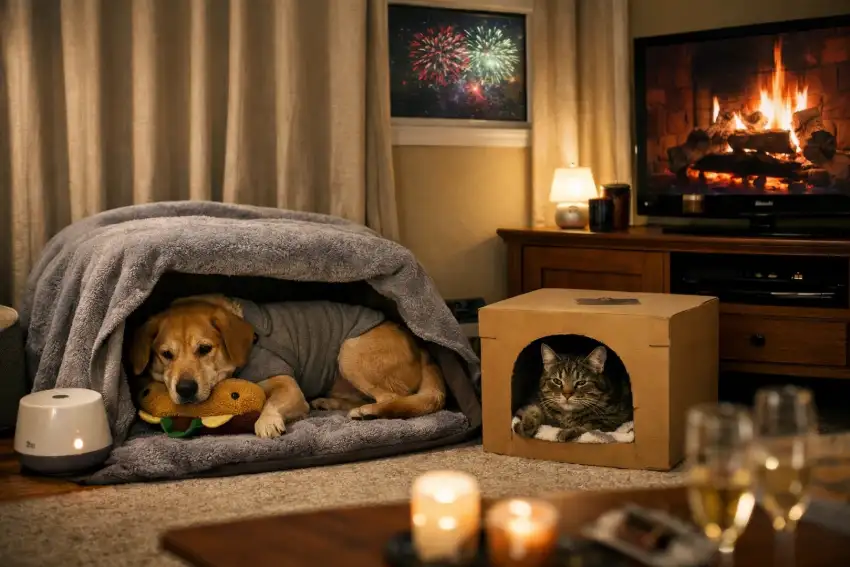
3.2 Create a “Safe Den” and Make It Familiar
Choose a quiet interior room (bathroom, closet, laundry room, or a covered crate area)
Add bedding that smells like home, plus water and a favorite toy
Practice calm “den time” daily with treats so it becomes a positive spot
3.3 Gentle Sound Practice (For Mild to Moderate Fear)
If your pet isn’t severely phobic, controlled sound practice can reduce sensitivity.
Play fireworks sounds at very low volume while your pet eats or plays
Keep sessions short (1–3 minutes)
Stop before your pet shows stress
Gradually increase volume over days only if your pet stays relaxed
Important: If your pet panics even at low volume, skip this and focus on management and professional help.
4. Preparation 1–2 Days Before: Set the Stage
Exercise earlier in the day: a calm, satisfied dog handles stress better.
Stock calming tools: high-value chews, food puzzles, lick mats, and extra treats.
Plan potty breaks: earlier evening walks, and quick late-night potty trips on leash.
Close windows and curtains: reduce light flashes and muffled echoes.
5. The Night of Fireworks: A Step-by-Step Plan
On the night, your goal is to reduce triggers, keep your pet contained, and provide a calm routine.
5.1 Keep Pets Indoors and Contained
No outdoor time off-leash, even in fenced yards
Use a harness for dogs for all potty breaks (more secure than a collar)
Keep cats in a closed room before fireworks start
Use baby gates or closed doors to prevent door-dashing
5.2 Sound and Light Management
Turn on TV, a fan, or white-noise machine to mask sharp bangs
Close blinds and curtains to reduce flashes
Choose the most interior room available
5.3 Give a “Calm Job” (Chew, Lick, Sniff)
Offer a stuffed food toy, lick mat, or long-lasting chew
Use scatter feeding (“find it”) to encourage sniffing and calm focus
Keep rewards flowing for calm behavior
If your pet won’t eat: that’s a sign stress is high. Move to stronger management and consider veterinary support.
5.4 How to Respond to Fear Without Reinforcing It
Comforting your pet does not “reward fear.” Fear is an emotion, not a chosen behavior.
Stay calm and speak softly
Allow your pet to hide in their safe den
Pet them if they seek contact; don’t force cuddling if they want space
Avoid punishment for barking or trembling (it increases anxiety)
6. Tools That Can Help (And When They’re Worth Trying)
6.1 Helpful Low-Risk Tools
White noise or calming music: reduces sharp sound peaks
Food enrichment: chews and lick mats can help many dogs settle
Pressure wraps: some dogs feel calmer with gentle pressure (must be introduced ahead of time)
Safe hiding spots for cats: covered beds, boxes, and high shelves in a closed room
6.2 Tools That Often Disappoint
One-time “magic” calming products: may be too mild for severe phobias
Trying to “tire them out” during fireworks: can increase stress and risk escape
7. When to Talk to Your Vet (This Is More Common Than People Think)
Some pets need more than home management. If fireworks cause true panic, veterinary support can be humane and effective.
Your pet injures themselves trying to escape
Your dog can’t settle, won’t eat, and shakes for hours
Your cat hides and refuses food or litter box use after noise events
Fear is getting worse each year
Your veterinarian may recommend a plan that includes behavior training plus prescription medication for predictable events. For many pets, this prevents panic and improves quality of life.
8. After the Fireworks: Recovery and Prevention
Keep walks quiet and low-pressure the next day
Maintain normal routines and encourage rest
Continue sound desensitization training in small, controlled steps
Note what helped and what didn’t so you can improve your plan for the next holiday
Final Thoughts: Plan Ahead, Reduce Triggers, and Prioritize Safety
Fireworks are a predictable challenge, which means you can prepare. The best plan is layered: update ID, prevent escapes, set up a safe den, manage sound and light, and provide calming enrichment. If your pet experiences true panic, involve your vet early—because preventing fear is kinder and more effective than “pushing through it.”
Your action step: today, set up your pet’s safe den and do one short practice session with treats so it becomes a familiar, comforting space before the next fireworks night.