Cats are often seen as the “cheaper” pet compared to dogs – and in many cases that’s true. But in the US and Europe, an indoor cat can still cost a meaningful amount of money every single year: food, litter, vaccines, parasite prevention, vet bills and more.
If you’re thinking about getting a cat (or already have one), it’s smart to understand the real yearly cost so you can plan ahead and avoid nasty surprises.
In this guide, we’ll cover:
The main yearly cost categories for cats
The difference between first-year and later-year costs
Indoor vs outdoor cats and how that changes expenses
Hidden costs that new owners often forget
How to build a simple yearly cat budget that actually works
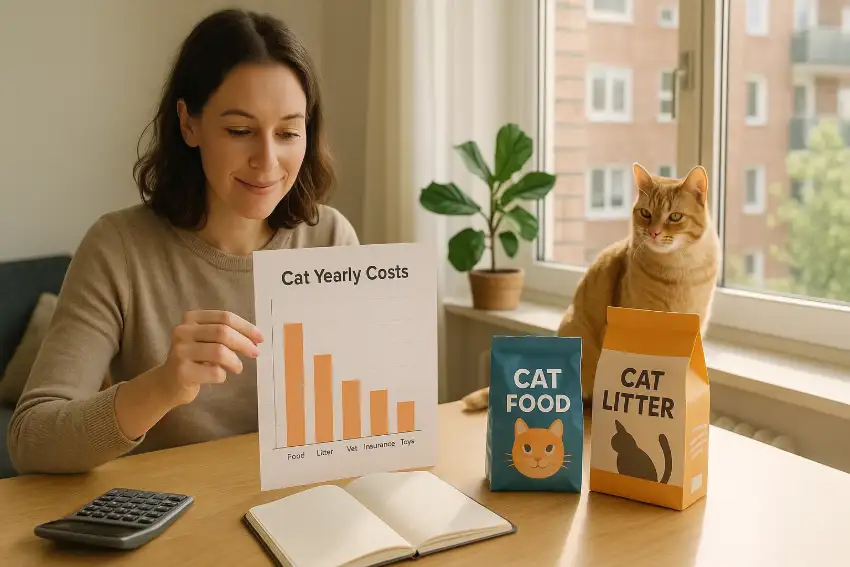
1. First-Year vs “Normal” Yearly Costs
The first year with a new cat is usually the most expensive. You pay setup costs and complete basic medical work. After that, spending usually stabilizes – although senior years often get more expensive again.
1.1 First-year extras
In the first year you’ll likely pay for:
Adoption fee or purchase price
Spay/neuter surgery (if not already done)
Initial vaccination series and boosters
Microchipping and registration (where used)
Starter supplies (litter box, carrier, scratching post, bed, etc.)
After this setup phase, you move into a more predictable pattern of:
Food and litter
Routine vet care and parasite prevention
Occasional new supplies and toys
Unexpected illnesses or injuries
2. Yearly Cost Category 1: Food and Treats
Food is one of the biggest and most predictable cat costs.
2.1 What affects food cost
Type of food: Dry food is usually cheaper per calorie; wet food is more expensive but often better for hydration.
Brand and quality: Very cheap diets can cause health issues; very “boutique” brands may be overpriced for the benefit they give.
Body size and age: Large or very active cats eat more; seniors may need special diets.
2.2 How to control food costs safely
Choose a mid-range, complete and balanced diet recommended by your vet.
Measure portions based on body condition, not just the back of the bag.
Use a mix of dry and wet if needed for urinary health, while keeping total calories reasonable.
Use small pieces of food or simple treats instead of constant expensive snacks.
3. Yearly Cost Category 2: Litter and Toilet Supplies
Litter is a cat-only expense that dog owners don’t have – and it adds up over a year.
3.1 Litter types and cost
Clumping clay litter: Convenient and popular; cost depends on brand and how often you change it.
Silica, wood or paper litter: Can be more expensive but may last longer or have less dust.
Eco-friendly litters: Often priced higher, though some owners prefer them for environmental reasons.
3.2 Saving on litter without upsetting your cat
Buy in larger bags to reduce cost per kilogram.
Keep boxes clean – this reduces waste and helps your cat use the box reliably.
Change brands slowly if you want to switch to something more affordable; sudden changes can cause accidents.
For indoor-only cats, litter is a permanent yearly cost. Don’t forget to include it when you think about “cheap” cat ownership.
4. Yearly Cost Category 3: Routine Vet Care and Parasite Prevention
Even if your cat never sets a paw outdoors, they still need regular vet care in the US and Europe.
4.1 Routine vet care for adult cats
Each year (or every few years, depending on vaccine schedule), most cats should have:
A wellness exam (check weight, teeth, heart, lungs, joints, eyes, ears)
Vaccine boosters as recommended by your vet and local guidelines
Dental checks and cleaning plans
For middle-aged and senior cats, your vet may also recommend:
Annual blood tests for kidney, liver and thyroid function
Urine tests to catch kidney or urinary issues early
Blood pressure checks
4.2 Parasite prevention
Indoor cats are at lower risk, but still not at zero risk, for parasites:
Fleas can come in on people, other pets or second-hand items.
Worms can be transmitted through prey (for hunting cats) or sometimes from the environment.
Outdoor cats typically need more frequent and consistent parasite control throughout the year.
5. Yearly Cost Category 4: Insurance or Emergency Savings
Routine care is one thing; emergencies are another. A single serious illness or accident can cost as much as several years of “normal” cat expenses.
5.1 Pet insurance for cats
Premiums for cats are often lower than for dogs – especially for indoor cats with no major breed risks.
Accident-and-illness policies can help with cancer, kidney disease, traumatic injuries, surgery and hospitalization.
Some owners choose accident-only policies or skip insurance and rely on savings.
5.2 Emergency savings fund
If you don’t use insurance, it’s wise to build a dedicated “cat emergency fund”.
Even a modest fund helps cover exam fees, basic tests and initial treatment in an emergency.
Keep this money separate so it’s not spent on everyday purchases.
A realistic yearly cat budget usually includes either insurance premiums, or regular savings contributions, or a mix of both.
6. Yearly Cost Category 5: Grooming, Enrichment and Home Care
Many cats are fairly low maintenance – but not completely “free”.
6.1 Grooming
Short-haired cats: Often need only brushing at home and occasional nail trims.
Long-haired cats: May need regular brushing plus occasional professional grooming to prevent matting.
Neglected mats and coat problems can become medical issues that require sedation and shaving – much more expensive than simple preventive grooming.
6.2 Scratching and furniture
Cats need to scratch; if you don’t provide good scratching posts, they may damage furniture.
Including sturdy scratching posts or boards in your yearly budget can save money on repairs.
6.3 Toys and enrichment
Rotate a small set of toys rather than constantly buying new ones.
Use simple, low-cost options (cardboard boxes, paper tunnels, DIY puzzle feeders).
Budget a little each year for replacing worn-out or damaged toys.
7. Indoor vs Outdoor Cats: How Costs Change
Whether your cat lives strictly indoors, goes outdoors supervised, or roams freely affects both financial risk and typical yearly costs.
7.1 Indoor-only cats
Higher litter costs (all bathroom needs are indoors).
Often lower risk of trauma, infections and fights.
Still need enrichment to avoid boredom and obesity.
7.2 Indoor-outdoor or outdoor-roaming cats
Lower litter use if they toilet outside, but you may still want indoor boxes.
Higher risk of injuries (cars, fights, falls), infections and parasites.
Likely more vet visits over their lifetime for wounds, abscesses and infections.
So while outdoor cats may use less litter, they often generate more medical expenses over the years.
8. Hidden and Occasional Costs Cat Owners Forget
Some costs don’t happen every year, but they still matter over your cat’s lifetime.
Dental care: At some point, many cats need a professional dental cleaning under anesthesia, possibly with extractions.
Travel: If you go on long trips, you might pay for a cat sitter or boarding.
Housing: In some rentals, pets mean extra deposits or monthly “pet rent”.
Damage: Scratched furniture, broken items, cleaning costs.
You don’t need to budget these as if they happen every year, but it’s wise to keep them in mind when deciding if you can afford a cat.
9. Building Your Own Yearly Cat Budget
Instead of searching for one average number online, build a simple budget tailored to your cat and your location.
9.1 Step 1: List your predictable monthly costs
Food
Litter
Insurance premium (if you use it)
Any regular medications
9.2 Step 2: Estimate yearly costs and convert to monthly
For each item below, estimate a yearly total, then divide by 12:
Routine vet visits and vaccines
Parasite prevention (flea, tick, worm treatments)
Grooming (if using a professional groomer)
Toys, scratching posts and replacement beds
Average yearly pet sitting or boarding for trips
9.3 Step 3: Add an emergency protection line
Monthly contribution to a dedicated “Cat Emergency Fund”, or
Expected deductibles and co-pays if you rely on insurance
9.4 Step 4: Check if the total fits your real life
Look at your monthly total and ask:
Can I comfortably pay this every month without skipping essentials?
Do I have a little space for price increases over time?
If not, what could I adjust (insurance level, brand of food, type of litter, travel habits)?
10. Final Thoughts: Cats Are “Cheaper” – But Not Free
Compared to many dogs, especially large breeds, cats are often cheaper per year – but they are never “no cost”. Over a 10–15+ year lifespan, even a modest yearly budget adds up to a serious financial commitment.
When you:
Understand the main cost categories,
Plan for food, litter, vet care and emergencies,
Choose indoor/outdoor lifestyles and insurance with eyes open,
you protect both your cat and your own financial stability. That means fewer money shocks and more time to enjoy what really matters: quiet evenings with a purring friend, shared routines and a relationship that feels rich in ways no spreadsheet can measure.