The cost of a dog or cat doesn’t stay the same from year to year. In the US and Europe, your spending changes a lot as your pet moves through life: tiny puppy or kitten, stable adult, and finally senior years. Some stages are cheaper, some are much more expensive – and if you don’t plan ahead, the transitions can be a shock.
In this guide, we’ll walk through how pet costs change by life stage so you can:
Understand which years are usually the most expensive
Plan your budget as your pet grows up and grows old
Prepare for senior care before it suddenly appears
Decide how insurance and savings fit into each stage
1. Why Pet Costs Change Over Time
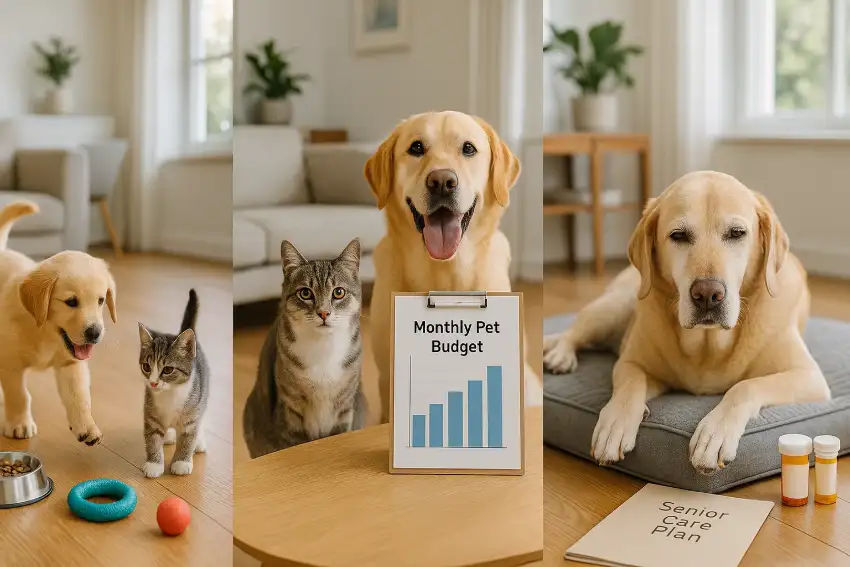
From a money point of view, dogs and cats usually follow this pattern:
Puppy/kitten years: High first-year setup costs, vaccines, spay/neuter, training and extra damage at home.
Adult years: More stable, predictable costs – usually the cheapest period if your pet stays healthy.
Senior years: Rising vet bills, medications, special diets and more frequent check-ups.
Understanding this curve helps you avoid two common mistakes:
Thinking the first “cheap” adult years will last forever.
Being surprised when senior costs suddenly jump in just a year or two.
2. Puppy and Kitten Stage: The Expensive “Start-Up” Years
The first 12–18 months of your dog or cat’s life are often the most intense – emotionally and financially.
2.1 One-time medical costs
For most puppies and kittens, you’ll pay for:
Initial vaccination series: several visits for core vaccines, sometimes plus extra vaccines based on risk.
Spay/neuter surgery: usually done in the first year or so, depending on vet advice.
Microchipping: often done at a vaccine visit or during surgery.
Early parasite prevention: fleas, ticks and worms while your pet is growing.
2.2 Setup and equipment
You’ll usually buy:
Beds, bowls and basic grooming tools
Crate, pen, gates or litter boxes
Collar, harness, leash and ID tag (for dogs)
Scratching posts or boards (for cats)
Carriers, toys and training equipment
Most of these are one-time or rare purchases, but they make the first year more expensive than later years.
2.3 Training and socialization
Puppies often need group classes and sometimes private help.
Kittens may benefit from basic handling and socialization guidance, even if they don’t attend formal classes.
Good training and socialization early can prevent costly behavior problems later.
2.4 Extra “puppy/kitten chaos” costs
Young animals chew, scratch and get into trouble. You might spend extra on:
Cleaning products and replacement items (shoes, cables, soft furnishings)
Minor vet visits for digestive upsets or injuries
Additional toys and chews to keep them busy
Financially, think of the puppy/kitten stage as the “start-up phase” of pet ownership. It’s intense, but it doesn’t last forever.
3. Adult Stage: The “Stable” (And Often Cheapest) Years
Once your dog or cat reaches adulthood, costs usually settle into a more predictable pattern – especially if they stay healthy.
3.1 Predictable yearly costs
For a healthy adult dog or cat, your budget will mainly cover:
Food and litter (for cats)
Routine wellness exams (often once a year)
Vaccine boosters according to your vet’s schedule
Flea, tick and worm prevention (and heartworm, in some regions)
Insurance premiums or monthly contributions to an emergency fund
3.2 Training, services and lifestyle
In the adult years, extra costs depend heavily on your lifestyle:
Dog walkers and daycare if you work long hours away from home.
Grooming – especially for long-haired or curly dogs and some long-haired cats.
Boarding or pet sitting during holidays.
Special activities like dog sports, training clubs or catio-building for indoor cats.
3.3 Hidden adult-stage factors
Some adult pets develop allergies or chronic skin/ear issues that add to yearly costs.
Active dogs may experience injuries from sports or hiking.
Outdoor cats may need treatment for bites, abscesses or accidents.
Even with these variations, adult years are usually the least expensive stage on average. This is the time to:
Pay down any debt from early vet bills.
Build a stronger emergency fund.
Prepare financially for senior care later on.
4. Senior Stage: The Most Common “Surprise Expense” Years
Many owners are caught off guard by how quickly costs rise when their pet becomes a senior – especially if the adult years felt cheap and easy.
4.1 More frequent vet visits
Senior dogs and cats often need:
More frequent check-ups (every 6–12 months, sometimes more often).
Regular blood and urine tests to monitor organs and chronic diseases.
Diagnostic imaging (X-rays, ultrasound) to investigate new symptoms.
4.2 Chronic conditions and medications
Common senior issues include:
Arthritis and mobility problems
Kidney disease (especially in cats)
Heart disease
Diabetes or thyroid disorders
Cancer
Dental disease and tooth loss
Many of these require:
Daily medications
Special prescription diets
Regular monitoring tests
4.3 Supportive care and home adjustments
Orthopedic beds and non-slip mats for arthritic dogs and cats.
Litter box changes: lower sides, extra boxes closer to where your cat sleeps.
Ramps or steps for dogs getting into cars or onto furniture.
More frequent grooming if your pet struggles to clean themselves.
4.4 End-of-life care
In the last months or years, you may face:
More frequent vet visits and medication adjustments.
Advanced diagnostics and treatment decisions (for example, surgery vs palliative care).
Costs related to humane euthanasia and aftercare (cremation or burial).
Emotionally, this is the hardest stage. Having a financial plan in advance can reduce stress when you’re already dealing with difficult decisions.
5. How Pet Insurance and Savings Fit Into Each Life Stage
The value of insurance and savings shifts as your pet ages.
5.1 During puppy/kitten and young adult years
Starting insurance early often gives the best coverage (fewer pre-existing conditions).
Premiums may be lower when your pet is young and healthy.
This is when accidents and unexpected illnesses first appear – surgery for swallowed objects, broken bones, etc.
5.2 Adult years
Many owners feel tempted to cancel insurance when their pet seems healthy and costs are low.
However, dropping coverage right before senior years (when risks rise) can backfire.
If you decide to rely more on savings, you need a disciplined, regular saving habit.
5.3 Senior years
Insurance can get more expensive, and some new issues may be excluded if you start late.
If you kept a good policy from youth, it can help with chronic conditions and cancer costs.
If you do not have insurance, a strong emergency/senior care fund is crucial.
A realistic strategy for many owners in the US and Europe is:
Start insurance when your pet is young, and keep it if you can afford rising premiums.
At the same time, build savings for deductibles, co-pays and uncovered items.
If you must cancel later, time it carefully and increase your savings plan.
6. Life Stage Planning Checklist: What to Do Financially at Each Phase
6.1 Puppy/kitten checklist
Budget for vaccines, spay/neuter and microchipping.
Factor in training classes and extra damage/cleaning costs.
Decide early about insurance and start a small emergency fund.
Choose good-quality food and basic equipment you can reuse for years.
6.2 Adult checklist
Use this “cheaper” period to build your pet emergency fund.
Review insurance coverage and adjust if needed (deductible, reimbursement level, limits).
Keep up with routine care to prevent problems that will be expensive in senior years.
Track your real yearly spending to estimate future budgets more accurately.
6.3 Senior checklist
Talk to your vet about likely future issues for your pet’s breed and health history.
Increase your budget for vet visits, diagnostics and medications.
Discuss realistic treatment options that balance quality of life and finances.
Prepare emotionally and financially for end-of-life decisions and aftercare.
7. Common Mistakes Owners Make With Life-Stage Costs
Thinking only about adoption or breeder fees. The real cost is spread across 10–15+ years, not just the first week.
Assuming adult-year costs will stay low forever. Senior pet care almost always costs more.
Dropping insurance without a savings plan. This often leaves owners exposed exactly when risk is increasing.
Not adjusting the budget as pets age. Food, exercise needs and medical costs all change by life stage.
8. Final Thoughts: Your Pet’s Life, Your Financial Timeline
Your dog or cat’s life stages line up with your own: you might change jobs, move homes, start a family, or face your own health challenges while your pet moves from puppy/kitten to playful adult to aging senior.
When you:
Understand how costs shift over time,
Plan for expensive stages before they arrive, and
Use insurance and savings in a way that fits your risk tolerance,
you’re not just protecting your wallet – you’re protecting your pet’s future. Financial planning by life stage lets you say “yes” to the care they need at every age, from clumsy puppy zoomies to slow senior naps, with fewer shocks and more peace of mind.