Bringing home a new cat or dog is exciting—but the first introductions can make or break the relationship between your pets. Rushing the process is the most common reason introductions go wrong. The safest approach is to control space, manage stress, and let your pets build positive associations in small steps.
This guide covers safe, realistic introduction plans for the most common situations (new dog to resident dog, new cat to resident cat, cat-to-dog, and dog-to-cat), plus red flags to watch for and when to call in a trainer or veterinarian.
1. Before You Bring the New Pet Home: Set Yourself Up for Success
A little preparation prevents chaotic first meetings and helps your existing pets feel secure.
1.1 Plan the Space
Safe room for a new cat: a quiet room with litter box, food, water, bedding, and hiding spots.
Separation zones for dogs: baby gates, crates (if crate-trained), or closed doors to control access.
Escape routes for cats: vertical spaces (cat tree, shelves) so a cat can move away safely.
1.2 Stock the Right Tools
Baby gates (ideally with a small pet door or cat-safe height option)
Leashes and harnesses for controlled dog intros
Treats and food rewards (high value)
Separate bowls and separate litter boxes (cats)
Enzyme cleaner for accidents
1.3 Health and Safety First
Schedule a vet check for the new pet early (especially rescues)
Confirm parasite prevention (fleas can spread fast in multi-pet homes)
Keep vaccines current as recommended by your vet
2. The Golden Rules of Safe Pet Introductions
Go slow: days to weeks is normal, especially with cats.
Control the environment: use barriers, leashes, and rooms to prevent “forced contact.”
Start with scent: pets learn a lot from smell before face-to-face meetings.
Keep it positive: treats, meals, play, and calm praise should happen around the other pet’s presence.
End on success: stop sessions before anyone gets overwhelmed.
Key idea: Your goal isn’t “tolerance on day one.” Your goal is calm neutrality that can grow into comfort.
3. Step 1: Scent Introduction (Day 1–3, Sometimes Longer)
Scent swapping lets pets “meet” without pressure.
Rub each pet gently with a soft cloth and place it near the other pet’s area
Swap bedding (if it doesn’t cause stress)
Let them sniff under the door without forcing interaction
Feed on Opposite Sides of a Door
Place food bowls several feet from the closed door at first
Gradually move bowls closer as both pets remain calm
Why it works: it builds “other pet smell = good things happen.”
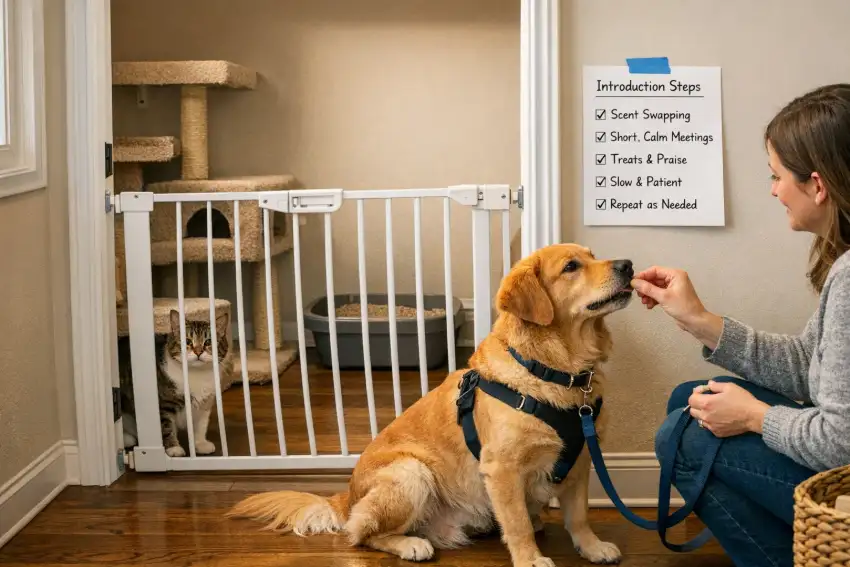
4. Step 2: Visual Introduction With a Barrier (Baby Gate or Cracked Door)
Once scent exposure is calm, add controlled visuals.
How to Do It Safely
Use a baby gate, screen door, or slightly opened door with a doorstop
Keep sessions short (1–5 minutes at first)
Give treats for calm looking and calm disengagement
Stop before staring turns into growling, lunging, or barking
Signs You Should Slow Down
Hard staring, stiff bodies, raised hackles (dogs)
Hissing, growling, swatting, ears pinned back (cats)
Fixation (dog won’t look away from the cat)
One pet refusing food or becoming panicked
5. Introduction Plan: New Dog to Resident Dog
Dog-to-dog introductions usually go best in neutral territory first.
5.1 First Meeting (Neutral Outdoor Space)
Start with parallel walking 10–20 feet apart (more if needed)
Gradually decrease distance if both dogs stay loose and calm
Avoid face-to-face greetings right away
Keep leashes loose (tight leashes increase tension)
5.2 Short Sniff Greeting (If Body Language Looks Good)
Allow 1–2 seconds of sniffing, then call away and reward
Repeat multiple short greetings rather than one long one
5.3 Bringing Them Home
Enter the home calmly and separate at first (gates or different rooms)
Pick up toys and high-value chews initially to prevent guarding conflicts
Feed separately until you’re confident there’s no tension
6. Introduction Plan: New Cat to Resident Cat
Cat introductions should be slow and structured. Rushing often leads to long-term tension.
6.1 Safe Room Setup
New cat stays in a separate room for several days or longer
Provide hiding spots and vertical perches
Keep litter and food separate
6.2 Progression Steps
Scent swap: daily
Door feeding: calm meals near the door
Barrier visuals: baby gate or cracked door
Short supervised room time: one cat free, the other behind barrier or in carrier only if calm
6.3 Don’t Force Friendship
Many cats do best with “peaceful co-existence” rather than cuddling.
Provide multiple resources so cats don’t compete.
7. Introduction Plan: Dog to Cat (Resident Cat or New Cat)
This is the scenario where safety planning matters most. A dog’s prey drive or excitement can overwhelm a cat quickly.
7.1 Control the Dog First
Dog on leash and harness
Practice “look at me,” “sit,” and “place” before the cat is involved
Keep sessions short and end early
7.2 Give the Cat Control and Escape Routes
Cat should have vertical escape (cat tree, shelves)
Never corner the cat
Use a gate so the cat can leave while dog stays separated
7.3 Reward Calm, Not Chase
Reward the dog for looking at the cat calmly and then looking away
If the dog fixates, stiffens, or lunges, increase distance immediately
8. Introduction Plan: Cat to Dog (Resident Dog or New Dog)
If you’re bringing in a new dog to a home with a cat, assume the cat needs time and safe spaces.
Start with cat in a separate area and dog on leash
Use scent swapping and barrier intros first
Provide cat-only rooms or cat-only vertical zones long-term
Important: Some dogs cannot safely live with cats due to high prey drive. If you see intense fixation or repeated attempts to chase, get professional help quickly.
9. Multi-Pet Home Success Tips (Reduce Conflict Long-Term)
9.1 Resource Management
Food: feed separately at first
Water bowls: multiple locations
Resting spots: multiple beds, multiple cat perches
Litter boxes: enough boxes in different locations for cats
9.2 Supervision and Gradual Freedom
Supervise all early interactions
Use gates when you can’t supervise
Increase freedom slowly after repeated calm sessions
9.3 Keep Routines Predictable
Regular feeding times
Daily walks and play sessions
Calm quiet time
10. Red Flags: When Introductions Are Not Going Well
Some tension is normal, but these signs mean you should pause and get help.
Repeated fighting or injuries
Dog lunging or attempting to chase the cat repeatedly
Cat hiding all day, refusing food, or stopping litter box use
One pet guarding food, toys, or doorways
Escalating behavior over days rather than improving
11. When to Call a Trainer or Vet
Professional support can prevent long-term problems.
Call a trainer/behavior professional if: there’s lunging, snapping, chasing, or intense reactivity.
Call a vet if: a pet suddenly becomes aggressive, stops eating, hides, or shows signs of pain.
Safety note: If you ever feel unsafe handling your dog during introductions, stop sessions and seek professional help.
Final Thoughts: Slow, Structured Introductions Create Peaceful Homes
The safest way to introduce a new cat or dog is to start with scent, progress to barrier visuals, and only then allow controlled, supervised interaction. Keep sessions short, reward calm behavior, and manage resources so pets don’t feel they have to compete. Some pets become friends, others simply learn to coexist—and that’s a success.
Your action step: write a simple two-week introduction plan (scent, barrier, short supervised sessions) and commit to going slower than you think you need. In multi-pet homes, patience is the best safety tool you have.