New Year’s Eve, Independence Day in the US, and other firework-heavy holidays in Europe can be exciting for humans – but for many dogs and cats, they are terrifying. Sudden bangs, flashes of light, burning smells and crowds of shouting people can trigger:
Shaking and hiding
Pacing and panting
Destructive behaviour or attempts to escape
Accidents indoors (even in house-trained pets)
This guide will help you get ready before the fireworks start, so your pet’s New Year’s Eve or Independence Day can be as calm and safe as possible. We’ll cover:
How fireworks affect dogs and cats
Short-term preparation in the days before the event
Longer-term training for noise-sensitive pets
Medication, supplements and when to talk to your vet
Step-by-step plans for the night itself
Note: This article is general information only. Always talk to your veterinarian before starting or changing any medication or if your pet shows severe anxiety or harmful behaviour.
1. Why Fireworks Are So Scary for Dogs and Cats
Fireworks combine several things that many animals naturally find frightening:
Loud, unpredictable noises – booms, crackles, whistles, repeated with no pattern.
Flashes of light – sudden, bright and often visible through windows.
Smell of smoke and burning – strong scents that signal danger in nature.
Changes in human behaviour – visitors, parties, shouting, music and doorbells.
Dogs and cats don’t understand that fireworks are “for fun.” To them, they often sound like storms, explosions or something unknown and dangerous. Noise-sensitive animals can have reactions similar to panic attacks in humans.
2. How to Tell if Your Pet Is Afraid of Fireworks
2.1 Signs of fear in dogs
Panting, even when not hot
Shaking or trembling
Drooling
Restless pacing, unable to settle
Trying to hide under beds, in bathrooms, behind furniture
Whining, barking or howling
Clinginess, trying to climb onto you or into small spaces
Attempts to escape (scratching doors, breaking through barriers, digging under fences)
2.2 Signs of fear in cats
Hiding in very small or high places
Flattened ears, wide eyes, tail tucked
Refusing to eat, drink or use the litter tray
Sudden aggressive reactions if approached while scared
Accidents outside the litter box during or after loud fireworks
If you’ve seen any of these behaviours around storms, motorbikes or previous holidays, treat your pet as at risk and plan proactively for fireworks season.
3. Short-Term Preparation: What to Do in the Days Before Fireworks
Even if fireworks are only a week or a few days away, there is still a lot you can do.
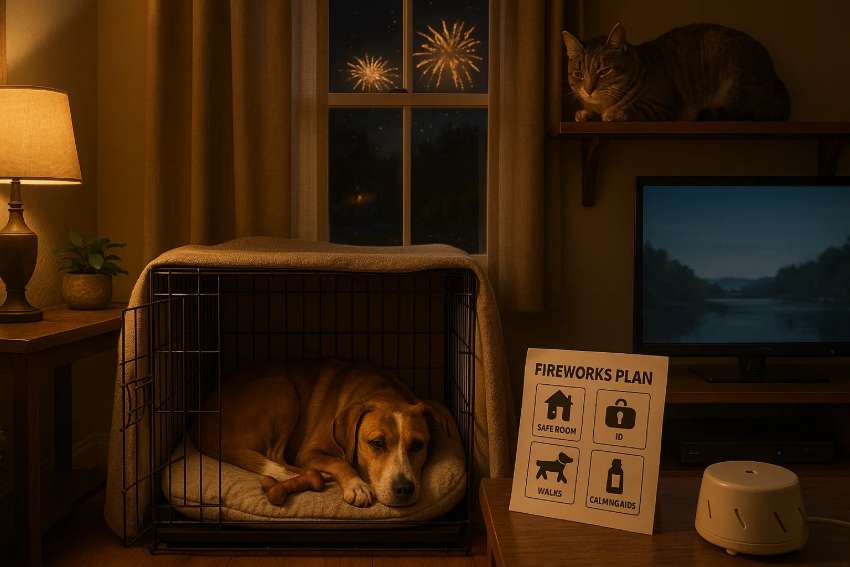
3.1 Create a “fireworks safe room”
Choose a room that is:
As far from outside noise as possible (often an interior room, hallway or bathroom)
Easy to darken with thick curtains or blinds
Large enough for your pet’s bed/crate, water and a few toys
In the days before the event:
Set up:
A comfortable bed or open crate with blankets
Fresh water
Favourite toys or chews (for dogs) and hiding spots (for cats)
Spend relaxed time there with your pet – feed treats or meals in this room so they build positive associations.
3.2 Sound and light control
Use thick curtains or blackout blinds to reduce flashes.
Plan to have background noise ready:
TV, music or white noise at a comfortable volume
Soft, steady sound works better than sudden loud music
3.3 Exercise and enrichment plan
On the day of fireworks:
Walk dogs earlier in the day or late afternoon, before fireworks usually start.
Give extra mental exercise (training, sniff games, puzzle toys) so they are more relaxed and tired in the evening.
For cats:
Play interactive games earlier (wand toys, chasing balls) to release energy.
3.4 Check collars, microchips and ID
Make sure your dog or cat has a secure collar with an ID tag.
Confirm microchip details are up to date with your current address and phone number.
Sadly, many pets go missing during fireworks – proper ID helps them find their way home.
4. Long-Term Training: Helping Noise-Sensitive Pets Between Holidays
If your pet has serious fireworks fear year after year, you can work on desensitization and counterconditioning outside the fireworks season:
Use recorded firework sounds from reputable sources (noise CDs, playlists, training apps).
Start at a very low volume – so low your pet notices but does not react with fear.
Pair the sounds with something positive:
High-value treats
Play sessions
Gentle massage or cuddle time (for pets that enjoy touch)
Very gradually increase the volume over many sessions and days, always staying below your pet’s fear threshold.
This process takes time and patience, and severe cases often benefit from working with a force-free trainer or veterinary behaviourist for best results.
5. Medication, Supplements and Calming Aids
Some dogs and cats are so distressed by fireworks that management alone isn’t enough. In those cases, talk to your vet well before New Year’s Eve or Independence Day.
5.1 Prescription medication
Your vet may recommend short-term anti-anxiety medication or sedatives for:
Pets with a history of severe panic
Animals who injure themselves during storms or fireworks
Never give human medications or leftover drugs without veterinary advice – many are unsafe for pets.
Always test the medication on a non-fireworks night first to see how your pet responds.
5.2 Non-prescription calming tools (ask your vet first)
Pheromone diffusers or sprays (dog- or cat-specific) in the safe room.
Calming supplements or treats with ingredients like L-theanine, casein or herbal blends.
Body wraps or calming shirts that apply gentle pressure to some dogs, which can feel reassuring.
These options are not magic cures, but they can be useful pieces of an overall plan for mild to moderate anxiety.
6. Step-by-Step Plan for Firework Night (New Year’s Eve, Independence Day, etc.)
6.1 Before the fireworks start
Give dogs a good walk and toilet break before dark.
Bring outdoor cats indoors well before evening and keep them in overnight.
Feed a slightly earlier, normal meal so your pet isn’t hungry later when stressed.
Set up the safe room:
Curtains closed or blinds down
TV/music/white noise on at a steady level
Bed/crate ready, plus toys, chews, water and litter box (for cats)
Put “Do not open” reminders on doors leading outside so guests don’t accidentally let pets out.
6.2 During the fireworks
Stay home if your pet has severe firework anxiety, whenever possible.
Stay calm yourself – pets pick up on your body language and tone.
Let your dog or cat choose where to be:
Some will want to hide in a crate, under a bed or in a closet – allow this.
Others will want to be close to you – that’s okay too.
Offer:
Long-lasting chews or lick mats for dogs
Interactive toys or hidden treats for cats (if they’re willing to eat)
Speak in a soft, relaxed voice and reward any calm behaviour with gentle praise or treats.
You are not “rewarding fear” – you are helping your pet feel safer in a scary situation, which is exactly what they need.
6.3 What not to do
Do not force your pet to watch fireworks from a window or go outside.
Do not punish vocalising or hiding – this increases anxiety.
Do not let dogs off-leash near fireworks displays or noisy streets; even usually reliable dogs can bolt when terrified.
7. Special Considerations: Apartments, Shared Buildings and Gardens
7.1 Apartments and city living
High-rise noise can echo; interior rooms (bathrooms, hallways) often work best as safe spaces.
Let neighbours know you have nervous pets – some may warn you before setting off private fireworks.
Use rugs, cushions and heavy curtains to help absorb sound.
7.2 Houses with gardens in the US and Europe
Secure fences and gates ahead of time; check for gaps where a panicked dog could escape.
On firework nights, treat the garden as an on-leash-only area, even if usually off-leash.
Supervise toilet breaks closely and keep them brief.
8. After the Fireworks: Recovery and Next Steps
Once the night is over:
Keep routines calm the next day – normal walks, meals and play.
Check the garden and local walking routes for:
Firework debris
Broken glass or litter
Watch for delayed signs of stress:
Clinginess
Changes in appetite
New fears of outdoor spaces
If your pet’s reaction was severe, make a note of what happened and book an appointment with your vet or a behaviour professional in the coming weeks. That gives you time to plan for the next holiday instead of repeating the same crisis.
9. Quick Fireworks Safety Checklist for Pet Owners
Identify if your dog or cat is noise-sensitive and plan in advance.
Create a safe room with bed, water, litter box (for cats), toys and background noise.
Exercise and feed your pet earlier on the day of fireworks.
Bring cats indoors and walk dogs before dark; keep them inside and on-leash for any necessary toilet breaks.
Double-check ID tags and microchip details.
Talk to your vet about medication or calming aids if past fireworks were traumatic.
Stay calm, stay with your pet if you can, and let them hide or cling as needed.
With good planning, New Year’s Eve, Independence Day and other fireworks holidays can move from “nightmare nights” for your pet to manageable, safer events. Your dog or cat may never love fireworks – and that’s okay – but they can learn that, with your help, loud nights are something they can survive instead of something to panic about.