Many dogs in the US and Europe bark at every sound or movement: neighbors in the hallway, people outside the window, delivery drivers, other dogs on the street. A few warning barks are normal – but constant, explosive barking is stressful for you, your neighbours and sometimes even for your dog.
This guide shows you how to reduce excessive barking using kind, science-based methods – not shouting or punishment. You’ll learn:
Why dogs bark at people and dogs outside
How to tell if your dog is scared, excited or just bored
Management tricks to reduce triggers in apartments and houses
Step-by-step training exercises to teach your dog to be calmer and quieter
When to get help from a vet or behaviour professional
1. Why Dogs Bark at Neighbors, Delivery Drivers and Other Dogs
Barking is normal dog communication, but different emotions can sit behind it:
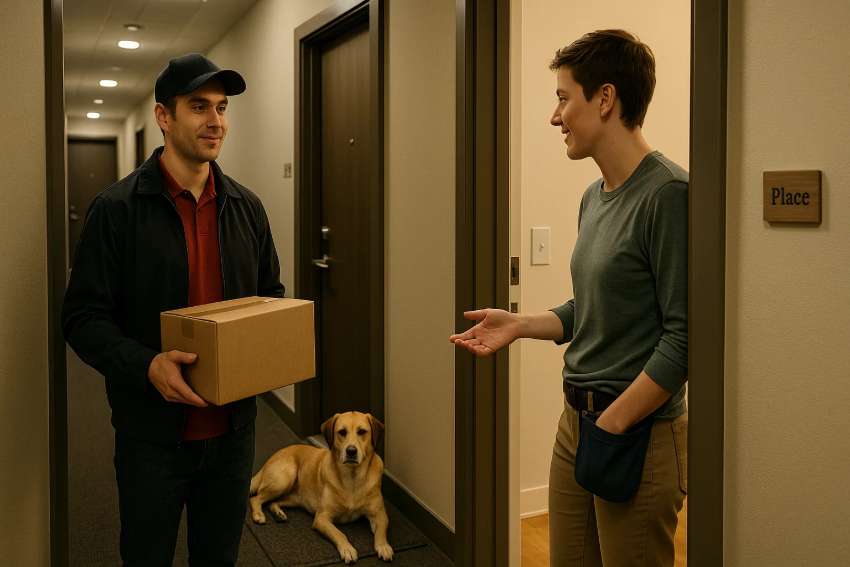
Guarding / alert barking: “Someone is near our home!” – common with doorbells, footsteps in hallways, voices outside.
Fear or anxiety: “That person/dog is scary, go away!” – often loud, high-pitched, with backing away or stiff posture.
Frustration: “I want to get to them but I can’t!” – especially when your dog sees other dogs or people from the window or balcony.
Learned habit: If barking makes the “intruder” go away (delivery leaves, neighbour walks off), your dog thinks barking works.
Boredom / lack of stimulation: A dog with too much energy and not enough mental activity will bark at anything that moves.
To change the barking, we don’t just try to “shut the dog up”. We:
Reduce how often the dog is triggered
Change how they feel about those triggers
Teach them a different behaviour that we can reward
2. Identify Your Dog’s Main Triggers
Start with a simple “barking diary” for a few days:
What time did the barking happen?
What was going on? (neighbour in hallway, parcel delivery, dog outside, elevator noise, car doors, etc.)
Where was your dog? (sofa, balcony, at the door, in another room)
How long did the barking last?
Most owners find repeating patterns. Common apartment/house triggers:
Footsteps and voices outside the front door
Doorbells and knocking
Delivery drivers walking to the building or mailbox
Dogs and people passing by windows, balconies or garden fences
Once you know the main triggers, you can build a plan instead of just reacting in the moment.
3. Management: Reduce Opportunities to Bark
Management means changing the environment so your dog can’t rehearse the problem behaviour all day. It doesn’t replace training, but it makes training much easier.
3.1 Block the view of “bark TV”
Add frosted window film, blinds or curtains at the dog’s eye level, especially on street-facing windows.
Move sofas or dog beds away from windows and balcony doors so your dog can’t sit and stare at every passer-by.
Use baby gates to keep your dog out of rooms with the noisiest views when you’re not actively training.
3.2 Soften hallway and stair triggers
Use a white noise machine or fan near the front door to muffle footsteps and voices.
Place a thick rug by the front door to help absorb sound from the hallway.
Keep your dog in a room further from the front door when you’re out or busy.
3.3 Control access to balconies and gardens
If your dog barks endlessly from the balcony or fence:
Limit unsupervised access.
Use that area only during calmer times of day while you’re training.
The less your dog practices “going crazy” at every sound, the faster training will work.
4. Foundation Skills: Teach “Quiet” and “Go to Your Spot”
Instead of just shouting “Quiet!”, we want to teach what “quiet” means and give your dog a specific job to do when triggers appear.
4.1 Teaching a real “quiet” cue
Wait for a moment when your dog is already calm and not barking.
Say your cue word softly: “Quiet” or “Shhh”.
Immediately give a treat for that quiet moment.
Repeat many times in calm situations – you’re teaching “Quiet = be silent and you get food”.
Later, when your dog barks:
Wait for a split second pause in the barking.
Say “Quiet” in a calm voice.
If your dog stays quiet for 1–2 seconds, mark it (“Yes!”) and give a treat.
Gradually ask for longer quiet periods (3, 5, 10 seconds) before the reward.
Never give a treat while your dog is mid-bark – always reward the moments of silence.
4.2 Teaching “go to your spot” (mat/place)
A “spot” is a bed or mat a few metres away from the door or window where your dog can relax.
Put the mat down and lure your dog onto it with a treat.
When all four paws are on the mat, say “Yes!” and give the treat.
Repeat until your dog happily steps onto the mat as soon as you point.
Add a cue like “Place” or “Bed” once they understand the action.
Later, when the doorbell rings or you see a trigger, you can ask your dog to “Place” and reward calm behaviour there instead of rushing the door or window.
5. Training for Specific Triggers
5.1 Barking at neighbors in the hallway
Goal: Your dog hears people outside but stays relatively calm and quiet.
Ask a friend or family member to walk past your door or lightly talk in the hallway.
As soon as your dog notices the sound but before barking explodes:
Say “Yes!” and feed a treat.
Or ask “Place” and reward on the mat.
If your dog is already barking hard, the trigger is too strong:
Have your helper move further away and reduce volume.
Work at a level where your dog can still think and eat.
Gradually increase the sound and realism over days:
Normal walking, talking, doors closing.
Different people and times of day.
Over time, hallway sounds should become a signal: “Human noise = treats and calm, not panic.”
5.2 Barking at delivery drivers and doorbells
Goal: Doorbell or knock means “go to mat and wait”, not “rush and explode”.
First, record your doorbell sound on your phone or ask someone to knock gently.
Play the sound at a very low volume (or knock very softly).
Immediately say “Place”, guide your dog to the mat and reward generously.
Repeat until your dog automatically runs to the mat when they hear the sound.
Slowly increase volume or knock louder, always sending them to the mat and rewarding.
Once this is working with practice sounds, try a real delivery:
Ask a friend to ring the bell and wait.
Send your dog to “Place”, feed a few treats while you calmly open the door.
If needed, keep a leash on your dog the first few times for extra control.
For high-energy dogs, a stuffed KONG or chew on the mat can help keep them busy while you handle the door.
5.3 Barking at other dogs through windows or on walks
Through windows/balcony:
Block some of the view as described in management.
When your dog spots a dog outside but has not started barking:
Say “Yes!” and give a treat.
Or call them away to their mat and reward there.
This teaches “Dog outside = look to my human for food, not bark at the window”.
On walks:
Keep enough distance so your dog can see other dogs but still take treats.
Each time your dog looks at a dog and then looks back at you, reward.
Gradually shrink the distance over time, as long as your dog stays relaxed.
6. Exercise and Enrichment: Tired Minds Bark Less
A dog with too much unused energy will react more strongly to every sound and movement. Make sure your dog has:
Physical exercise appropriate for their age and breed:
Daily walks with sniffing time (not just fast marching).
Safe off-leash or long-line time where possible.
Mental enrichment:
Food puzzles and snuffle mats.
Short training sessions (sit, down, touch, tricks).
Chew toys and safe bones (as advised by your vet).
A dog who has used their brain and body during the day is less likely to spend hours patrolling the windows and reacting to every noise.
7. Why Punishment and Shock Collars Are a Bad Idea
It can be tempting to shout, use spray collars or even electric shock collars to “stop” barking. These methods can:
Increase your dog’s fear and stress.
Teach them that:
“When people or dogs appear, bad things happen.”
…which can actually make aggression and anxiety worse.
Damage your dog’s trust in you.
You might see short-term silence, but the underlying emotion (fear, frustration) is still there – and often stronger. Long-term success comes from changing how your dog feels about triggers, not just punishing the noise.
8. Sample Daily Plan for a “Barky” Apartment Dog
Morning
Walk with sniffing and a bit of training (10–15 minutes of simple cues).
Breakfast in a food puzzle instead of a bowl.
Short training: 5 minutes of “Quiet” and “Place” practice with very soft hallway sounds.
Afternoon
Another walk or play session.
Hide a few treats around one room for scent games.
Training: window practice – reward calm looking at people/dogs outside, call away and reward.
Evening
Practice doorbell game:
Play recorded bell quietly → “Place” → reward.
Relax time with chew toy while you watch TV.
Adjust the plan to your schedule, but try to include exercise, enrichment and a few short training sessions every day.
9. When to Involve a Vet or Behaviour Professional
Get extra help if:
Your dog’s barking is extreme, lasts for long periods, or leads to neighbours complaining.
Your dog injures themselves scratching doors, windows or crates.
You suspect underlying anxiety, fear or past trauma.
A vet can:
Check for medical issues (pain, hearing loss, cognitive decline).
Discuss whether anti-anxiety medication might help in severe cases.
A qualified trainer or behaviourist (who uses positive methods) can:
Design a custom training plan for your home and building setup.
Coach you through real-life situations with neighbours and deliveries.
10. Final Thoughts: Aim for “Much Better”, Not “Perfect Silence”
Some barking is normal – dogs are not silent robots. The realistic goal is:
Fewer barking outbursts
Shorter barking episodes when they do happen
More control and calm responses around everyday triggers
By combining:
Smart management (blocking views, reducing triggers)
Positive training (“Quiet”, “Place”, reward calm)
Enough exercise and enrichment
…you can turn your “alarm system that never stops” into a dog who gives a few sensible warnings – and then settles down again, leaving you and your neighbours in peace.