In the UK and many parts of Europe, hedgehogs are a much-loved symbol of wild gardens. People put out food, build “hedgehog highways” between fences and celebrate each spiky visitor on their wildlife cameras. At the same time, social media shows cute “pet hedgehogs” in small cages indoors. It’s no surprise many animal lovers start to wonder:
“Should I keep a hedgehog as a pet, or is it better to support them as wild animals in my garden?”
This guide will help you understand:
The difference between wild European hedgehogs and exotic pet hedgehogs
Why taking wild hedgehogs into your home is usually not appropriate or legal
What pet hedgehog ownership really involves (costs, care and challenges)
Practical ways to help wild hedgehogs without keeping one in a cage
Note: This article is general information only. Wildlife laws and pet regulations vary by country and region. Always check your local rules before keeping or handling hedgehogs.
1. Two Very Different Hedgehogs: Wild vs “Pet” Species
When people talk about hedgehogs in the UK and Europe, they usually mean the European hedgehog that wanders through gardens at night. But the small hedgehogs often seen as pets online are usually a different species altogether.
1.1 The wild European hedgehog
Native to the UK and large parts of Europe.
Nocturnal insectivore: naturally eats beetles, worms, caterpillars and other invertebrates.
Has complex seasonal needs:
Roams long distances at night
Builds nests for day sleeping
Hibernates (or semi-hibernates) depending on local climate
Protected and declining in many areas; considered a key garden wildlife species.
1.2 Exotic pet hedgehogs
Most “pet” hedgehogs are hybrids, commonly called African pygmy hedgehogs.
They are not native to Europe and have different climate and care requirements.
In some countries or regions, keeping them may be restricted, regulated or discouraged.
The key point: “Wild hedgehogs in your garden” and “pet hedgehogs in a cage” are not the same thing, even though they share a name and general appearance.
2. Why You Should Not Take Wild Hedgehogs Home as Pets
It can be tempting to “rescue” a small hedgehog you see outside and keep it as a pet. In most cases, this is not good for the animal and may be against wildlife protection laws in your country.
2.1 Wild hedgehogs are not domesticated
They have evolved to:
Roam freely at night
Choose their own nesting spots
Hunt a varied, natural diet
Captivity in a cage or small indoor enclosure:
Restricts their natural movement
Can cause chronic stress and frustration
Often fails to meet their seasonal needs (for example, hibernation)
2.2 Legal and welfare considerations
In many parts of the UK and Europe, wild hedgehogs are protected:
It may be illegal to keep them without appropriate licenses or permits.
Handling and keeping wildlife is often restricted to approved rehabilitators and vets.
Wild hedgehogs may carry parasites or diseases that need professional treatment.
Improper care can lead to suffering, even if your intentions are kind.
2.3 When a wild hedgehog genuinely needs help
There are times when intervention is appropriate:
Hedgehog out in the daytime, stumbling, very thin or clearly injured.
Very small hoglets (babies) alone outside with no adult in sight for a long time.
In these cases, the best action is:
Safely place the hedgehog in a small box with a towel.
Keep it warm, quiet and away from pets and children.
Contact a wildlife rescue centre or hedgehog rehabilitator as soon as possible for instructions.
The goal is treatment and eventual release back to the wild – not turning the animal into a pet.
3. The Reality of Keeping a Pet Hedgehog Indoors
If you are still thinking about a hedgehog as a pet (for example, an African pygmy hedgehog from a breeder where legal), it’s important to understand what you’re signing up for. They are not “easy starter pets” for children.
3.1 Housing and environment
Temperature-sensitive:
Most pet hedgehogs need a warm, stable environment; getting too cold can trigger dangerous hibernation attempts.
Space and exercise:
They need a secure enclosure with hiding places, digging material and a safe running wheel.
Small cages marketed for hamsters or guinea pigs are often too small and bare.
Nocturnal habits:
They are most active at night, which means noise and activity while you are trying to sleep.
3.2 Diet and health
Specialized diet:
Quality insectivore diet or carefully selected cat food, plus insects and safe vegetables as advised by experienced exotic vets.
Obesity risk:
Many pet hedgehogs become overweight in captivity if diet and exercise are not managed well.
Finding a vet:
You need access to a vet who is comfortable with exotic species, which may be harder or more expensive than standard dog/cat care.
3.3 Temperament and handling
Many hedgehogs are naturally shy and may curl into a ball when stressed.
They can tolerate gentle, patient handling, but very few are truly “cuddly” in the way people imagine.
They may not enjoy being constantly picked up or posed for photos.
In short, pet hedgehogs are specialist animals that require careful research, stable conditions and exotic vet access. They are not the best choice if you mainly want a playful, interactive family pet.
4. Pros and Cons: Pet Hedgehog vs Supporting Wild Hedgehogs
4.1 Pros of keeping a pet hedgehog (where legal)
Opportunity to observe a fascinating animal up close.
Can be rewarding for experienced, patient owners who enjoy caring for exotic species.
May suit people who:
Have limited space for larger pets
Are awake and active in the evenings and at night
4.2 Cons of keeping a pet hedgehog
Requires specialist knowledge and equipment (heating, enclosures, diet).
Potential legal restrictions or ethical concerns in some countries.
Not naturally sociable; limited interaction compared with dogs or even many cats and rabbits.
Finding veterinary care can be more difficult and expensive.
4.3 Pros of leaving hedgehogs wild and supporting them in your garden
Helps a native species that is struggling in many areas.
Allows hedgehogs to express all their natural behaviours – roaming, nesting, hibernating.
You can enjoy regular hedgehog visits via:
Wildlife cameras
Evening watching from windows or patios
No exotic vet bills, special heating or indoor cages to clean.
4.4 Cons or limits of the “wild hedgehog supporter” approach
You will not have a “pet” in the traditional sense – you can’t pick up, cuddle or fully tame wild hedgehogs.
Some gardens may not be suitable for hedgehogs (for example, high-rise apartments without ground-level access).
For many animal lovers in the UK and Europe, the most ethical and realistic choice is to support hedgehogs as wild animals rather than trying to keep one in a cage indoors.
5. How to Make Your Garden a Hedgehog-Friendly Haven
If you decide wild hedgehogs are best left wild, there are lots of ways to help them from your own backyard or shared green space.
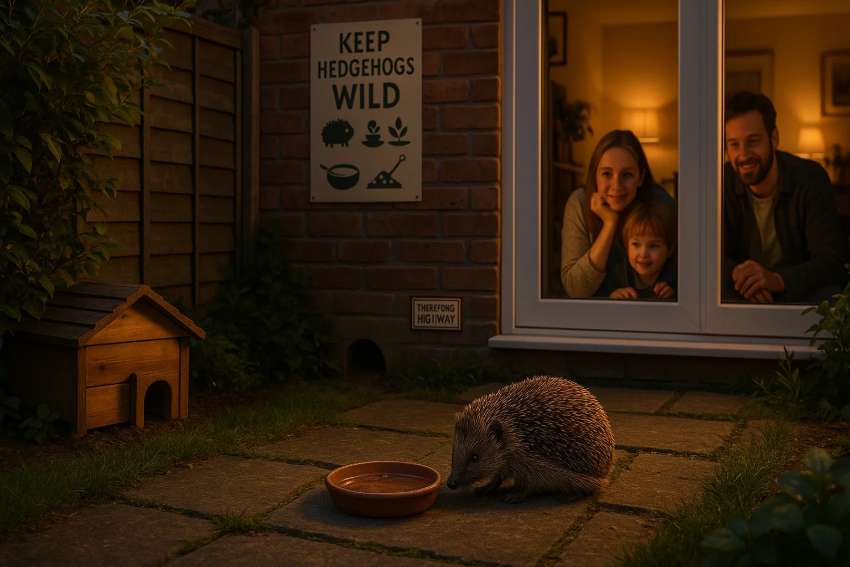
5.1 Provide safe access: “hedgehog highways”
Hedgehogs roam through multiple gardens at night in search of food and mates.
Solid fences can trap them or block safe routes.
Solutions:
Cut small gaps (around 13 x 13 cm) in the bottom of fences and mark them as “hedgehog highways”.
Agree with neighbours to connect your gardens into safe routes.
5.2 Offer shelter and nesting sites
Leave quiet corners with:
Log piles
Leaf piles
Dense shrubs or wild patches
Consider a purpose-built hedgehog house:
Placed in a quiet, shaded spot
With a narrow entrance to deter predators and pets
5.3 Food and water – done safely
Provide a shallow, heavy dish of fresh water year-round.
For food:
Use meaty cat or dog food or specialist hedgehog food.
Avoid milk (it can cause digestive upset) and high-sugar foods.
To reduce risk of attracting foxes, rats or neighborhood cats:
Feed in a hedgehog feeding station (a low, covered box with a small entrance).
Remove leftover food in the morning.
5.4 Garden safety: avoid hidden hazards
Cover drains, holes and steep-sided ponds so hedgehogs can’t fall in and get trapped.
Check long grass and piles of leaves before mowing or strimming.
Avoid or limit slug pellets and strong pesticides; they can harm hedgehogs directly or by killing their food sources.
6. Is a Hedgehog the Right “Pet” for You?
Before you commit to any hedgehog – exotic pet or wild visitor – ask yourself:
Do I truly want a pet I can handle and interact with daily, or do I mostly want to support wildlife and enjoy watching animals behave naturally?
Am I willing to research laws and welfare guidance in my country before making any decisions?
Do I have access to an experienced exotic vet if I choose a pet hedgehog species?
Would my time and money be better spent on:
Donating to wildlife rescues
Improving my garden for wild hedgehogs
Adopting a more domesticated pet like a dog, cat or rabbit?
For many people in the UK and Europe, the most satisfying answer is:
“I’ll leave hedgehogs wild, but I’ll make my garden a safe, welcoming place for them.”
That way, you support conservation, enjoy magical nighttime visitors and respect hedgehogs for what they really are: wild, independent animals that don’t belong in a small cage.