A good outdoor enclosure can completely change your pet’s life. Fresh air, natural light, room to run or roam, grass under their feet – these are all things that rabbits, guinea pigs and tortoises love. But if the enclosure is poorly built, it can also be dangerous: escapes, predator attacks, injuries, heatstroke or cold stress.
This guide walks you step-by-step through how to design and build a safe, predator-proof and comfortable outdoor space for:
Pet rabbits
Guinea pigs
Land tortoises (e.g. Mediterranean species) in suitable climates
The advice is written with typical backyards and gardens in the US and Europe in mind, but the principles apply almost everywhere.
1. Different Species, Different Needs
Before you pick up a hammer, it helps to understand what each species needs from an outdoor enclosure.
1.1 Rabbits
Very active, designed to run and jump.
Prey animals that scare easily – they need safe hiding places.
Excellent diggers and can squeeze through surprisingly small gaps.
Don’t tolerate extreme heat or damp, drafty conditions.
1.2 Guinea pigs
Less athletic than rabbits, but still need space and variety.
Very sensitive to cold, damp and heat; easily stressed by predators and noise.
Not great climbers or jumpers, but can still escape through gaps and chew soft materials.
1.3 Tortoises (land species)
Need access to sunlight for UVB and warmth for proper shell and bone health.
Often dug into the ground or under shelters when resting.
Can climb, push and dig more than many people expect.
Some species cannot be kept outdoors year-round in colder climates – they may need indoor housing or controlled hibernation.
The basic rule: build for the strongest, most determined version of your pet (the champion digger, jumper, chewer or escape artist), not for the sleepy version you see at nap time.
2. General Design Principles for Any Safe Enclosure
Regardless of species, every good outdoor enclosure should be:
Predator-proof: foxes, raccoons, dogs, birds of prey, martens and even curious neighbors’ cats.
Escape-proof: no gaps for squeezing, climbing or digging out.
Weather-aware: shade, wind and rain protection, and no “oven effect” in summer.
Comfortable to use for you:
Easy to access for cleaning and feeding.
Strong enough to last more than one season.
It’s easier and cheaper to build it right once than to rebuild after a near-miss or tragedy.
3. Choosing the Best Location
Where you place the enclosure is as important as how you build it.
Sun and shade balance:
Rabbits & guinea pigs: need shade in warm months; direct midday sun can cause heatstroke.
Tortoises: need access to sunny basking areas and shade to cool down.
Drainage: Avoid low, soggy spots where water collects. Damp flooring + prey animals = health problems.
Noise and stress: Place away from loud air conditioners, barking dogs, busy roads or children’s play equipment if possible.
Visibility and supervision: Choose a spot you can easily see from the house, so you notice problems early.
Security: Enclosures closer to the house usually feel less attractive to predators than those at the very back of the garden.
4. Materials: What to Use (and What to Avoid)
4.1 Frames and structure
Good options:
Pressure-treated or exterior-grade wood (non-toxic, pet-safe once cured).
Metal framing (aluminum or steel) for long-lasting runs.
Solid walls or panels for shelter sections.
Avoid:
Flimsy “flat-pack” hutches that flex or wobble.
Untreated wood sitting directly on wet soil (rots fast).
Sharp edges or protruding nails/screws.
4.2 Mesh and wire
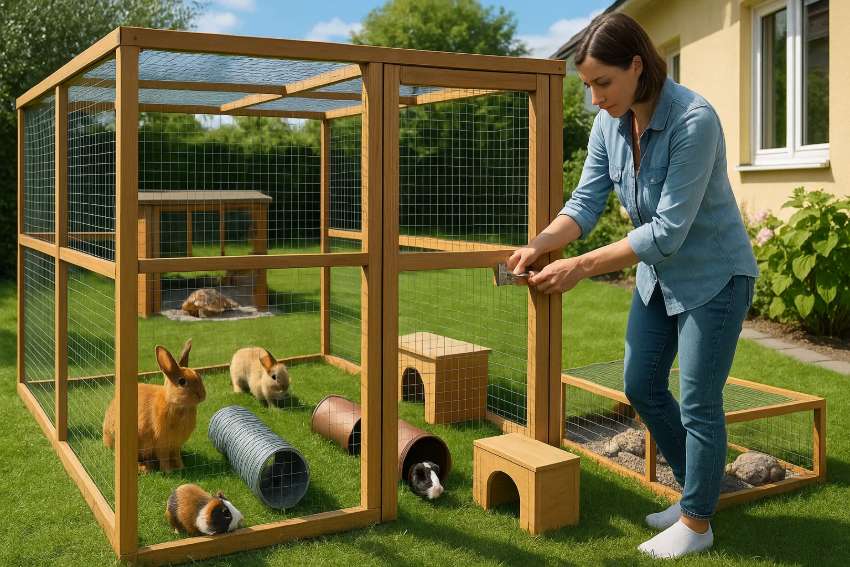
Use welded wire mesh (hardware cloth), not thin chicken wire.
Chicken wire keeps animals in, but many predators can bite or tear their way through.
For most small pets, a mesh aperture of 1–2.5 cm (½–1 inch) works well.
Ensure all cut edges are either folded inward or covered to avoid injuries.
4.3 Roof and cover
Every outdoor run should have a secure top:
Mesh roof panels for ventilation.
Solid sections (wood, corrugated plastic, roofing panels) for shade and rain protection.
This protects from:
Foxes and cats jumping in
Birds of prey (hawks, owls)
Objects falling from balconies/trees
5. Floors and Bases: Dig-Proof and Comfortable
The floor is where many enclosures fail. You need a base that:
Prevents digging out by pets and digging in by predators.
Is safe and comfortable for feet and shells.
Can be cleaned and kept reasonably dry.
5.1 Rabbits and guinea pigs
Best options:
A layer of welded mesh laid flat on the ground with at least 10–15 cm of soil, turf or bedding on top.
Patio slabs or concrete with deep layers of soft bedding, straw or grass mats in areas where pets rest.
Why mesh under the soil?
Pets can dig and enjoy natural behaviour, but can’t escape.
Foxes and other predators can’t dig in.
Avoid:
Bare wire as the only flooring – it can hurt feet over time.
Runs sitting directly on grass with no buried protection – determined rabbits and predators can dig under in a single night.
5.2 Tortoises
Most tortoises do best on natural substrates:
Soil (untreated, pesticide-free)
Mixed with sand or small gravel for Mediterranean species
Bury the fence or wall at least 20–30 cm deep to stop digging out.
Provide:
Areas of dry, firm ground for walking and basking.
Softer areas where they can dig shallow scrapes to rest.
6. Size and Layout: How Big Is “Big Enough”?
More space is almost always better, but many backyards have limits. Aim for the largest secure area you can realistically build and maintain.
6.1 Rough size ideas
Rabbits: for a bonded pair, think in terms of a minimum of several square metres for the run (for example 3–6 m² or more), plus a secure indoor hutch/house.
Guinea pigs: also need more space than many commercial hutches provide; plan for generous floor area rather than tall ramps.
Tortoises: need enough room to roam, explore and thermoregulate – a pen several times the length and width of the tortoise is only a starting point, not a ceiling.
6.2 Zoning the enclosure
Think of your enclosure layout in zones:
Sleeping/shelter zone: dry, insulated house or hide, off the ground if possible for mammals.
Open activity zone: space for running, hopping, walking and exploring.
Feeding/drinking zone: bowls or hay racks in areas that stay clean and dry.
Toilet/fouling area (for rabbits/guinea pigs): litter trays or a corner where they naturally choose to go, easy to clean.
Basking and shade zones (for tortoises): flat stones or platforms that warm in the sun, plus shaded hides and planting.
7. Weather Protection: Sun, Rain, Wind and Temperature
7.1 Shade and heat management
Provide permanent shade in part of the enclosure:
Roof panels
Shade cloth
Dense shrubs or climbing plants (pet-safe) outside the run
Rabbits and guinea pigs can overheat quickly in hot weather:
Ensure plenty of airflow; avoid fully closed plastic boxes in direct sun.
Use frozen water bottles or ceramic tiles as cool spots in heatwaves.
Tortoises need sun but also shade:
Design several micro-climates: sunny, dappled shade, deep shade.
7.2 Rain and wind
At least one section of the run should be:
Fully roofed and dry
Protected on at least one or two sides from wind
For rabbits and guinea pigs, the sleeping house should be:
Raised off the ground
Well-insulated and bedded with straw or safe bedding
Tortoises benefit from:
Dry hides or small “greenhouse” style shelters
In cooler climates, access to indoor housing or heated areas for bad weather
8. Predator-Proofing and Escape Prevention
Many people only realize their enclosure is not secure enough after a predator visit. Plan for foxes, raccoons, dogs, cats and birds of prey from day one.
Locks and latches:
Use bolt locks or carabiners, not simple twist catches a fox or raccoon could nudge open.
Check doors close flush with no gaps.
Roof security:
Every run must have a roof – mesh or solid – securely attached.
Buried or apron mesh:
Bury mesh vertically or lay it flat around the perimeter and cover with soil or stones to stop digging.
Night routine:
Rabbits and guinea pigs should be shut into their secure sleeping house or locked night area at dusk.
Double-check locks and gates every evening, just like locking your own doors.
Visual barriers:
Solid lower walls can reduce stress from nearby dogs or foxes staring in, especially for rabbits and guinea pigs.
9. Enrichment: Making the Enclosure Fun and Natural
A safe box with nothing in it is… boring. Enrichment keeps your pets mentally and physically healthy.
9.1 For rabbits and guinea pigs
Tunnels and hideouts:
Sturdy tubes, cardboard boxes (under cover so they don’t get soggy), wooden hide houses.
Platforms and levels:
Low ramps and platforms for rabbits to jump on and off.
Always provide non-slip surfaces and safe heights.
Foraging opportunities:
Scatter hay in different areas instead of just using racks.
Stuff hay into cardboard tubes or safe chew toys.
Edible plants:
Pet-safe herbs and grasses in pots or troughs (e.g. parsley, basil, plantain, dandelion leaves – check safety first).
9.2 For tortoises
Varied terrain:
Flat stones, small slopes and different substrates to walk over.
Hides and shelters:
Log piles, rock caves or purpose-built hides where they can retreat.
Edible plants:
Safe weeds and tortoise-friendly plants (check species-specific lists) for natural grazing.
10. Step-By-Step Example: Simple Rabbit/Guinea Pig Run
Here’s a basic outline you can adapt to your garden.
Plan size and shape.
For two rabbits, aim for at least 3–4 m² (for example 2 m x 2 m) plus an attached sleeping house.
Prepare the base.
Lay welded mesh over the ground where the run will sit.
Secure it at the edges and cover with 10–15 cm of soil, turf or bedding.
Build the frame.
Use sturdy wood to create a rectangular frame around the base.
Add vertical supports at corners and along the sides.
Attach mesh walls and roof.
Staple or screw welded mesh to the frame on all sides and top.
Add at least one human-sized access door with a bolt lock.
Add shelter and enrichment.
Connect the run to a solid sleeping house (raised off the ground) via a secure ramp or tunnel.
Add hide boxes, tunnels, hay racks and water bottles/bowls.
11. Step-By-Step Example: Basic Outdoor Tortoise Pen
This example is for a small/medium land tortoise in a climate that allows safe outdoor time in mild seasons.
Choose a sunny, sheltered spot.
At least part of the pen should get several hours of direct sun.
Mark out the area.
Use wooden boards or bricks to create solid sides at least 30–40 cm high.
Bury the walls.
Dig a trench and sink the walls 20–30 cm into the ground, or add buried mesh along the inside.
Shape the interior.
Mix soil and sand/gravel to create different textures.
Add flat rocks for basking and a shallow water dish.
Add hides and shade.
Provide at least one sturdy hide and a plant or shade structure.
Cover if predators are a concern.
Add a mesh or bar roof if birds of prey, dogs or foxes are common in your area.
Always monitor temperatures closely; many tortoises still need indoor housing or additional heat/UV sources depending on your climate and species.
12. Cleaning, Maintenance and Ongoing Checks
A safe enclosure is not a “build it and forget it” project. Regular checks keep it secure and healthy.
Inspect fencing, mesh, doors and locks at least weekly for rust, chew marks, digging or loose panels.
Remove soiled bedding daily from sleeping areas; do deeper cleans weekly.
Check for damp patches, moldy hay or buildup of droppings and adjust layout or cleaning frequency.
Watch your pets:
Are they using all parts of the enclosure?
Do they have favourite rest spots you should make more comfortable?
13. Common Mistakes to Avoid
Relying on thin chicken wire as the only protection against predators.
No roof on the run – open-top pens are invitations to foxes, cats and birds of prey.
Sitting runs directly on grass with no buried protection against digging.
Small, dark hutches with minimal attached exercise space.
Forgetting about extreme weather – heatwaves and storms can be as dangerous as predators.
Building something hard to clean – if cleaning is a nightmare, it won’t get done as often as needed.
When in doubt, ask yourself: “Would I feel safe sleeping here if I were the size of my pet?” If the answer is no, keep improving the design.
With thoughtful planning, good materials and regular checks, your outdoor enclosure can give rabbits, guinea pigs or tortoises a life that’s richer, safer and closer to nature – without turning your backyard into a danger zone.