Most pet owners worry about “overreacting.” But when it comes to urgent health problems, waiting too long is usually the bigger risk. Dogs and cats are experts at hiding pain, and some conditions become emergencies faster than you’d expect—especially in small pets, kittens/puppies, seniors, and pets with chronic disease.
This guide covers the most important red-flag symptoms that mean your dog or cat should see a veterinarian immediately (or go to emergency/urgent care), what you can do while you’re heading in, and common “wait-and-see” mistakes that can turn a manageable problem into a crisis.
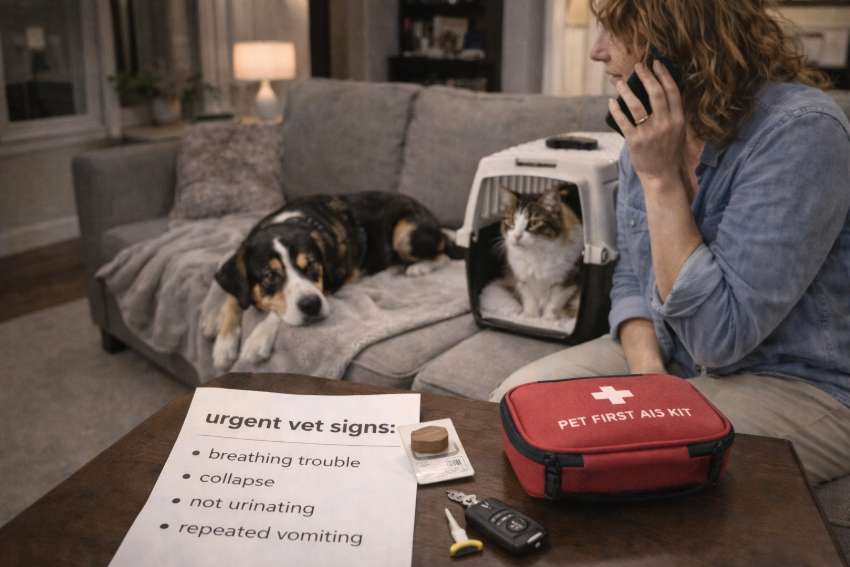
1. First Rule: If Your Gut Says “This Isn’t Normal,” Take It Seriously
You know your pet’s normal routine better than anyone. A sudden change in breathing, movement, behavior, or consciousness is a reason to act quickly—even if you can’t identify the exact cause.
Sudden, severe symptoms are more urgent than mild symptoms that slowly improve.
Multiple symptoms at once (vomiting + weakness, panting + collapse, not eating + hiding) raise urgency.
Vulnerable pets (very young, very old, very small, or chronically ill) need faster intervention.
2. Breathing Problems (Always Urgent)
Difficulty breathing is one of the most serious emergencies in both dogs and cats.
Open-mouth breathing in a cat: especially alarming—cats rarely breathe with an open mouth unless stressed or in trouble.
Blue/gray gums or tongue: oxygen emergency.
Labored breathing: belly effort, flared nostrils, wide stance, neck stretched out.
Sudden collapse after coughing or panting: urgent.
Choking or something stuck: pawing at mouth, gagging, distress.
What to do: keep your pet calm, avoid stressful handling, and go to urgent care immediately. Do not force water or food.
3. Collapse, Seizures, or Extreme Weakness
Collapse or fainting: even if they “recover,” it can signal heart, bleeding, toxin, or neurologic emergencies.
Seizures: first-time seizures, repeated seizures, or seizures lasting more than a couple minutes are urgent.
Severe weakness: unable to stand, sudden wobbliness, extreme lethargy.
What to do during a seizure: keep hands away from the mouth, move hazards away, dim lights, time the seizure, and seek veterinary care. If safe, record video for the vet.
4. Bleeding, Trauma, or Suspected Internal Injury
Hit by car, fall, or major impact: even if your pet seems “fine,” internal injuries can be hidden.
Uncontrolled bleeding: apply gentle pressure with a clean cloth and head to emergency care.
Bloated abdomen after trauma: possible internal bleeding.
Broken bone signs: severe limping, dangling limb, obvious pain.
5. Severe Vomiting or Diarrhea (Especially with Blood or Dehydration)
Repeated vomiting: can lead to dehydration quickly.
Unable to keep water down: urgent.
Blood in vomit or stool: urgent.
Black/tarry stool: may indicate digested blood.
Diarrhea + weakness or pale gums: urgent.
High-risk groups: puppies/kittens, seniors, small breeds, and pets with kidney disease, diabetes, or other chronic issues.
6. Not Urinating, Straining, or Painful Urination
Urinary issues are one of the most time-sensitive emergencies—especially in male cats.
Cat repeatedly entering the litter box with little/no urine: emergency (possible blockage).
Crying or straining to pee: urgent.
Blood in urine: needs prompt veterinary evaluation.
Dog unable to urinate: urgent (blockage can be life-threatening).
What to do: do not wait overnight. Seek urgent care.
7. Swollen Belly, Retching, or Restlessness (Bloat Risk in Dogs)
In dogs, a suddenly distended abdomen with unproductive retching can be a life-threatening emergency (often discussed as bloat).
Swollen, tight belly
Repeated dry heaving or trying to vomit with little coming up
Excess drooling, pacing, anxiety
Weakness or collapse
What to do: go to emergency care immediately. This is time-critical.
8. Poisoning or Toxin Exposure
If your pet may have ingested something toxic, treat it as urgent even if symptoms haven’t started yet.
Human medications (pain relievers, antidepressants, ADHD meds, etc.)
Rodent poison
Certain foods (chocolate, grapes/raisins, xylitol products, alcohol)
Household chemicals (cleaners, antifreeze)
Plants (many are irritating or toxic, especially to cats)
What to do: call a vet or urgent care right away. Do not induce vomiting unless a professional tells you to.
9. Sudden Severe Pain, Crying, or Inability to Walk
Sudden yelping/panting with pain: urgent evaluation needed.
Paralysis or dragging legs: emergency.
Cat hiding and growling when touched: can be serious pain.
10. Eye Emergencies (Time Matters for Vision)
Sudden squinting, eye held shut, pawing at eye
Cloudy eye, visible wound, or foreign object
Sudden swelling around the eye
Eye looks “popped out” or abnormal pupil size
What to do: seek urgent vet care. Vision can be lost quickly with eye injuries or glaucoma.
11. Allergic Reactions: Facial Swelling, Hives, Breathing Changes
Swollen face, lips, eyelids
Hives, sudden intense itching
Vomiting/diarrhea after a sting or new medication
Any breathing difficulty
What to do: contact a vet immediately. If breathing is affected, go to emergency care.
12. “Quiet” Emergencies: Subtle Signs That Still Matter
Some urgent problems look like mild behavior changes at first:
Cat suddenly hiding and not eating: can indicate serious illness.
Sudden increase in thirst and urination: possible metabolic emergency.
Pale gums: possible blood loss or shock.
Cold ears/feet with weakness: possible shock.
13. What You Can Do While You’re Heading to the Vet
Stay calm: your pet’s stress affects breathing and pain.
Bring info: what happened, when it started, any toxin exposure, medications, and a short symptom timeline.
Transport safely: cats in carriers; dogs restrained with a harness/seatbelt.
Don’t force food or water: especially with vomiting, breathing issues, or possible obstruction.
Take photos/video: vomiting, stool, breathing, gait changes can help the vet.
Final Thoughts: When in Doubt, Call—It’s Better to Be Safe
Breathing trouble, collapse, repeated vomiting/diarrhea with weakness, inability to urinate (especially male cats), major trauma, suspected poisoning, sudden severe pain, and eye injuries are all reasons to seek immediate veterinary care. You don’t need a perfect diagnosis to act—you just need to recognize that your pet is not okay.
Your action step: save your nearest emergency vet number in your phone, keep a carrier ready, and trust your instincts. Acting quickly can be the difference between a simple treatment and a life-threatening crisis.