If you’ve ever been quoted hundreds (or even thousands) for a dog or cat dental cleaning, you’re not alone. Many pet owners feel shocked—especially when the pet seems fine and “still eats normally.” The hard truth is that dental disease is extremely common, and professional cleanings are expensive because they’re not just a quick “toothbrush session.” They typically involve anesthesia, monitoring, full-mouth dental X-rays, and sometimes extractions.
This guide explains why dental cleanings cost so much, what’s actually included, how to prevent dental problems at home, and the warning signs that mean your pet needs a vet check sooner rather than later.
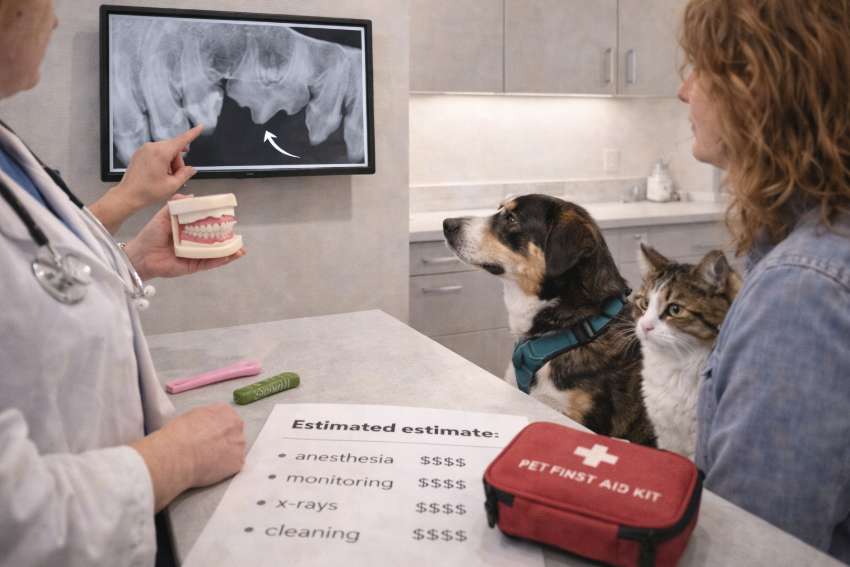
1. Why Pet Dental Cleanings Cost So Much
The biggest cost driver is safety. Unlike humans, pets can’t sit still and rinse on command. A proper dental cleaning is usually done under anesthesia so the vet team can clean thoroughly and safely—especially below the gumline, where the most damaging disease happens.
1.1 Anesthesia and Monitoring
Pre-anesthetic exam and planning: your vet assesses heart, lungs, age-related risks, and underlying issues.
Bloodwork (often recommended): helps detect problems that increase anesthesia risk.
IV catheter and fluids: supports blood pressure and safety.
Continuous monitoring: trained staff monitor oxygen, heart rate, blood pressure, temperature, and depth of anesthesia.
Why this matters: the goal is to reduce anesthesia risk and catch complications early.
1.2 Full-Mouth Dental X-Rays
Dental disease often hides below the gumline. X-rays help detect root infections, bone loss, resorptive lesions (in cats), and hidden problems that aren’t visible during a basic exam.
What you’re paying for: equipment, staff training, and time to take and interpret images.
Why it affects cost: it adds time and requires specialized tools.
1.3 Scaling and Polishing (Above and Below the Gumline)
Scaling: removes plaque and tartar.
Subgingival cleaning: addresses bacteria below the gumline, where periodontal disease develops.
Polishing: smooths enamel to slow future plaque buildup.
1.4 Extractions and Advanced Care (When Needed)
Many pets don’t just need cleaning—they need treatment. Extractions are common and can significantly increase cost because they require time, pain management, nerve blocks, and careful surgical technique.
Extractions: fractured teeth, infected roots, severe periodontal disease.
Cat-specific issue: painful resorptive lesions are common and often require extraction.
Pain control: medications and sometimes local nerve blocks.
1.5 The “Staff Time” Factor
A safe dental procedure requires trained staff for anesthesia, monitoring, dental imaging, cleaning, and recovery. It’s a team procedure—not a quick appointment.
2. Why “Anesthesia-Free Dental Cleaning” Is Usually a Bad Idea
You may see grooming salons offering anesthesia-free dentals. While it can remove visible tartar, it typically can’t do what matters most: deep cleaning below the gumline and dental X-rays. Many pets won’t tolerate thorough work while awake.
What it can do: cosmetic tartar removal on visible surfaces.
What it can’t reliably do: safe subgingival cleaning, X-rays, diagnosing hidden disease, and pain-free extractions.
Risk: missed disease can progress until it becomes painful and expensive.
Practical takeaway: If cost is the concern, focus on prevention and early vet checks—not cutting corners on procedures that require anesthesia for safety.
3. What Happens If You Don’t Treat Dental Disease?
Dental disease is not just “bad breath.” It can become chronic pain and infection.
Pain and tooth loss: pets often hide it and keep eating.
Chronic infection: bacteria under the gums can cause inflammation and bone loss.
Abscesses: facial swelling, draining tracts, severe pain.
Systemic effects: ongoing inflammation is not good for overall health, especially in older pets.
4. The Most Cost-Effective Strategy: Prevent Problems Early
The best way to avoid expensive dentals is to slow plaque buildup and catch disease before extractions are needed.
4.1 Daily Tooth Brushing (The Gold Standard)
Nothing beats brushing for plaque control.
Best frequency: daily, or as close to daily as possible.
Use pet toothpaste: never human toothpaste (can be harmful if swallowed).
Start small: finger brushing or a soft brush, short sessions.
Step-by-Step Brushing Plan for Beginners
Days 1–3: let your pet lick pet toothpaste from your finger.
Days 4–7: gently rub gums and outer teeth with your finger.
Week 2: introduce a soft toothbrush for a few seconds.
Week 3+: build up to 30–60 seconds per side, focusing on outer surfaces.
Tip: Outer tooth surfaces matter most. You don’t need to pry the mouth open wide.
4.2 Dental Chews and Dental Diets (Helpful, Not Magic)
Dental chews: can reduce plaque mechanically if your pet actually chews them properly.
Dental diets: some kibble shapes and textures help scrape teeth.
Best use: as a supplement to brushing, not a replacement.
4.3 Water Additives and Oral Gels
These can help with breath and mild plaque, but results vary.
Good for: pets that refuse brushing, mild maintenance.
Limitations: won’t remove established tartar or treat periodontal disease.
4.4 Routine Vet Oral Checks
Ask your vet to score dental health at annual exams
Plan earlier cleanings for small breeds and cats prone to dental issues
Address broken teeth quickly (they often lead to expensive extractions if delayed)
5. Pets Most at Risk for Expensive Dental Work
Some pets are more likely to need dentals and extractions.
Small dog breeds: crowded teeth and faster plaque buildup are common.
Flat-faced breeds: can have tooth crowding and bite issues.
Senior pets: more time for disease to progress.
Cats: resorptive lesions and gum inflammation can be common even with “normal-looking” teeth.
Pets that chew hard objects: risk of fractures (bones, antlers, very hard toys).
6. Common Signs Your Pet Has Dental Problems (Even If They Still Eat)
Pets often keep eating despite dental pain. Watch for:
Bad breath that doesn’t improve
Red, swollen gums or bleeding
Visible tartar buildup (yellow/brown crust)
Drooling or pawing at the mouth
Chewing on one side, dropping food, or preferring soft food
Hiding, irritability, or reduced interest in toys
Facial swelling or draining tracts (urgent)
7. How to Lower the Cost When a Dental Is Needed
You can’t make veterinary care free, but you can make it more predictable.
Ask for an estimate range: dental costs vary based on extractions and X-ray findings.
Ask what’s included: anesthesia monitoring, X-rays, pain meds, IV fluids, recovery care.
Consider pet insurance or a wellness plan: some plans help with routine cleanings.
Do it sooner: earlier cleanings often mean fewer extractions.
Smart question to ask: “Is my pet likely to need extractions based on today’s exam?” It won’t be perfect without X-rays, but it helps you plan.
8. When to See a Vet Quickly (Dental Emergencies)
Facial swelling, bleeding from the mouth, or pus
Broken tooth (especially with visible pulp or pain)
Not eating, crying, or sudden behavior changes
Drooling with pawing at the mouth or inability to close the mouth
Emergency note: If your pet is having trouble breathing, swallowing, or is extremely weak, seek urgent care immediately.
Final Thoughts: Dental Prevention Is Cheaper Than Dental Repair
Professional dental cleanings cost so much because they are real medical procedures—anesthesia, monitoring, X-rays, and sometimes surgery. The best way to reduce the financial hit is to prevent disease early with brushing, smart chew choices, and routine vet dental checks. Even small improvements—like brushing a few times a week and avoiding tooth-breaking chews—can save you a lot over your pet’s lifetime.
Your action step: start a two-week “tooth brushing habit” plan today. Keep a pet toothbrush and toothpaste next to your treats, brush for 20–30 seconds, and slowly build the routine. Consistency is what prevents the expensive problems later.