Kids can learn empathy, patience, and responsibility through pets—but only if the “responsibility” is realistic. Many families start with good intentions (“my child will feed the dog every day!”) and then end up frustrated when tasks are forgotten or done unsafely. The key is to match pet chores to a child’s age, attention span, and motor skills, while keeping adults responsible for safety-critical care.
This guide gives age-appropriate pet chores for dogs, cats, and small pets, explains how to teach respectful handling, and shows you how to build routines that stick—without turning pet care into daily conflict.
1. The Golden Rule: Adults Own the Pet, Kids Practice Responsibility
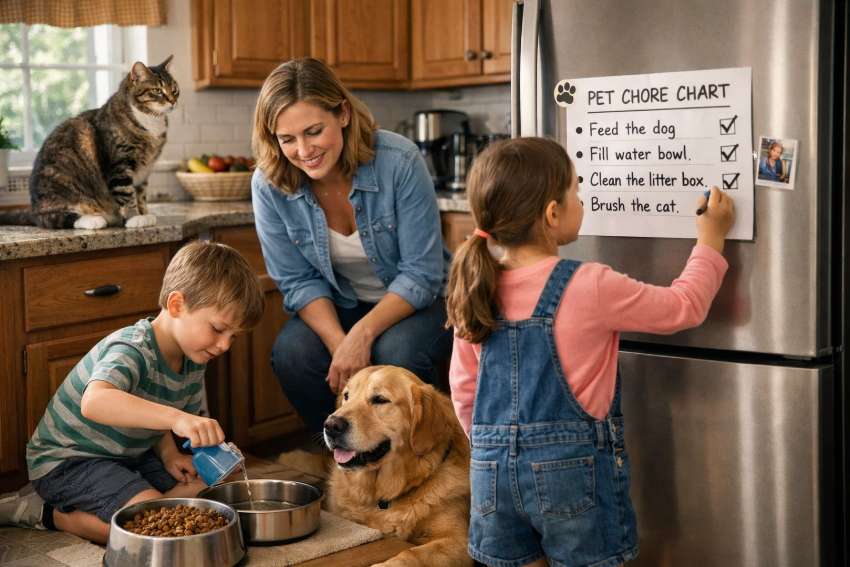
Even when kids help, the adult remains responsible for the pet’s health and safety.
Adults handle: medication, vet decisions, leash safety, bite-risk situations, and any task where a mistake could harm the pet.
Kids practice: predictable, low-risk chores with supervision until they are consistently reliable.
Goal: build lifelong respect for animals, not perfection.
2. Respect Starts With Body Language (Teach This Before Chores)
Most child–pet problems come from misunderstanding signals. Teach kids to “read” an animal before touching or approaching.
2.1 A simple rule kids can remember: “Ask, Approach, Pause”
Ask: ask the adult for permission first.
Approach: move slowly, from the side, not head-on.
Pause: let the pet come to you; if they move away, you’re done.
2.2 “Green, Yellow, Red” signals
Green (OK): relaxed body, loose tail, soft face, slow blinking (cats).
Yellow (pause): lip licking, turning head away, stiff body, ears back, tail twitching (cats).
Red (stop): growling, hissing, snapping, raised hackles, hard stare, cornered hiding.
3. Age-Appropriate Pet Chores (What Kids Can Actually Do)
Below are realistic chores by age group. Kids develop at different rates, so use this as a starting point and adjust.
Age 2–4: “Helper Jobs” (Supervised 100% of the Time)
At this age, chores are about building gentle habits, not true responsibility.
Carry a lightweight treat pouch (adult gives the treats)
Help refill a water bowl with a small cup (adult checks amount and cleanliness)
Place pre-measured kibble into a bowl (adult confirms diet and portion)
Hand an adult a brush or towel
Help put toys into a bin (clean-up game)
Respect lesson: “Pets are not toys. We touch gently and stop when they move away.”
Age 5–7: Simple Daily Routines (Supervised, With Checklists)
Kids can do short, repeatable tasks with clear steps.
Refresh water bowls (adult checks cleanliness)
Feed pets using a pre-measured scoop (adult confirms portion)
Brush a calm dog or cat for 1–2 minutes (adult supervises body language)
Fill a puzzle feeder or lick mat (adult approves ingredients)
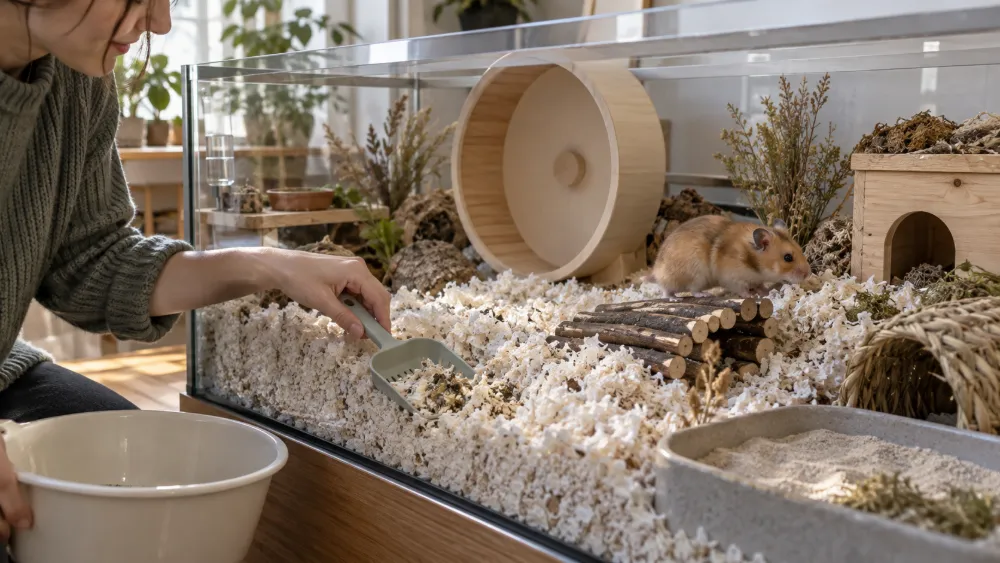
Spot-clean small-pet enclosures (adult handles deep clean)
Respect lesson: “We don’t wake sleeping pets, and we don’t hug or chase.”
Age 8–10: More Responsibility + Longer Tasks (Still Supervised for Safety)
Kids can take on “ownership” of routine tasks, but adults still verify.
Prepare meals (portioning with adult guidance)
Measure and set out fresh hay/greens for small pets (adult checks safe foods)
Wash bowls (adult ensures proper rinsing and no chemical residue)
Daily enrichment: short training games with a dog (adult oversees leash/space)
Basic grooming: brushing, wiping paws after walks (adult handles matting and skin issues)
Respect lesson: “If the pet looks uncomfortable, we stop. Comfort comes before chores.”
Age 11–13: Shared Ownership Tasks (Skill-Building Years)
Older kids can learn more complex routines and develop real consistency.
Maintain a feeding and water schedule with reminders
Do supervised dog walks in safe areas (adult decides route, gear, and rules)
Keep a simple health log: appetite, energy, litter box or poop notes
Weekly deep-clean support: litter box change, cage refresh (adult handles chemicals)
Train and reinforce cues: sit, wait, leash manners (adult checks technique)
Respect lesson: “Safety first: we never force contact, and we keep animals secure around doors and visitors.”
Age 14+: Near-Adult Responsibilities (With Clear Boundaries)
Teens can handle most daily care if they’ve been consistent and the tasks are safe.
Full daily care routine: food, water, enrichment, cleanup
Dog walking with route planning and safety checks (adult approval)
Basic grooming sessions (bathing, brushing, nail trim education with adult oversight)
Assist with vet prep: carrier training, medication schedule reminders (adult administers if needed)
Budgeting: tracking monthly costs for food/litter/supplies
Respect lesson: “Respect means meeting needs consistently, not just playing when it’s fun.”
4. Pet Chores by Type (Dogs, Cats, and Small Pets)
4.1 Dog Chores Kids Can Help With
Filling water bowls
Measuring food (adult checks)
Toy tidy-up and rotating toys
Simple training games (sit, touch, find it)
Helping pack the walk bag (poop bags, treats, towel)
4.2 Cat Chores Kids Can Help With
Water refresh and bowl washing
Gentle brushing (for cats who enjoy it)
Interactive play with a wand toy (adult supervises)
Helping with litter routine (age-appropriate tasks, hygiene emphasized)
4.3 Small Pet Chores Kids Can Help With
Refilling hay and water
Daily spot-cleaning
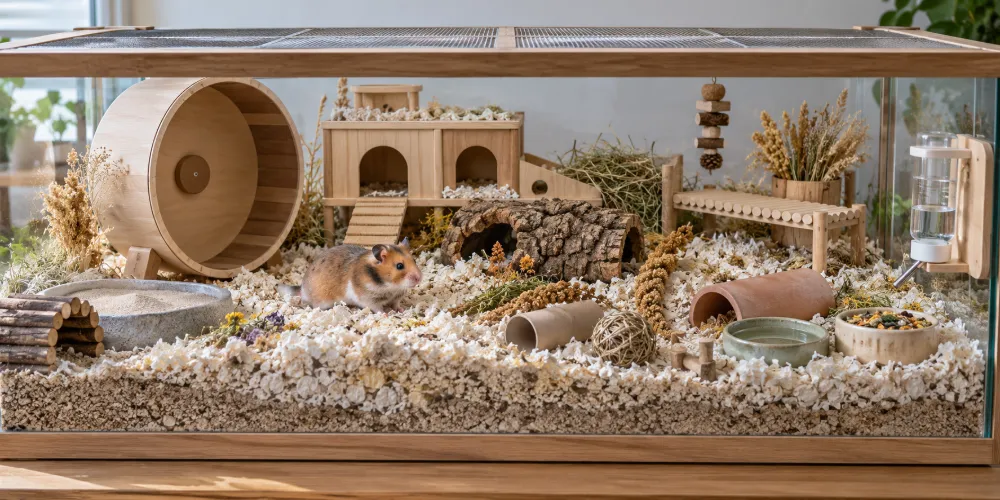
Preparing enrichment: tunnels, hiding boxes, safe chew options
Quiet observation time (learning normal behavior)
5. The “Respect Rules” Every Kid Should Know
No chasing: if the pet runs, we stop.
No hugging or face-to-face contact: many animals find this scary.
Hands low, voices soft: excitement can overwhelm pets.
Let them rest: don’t disturb sleeping, eating, or hiding pets.
Ask before touching: especially with visitors’ pets.
6. How to Make Chores Stick (Without Nagging)
Kids do better with structure than lectures.
Use a visual checklist: morning/evening tasks in one place.
Pre-measure supplies: labeled scoops, portion containers, treat jars.
Pair chores with an existing routine: after breakfast, before screen time, after homework.
Keep tasks short: 2–5 minutes is often enough for younger kids.
Praise the process: “You noticed she moved away and you stopped—great respect.”
7. Safety Notes: When Kids Should Not Be the One Doing the Task
Breaking up pet conflicts or handling strange animals
Walking a large or reactive dog alone
Giving medication or using chemicals/cleaners
Handling a stressed cat or a fearful dog
Picking up rabbits or fragile small pets without adult supervision
8. When to Involve a Vet or Trainer
Teach kids that asking for help is part of responsible pet care.
Any bite, scratch, or escalating growling/hissing
Signs of pain, sudden behavior change, or not eating
Repeated fear responses to handling or noise
Safety concerns about walking or training
Final Thoughts: Respect Is a Skill You Teach in Tiny Moments
Teaching kids to respect animals isn’t about forcing perfect chores—it’s about building habits: asking permission, reading body language, handling gently, and meeting needs consistently. Start with small, low-risk tasks, use checklists, and keep adults responsible for safety. Over time, pet chores become less about “helping” and more about raising a confident, compassionate kid who understands that animals deserve patience and choice.
Your action step: choose one age-appropriate daily chore and one “respect rule” to focus on this week. Keep it simple, repeat it daily, and celebrate calm, gentle behavior—not just finished tasks.