“Trendy” doesn’t just mean “popular.” In 2025, the breeds getting the most attention in the US and UK share a few things: they fit modern living (apartments, hybrid work, smaller yards), they look great on social media, and they match what many families want right now—companionship, manageable exercise needs, and predictable routines.
This guide gives you a practical, real-life look at 20 of the trendiest dog breeds in the US and UK in 2025, why they’re everywhere, what they’re actually like to live with, the hidden “trend costs,” and how to choose responsibly (or pick a better-fit alternative).
1. What “Trendiest in 2025” Means (So You Don’t Choose a Dog for the Wrong Reason)
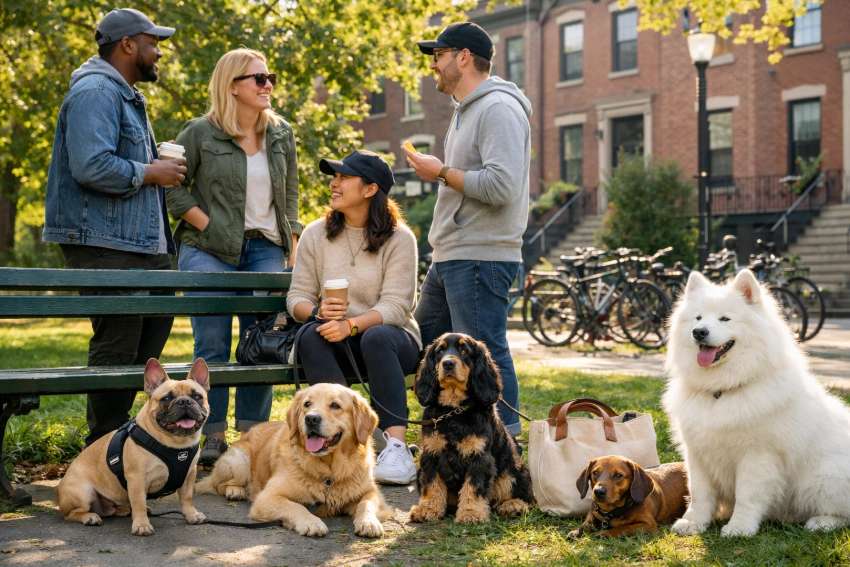
For this article, “trendiest” means breeds that are showing up again and again in real-world demand—registrations, urban sightings, social buzz, and family wish lists—especially across the US and UK.
Big-city friendly: adaptable to smaller homes and busier neighborhoods
Family lifestyle fit: companion-focused and people-oriented
Online visibility: recognizable looks and “shareable” personalities
Rising interest: breeds people are newly considering, not just long-time classics
Important note: Trendy does not always mean healthy, easy, or affordable. Some fashionable breeds come with higher vet bills, grooming costs, or training needs—so this guide includes the “reality check” for each.
2. The Top 20 Trendiest Dog Breeds in the US and UK (2025 List)
1) French Bulldog
Why it’s trending: compact, affectionate, and highly adaptable to city life.
Best for: apartment living, calmer households, short daily walks
Reality check: higher risk of breathing and heat issues; insurance and vet costs can be significant
2) Labrador Retriever
Why it’s trending: still the “default family dog” in many homes—friendly, trainable, and versatile.
Best for: active families, first-time dog owners who want a steady temperament
Reality check: needs consistent exercise and weight management; boredom can lead to chewing
3) Golden Retriever
Why it’s trending: gentle, social, and famously family-friendly.
Best for: families with kids, owners who enjoy daily walks and play
Reality check: shedding is intense; grooming and vacuuming are part of life
4) Cocker Spaniel (English Cocker Spaniel in particular)
Why it’s trending: the “happy, sporty, compact” companion that fits many UK and US homes.
Best for: people who want a medium-small dog with a cheerful temperament
Reality check: grooming and ear care are non-negotiable; can be sensitive if training is harsh
5) Dachshund (including Miniature varieties)
Why it’s trending: huge personality in a small body—plus a very recognizable look.
Best for: smaller homes, owners who want a funny, loyal companion
Reality check: back health matters; avoid too many stairs and jumping on/off furniture
6) German Shepherd Dog
Why it’s trending: admired for intelligence, loyalty, and working-dog confidence.
Best for: experienced owners, active households, people who enjoy training
Reality check: needs structure and mental work; under-stimulated shepherds can become reactive
7) Poodle (Standard/Miniature/Toy)
Why it’s trending: smart, trainable, and often chosen by people who prefer lower-shedding coats.
Best for: owners who want a highly trainable dog and can commit to grooming
Reality check: grooming is ongoing (professional or very consistent DIY)
8) Bulldog (English Bulldog)
Why it’s trending: iconic look and a slower-paced, companion style that suits many homes.
Best for: calmer households, short walks, “couch buddy” lifestyles
Reality check: heat sensitivity and skin/ear folds can mean higher maintenance and vet spend
9) Rottweiler
Why it’s trending: loyal, steady, and increasingly popular with owners wanting a confident guardian-type companion.
Best for: experienced owners who value training and boundaries
Reality check: early socialization is critical; strength + size means training isn’t optional
10) Cavalier King Charles Spaniel
Why it’s trending: affectionate, gentle, and easy to integrate into many households.
Best for: apartments, seniors, families wanting a friendly lap dog
Reality check: plan for ongoing health screening and a solid vet budget
11) Staffordshire Bull Terrier
Why it’s trending: affectionate “people dog” reputation in the UK and growing interest with the right training.
Best for: owners who want a loyal companion and can provide structure
Reality check: dog-to-dog selectivity can happen; careful introductions and training help
12) English Springer Spaniel
Why it’s trending: active, friendly, and a classic family gundog type in the UK.
Best for: outdoorsy families, runners/hikers, people who love training games
Reality check: needs daily exercise and enrichment or they get chaotic
13) Australian Shepherd
Why it’s trending: athletic, smart, and very visible on social media.
Best for: active owners who want a dog “project” (training, sports, tricks)
Reality check: herding instincts can mean nipping or chasing without training
14) Pembroke Welsh Corgi
Why it’s trending: adorable silhouette, big personality, and compact size.
Best for: owners who want a smaller dog with a “big dog” attitude
Reality check: can be barky and stubborn; weight control matters for their backs
15) Cane Corso
Why it’s trending: growing demand for large, impressive guardian breeds—especially among experienced owners.
Best for: confident, experienced handlers who prioritize training and management
Reality check: not a casual family pet; requires serious socialization, space, and leadership
16) Miniature Schnauzer
Why it’s trending: compact, expressive, and fits many households.
Best for: apartments, families who want a smaller dog with personality
Reality check: can be vocal; grooming and coat care are ongoing
17) Jack Russell Terrier
Why it’s trending: small, bold, “always ready” energy—plus renewed public interest.
Best for: active owners who love training, games, and a lively dog
Reality check: high prey drive and big energy; boredom leads to digging and chaos
18) Italian Greyhound
Why it’s trending: sleek “designer” look and affectionate, clingy companionship.
Best for: quiet homes, people who want a gentle indoor dog
Reality check: can be fragile and cold-sensitive; potty training may take patience
19) Samoyed
Why it’s trending: the famous “smiling” face and fluffy coat that photographs beautifully.
Best for: cooler climates, owners who enjoy grooming and daily activity
Reality check: heavy shedding, high grooming needs, and can be vocal
20) Shetland Sheepdog
Why it’s trending: smart, trainable, and increasingly noticed as a smaller herding dog option.
Best for: people who enjoy training and want a smaller, sensitive herding breed
Reality check: can be noise-alert and shy without socialization; coat care is real
3. Why These Breeds Are Trending Right Now
3.1 Smaller Homes + Urban Living
Many US and UK households are prioritizing dogs that fit into apartments, townhomes, and smaller gardens. That favors compact companion breeds and adaptable “easy to live with” temperaments.
3.2 Companion-First Dogs
Hybrid work and lifestyle changes have made people value emotional companionship more than ever. Breeds known for cuddly, people-focused behavior have a big advantage.
3.3 Social Media “Visibility”
Breeds with distinctive looks (short faces, fluffy coats, unique silhouettes) and expressive personalities get shared more online, which increases demand. That doesn’t mean they’re the best match for every home.
4. The “Trend Costs” People Don’t Expect
Before you commit, budget beyond the adoption fee or purchase price.
Higher insurance premiums: some popular breeds are more expensive to insure due to common health issues.
Breed-specific vet costs: flat-faced breeds can have breathing, skin, and heat-related needs.
Grooming: poodles, spaniels, schnauzers, and thick-coated breeds can require regular professional grooming.
Training support: herding breeds and guardian breeds often need structured training and management.
Travel and pet sitting: high-energy or anxious dogs may be harder (and pricier) to board.
5. How to Choose a Trendy Breed Responsibly (So You Don’t Regret It)
5.1 Start With Your Lifestyle, Not the Breed List
If you want calm evenings: prioritize calmer temperaments over “cool factor.”
If you’re busy: avoid breeds that need daily intense training or long exercise blocks.
If you live in a hot area: be cautious with flat-faced dogs and heavy-coated breeds.
5.2 Consider an Adult Dog (Not Just Puppies)
If you love a breed but want fewer surprises, adopting an adult dog can be the best of both worlds: known temperament, calmer energy, and often fewer “puppy chaos” months.
5.3 Ask These Questions Before Bringing One Home
What does a normal day of exercise look like for this breed?
What are the most common health issues, and can I budget for them?
How much grooming time (or money) will I realistically commit to?
Do I want a dog that’s social with strangers, or more reserved/protective?
How will I manage training in the first 90 days?
6. When to Talk to a Vet or Trainer (Don’t Wait Too Long)
6.1 Vet Check: Especially Important for Flat-Faced and Senior Adoptions
Book an early baseline exam if you’re adopting or buying any dog—especially flat-faced breeds, older dogs, or dogs with unknown histories.
Noisy breathing, coughing, overheating easily, or exercise intolerance
Chronic skin irritation (folds, allergies, ears)
Persistent digestive issues or ongoing itchiness
6.2 Trainer Help: These Red Flags Are Worth Professional Support
Reactivity on leash (lunging, barking, freezing)
Separation anxiety (panic, destruction, nonstop vocalizing when alone)
Resource guarding (growling over food, toys, resting areas)
Guardian breeds showing over-protectiveness without control
Early, reward-based training is cheaper and easier than fixing entrenched problems later.
Final Thoughts: The Best “Trendy” Dog Is the One That Fits Your Real Life
It’s fun to follow dog trends—but your daily routine is what decides whether a breed will feel like a dream or a constant struggle. Use this list as a starting point, then filter it through your home setup, time, budget, and training commitment. If you choose with your lifestyle first, you’ll end up with a dog you genuinely enjoy for years—not just a breed that looks great in photos.
Your action step: pick your top 3 breeds from this list, then write down your honest daily schedule (work, walks, downtime). The breed that matches your schedule—not your feed—is the right one.