If you love the idea of a pet but dread the chaos of puppy or kitten life, a senior dog or cat might be your perfect match. Older pets are often overlooked in shelters, yet they can be some of the easiest, sweetest companions—calmer at home, more predictable in temperament, and frequently already trained in the basics. Many also thrive in quieter households with steady routines.
This article explains why adopting a senior pet can be a fantastic choice, what “cheaper” really means (and what it doesn’t), how to choose a healthy match, and how to set up your home for comfort and long-term care.
1. What Counts as a “Senior” Dog or Cat?
“Senior” isn’t one exact age—it depends on species and size.
Dogs: often considered senior around 7+ years, with large breeds aging earlier.
Cats: often considered senior around 10+ years.
Practical takeaway: focus less on a number and more on energy level, mobility, and health history.
2. Why Senior Pets Can Be an Amazing Fit
2.1 You Often Get a More Predictable Personality
With an adult or senior pet, the “who are you really?” phase is shorter. Many are already fully grown, with stable temperament and clear preferences.
Lower chance of surprise size/energy changes
Less adolescent behavior and boundary testing
More obvious likes/dislikes (cuddly vs independent, playful vs calm)
2.2 Many Seniors Are Past the Destruction Stage
Less chewing, teething, and “everything goes in my mouth” behavior
Often easier to manage in apartments or busy households
More likely to settle after exercise and enjoy naps
2.3 Training Can Be Easier Than You Think
Older pets can absolutely learn new habits—especially in a calm home with consistent rewards.
Many dogs already understand house-training basics
Older cats often adapt well to litter box routines
Focus tends to improve when energy is calmer
2.4 Senior Pets Often Match Real-Life Schedules Better
Shorter, gentler walks instead of constant high-energy exercise
Less need for all-day supervision
Great for first-time owners who want a calmer start
3. The “Cheaper” Part: What You May Save (And What You Might Spend More On)
Adopting an older dog or cat can be cheaper in some ways—especially compared to buying a puppy/kitten or raising a young animal through its high-maintenance years.
3.1 Ways Senior Adoption Can Be Cheaper
Lower adoption fees: many shelters reduce fees for seniors to encourage adoption.
Less “starter gear” waste: no outgrowing collars, harnesses, crates, or litter boxes as quickly.
Less damage: fewer chewed shoes, destroyed furniture, or scratched doors (often).
Lower training/childcare costs: fewer puppy classes, daycare needs, and constant supervision.
3.2 Where Seniors Can Cost More
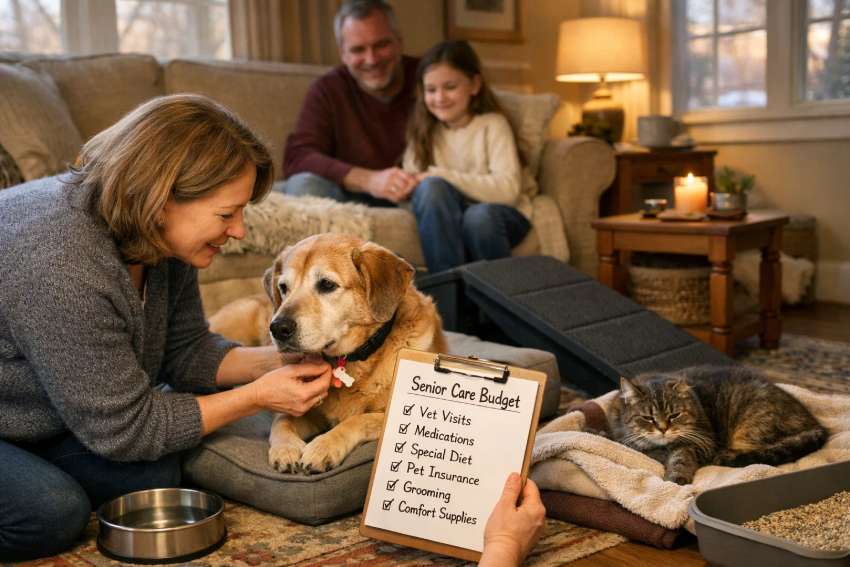
Vet care: older pets may need more frequent exams and bloodwork.
Chronic conditions: arthritis, dental issues, kidney disease (cats), and endocrine problems can appear with age.
Medication and supplements: ongoing costs can add up.
Bottom line: seniors can reduce “chaos costs” and upfront spending, but you should budget for higher medical planning. This is where an emergency fund or pet insurance becomes especially valuable.
4. How to Choose the Right Senior Pet (A Smart Adoption Checklist)
4.1 Ask the Shelter/Rescue These Questions
Why was the pet surrendered (if known)?
What is their daily routine like now (sleep, appetite, bathroom habits)?
How do they handle being alone?
Any known medical conditions or medications?
How do they do with stairs, car rides, and handling?
Dog: how are they on leash and around other dogs?
Cat: any litter box issues, or sensitivity to changes?
4.2 Look for “Lifestyle Fit” More Than Looks
If you want a calm home: choose a calm pet, not a high-drive breed type.
If you have stairs: prioritize a pet with good mobility or plan ramps.
If you travel: ask about boarding tolerance or sitter needs.
5. The First Month With a Senior Pet: What to Expect
Senior pets still need a decompression period—just like any rescue—but it may look different.
They may sleep a lot: stress and age both increase rest needs.
Routine is everything: meals, potty breaks, and quiet time help them settle.
They may grieve: some seniors are surrendered after a family change and may seem sad or clingy.
House-training refresh: even trained pets can have accidents during transition.
6. Senior-Friendly Home Setup (Small Changes, Big Comfort)
6.1 For Senior Dogs
Non-slip flooring: rugs or runners on slippery surfaces.
Orthopedic bed: supportive bedding for joints.
Ramps or stairs: for couches, beds, or car access if needed.
Gentle exercise: shorter walks, more sniffing, fewer sudden sprints.
6.2 For Senior Cats
Lower-entry litter box: easier on stiff joints.
Easy access to favorite spots: steps or platforms instead of high jumps.
Multiple water stations: encourages hydration.
Warm, quiet resting spots: away from household traffic.
7. Health Planning: The Smart Way to Budget for Senior Pets
Senior pets do best with proactive care rather than “wait until it’s serious.”
Book a vet visit soon after adoption for baseline exams and lab work if recommended
Discuss dental health early (common hidden cost)
Create a monthly “pet health” budget line or emergency fund
Ask about pain management options if mobility is reduced
8. When to Call a Vet Quickly (Senior Red Flags)
Not eating for a day, or significant appetite change
Sudden weight loss, vomiting, diarrhea, or increased thirst
Limping, difficulty standing, reluctance to use stairs
Changes in breathing, coughing, or collapse
Cat: litter box changes, straining, or accidents
Behavior changes: confusion, unusual aggression, or hiding
Final Thoughts: Senior Pets Give You the Best Parts of Pet Ownership—Fast
Adopting a senior dog or cat can be one of the most rewarding choices you make. You often skip the hardest stages (teething, constant supervision, housetraining from scratch) and get a calmer, more predictable companion who appreciates a stable home. While seniors may come with higher medical planning, many families find the overall experience is simpler, gentler, and surprisingly affordable when you budget wisely.
Your action step: if you’re considering a pet, meet at least one senior at a local shelter or rescue. Ask about their routine, mobility, and comfort needs—and imagine how easily they could fit into your daily life. You might be surprised by how perfect the match feels.