An outdoor enclosure can be a fantastic quality-of-life upgrade for rabbits, guinea pigs, and tortoises—more space, fresh air, and natural enrichment. But “letting them out in a pen” is also one of the easiest ways for small pets to get injured, stressed, overheated, or attacked by predators. A truly safe enclosure needs to protect against digging, climbing, squeezing through gaps, weather, and escape attempts, while still being easy for you to clean and maintain.
This guide walks you through a practical, step-by-step build plan for a safe outdoor enclosure, with species-specific notes for rabbits, guinea pigs, and tortoises, plus the most common mistakes that make enclosures unsafe.
1. Safety First: The Risks Outdoor Enclosures Must Prevent
Before building, it helps to know what you’re defending against.
Predators: foxes, dogs, cats, birds of prey, raccoons (region-dependent), rats, and even neighborhood pets.
Escape: rabbits dig, guinea pigs squeeze, tortoises push and climb surprisingly well.
Weather: overheating, heavy rain, cold wind, and sudden temperature drops.
Stress: constant predator pressure at the wire can cause shock in prey animals.
Toxins: treated wood, toxic plants, pesticides, slug bait, and contaminated soil.
2. Choose Location Wisely (It Matters More Than People Think)
Pick a quiet area: away from busy foot traffic, barking dogs, and loud roads.
Avoid fence lines and dense hedges: predators use these as approach routes.
Plan for partial shade: especially critical for tortoises and dark-coated rabbits.
Elevate drainage: avoid low spots that flood or become muddy.
Tip: Morning sun + afternoon shade is often a good balance for many climates.
3. Materials That Make or Break Safety
3.1 Mesh: Use Predator-Proof Wire (Not “Chicken Wire”)
Chicken wire is for containing chickens, not stopping predators. It can be torn or bent by determined animals.
Best choice: strong welded mesh/hardware cloth for sides and roof.
Small opening size: helps prevent paws reaching in and reduces escape squeezing.
Secure attachment: use screws with washers, not flimsy staples.
3.2 Frame: Stable, Weather-Resistant, and Chew-Safe
Wood frame: choose untreated or pet-safe treated wood and seal safely.
Metal frame: durable and harder to chew, but can heat up in direct sun.
Avoid exposed toxic coatings: especially where rabbits might chew.
3.3 Flooring and Dig Protection
Digging is a top failure point for rabbit and predator safety.
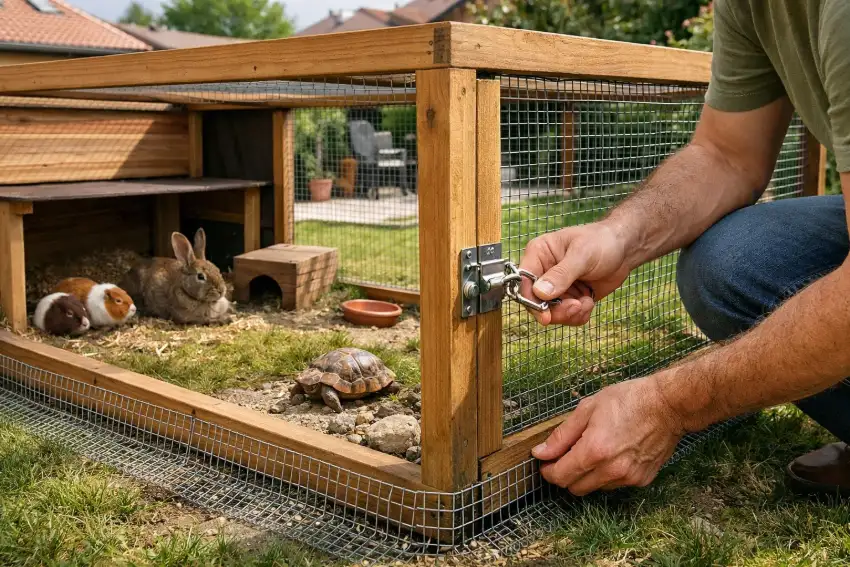
Wire apron: lay welded mesh flat on the ground around the perimeter and cover with soil, gravel, or paving.
Buried barrier: bury mesh down along the edges to reduce tunneling.
Solid base option: for tortoises, consider a solid perimeter with a dig barrier depending on species and soil.
4. Step-by-Step: A Simple, Safe Enclosure Design
This design works for many households and scales up easily.
Step 1: Decide Size (Bigger Is Better, Within Reason)
Plan for movement, not just “standing space.”
Include room for a hide box, water area, and grazing/foraging zone.
For multiple animals, increase size and add multiple hides to reduce stress.
Step 2: Build a Rigid Frame
Create a rectangular frame with strong corner supports.
Add cross braces so the enclosure doesn’t rack or twist.
Design it so you can open the top safely for cleaning.
Step 3: Install Welded Mesh on All Sides AND the Roof
Attach mesh to the outside of the frame so animals can’t push it out.
Overlap seams and secure with screws and washers.
Cover the roof completely to protect from climbing predators and birds.
Step 4: Add Dig Protection
Install a mesh apron around the enclosure footprint and cover it.
Pay extra attention to corners (predators often dig at corners first).
Step 5: Create a Secure Access Door
Use a door that closes flush (no gaps).
Add a two-step latch or carabiner so it can’t be nudged open.
Check hinge spacing to prevent small pets squeezing through.
Step 6: Add Weather Protection and Shade
Install a solid roof panel over part of the enclosure for rain cover.
Add shade cloth or a shaded section for hot days.
Ensure airflow so the enclosure doesn’t become an oven.
5. Species-Specific Safety Notes
5.1 Rabbits
Digging: rabbits can dig fast; use strong perimeter dig protection.
Chewing: protect wooden edges with chew guards or metal strips.
Stress: provide multiple hides and visual barriers inside the run.
Heat: rabbits overheat easily; shade and cool water are critical.
5.2 Guinea Pigs
Squeezing through gaps: use tighter mesh and minimize gaps at doors.
Predator reach-through: small mesh openings help prevent paws reaching in.
Cold and damp: guinea pigs are sensitive to wet, drafty setups; keep bedding dry.
5.3 Tortoises
Escape artists: tortoises push, climb, and wedge under edges; use solid walls or buried perimeter barriers.
Sun and shade balance: provide both basking and cool hide zones.
Safe substrate: avoid pesticide-treated soil and toxic plants.
Predators: smaller tortoises need roof protection from birds and dogs/cats.
6. Inside the Enclosure: What to Add for Comfort and Safety
Hide boxes: at least one per animal; more for multi-pet groups.
Water setup: stable, tip-resistant bowls; shaded placement in hot weather.
Ground cover: grass, safe plants, or clean substrate; avoid chemical-treated areas.
Enrichment: tunnels, platforms (species appropriate), and foraging spots.
Visual barriers: reduce stress when wildlife passes by.
7. What Doesn’t Work (Common Dangerous Mistakes)
Open-top pens: easy access for predators and escapes.
Chicken wire: can be torn or bent; predators can reach through and injure pets.
No dig protection: predators dig, rabbits dig, and both can defeat the enclosure quickly.
Leaving pets out overnight: the highest risk time is dusk to dawn.
Placing the enclosure against a fence/hedge: makes predator access easier and increases stress.
No shade or ventilation: heat stress can be fatal, especially for rabbits.
8. Daily and Weekly Safety Checklist
Daily: check latches, water, shade, and signs of digging or bent mesh.
After storms: inspect roof panels and corners for gaps or lifted edges.
Weekly: tighten screws, look for rust, and check for chewing damage.
Seasonal: adjust shade/insulation and remove toxic plants that appear.
9. When to Call a Vet (Outdoor-Related Red Flags)
Your rabbit or guinea pig stops eating or becomes unusually still after a scare (urgent)
Any bite/scratch wound or bleeding
Heavy panting, weakness, or signs of overheating
Limping, swelling, or sudden lethargy after outdoor time
Note: Prey animals can decline quickly. If something seems off, don’t wait.
Final Thoughts: Build for the Worst Case, Then Enjoy the Benefits
A safe outdoor enclosure is built with predator-proof mesh, a roof, dig protection, secure latches, and smart placement—plus shade and hiding spots for comfort. Once you build it correctly, outdoor time becomes a low-stress routine instead of a constant worry. If you’re unsure, start small, build strong, and upgrade one safety layer at a time.
Your action step: inspect your current setup (or your build plan) for the three most common failure points: weak wire, gaps at doors, and no dig protection. Fix those first before letting pets spend unsupervised time outdoors.